Artwork
Courtesan on the Town with Attendants at Night
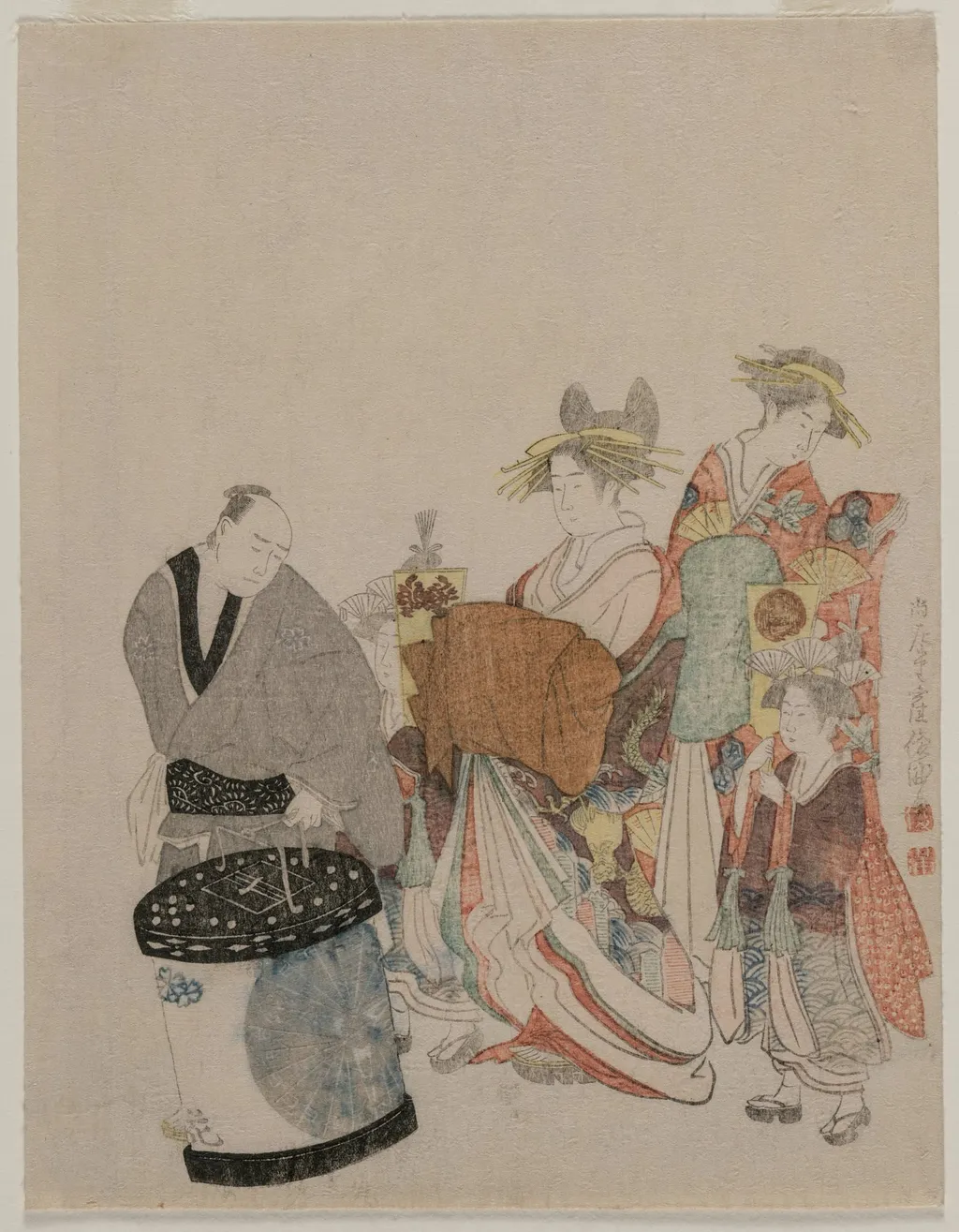
Courtesan on the Town with Attendants at Night is a print by the Romanticist artist Kubo Shunman. It dates from 1812 and is held in the collection of the Cleveland Museum of Art.
About this work
Overview
Created in 1812 by the Japanese artist Kubo Shunman, this woodblock print depicts a courtesan accompanied by attendants during an evening outing. The work is part of the ukiyo-e tradition and is held in the collection of The Cleveland Museum of Art. It captures a moment of urban leisure among the pleasure quarters’ elite, rendered with careful attention to costume and composition.
Subject & Meaning
The scene portrays a high-ranking courtesan, identified by her elaborate attire and the presence of attendants, as she moves through the night streets of Edo.
The scene portrays a high-ranking courtesan, identified by her elaborate attire and the presence of attendants, as she moves through the night streets of Edo. Her procession suggests status and ritualized social performance. The inclusion of a male figure, possibly a patron or servant, and the ornate objects they carry reflect the ceremonial nature of such outings, blending personal elegance with public display.
Technique & Style
Shunman employed fine line work and layered color printing typical of late Edo-period ukiyo-e. The kimonos are rendered in rich, contrasting hues, while the background remains subdued to emphasize the figures. Delicate patterns on fabrics and accessories are meticulously detailed, and the composition uses asymmetry to guide the viewer’s eye along the group’s movement, enhancing the sense of quiet motion.
History & Provenance
The print was produced during a period when woodblock prints of courtesans were widely circulated among urban audiences. It entered the Cleveland Museum of Art’s collection through established acquisition channels in the 20th century. Its survival in good condition reflects its careful preservation, likely due to its artistic merit and rarity among Shunman’s known works.
Context
This print emerged during the late Edo period, when the pleasure quarters of cities like Edo were centers of fashion and cultural innovation. Courtesans were both objects of desire and symbols of refined taste, and their depictions in art served as both documentation and fantasy. Shunman’s work aligns with a broader trend of portraying these women in dynamic, everyday settings rather than static portraits.
Legacy
Shunman’s print contributes to the understanding of gender, class, and performance in Edo-period Japan. While less widely known than contemporaries like Utamaro, his work offers nuanced insights into the private rituals of courtesans. Today, it remains a valuable artifact for studying the intersection of art, society, and urban life in early 19th-century Japan.
Artist & collection


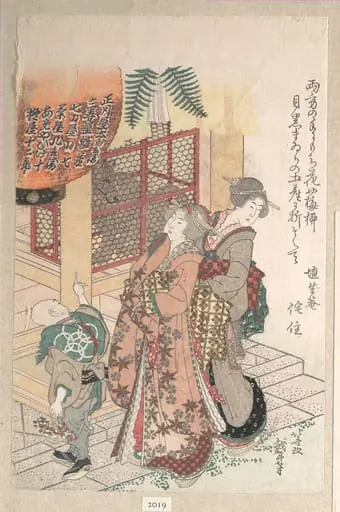 初詣|Young Women Visiting a Shinto Shrine
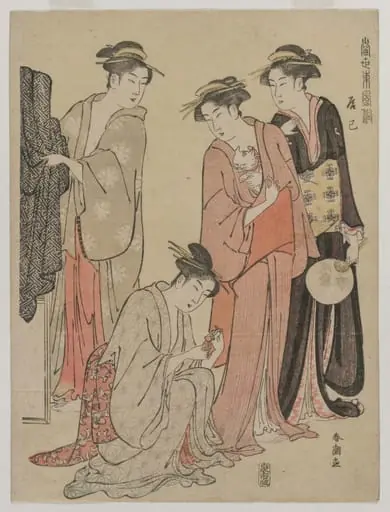 Women of the Tatsumi District (from the series Eastern Customs of the Present Day)
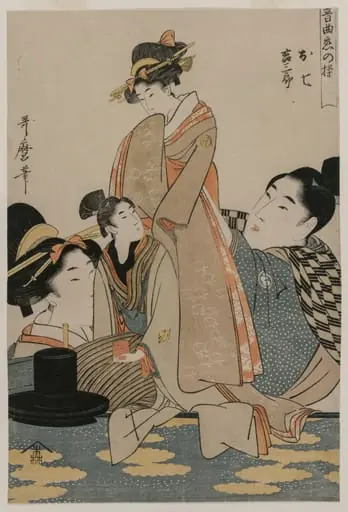 Oshichi and Kichisaburo (from the series Music on the Theme of Constancy in Love)
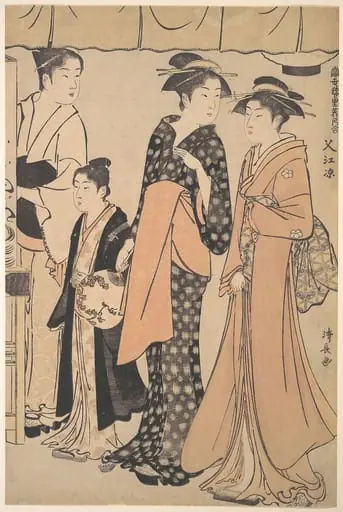 Sako no Suzumi|Cooling Off at Nakazu
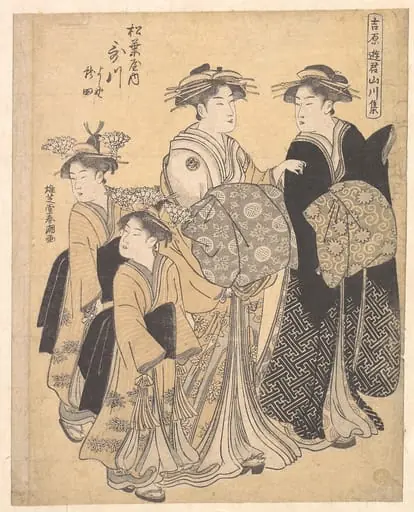 Untitled
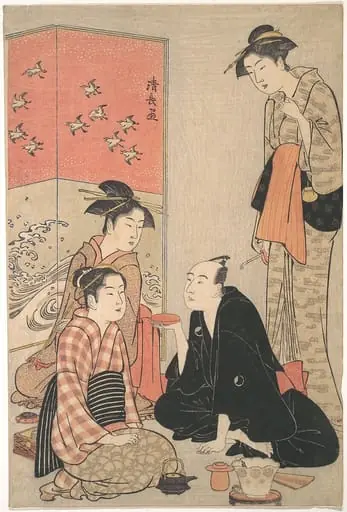 三代目沢村宗十郎と遊女|The Kabuki Actor Sawamura Sōjūrō III and Courtesans
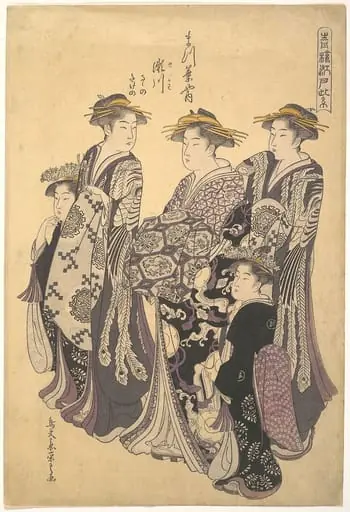 Seiryu Edo|Courtesan District of Edo
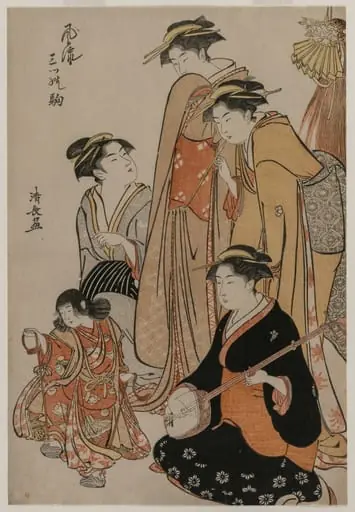 Women Watching a Girl Dance on Shells (From the series Fashionable Presentations of Three Horses)
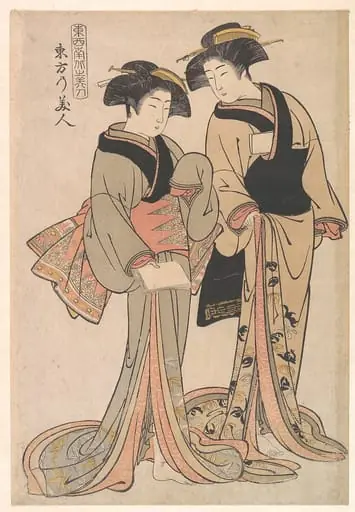 Untitled
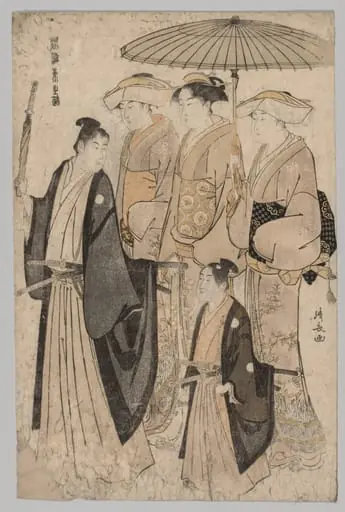 Woman of the Yoshiwara and Attendants (from the series Brocades of the East in Fashion)