Artwork
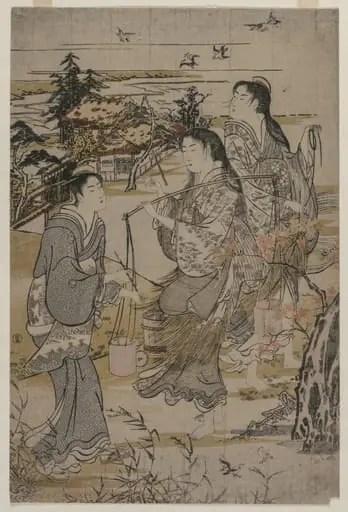
Women Cutting Branches of Bush Clover; The Noji Tama River in Omi Province, from an untitled series of the Six Tama Rivers
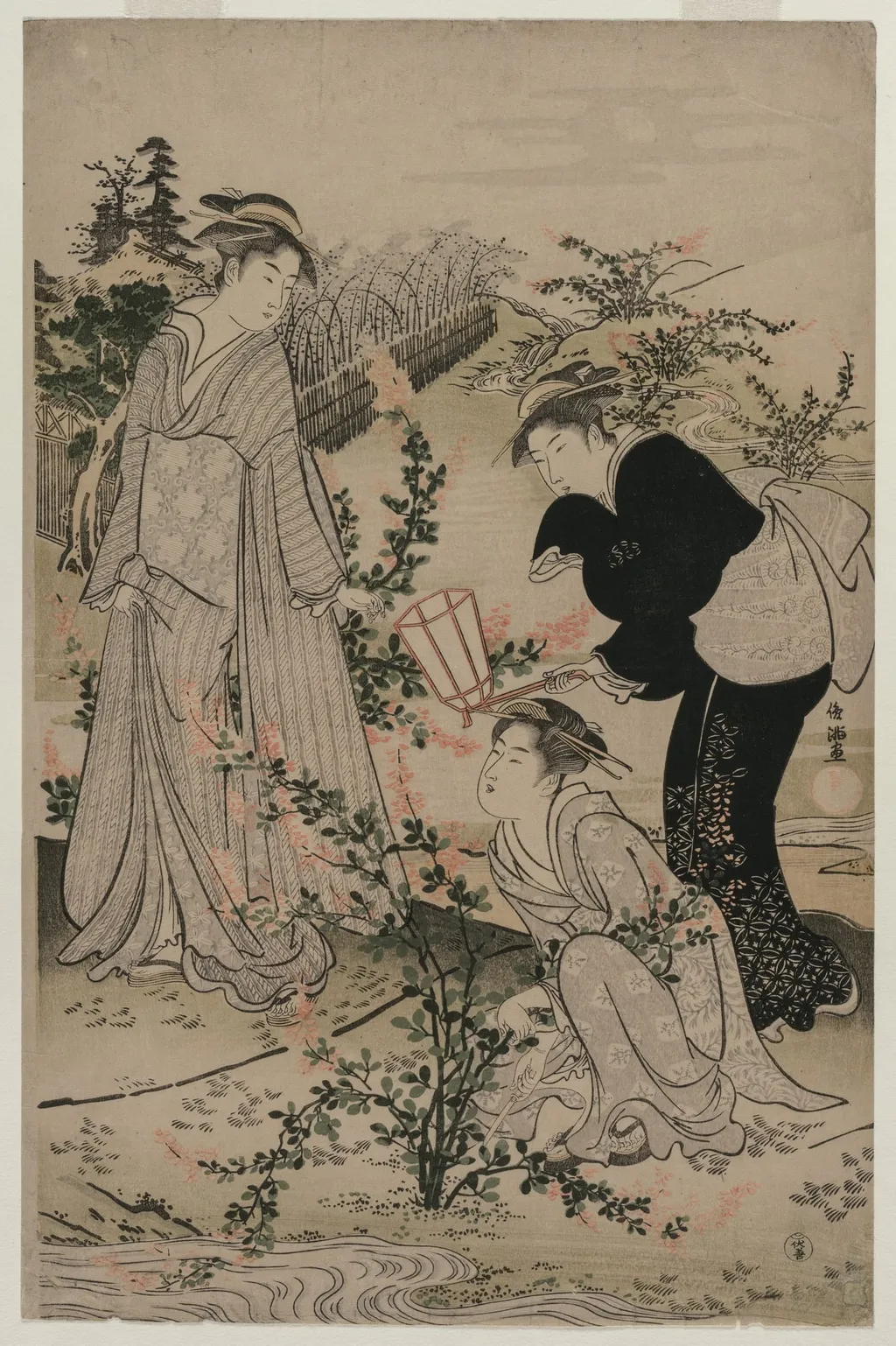
Women Cutting Branches of Bush Clover; The Noji Tama River in Omi Province, from an untitled series of the Six Tama Rivers is a print by the Romanticist artist Kubo Shunman. It dates from 1784 and is held in the collection of the Cleveland Museum of Art.
About this work
Overview
The composition emphasizes natural harmony and labor, rendered in delicate ink and color on paper, typical of late 18th-century Japanese printmaking.
Created around 1784 by Kubo Shunman, this woodblock print is part of an unnamed series depicting the Six Tama Rivers. It portrays a quiet rural scene in Omi Province, focusing on three women engaged in the seasonal task of harvesting bush clover branches along the Noji Tama River. The composition emphasizes natural harmony and labor, rendered in delicate ink and color on paper, typical of late 18th-century Japanese printmaking.
Subject & Meaning
The scene captures women gathering bush clover, a plant associated with spring and renewal in Japanese poetic tradition. Their postures—standing, kneeling, and bending—suggest coordinated effort and quiet diligence. The presence of the river and dense foliage grounds the activity in a specific, recognizable landscape, reinforcing a connection between human labor and the rhythms of nature, a recurring theme in Edo-period nature prints.
Technique & Style
Shunman employed soft, muted pigments and fine linework to convey texture and depth without heavy contrast. The figures are rendered with subtle modeling, their garments and movements suggested through gentle contours rather than sharp outlines. The background foliage is layered with light washes, creating atmospheric perspective. The print reflects a blend of literati sensibility and popular print aesthetics, prioritizing lyrical tone over dramatic effect.
History & Provenance
The print was produced during Shunman’s active period in Edo, when he explored nature-themed series influenced by both classical poetry and contemporary ukiyo-e conventions. It entered the collection of The Cleveland Museum of Art in the 20th century, likely through early Western acquisitions of Japanese prints. Its survival in good condition reflects careful preservation and scholarly interest in lesser-known Edo-period artists.
Context
This work belongs to a small group of prints that depict regional rivers and associated seasonal activities, distinct from the more common urban scenes of ukiyo-e. Such series reflected a growing Edo-period interest in provincial landscapes and traditional customs. Bush clover, often referenced in waka poetry, lent cultural weight to the depiction, transforming a mundane task into a quiet homage to nature’s cycles.
Legacy
Though not widely known outside specialist circles, Shunman’s series contributes to the broader understanding of Edo-period printmaking beyond the dominant ukiyo-e masters. His focus on rural labor and botanical detail offers a counterpoint to the more commercial themes of the time. The print remains a quiet example of how nature and daily life were intertwined in Japanese visual culture during the late 18th century.
Own this work as a print
Artist & collection


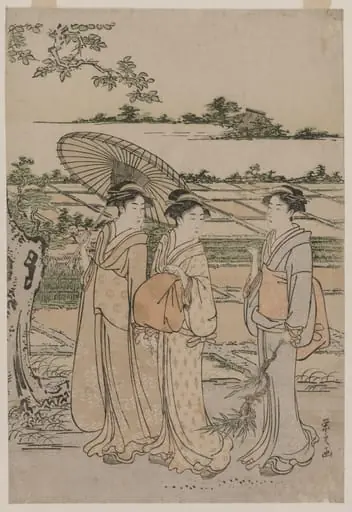 Three Women Strolling in the Countryside
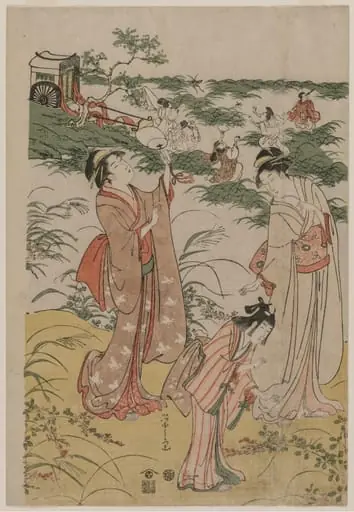 Women Chasing Crickets on an Autumn Moor
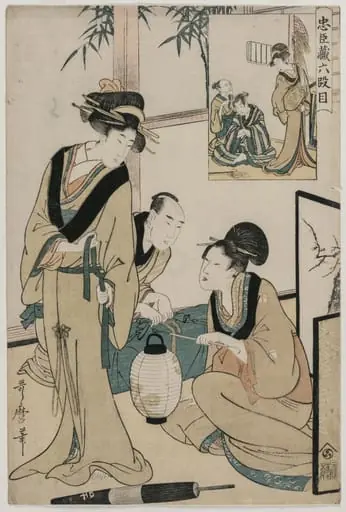 Chushingura: Act VI of The Storehouse of Loyalty
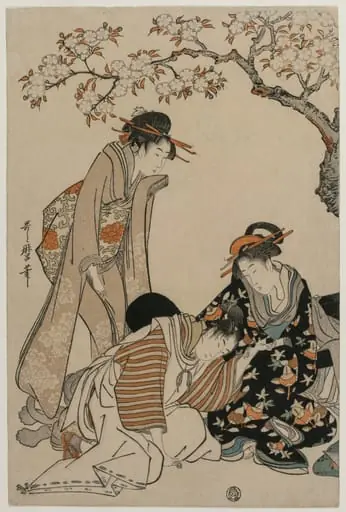 Parody of an Imperial Carriage Scene
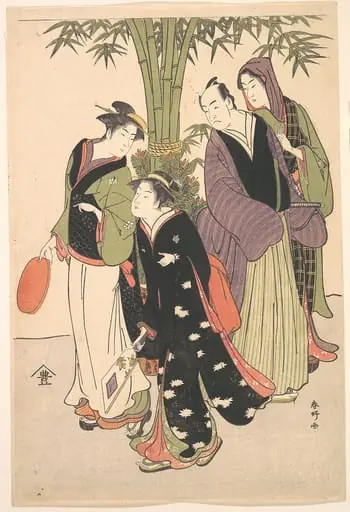 勝川春好画 三代目瀬川菊之丞・二代目市川門之助|Kabuki Actors Segawa Kikunojō III and Ichikawa Monnosuke II and Two Courtesans Celebrating the New Year
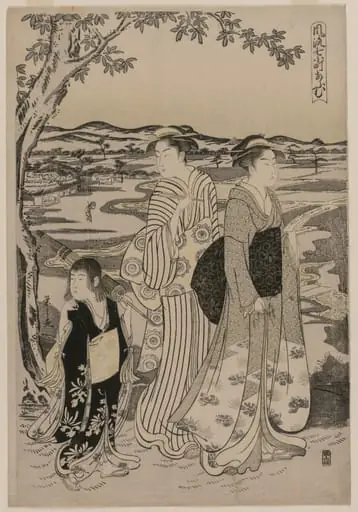 Omu the Parrot (from the series Seven Elegant Episodes from the Life of the Poetess Ono no Komachi)
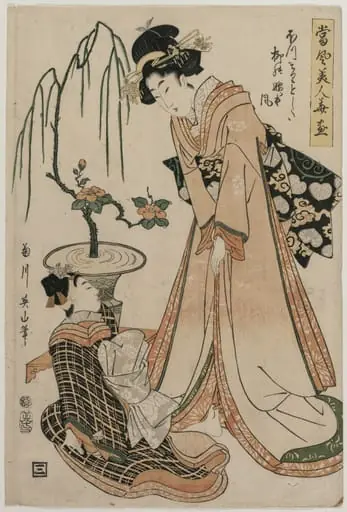 A Lady-in-Waiting with Waist as Slender as a Willow from the series Flowers and Modern Beauties
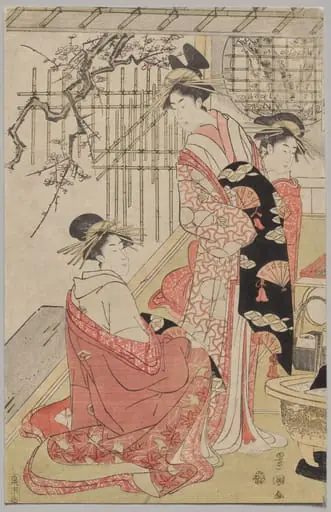 Courtesans of the Ōgiya on a Spring Outing
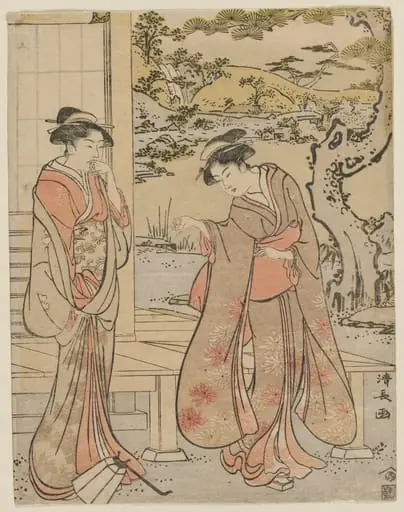 Woman Dropping a Lantern by a Porch
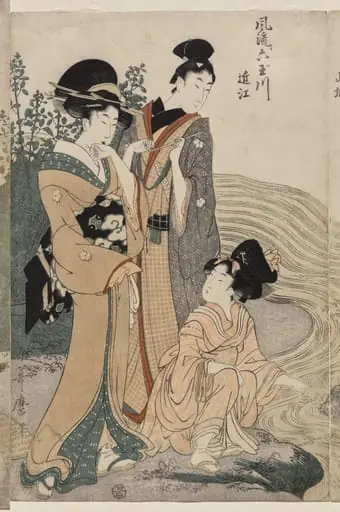 Omi Province from the series Fashionable Six Jewel Rivers (Furyu Mu Tamagawa)
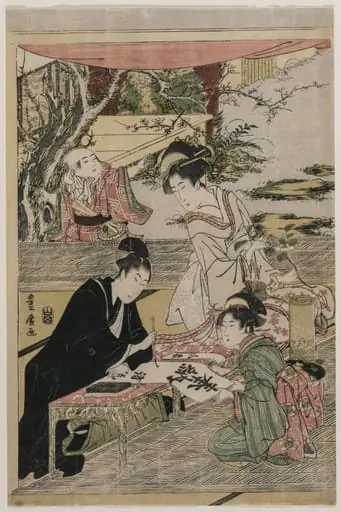 Young Man Writing at a Table
 Women with Salt Pails; The Noda Tama River in Mutsu Province, from an untitled series of the Six Tama Rivers