Artwork
梅と柳に目白|Japanese White-eyes with Plum Tree and Willow, from Spring Rain Surimono Album (Harusame surimono-jō, vol. 3)
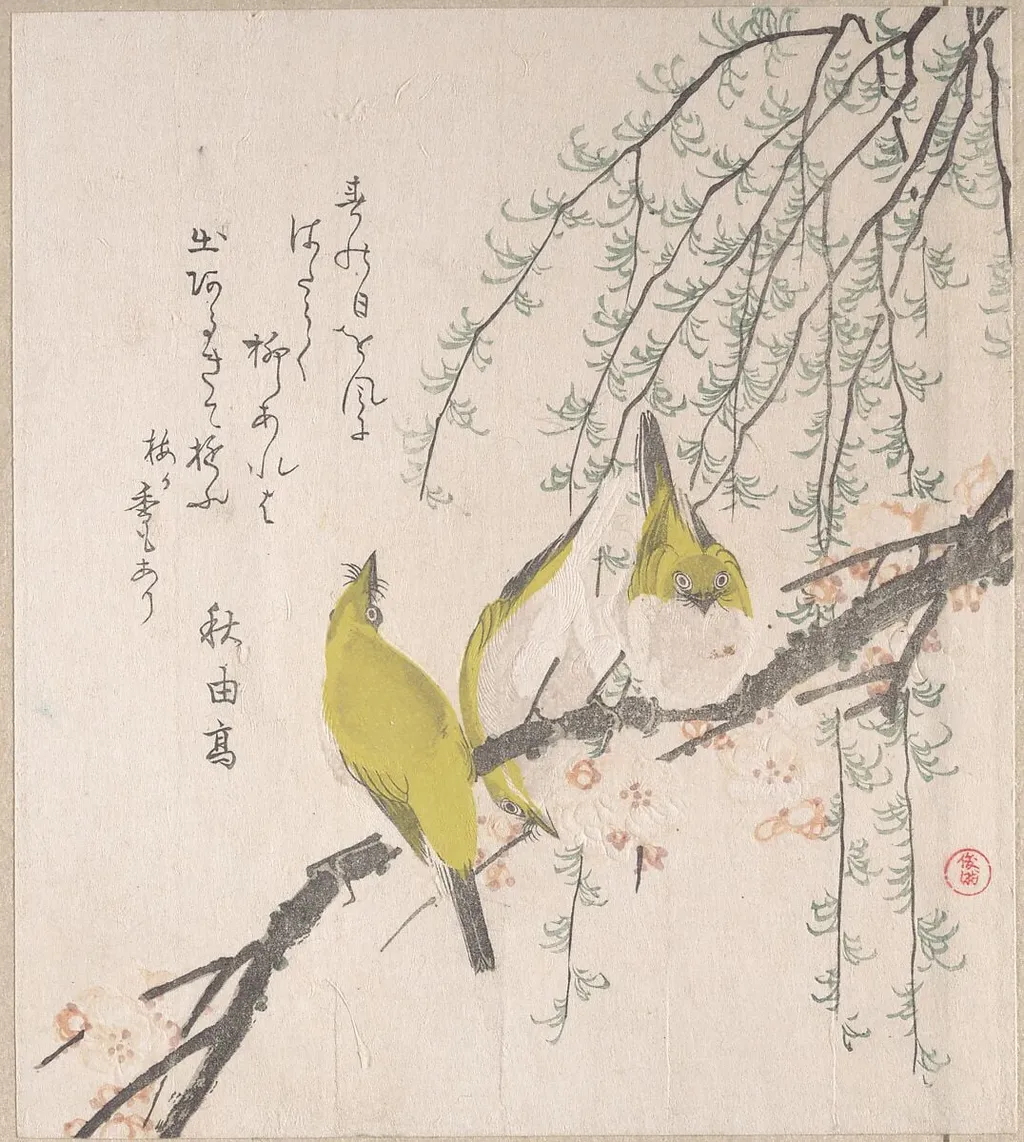
梅と柳に目白|Japanese White-eyes with Plum Tree and Willow, from Spring Rain Surimono Album (Harusame surimono-jō, vol. 3) is an ink print by the Romanticist artist Kubo Shunman. It dates from 1810 and is held in the collection of the Metropolitan Museum of Art.
About this work
Overview
Produced for literary and aesthetic circles rather than mass markets, it combines poetry, natural imagery, and refined woodblock printing.
This surimono print, created around 1810 by Kubo Shunman, is part of a privately commissioned album titled Spring Rain Surimono Album. Produced for literary and aesthetic circles rather than mass markets, it combines poetry, natural imagery, and refined woodblock printing. The work is mounted in a bound volume, reflecting its intimate, collectible nature and its role in elite Edo-period cultural exchange.
Subject & Meaning
Two Japanese white-eyes, small songbirds with bright yellow plumage, rest on slender branches beside a blooming plum tree and a trailing willow. The seasonal pairing of early spring blossoms and rain-dampened foliage evokes transience and renewal. The birds, often associated with delicate movement and song, subtly reinforce the theme of quiet natural harmony, aligning with poetic traditions that link nature with emotional nuance.
Technique & Style
Executed in ink and color on paper, the print employs fine, restrained lines and soft washes to suggest texture without detail. The birds’ forms are simplified yet lively, their yellow feathers rendered with subtle gradations. The willow’s drooping leaves and plum blossoms are outlined with precision, leaving large areas of blank paper to enhance spatial calm. The technique reflects the surimono tradition’s emphasis on craftsmanship and understated elegance.
History & Provenance
Created as part of a limited-run album, this print was likely commissioned by a poet or patron for private circulation. Such surimono were often exchanged among literati during seasonal gatherings. The work entered The Metropolitan Museum of Art’s collection as part of a broader acquisition of Edo-period prints, preserving its original album format and contextual integrity.
Context
Surimono emerged in the late 18th century as luxury prints for connoisseurs, blending poetry, visual art, and printmaking. Unlike commercial ukiyo-e, they were not sold publicly but circulated within intellectual circles. This piece reflects the Edo-period fusion of nature observation, literary allusion, and artisanal printmaking, where art served as a medium for refined personal expression.
Legacy
Kubo Shunman’s work exemplifies the surimono genre’s quiet influence on Japanese print culture. Though not widely known outside specialist circles, his integration of natural motifs with poetic sensitivity contributed to the evolution of intimate, literary printmaking. This print remains a representative example of how art in Edo Japan balanced aesthetic restraint with emotional resonance.
Artist & collection


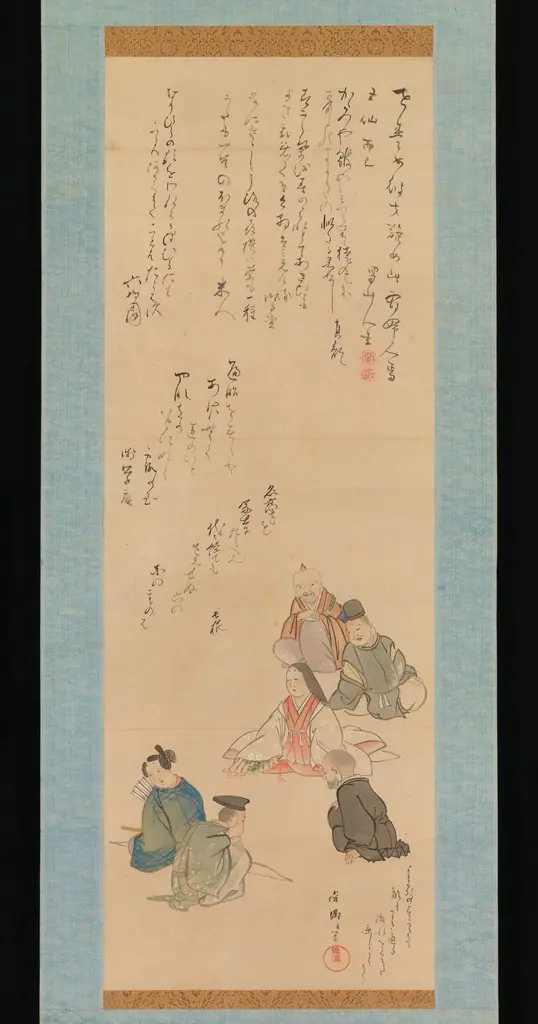
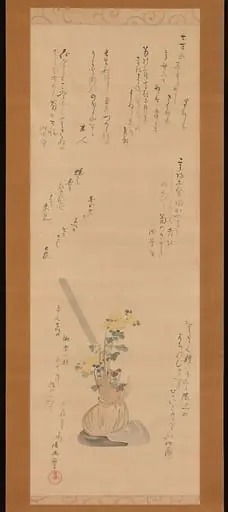
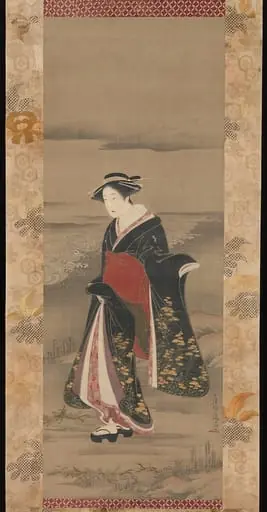
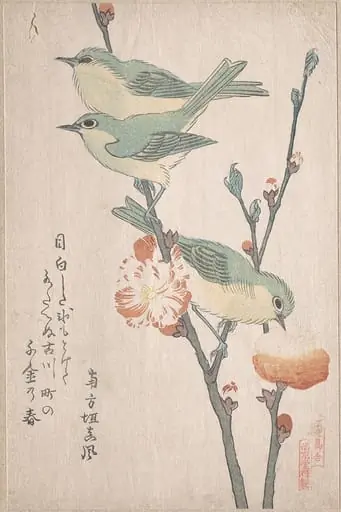 『鳥合』 桃花に目白|Japanese White-eyes on a Branch of Peach Tree,” from the Series An Array of Birds (Tori awase), from Spring Rain Surimono Album (Harusame surimono-jō, vol. 3)
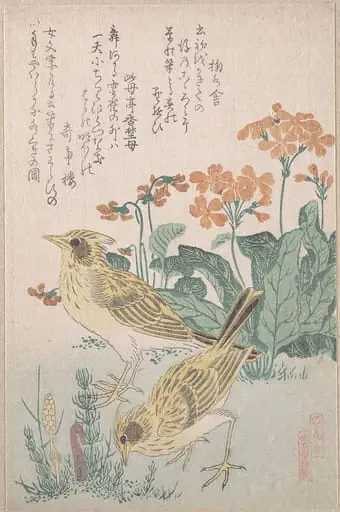 『鳥合』 桜草に雲雀|Skylarks and Primroses,” from the Series An Array of Birds (Tori awase), from Spring Rain Surimono Album (Harusame surimono-jō, vol. 3)
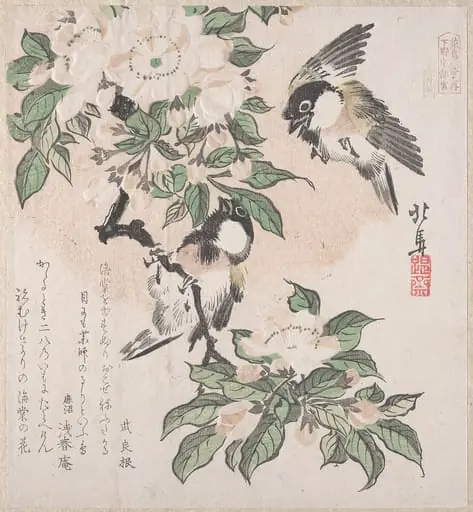 摺物帖 『春雨集』 『花鳥六番之内 下野宇都宮』 海棠に山雀|Spring Rain Collection (Harusame shū), vol. 3: Marsh-tits and Crab Apple Flowers
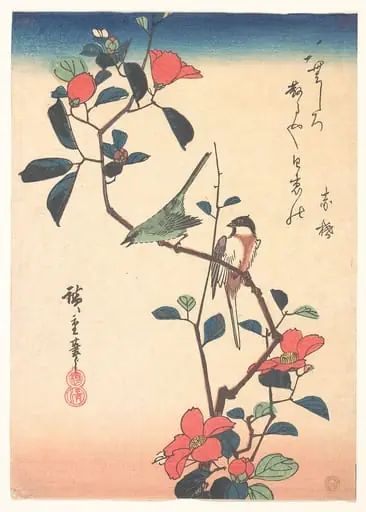 椿に目白と四十雀図|Japanese White-eye and Titmouse on a Camellia Branch
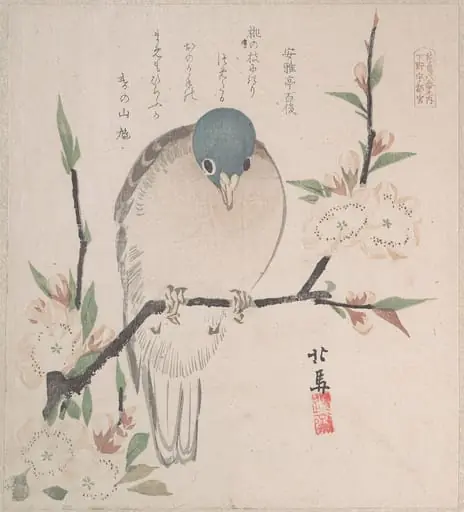 摺物帖 『春雨集』 『花鳥六番之内 下野宇都宮』 桃に山鳩|Spring Rain Collection (Harusame shū), vol. 3: Mountain Dove and Peach Flowers
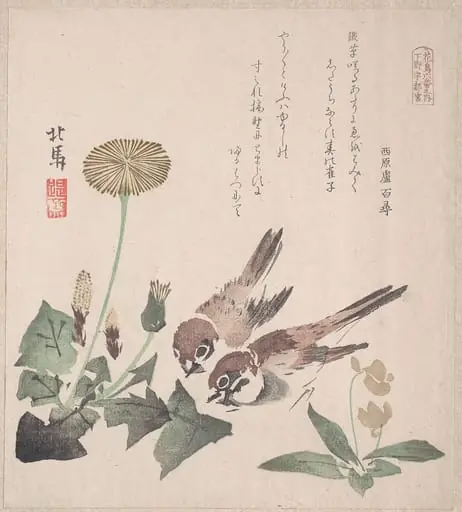 摺物帖 『春雨集』 『花鳥六番之内 下野宇都宮』 タンポポに雀|Spring Rain Collection (Harusame shū), vol. 3: Sparrows and Dandelions
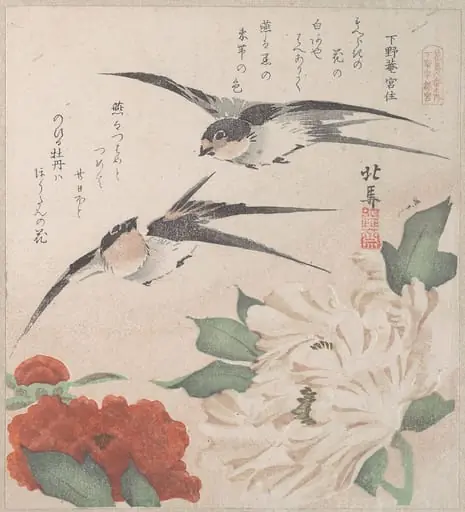 摺物帖 『春雨集』 『花鳥六番之内 下野宇都宮』 牡丹に燕|Spring Rain Collection (Harusame shū), vol. 3: Swallows and Peonies