Artwork
『鳥合』 桃花に目白|Japanese White-eyes on a Branch of Peach Tree,” from the Series An Array of Birds (Tori awase), from Spring Rain Surimono Album (Harusame surimono-jō, vol. 3)
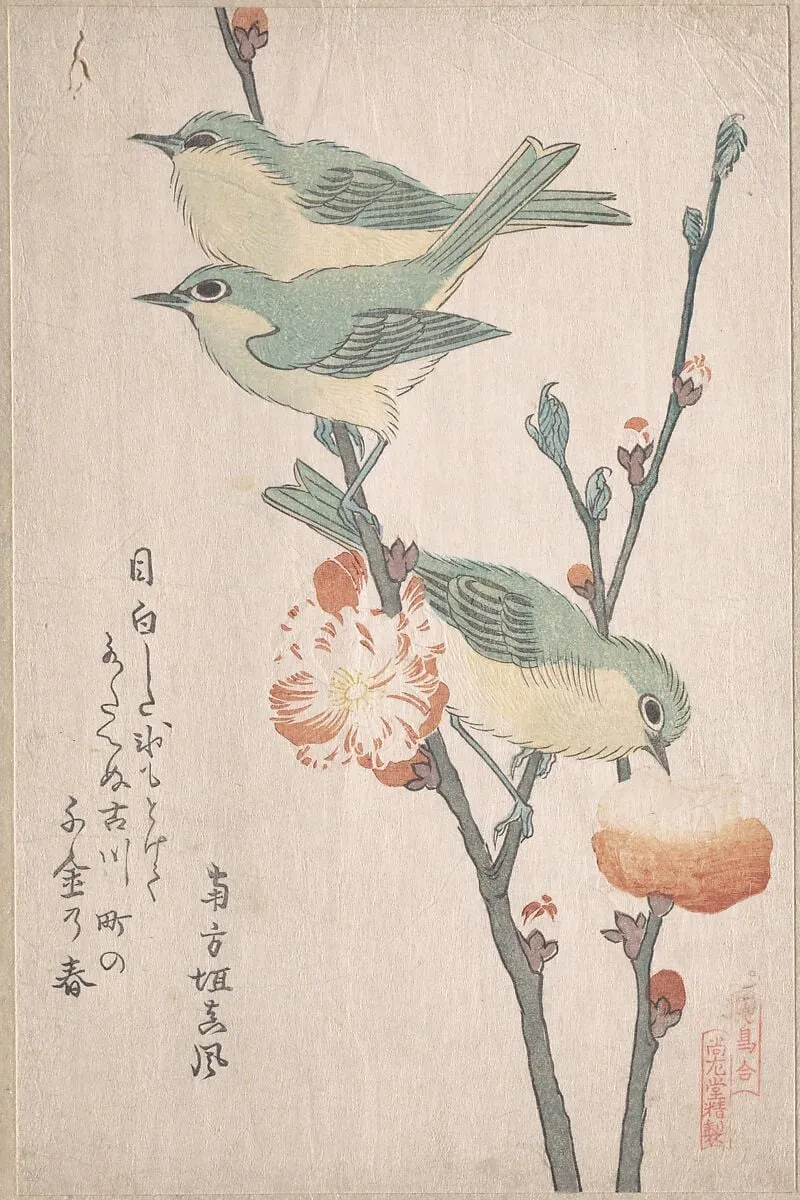
『鳥合』 桃花に目白|Japanese White-eyes on a Branch of Peach Tree,” from the Series An Array of Birds (Tori awase), from Spring Rain Surimono Album (Harusame surimono-jō, vol. 3) is an ink print by the Romanticist artist Kubo Shunman. It dates from 1808 and is held in the collection of the Metropolitan Museum of Art.
About this work
Overview
Produced as a luxury item for literary and artistic circles, it belongs to the series An Array of Birds, which pairs avian subjects with poetic inscriptions.
This surimono print, created around 1808 by Kubo Shunman, is part of a privately commissioned album titled Spring Rain Surimono Album, volume three. Produced as a luxury item for literary and artistic circles, it belongs to the series An Array of Birds, which pairs avian subjects with poetic inscriptions. The work is mounted in an album format, emphasizing its role as a refined object for intimate contemplation rather than mass distribution.
Subject & Meaning
The print depicts two Japanese white-eyes, a small songbird native to East Asia, on a blossoming peach branch. One bird hovers mid-flight above, while the other perches below, gazing outward. The peach blossoms, symbolizing spring’s fleeting beauty, complement the birds’ lively presence. Together, they evoke seasonal renewal and quiet harmony, themes often explored in poetry associated with such prints.
Technique & Style
Shunman employed fine, controlled lines and delicate washes of color to render the birds’ feathers and the peach blossoms with subtle realism. The ink outlines define form without heaviness, while soft pinks and pale yellows suggest the tenderness of early spring. The plain background isolates the subjects, directing attention to their interaction and the precision of the brushwork, characteristic of surimono’s refined aesthetic.
History & Provenance
Created as a surimono—a privately published woodblock print—the work was likely commissioned by a member of the literati class for personal or ceremonial use. It entered The Metropolitan Museum of Art’s collection as part of a bound album, preserving its original context. Such prints were often exchanged among poets and artists, making their survival in intact albums rare and historically valuable.
Context
Surimono emerged in late 18th-century Japan as elite, non-commercial prints, often combining poetry, calligraphy, and imagery. This piece reflects the cultural practice of linking nature with verse, where birds and blossoms served as seasonal motifs. Unlike mass-produced ukiyo-e, surimono were limited in number and intended for connoisseurs, blending visual art with literary refinement.
Legacy
Kubo Shunman’s bird-and-flower prints are noted for their lyrical restraint and attention to natural detail. Though not widely known outside specialist circles, his work exemplifies the quiet sophistication of surimono. This print remains a representative example of how Edo-period artists translated poetic sensibility into visual form, influencing later generations of nature-focused printmakers.
Artist & collection


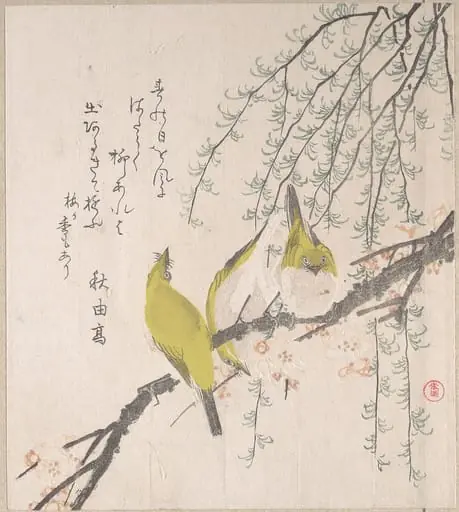 梅と柳に目白|Japanese White-eyes with Plum Tree and Willow, from Spring Rain Surimono Album (Harusame surimono-jō, vol. 3)
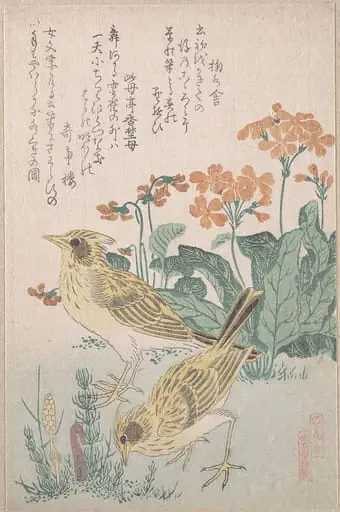 『鳥合』 桜草に雲雀|Skylarks and Primroses,” from the Series An Array of Birds (Tori awase), from Spring Rain Surimono Album (Harusame surimono-jō, vol. 3)
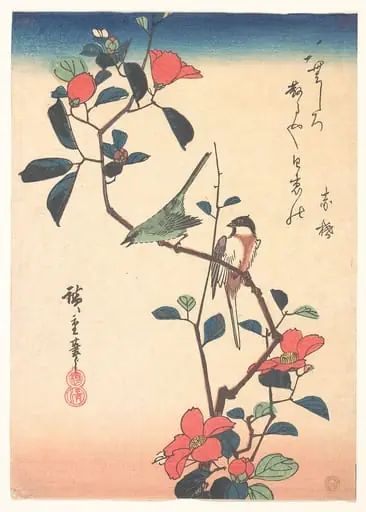 椿に目白と四十雀図|Japanese White-eye and Titmouse on a Camellia Branch
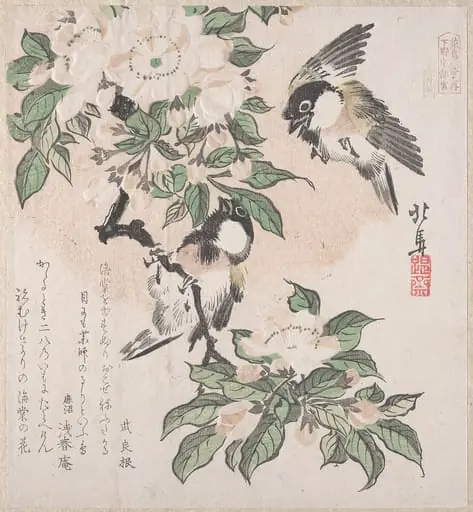 摺物帖 『春雨集』 『花鳥六番之内 下野宇都宮』 海棠に山雀|Spring Rain Collection (Harusame shū), vol. 3: Marsh-tits and Crab Apple Flowers
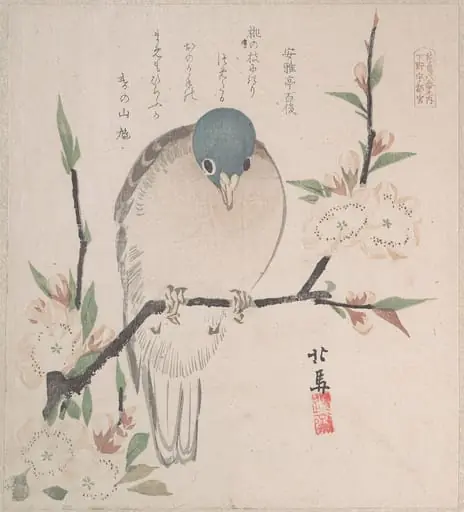 摺物帖 『春雨集』 『花鳥六番之内 下野宇都宮』 桃に山鳩|Spring Rain Collection (Harusame shū), vol. 3: Mountain Dove and Peach Flowers
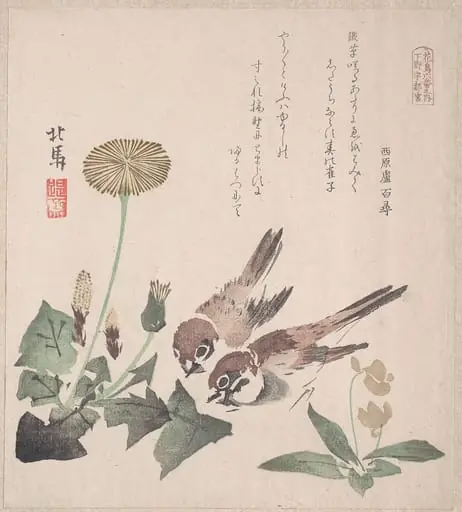 摺物帖 『春雨集』 『花鳥六番之内 下野宇都宮』 タンポポに雀|Spring Rain Collection (Harusame shū), vol. 3: Sparrows and Dandelions
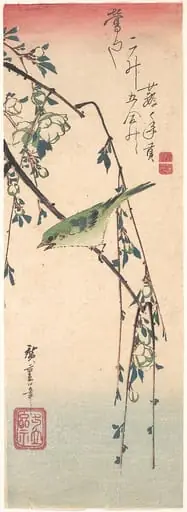 歌川広重画 梅に鶯|Warbler on a Plum Branch
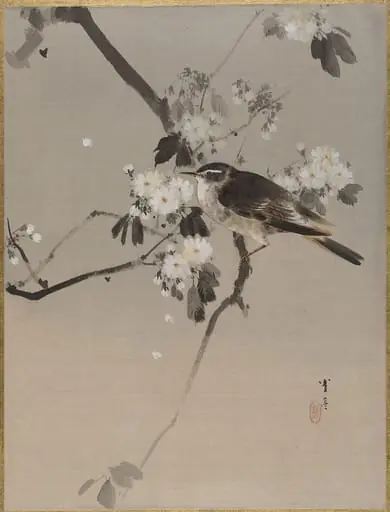 桜に小禽図|Birds on a Flowering Branch
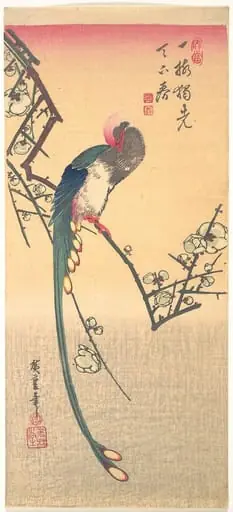 梅に三光鳥|Bird on a Plum Branch