Artwork
Pheasant and camellia shrub
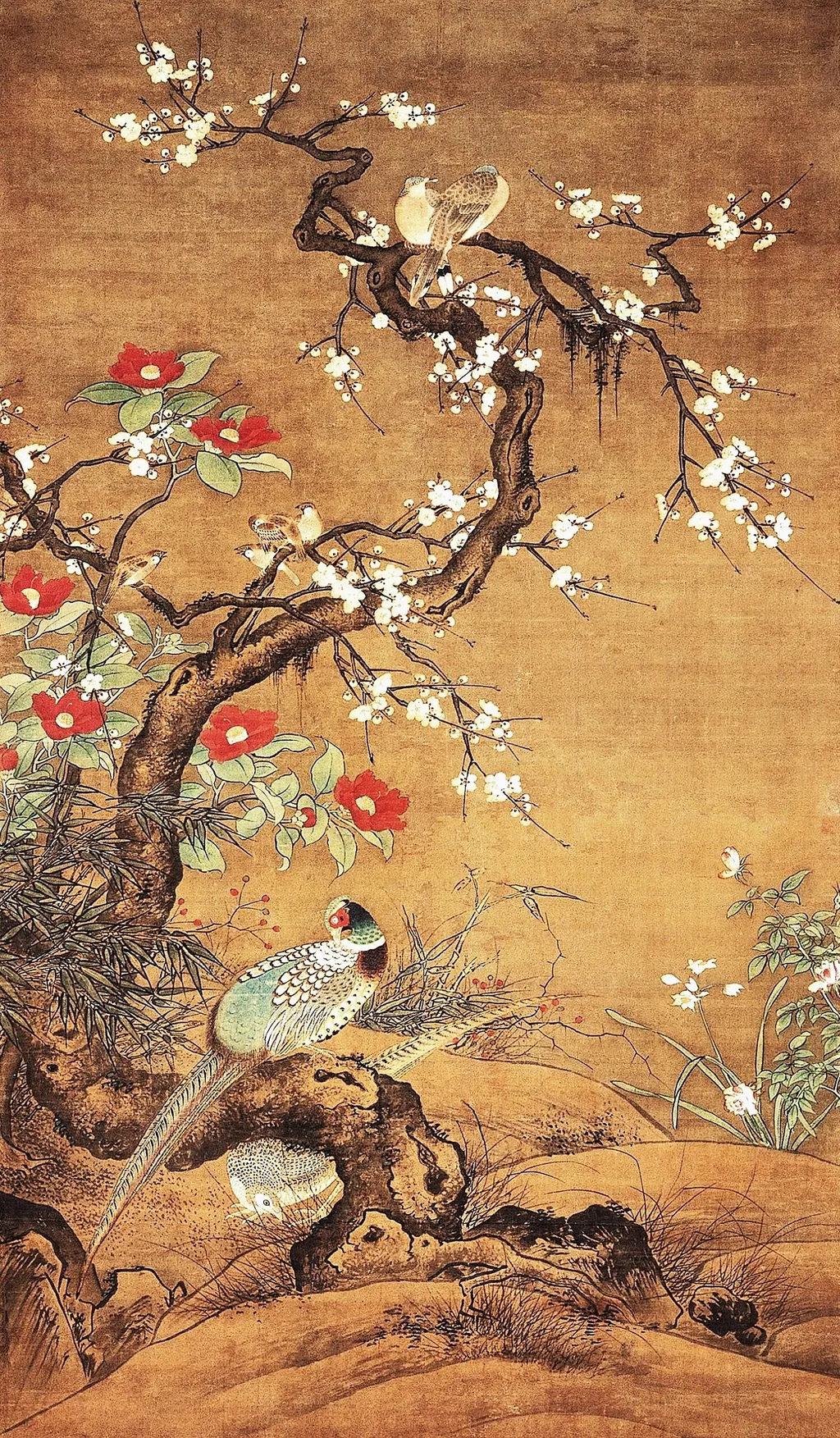
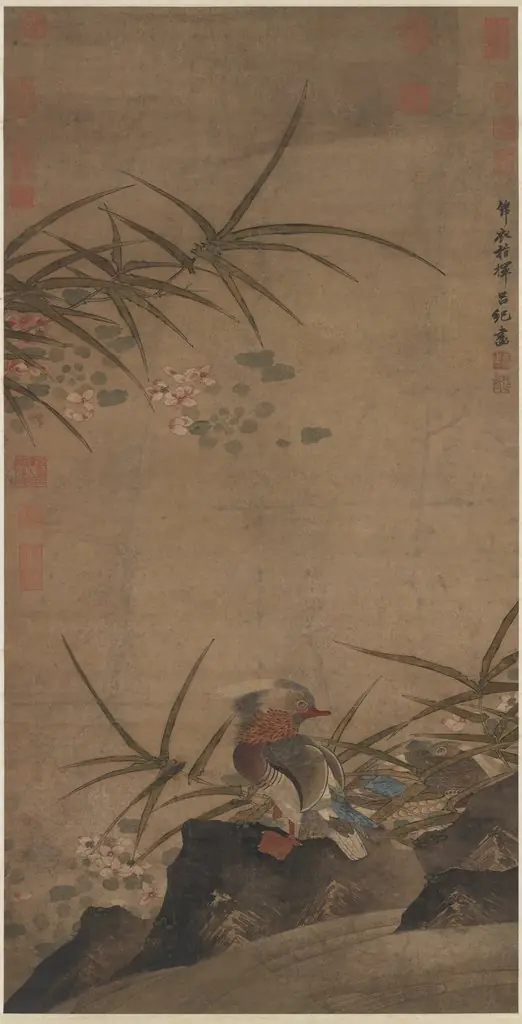
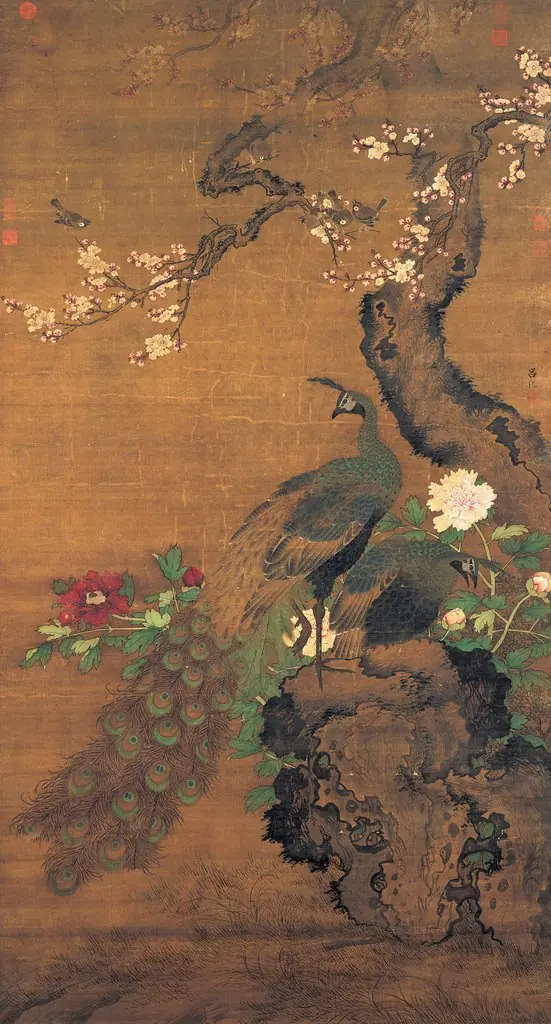
Pheasant and camellia shrub is an unspecified painting by the Ming dynasty painting artist Lü Ji. It dates from 1550 and is held in the collection of the National Museum of China.
About this work
Overview
Painted around 1550 by Lü Ji, this work depicts a pheasant resting on a stone amid a camellia shrub. Executed in ink and color on silk, it belongs to the Ming dynasty tradition of naturalistic bird-and-flower painting. The piece is currently preserved in the National Museum of China, where it represents the refined observational style favored in imperial artistic circles.
Subject & Meaning
The pheasant, a symbol of dignity and virtue in Chinese culture, is rendered with careful attention to its plumage, while the camellia, blooming in winter, suggests resilience and quiet beauty. Together, the elements form a harmonious composition that reflects Confucian ideals of moral integrity and natural order, without overt narrative or allegory.
Technique & Style
Lü Ji employed fine brushwork to capture the texture of feathers and petals, using layered washes to achieve subtle gradations of color.
Lü Ji employed fine brushwork to capture the texture of feathers and petals, using layered washes to achieve subtle gradations of color. The pheasant’s green head and white-spotted brown body contrast with the vibrant red camellia blooms, set against a softly glowing golden background that enhances depth without distraction. The precision of detail reveals a mastery of observation and controlled execution.
History & Provenance
Created during the mid-Ming period, the painting likely originated in a courtly context, where such works were valued for their aesthetic and symbolic qualities. It entered the collection of the National Museum of China in the 20th century, following the consolidation of imperial and aristocratic holdings after the fall of the Qing dynasty.
Context
This painting aligns with the Ming dynasty’s revival of classical bird-and-flower themes, influenced by earlier Song court painters. While not part of a larger series, it reflects the era’s preference for intimate, naturalistic scenes that celebrated the harmony between animals and plants, often commissioned for palace decoration or scholarly contemplation.
Legacy
Lü Ji’s work contributed to the enduring tradition of Chinese ornithological painting, influencing later artists through its balance of realism and elegance. Though not widely reproduced, the piece remains a key example of Ming-era naturalism, studied for its technical discipline and quiet compositional grace.
Artist & collection


 Flowers and Birds in a Spring Landscape
 Flowers and Birds in a Spring Landscape
 Flowers and Birds in a Spring Landscape
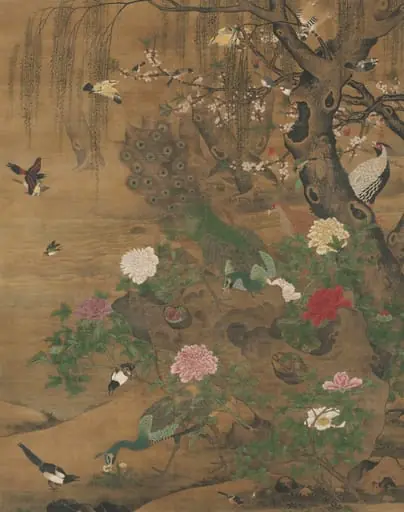 Birds Gather under the Spring Willow
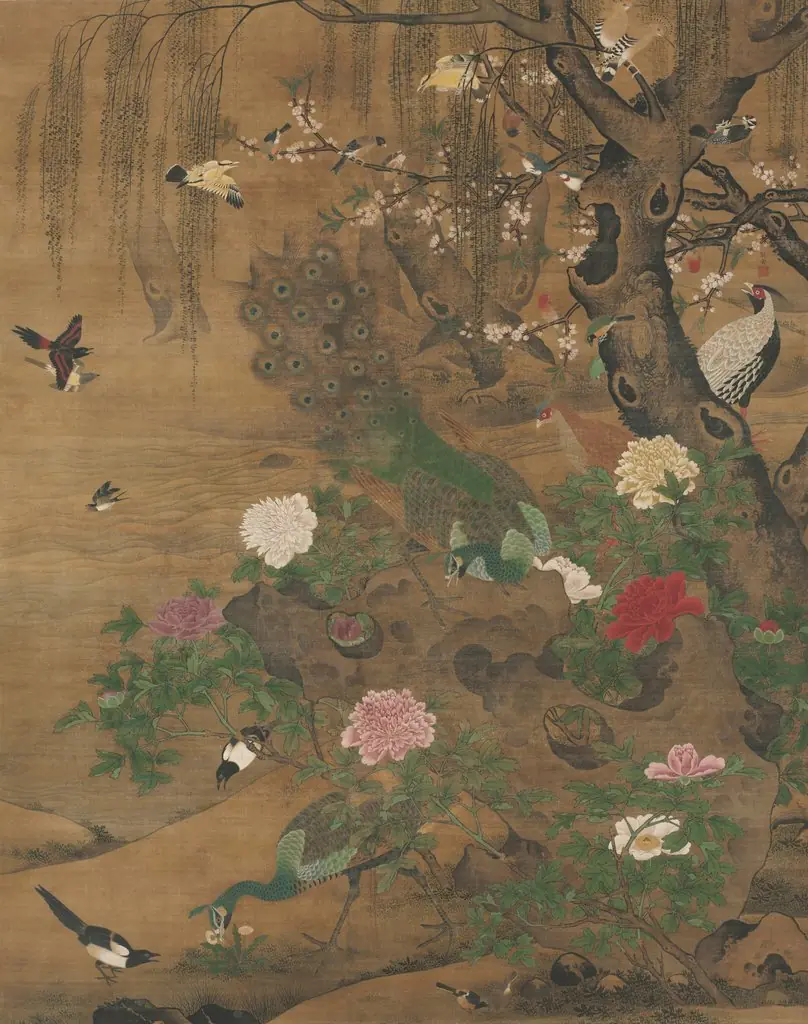 Birds Gather under the Spring Willow
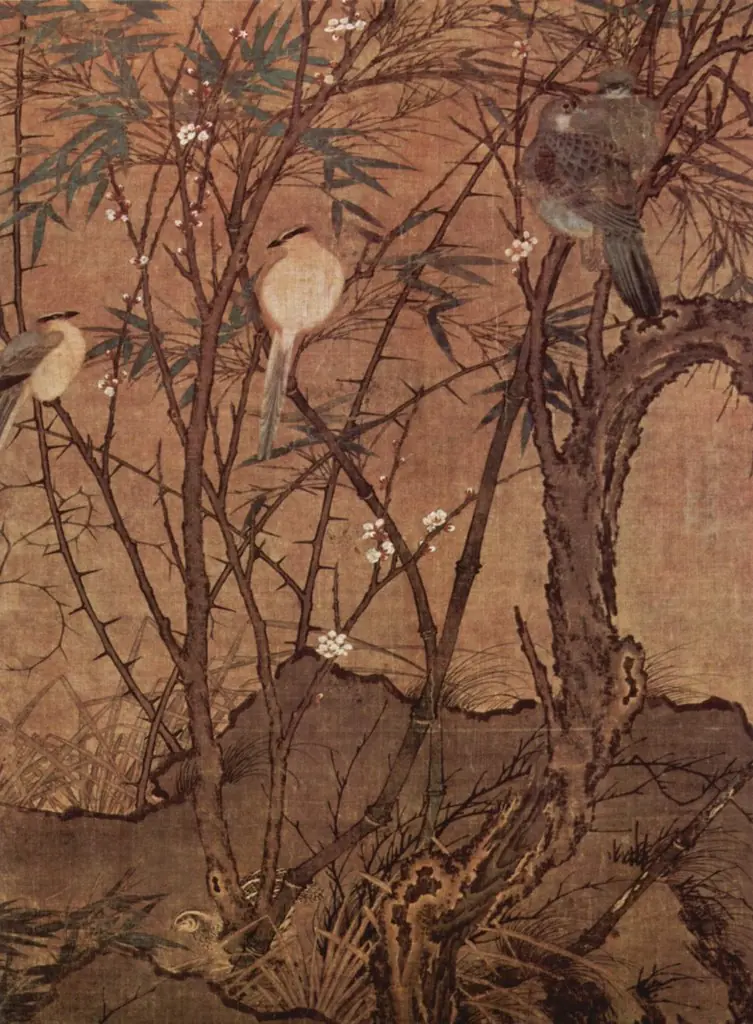 Plum Tree, Bamboo, and a Gathering of Birds
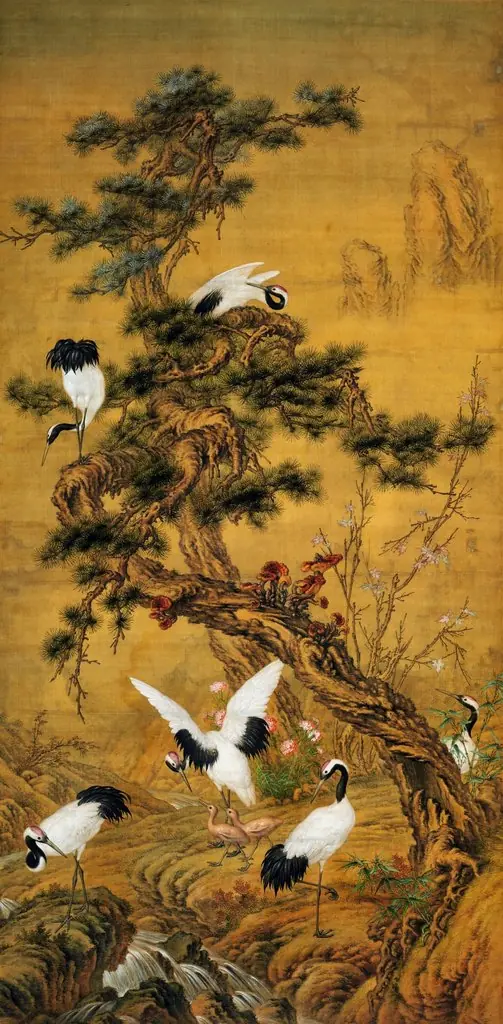 Pines and cranes in spring.
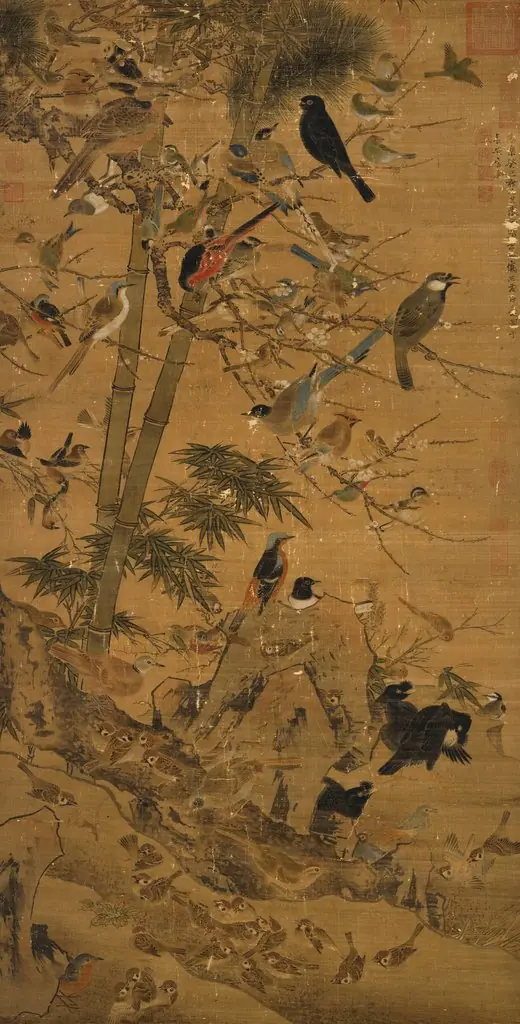 The "Three Friends" and a Hundred Birds
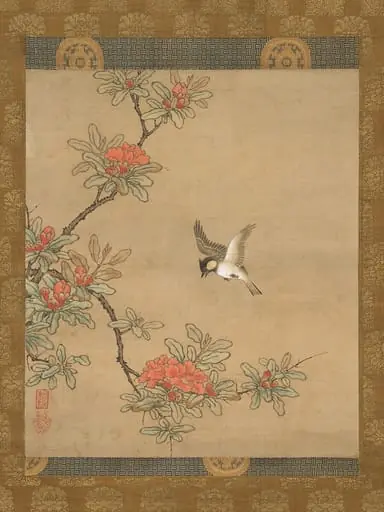 狩野之信筆 四十雀柘榴花図|Titmouse with Pomegranate Flowers
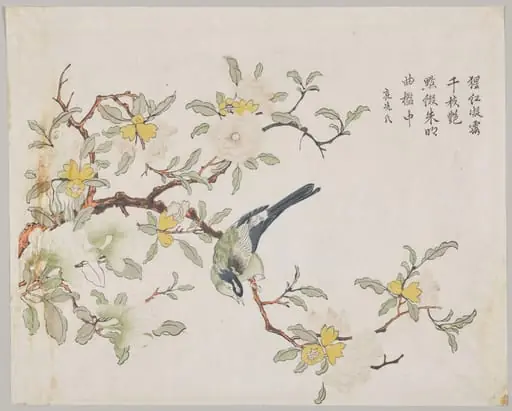 Bird on Pomegranate
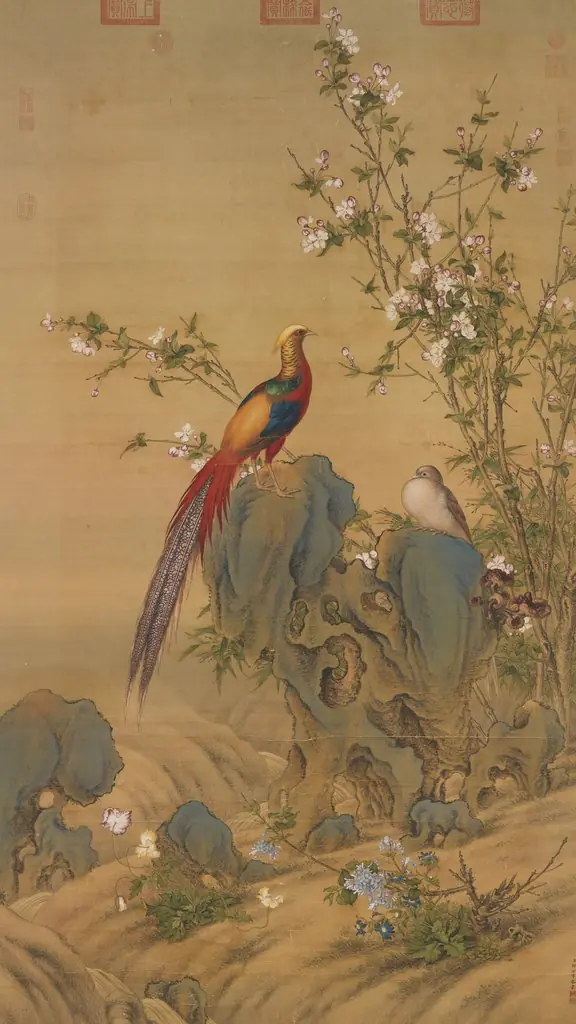 Golden Pheasants in Spring