Artwork
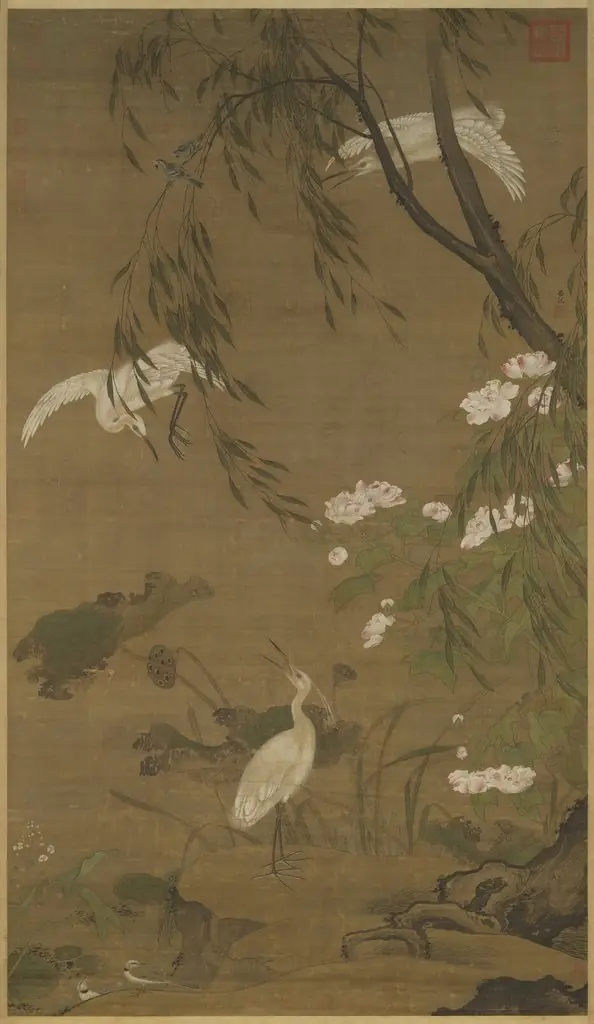
Egrets in Flight
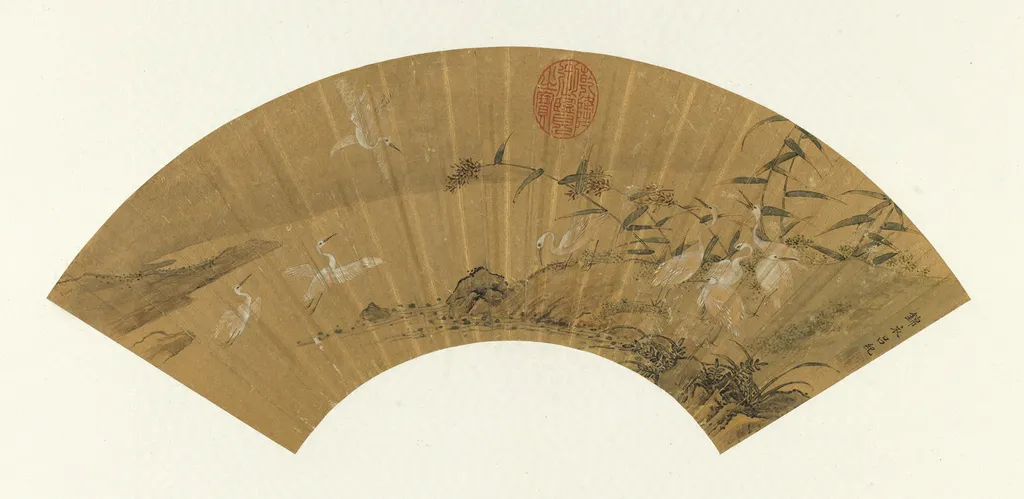
Egrets in Flight is an unspecified painting by the Ming dynasty painting artist Lü Ji. It is held in the collection of the National Palace Museum. This painting appears on a hand fan, combining functional design with artistic expression.
About this work
Overview
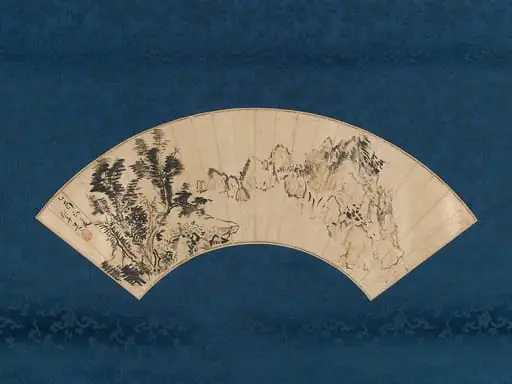
This painting appears on a hand fan, combining functional design with artistic expression. The composition centers on egrets in motion and repose, rendered with subtle tonal variations against a muted brown ground. The format suggests intimate, personal use, likely intended for private contemplation rather than public display.
Subject & Meaning
Egrets, often associated with grace and stillness in East Asian aesthetics, are depicted mid-flight and at rest, evoking natural harmony. Their presence, unaccompanied by human figures or dramatic elements, emphasizes quietude and the rhythm of the natural world. The scene invites reflection rather than narrative, aligning with poetic traditions that find meaning in simplicity.
Technique & Style
The artist employs varied brushwork to differentiate textures: soft, layered strokes suggest the lightness of feathers, while sharper, controlled lines define branches and foliage. The limited palette of white, gray, and warm brown enhances the delicate balance between form and atmosphere. The medium, likely ink and light color on paper, suits the fan’s portable scale and refined sensibility.
History & Provenance
Though the artist’s identity remains unconfirmed, the work reflects conventions of late imperial Chinese or Japanese fan painting, popular among literati and courtly circles from the 17th to 19th centuries. Such objects were often exchanged as gifts or used in seasonal rituals, carrying cultural weight beyond mere decoration.
Context
Fan paintings like this emerged from a tradition where nature served as both subject and moral metaphor. The egret’s elegance resonated with Confucian and Daoist ideals of purity and effortless movement. The fan’s form—held in the hand, turned gently—encouraged slow, attentive viewing, reinforcing its role as a vessel for contemplative aesthetics.
Legacy
This work exemplifies how everyday objects were elevated through artistic care, preserving a quiet visual language that continues to inform modern interpretations of nature in East Asian art. Its survival underscores the value placed on transient, personal artifacts, offering insight into private aesthetic experiences of its time.
Artist & collection


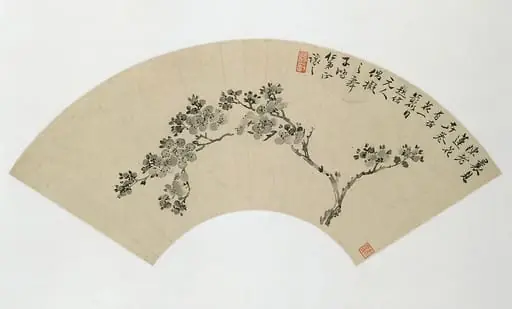 清 吳熙載 杏花 扇面|Apricot
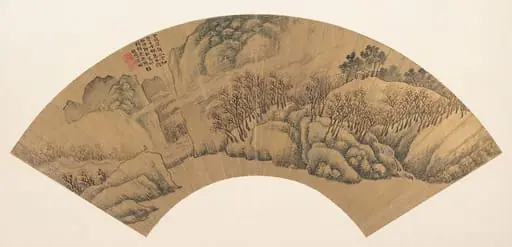 明 吳彬 翠壁丹楓 扇|Azure Cliff with Red Maples
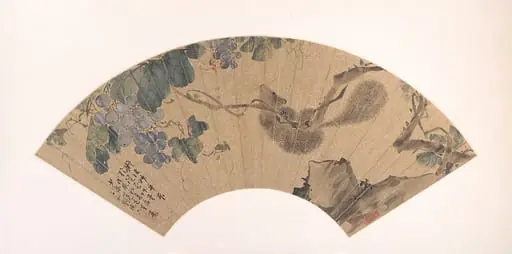 清 劉德六 松鼠葡萄 扇面|Squirrel and Grape
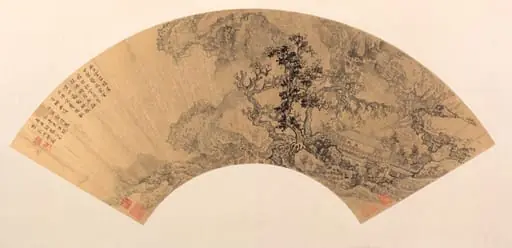 Landscape
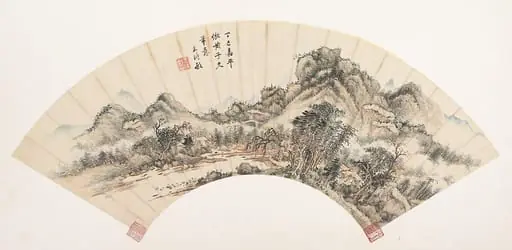 清 王時敏 倣黃子久筆意山水 扇頁|Landscape after Huang Gongwang
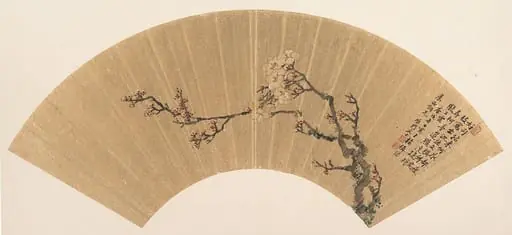 明/清 文止 疏影橫斜 扇|Plum Blossoms
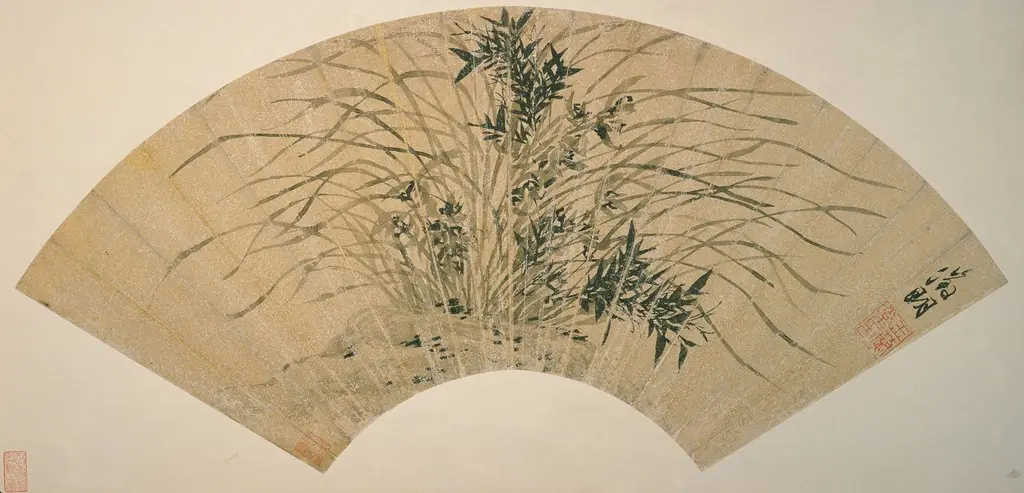 Orchids and Bamboo
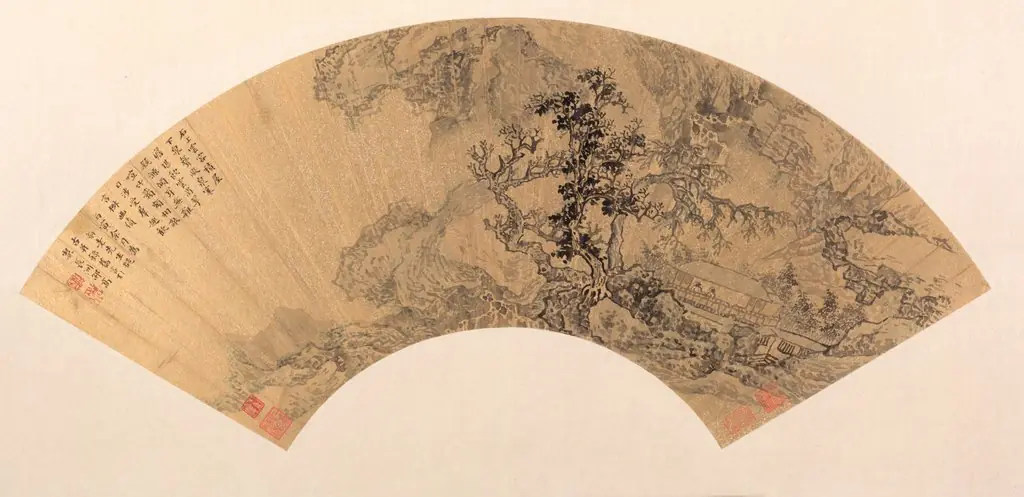 Landscape
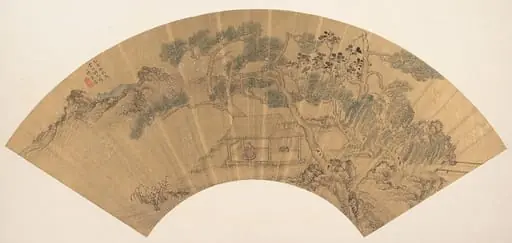 明 陳季淳 山水人物圖 扇頁|Landscape with figure
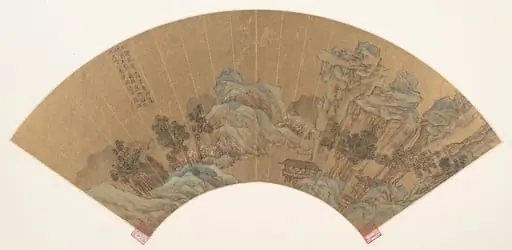 明 陸治 泉壑桃浪圖 扇面|Brocaded Sea of Peach Blossom Waves
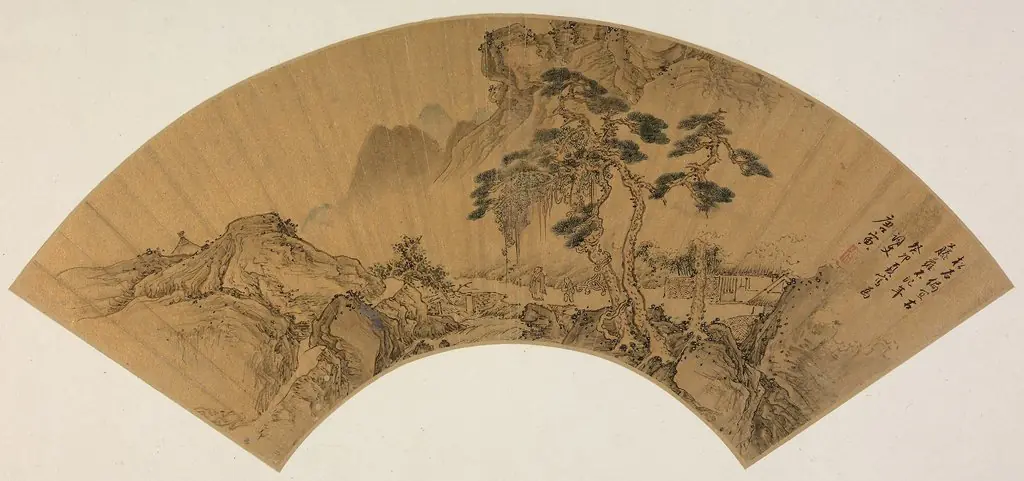 The Gathering at the Orchid Pavilion
 青木木米筆 山中喫茶図扇面|Preparing Tea by a Mountain Gorge