Artwork
Letter T
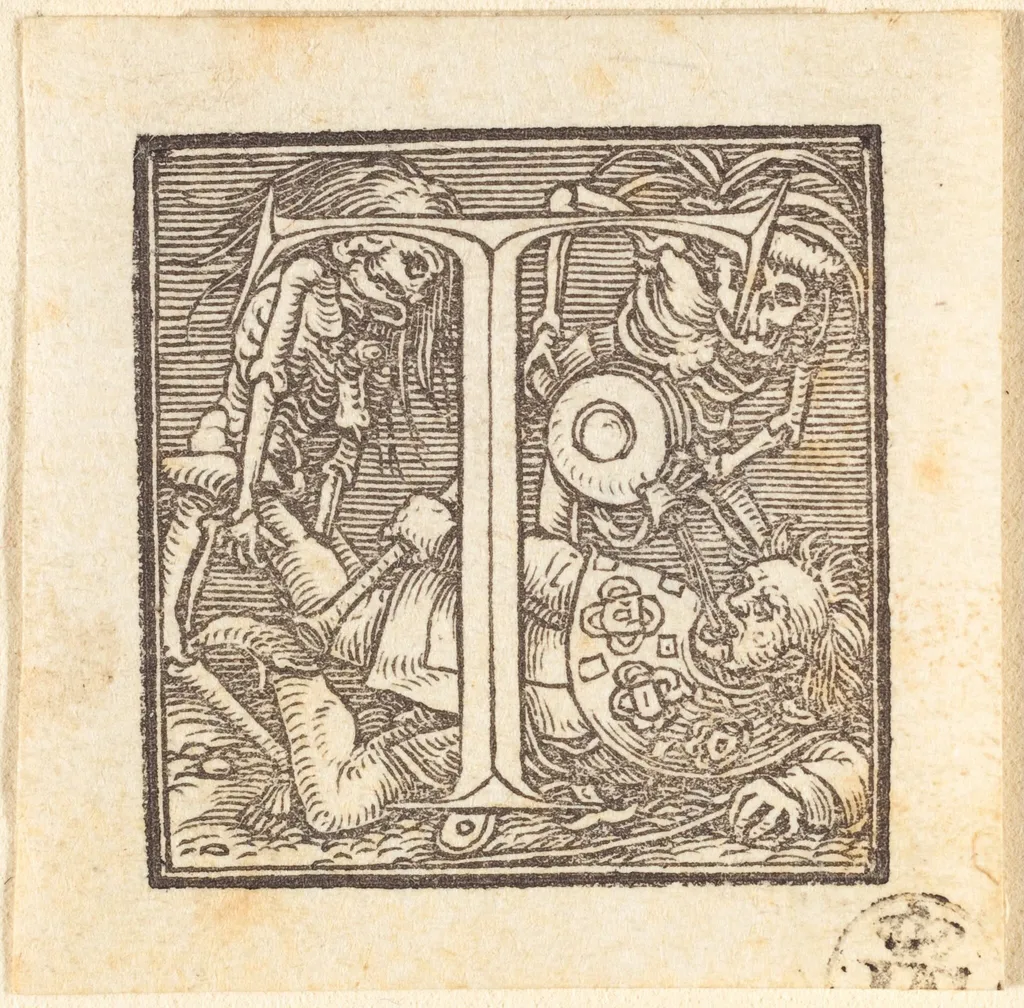
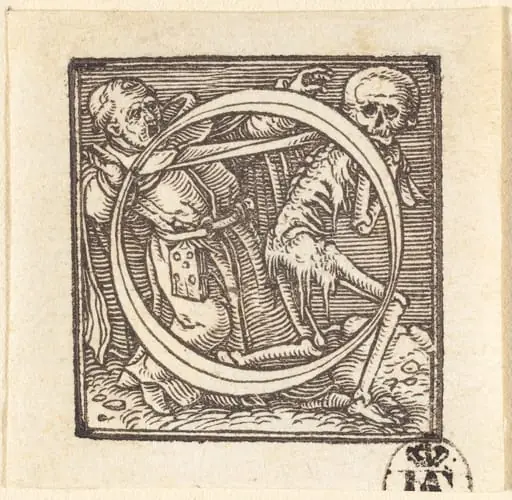
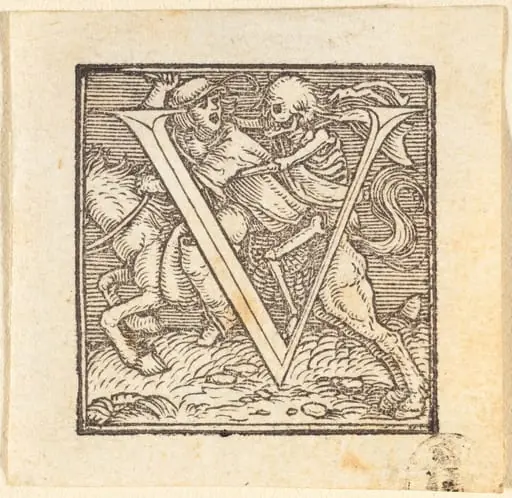
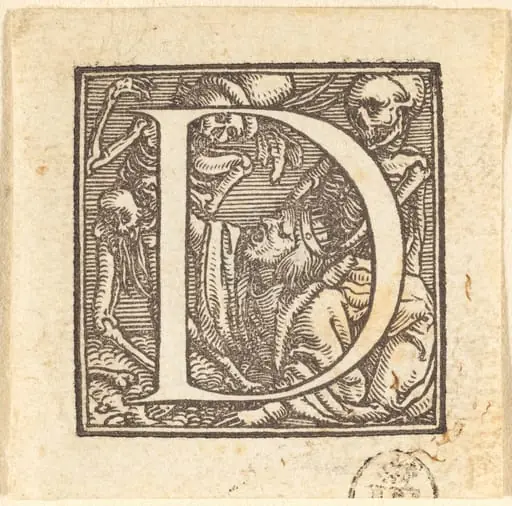
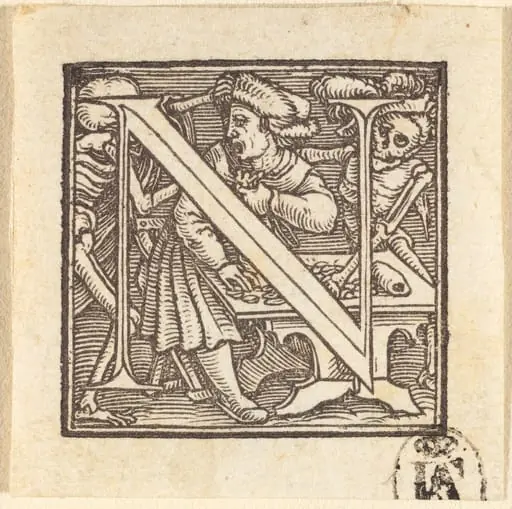
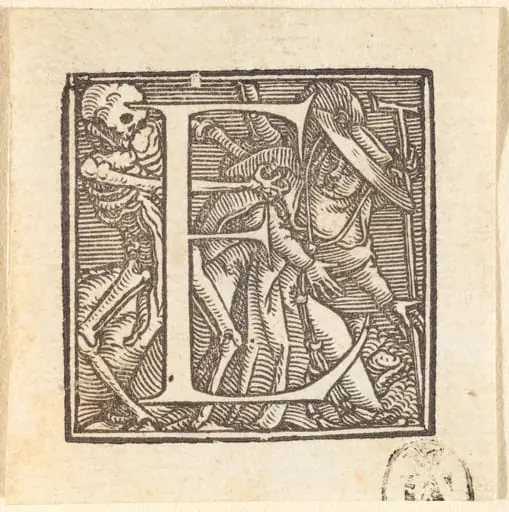
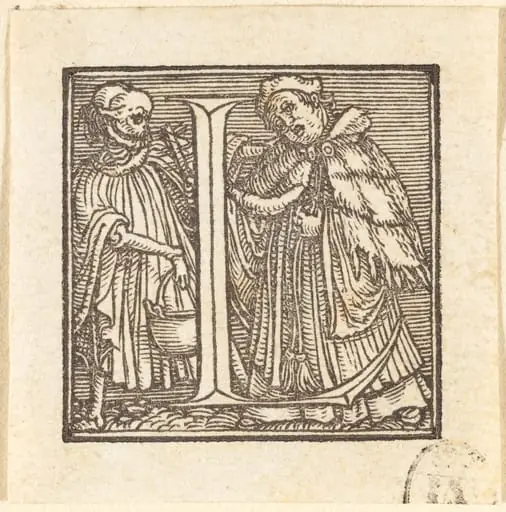
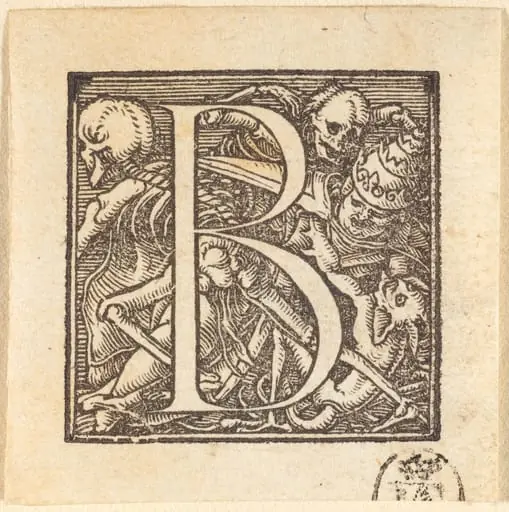
Letter T is an ink print by the Renaissance artist Hans Lützelburger. It dates from 1523 and is held in the collection of the National Gallery of Art.
About this work
Overview
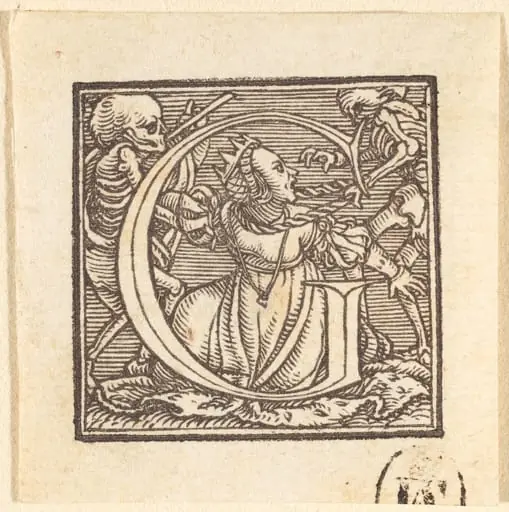
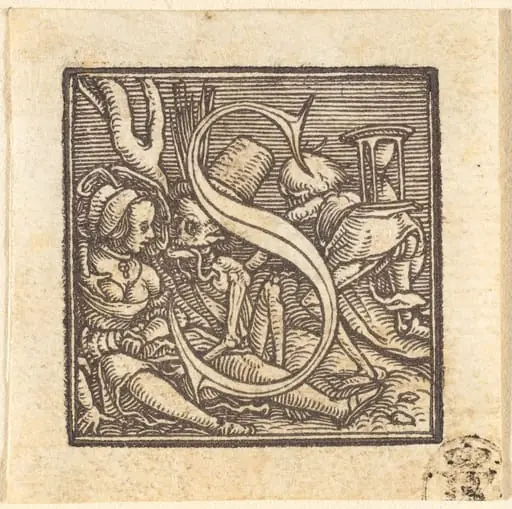
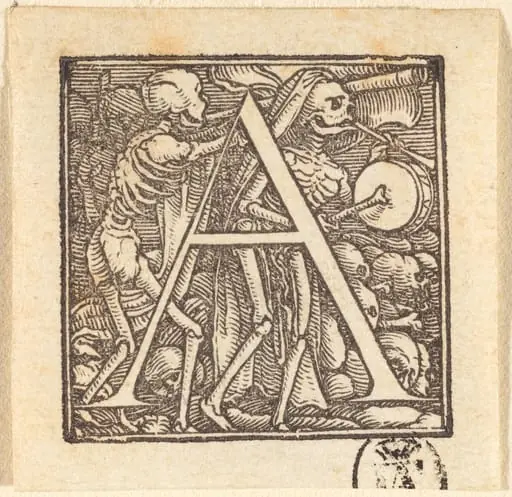
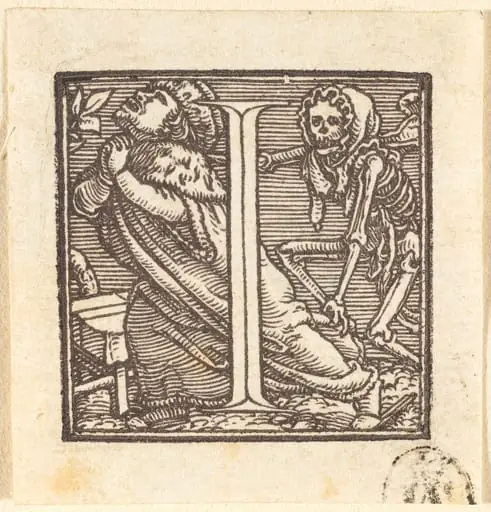
The work titled *Letter T* is a black‑and‑white woodcut produced circa 1523 by the German blockcutter Hans Lützelburger. Executed as a two‑panel composition, the left panel shows a solitary figure on a hill with a staff, gesturing toward a distant structure, while the right panel depicts a crowd gathered around a circular object on a raised platform, each figure expressing varied reactions.
Subject & Meaning
The juxtaposition of the solitary man and the assembled group suggests a narrative link, possibly illustrating a moral or instructional scene common in early‑modern print culture. The staff held by the figure may function as a visual cue, guiding the viewer’s attention from the isolated figure toward the communal activity, hinting at a cause‑effect relationship or a didactic lesson conveyed through the imagery.
Technique & Style
Lützelburger employed the woodcut method, carving the design in relief on a single block of wood and printing it in stark monochrome.
Lützelburger employed the woodcut method, carving the design in relief on a single block of wood and printing it in stark monochrome. His reputation for precise, fine lines is evident in the crisp delineation of clothing folds and facial expressions, while the contrast between the open landscape and the crowded platform demonstrates his skill in rendering both spaciousness and density within the same medium.
History & Provenance
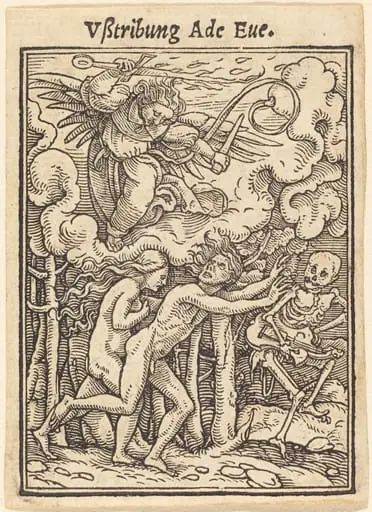
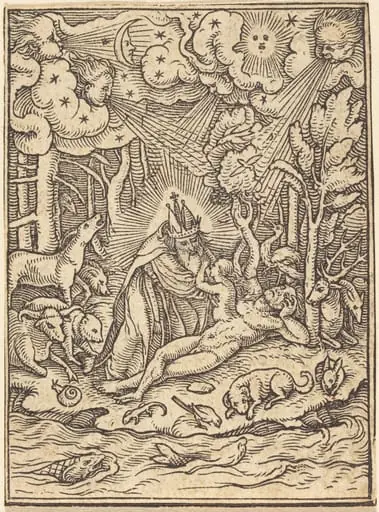
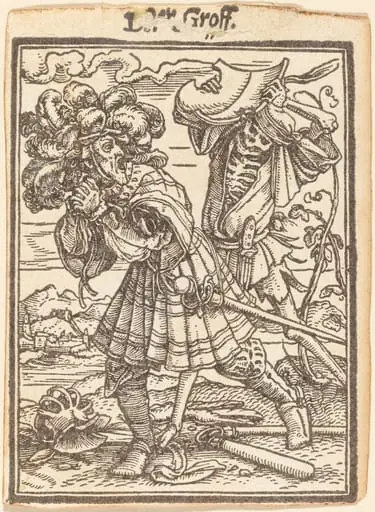
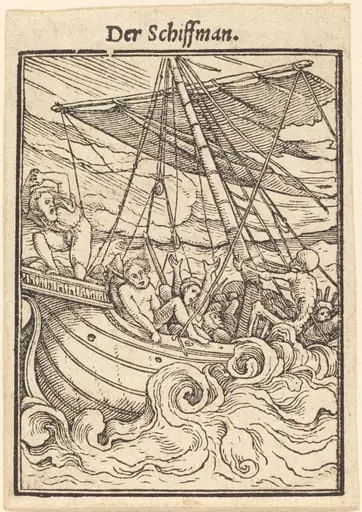
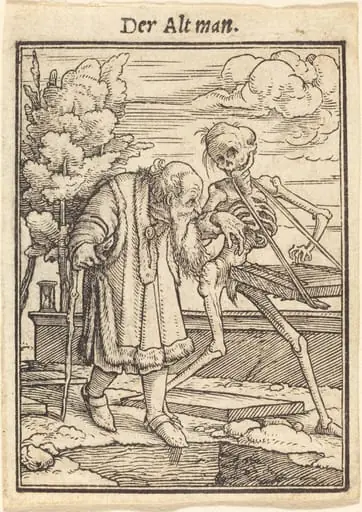
Active in Augsburg from at least 1516, Lützelburger worked under the prominent publisher Jost de Negker. Although best known for cutting the blocks of 41 images in Hans Holbein the Younger’s *Dance of Death* series, he died in 1526 before the series was finished. *Letter T* reflects his technical contributions during this period and survives as an example of his independent printmaking output.
Context
In the early sixteenth century, woodcuts served as illustrative devices in printed books, often conveying moral stories or instructional content to a broad audience. The dual‑scene format of *Letter T* aligns with this tradition, providing a compact visual narrative that could accompany textual explanations in educational or devotional publications of the time.
Artist & collection

Artist
Hans Lützelburger (died June 1526), also known as Hans Franck, was a German blockcutter ("formschneider") for woodcuts, regarded as one of the finest of his day.