Artwork
Letter G
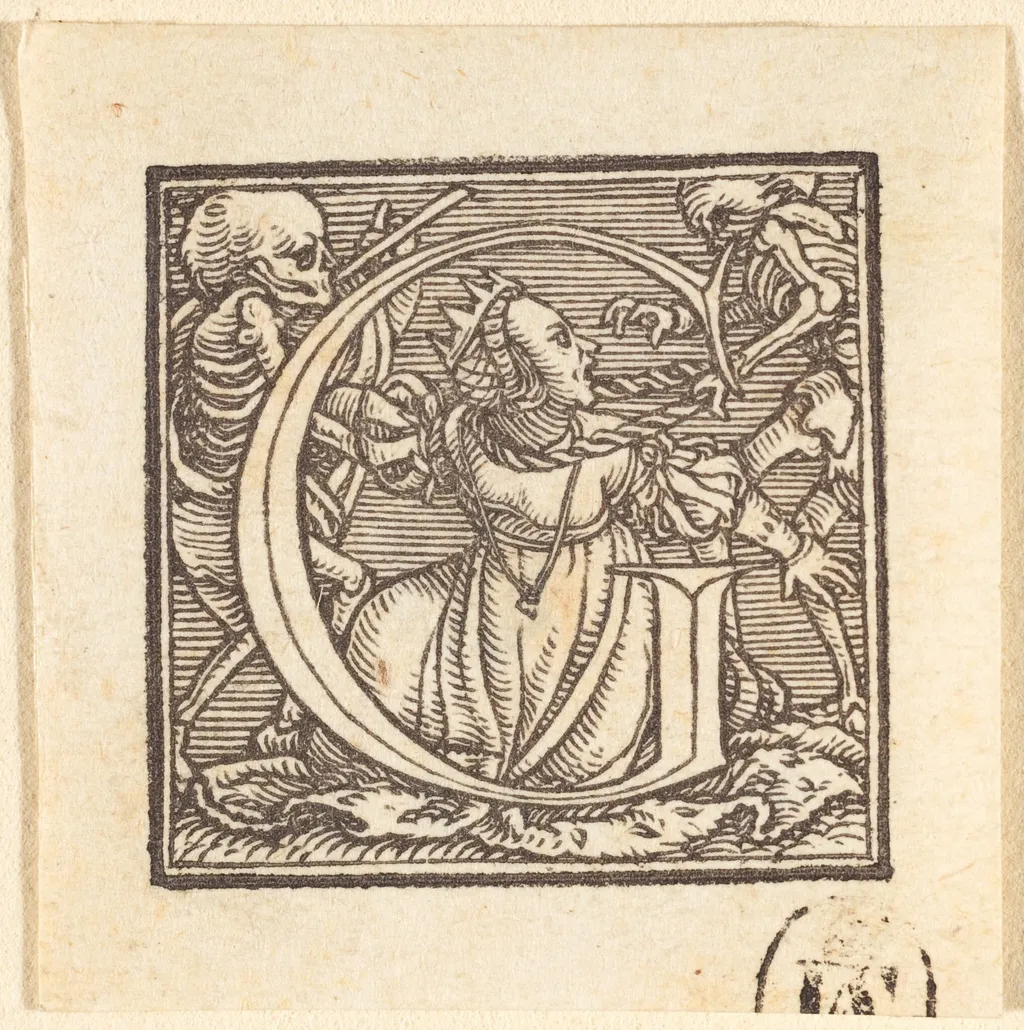
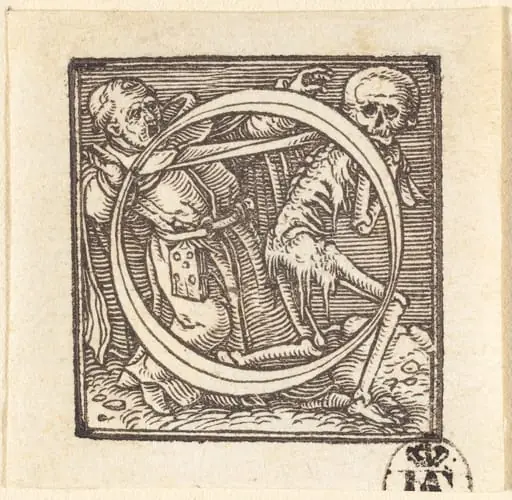
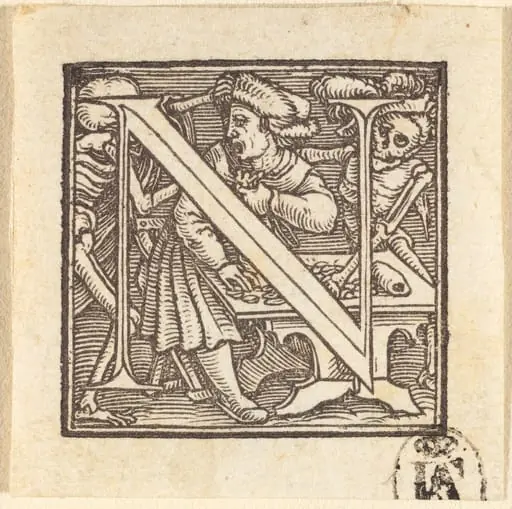
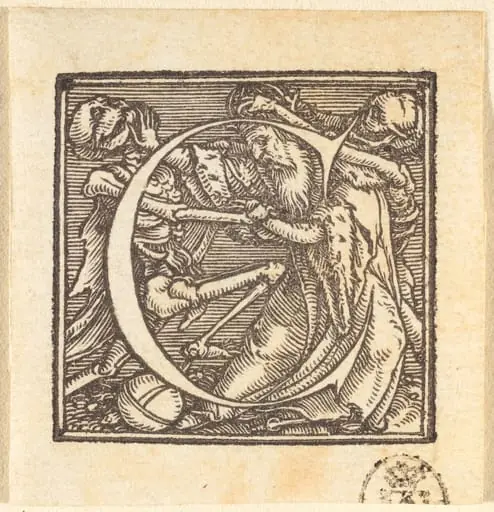
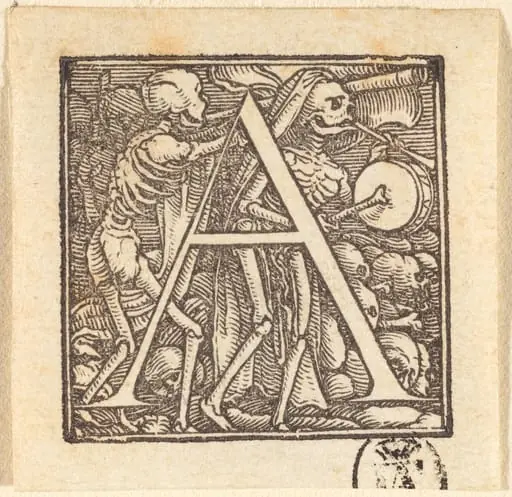
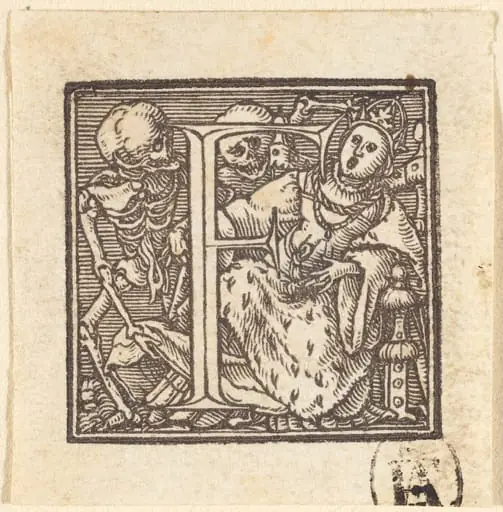
Letter G is an ink print by the Renaissance artist Hans Lützelburger. It dates from 1523 and is held in the collection of the National Gallery of Art.
About this work
Overview
Lützelburger, a master blockcutter active in Augsburg, specialized in translating existing designs into finely detailed printing blocks.
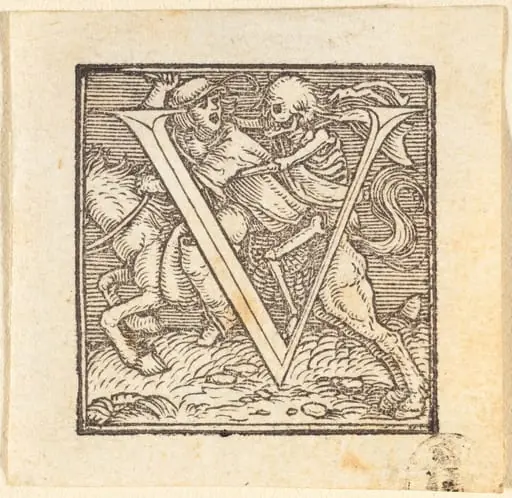
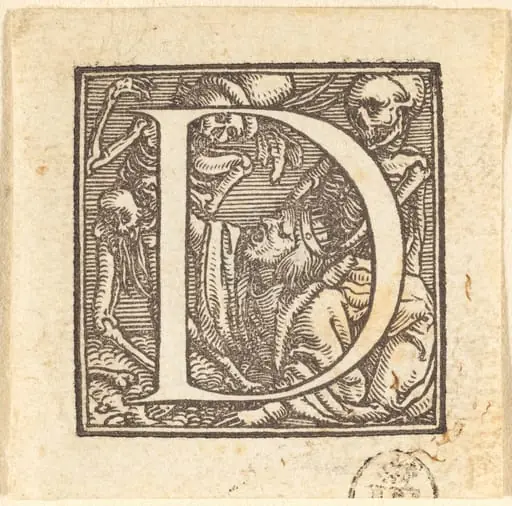
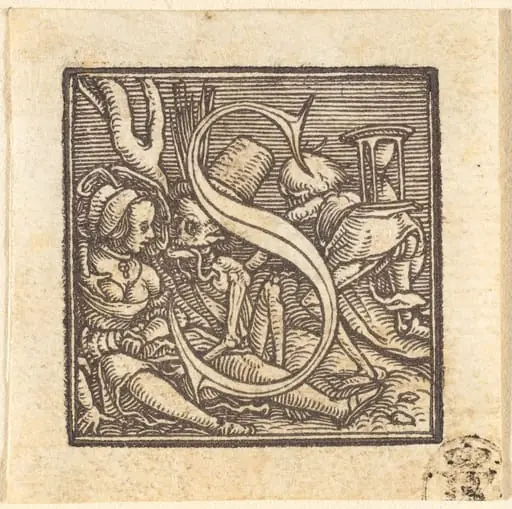
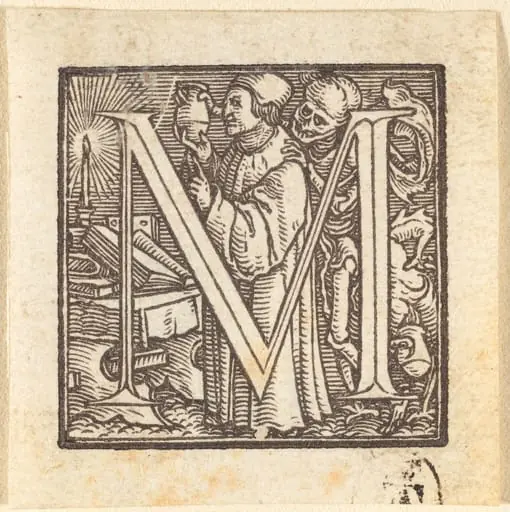
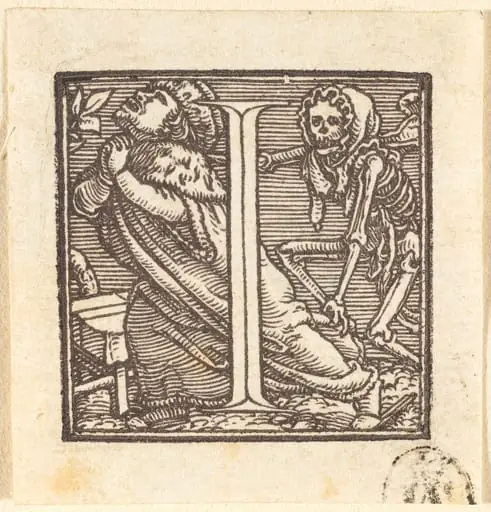
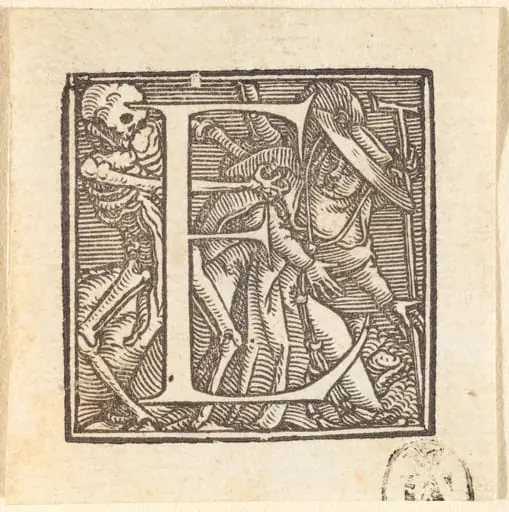
Created around 1523, this woodcut by Hans Lützelburger presents the letter 'G' as the focal point within a broader allegorical scene. Lützelburger, a master blockcutter active in Augsburg, specialized in translating existing designs into finely detailed printing blocks. Though not the original designer, his technical precision elevated the image into a refined example of early 16th-century printmaking, reflecting the collaborative nature of artistic production at the time.
Subject & Meaning
The letter 'G' is encircled by imagery of mortality: a skeleton and a hooded figure evoke themes of death and decay. This aligns with the broader context of the *Dance of Death* tradition, which used allegory to remind viewers of life’s impermanence. The letter may signify a chapter, a divine commandment, or a symbolic anchor within a sequence—its precise meaning remains open, but its placement underscores the inescapable presence of death even in structured symbols.
Technique & Style
Lützelburger employed fine, controlled lines to render texture and depth in a single ink tone. The mottled background and intricate detailing in the figures’ garments and skeletal forms demonstrate his command of woodcut carving. His technique avoided broad areas of solid black, instead using delicate cross-hatching and fine grooves to suggest shadow and volume, resulting in a quiet, somber elegance characteristic of his finest work.
History & Provenance
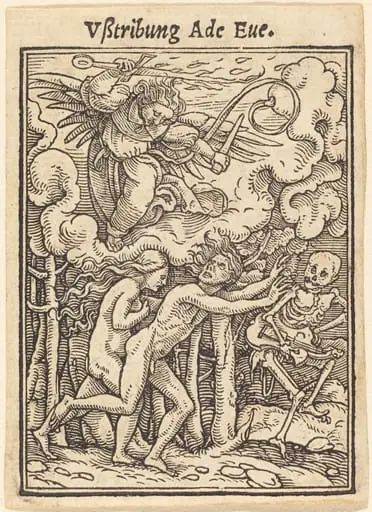
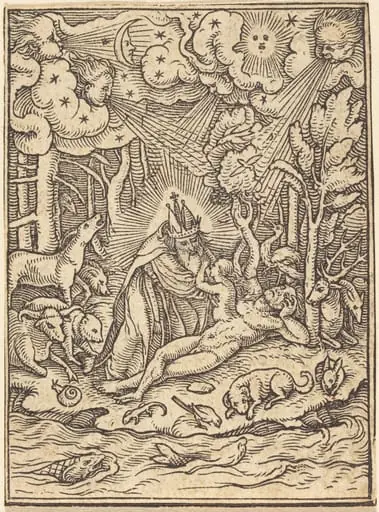
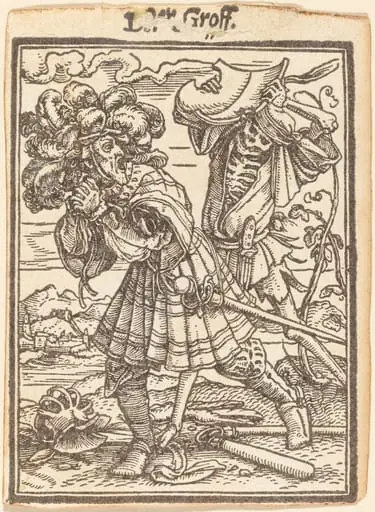
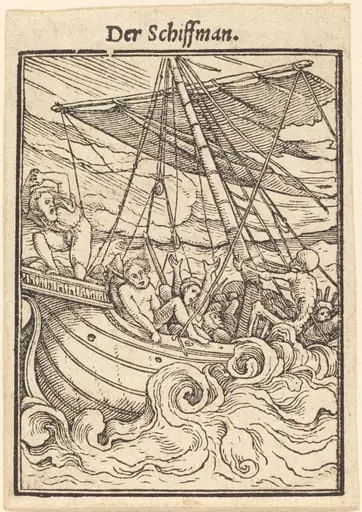
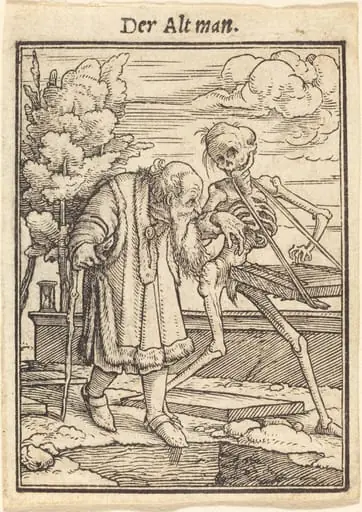
This woodcut was likely part of a larger series, possibly connected to Hans Holbein the Younger’s *Dance of Death*. Lützelburger was commissioned to cut 41 blocks for the project but died in 1526 before completing them. The surviving fragments, including this one, were preserved and later published. Its survival attests to the high regard for his craftsmanship, even as the original context of the full series was fragmented by his untimely death.
Context
In early 16th-century Germany, woodcuts served both religious and educational purposes, often disseminating moral messages to a broad audience. The *Dance of Death* motif was widely popular, reflecting anxieties about mortality amid plague and social upheaval. Lützelburger’s role as a specialist blockcutter highlights the division of labor in print production, where designers, cutters, and publishers each contributed distinct expertise to the final image.
Legacy
Lützelburger’s work, though often overshadowed by the designers he served, set a standard for technical excellence in woodcut engraving. His ability to translate complex compositions into precise, readable prints influenced later generations of printmakers. Surviving fragments like this 'G' remain key evidence of the collaborative, high-skill craft behind early printed imagery, preserving a quiet but vital chapter in the history of print.
Artist & collection

Artist
Hans Lützelburger (died June 1526), also known as Hans Franck, was a German blockcutter ("formschneider") for woodcuts, regarded as one of the finest of his day.