Artwork
Letter S
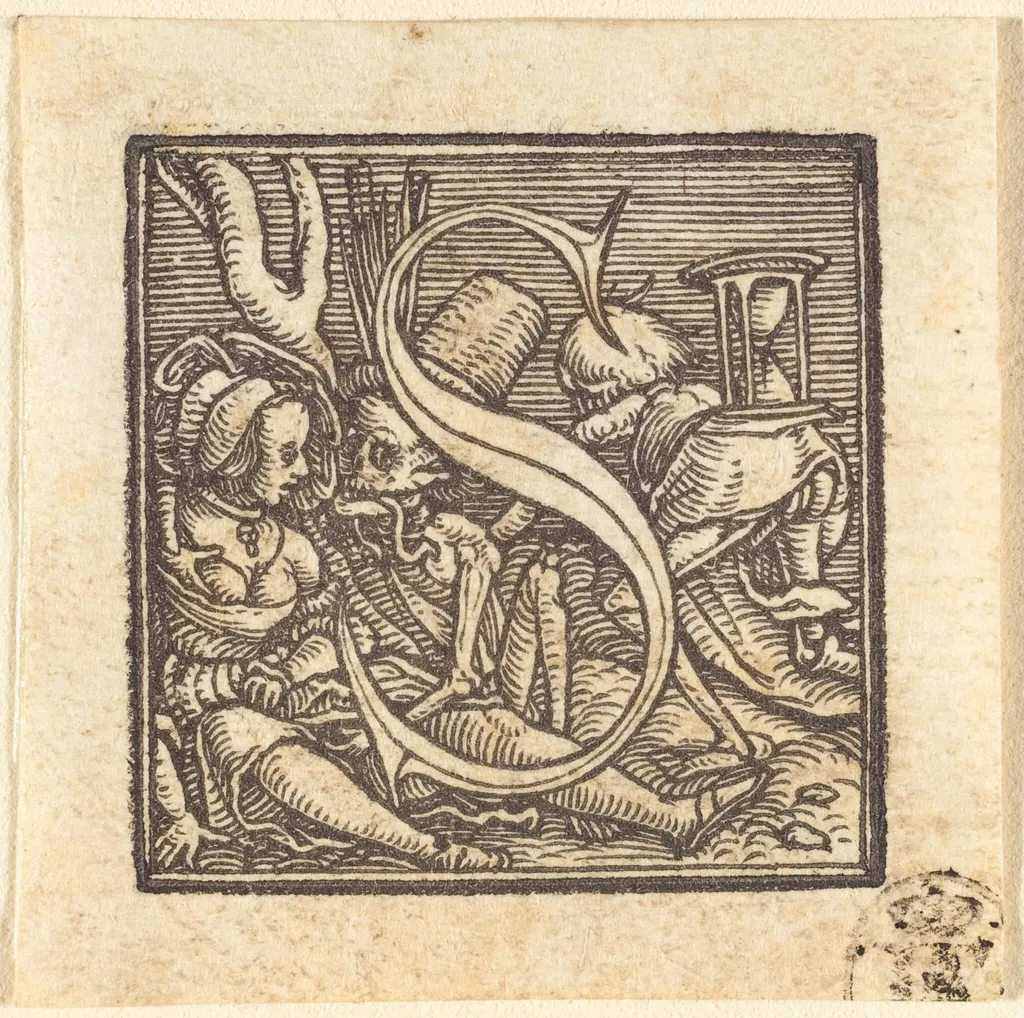
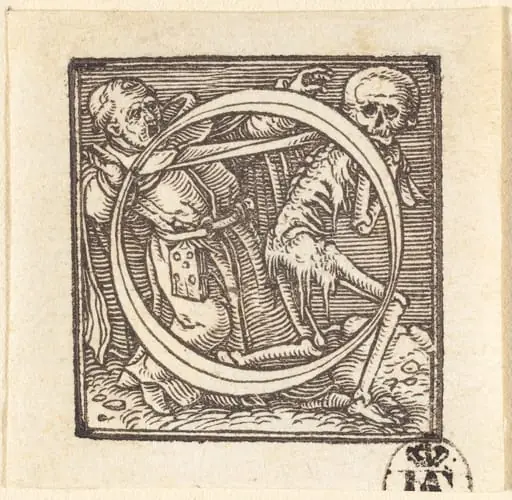
Letter S is an ink print by the Renaissance artist Hans Lützelburger. It dates from 1523 and is held in the collection of the National Gallery of Art.
About this work
Overview
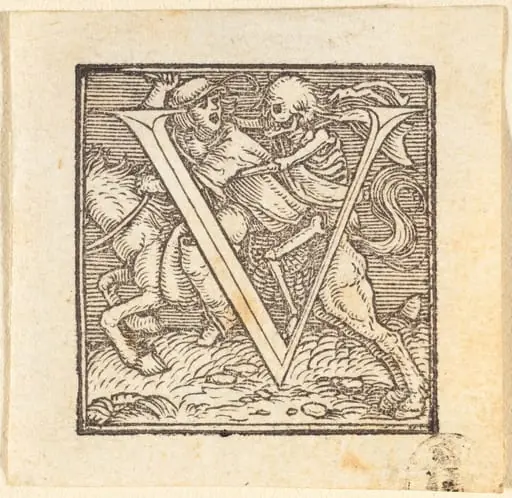
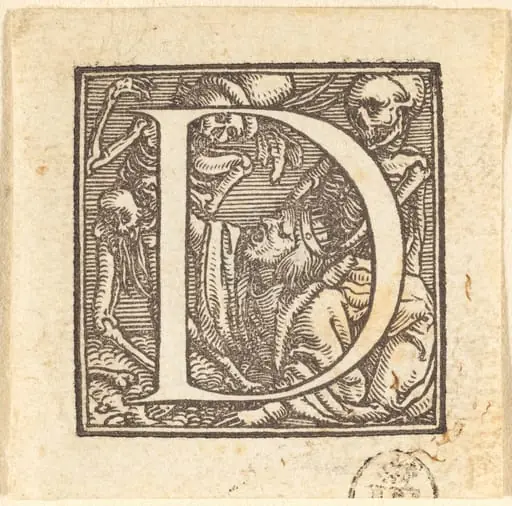
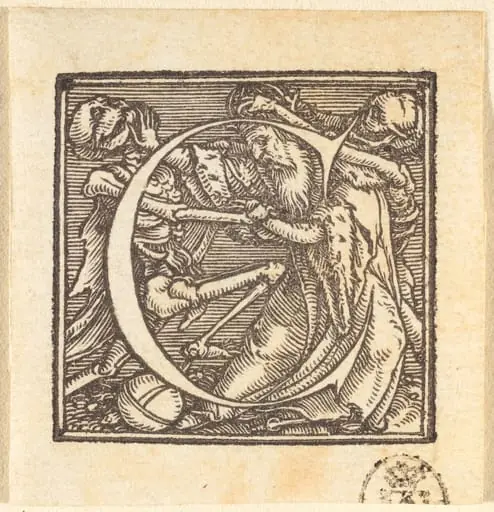
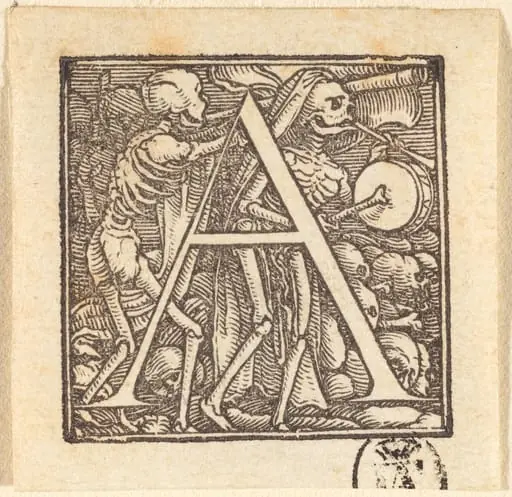
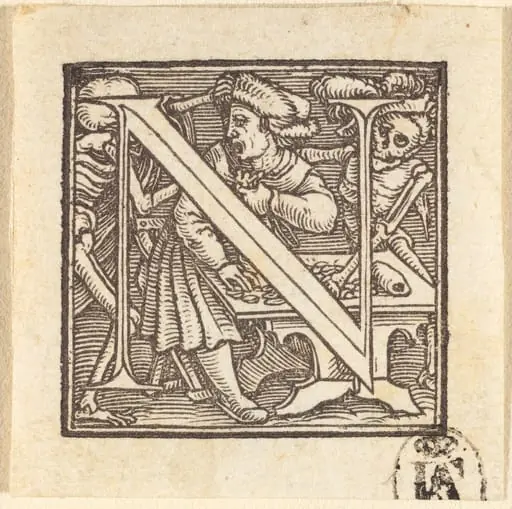
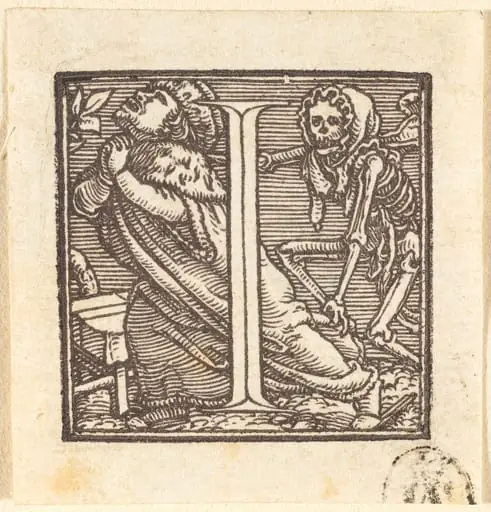
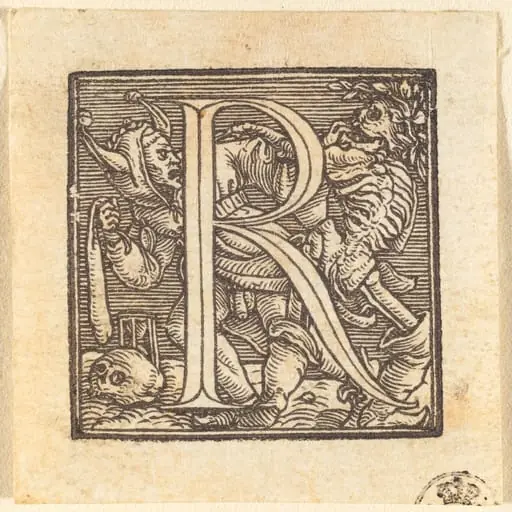
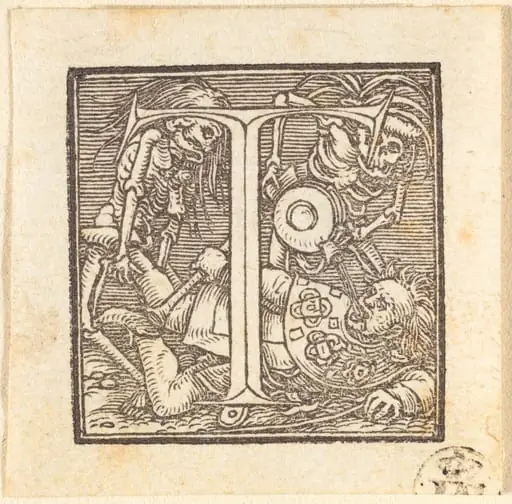
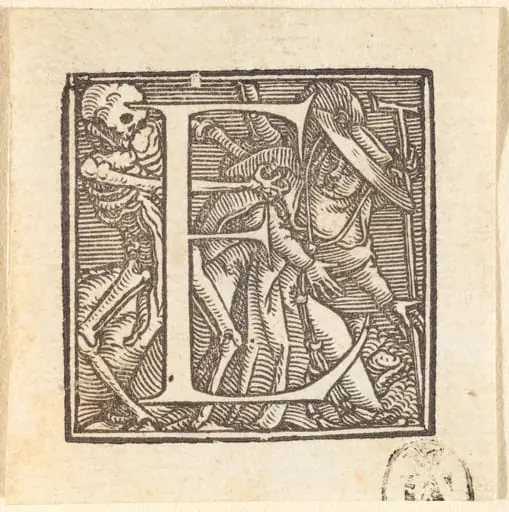
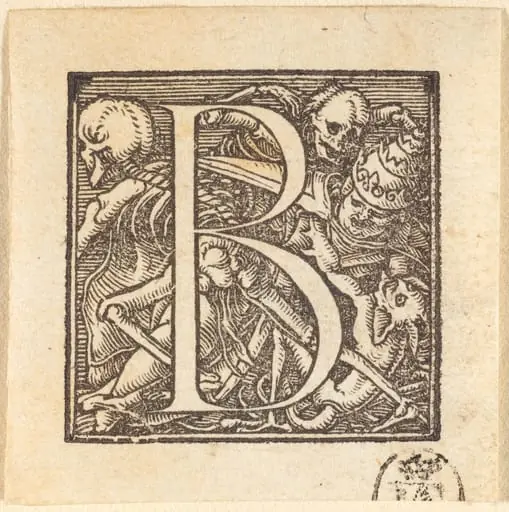
Created around 1523 by the German blockcutter Hans Lützelburger, this woodcut depicts the letter 'S' as a densely composed scene.
Created around 1523 by the German blockcutter Hans Lützelburger, this woodcut depicts the letter 'S' as a densely composed scene. Lützelburger, active in Augsburg and known for his precision, specialized in translating complex designs into carved blocks. The work exemplifies his skill in integrating intricate imagery within a constrained typographic form, reflecting the Renaissance fascination with visual puzzles and decorative typography.
Subject & Meaning
The letter 'S' encloses a miniature world: two figures interact amid vines, one seated, the other leaning near. A bird rests above, a fish below, and small figures and leaves fill the negative space. The composition suggests a microcosm of nature and human activity, possibly symbolizing interconnectedness or serving as a mnemonic device. Its complexity invites close observation, aligning with Renaissance ideals of order and symbolic richness.
Technique & Style
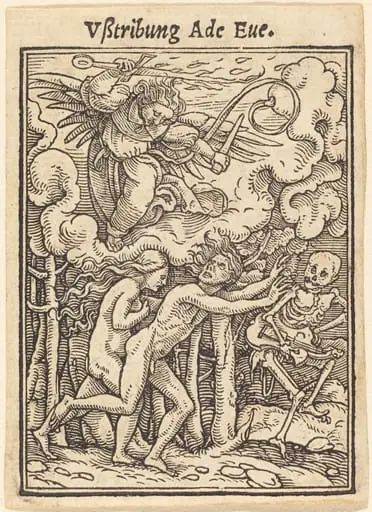
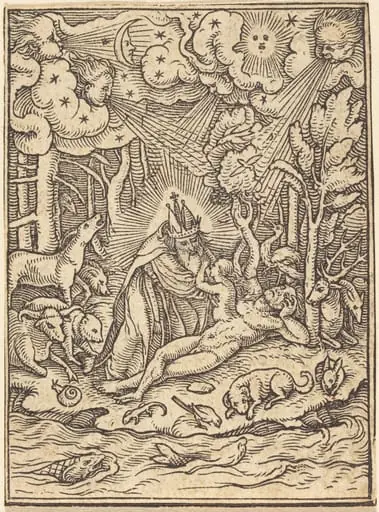
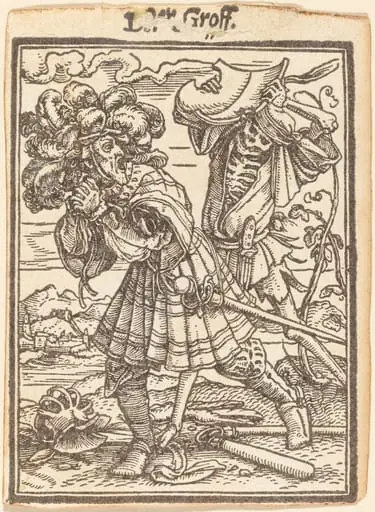
Lützelburger employed sharp, clean lines and bold, simplified forms to maximize detail within the narrow confines of the letterform. The carving technique allowed for high contrast between inked areas and the white paper, enhancing legibility and visual rhythm. The dense patterning of vines, figures, and flora demonstrates mastery in spatial compression, a hallmark of his work in the Holbein *Dance of Death* series.
History & Provenance
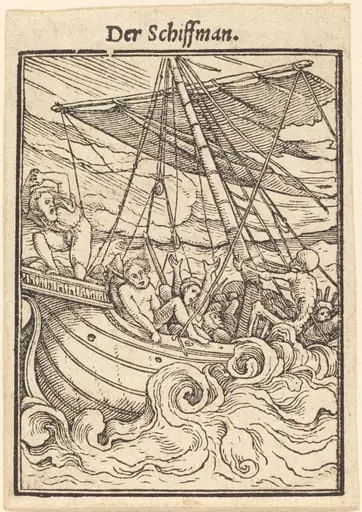
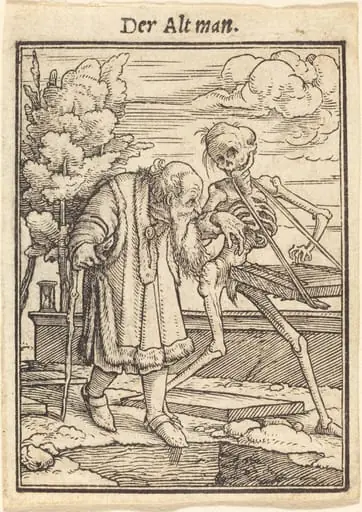
Hans Lützelburger, also known as Hans Franck, worked in Augsburg from approximately 1516 until his death in 1526. He was a principal carver for the publisher Jost de Negker and contributed 41 blocks to Holbein’s *Dance of Death*. This 'Letter S' was likely part of a larger decorative or educational project, though its original context remains undocumented. It survives as a rare example of his independent work outside the famous series.
Context
In early 16th-century Germany, typographic ornamentation often blended utility with artistic expression. Letterforms were not merely functional but served as canvases for allegory and decoration, especially in printed books and broadsheets. Lützelburger’s 'S' reflects this trend, where craftsmanship and intellectual play converged, appealing to educated audiences who appreciated layered visual meaning.
Legacy
Though Lützelburger’s output was limited by his early death, his precision influenced subsequent generations of woodcutters. The 'Letter S' stands as a testament to the technical possibilities of the medium, demonstrating how form and content could be fused in print. It remains a key example of Renaissance decorative printing, studied for its ingenuity in spatial organization and craftsmanship.
Artist & collection

Artist
Hans Lützelburger (died June 1526), also known as Hans Franck, was a German blockcutter ("formschneider") for woodcuts, regarded as one of the finest of his day.