Artwork
'Rough Sketches 1860-61'
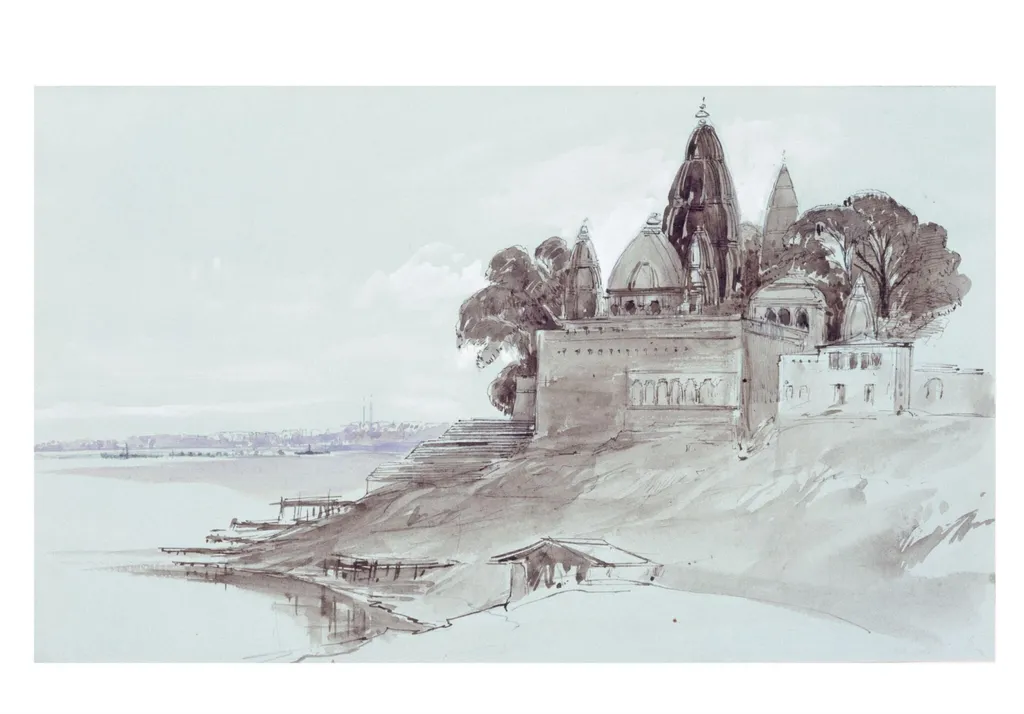
'Rough Sketches 1860-61' is a watercolor work on paper by the Impressionist artist Lady Charlotte Canning. It dates from 1860 and is held in the collection of the Victoria and Albert Museum.
About this work
Overview
Executed in watercolour, pencil, pen, and ink, the works are mounted on cream wove paper and bound in dark green cloth with leather trim and marbled endpapers.
Created between 1860 and 1861, this album of watercolours by Lady Charlotte Canning comprises 75 topographical studies of India. Executed in watercolour, pencil, pen, and ink, the works are mounted on cream wove paper and bound in dark green cloth with leather trim and marbled endpapers. Each page typically bears a title and date, documenting her observations during her time in India as the wife of the Governor-General.
Subject & Meaning
The sketch depicts a riverbank lined with architectural forms suggesting temples or fortified structures, their domes and spires rising above steps leading to the water. Small boats drift near the shore, while trees frame the scene. The composition reflects a quiet, observational gaze—neither idealized nor overtly symbolic—offering a personal record of place rather than a grand narrative.
Technique & Style
Loose, rapid brushwork and subtle washes define the forms, with minimal detail and a restrained palette of browns and grays. The artist prioritized atmosphere over precision, using light, fluid strokes to suggest volume and light. This approach, though not formally aligned with later Impressionism, shares an interest in transient effects and immediate perception.
History & Provenance
The album was assembled by Lady Charlotte Canning during her residence in India, following the 1857 uprising. It remained in the family until acquired by the Victoria and Albert Museum, where it is preserved as part of a broader collection of 19th-century British artistic responses to colonial India.
Context
As a woman in a colonial administrative role, Canning’s sketches offer a rare domestic perspective on India’s landscapes during a period of political upheaval. Her work contrasts with official surveys and military illustrations, presenting instead intimate, unembellished views shaped by personal experience and quiet contemplation.
Legacy
The album stands as a significant example of amateur watercolour practice by a British woman in colonial India. Its value lies not in technical polish but in its candid documentation of architecture and environment, contributing to the historical record of how place was perceived beyond imperial narratives.
Artist & collection
Artist
Lady Charlotte Canning painted gentle scenes in watercolor while traveling through India in the 1850s and 1860s.

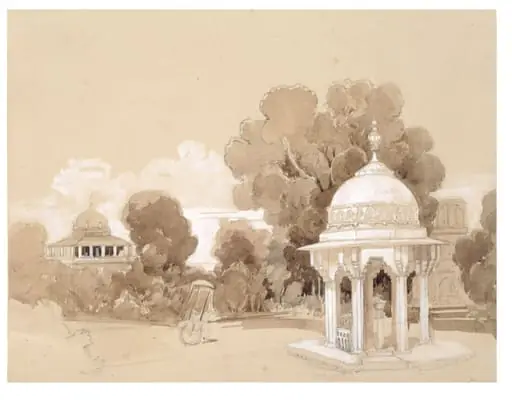 Album of topographical views in India
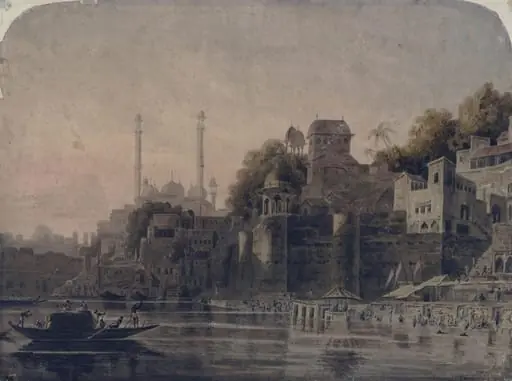 Benares on the Ganges
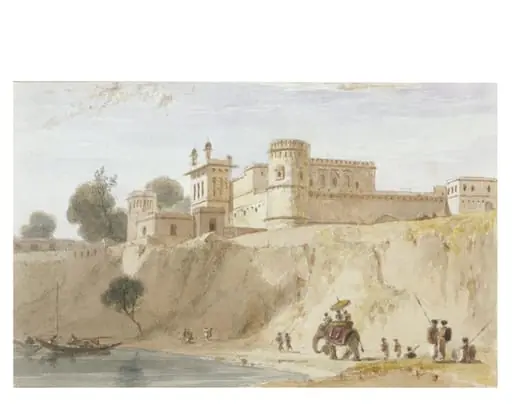 Anopshur
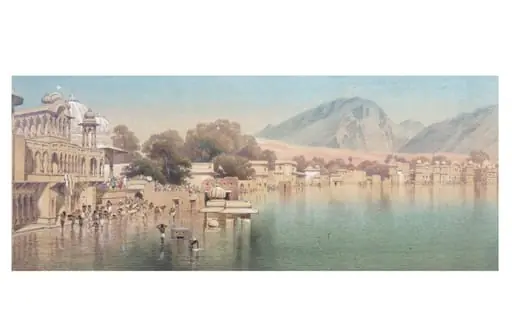 View of Pushkar Lake and the bathing ghats, near Ajmer
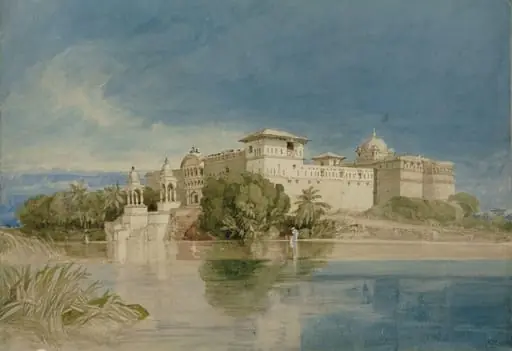 Palace at Perawa, Malwa, Bengal
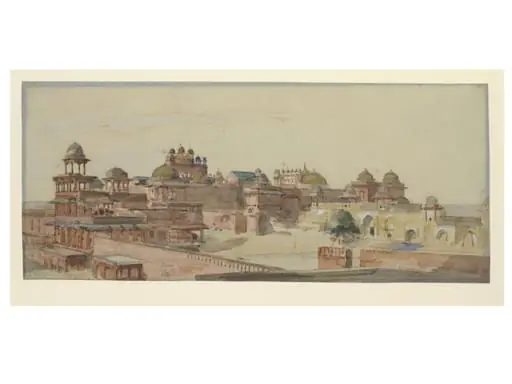 View of Fatehpur Sikri, Agra
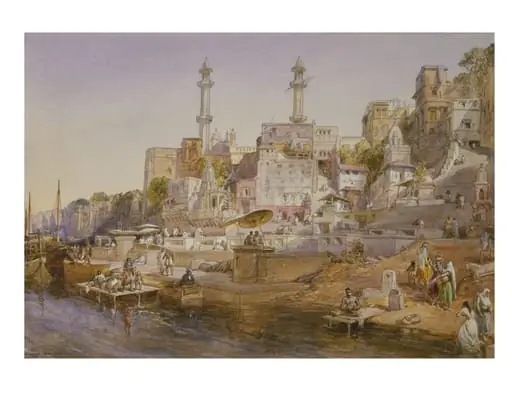 The Mosque of Aurangzeb and Panchganga Ghat from the Ganges, Benares.
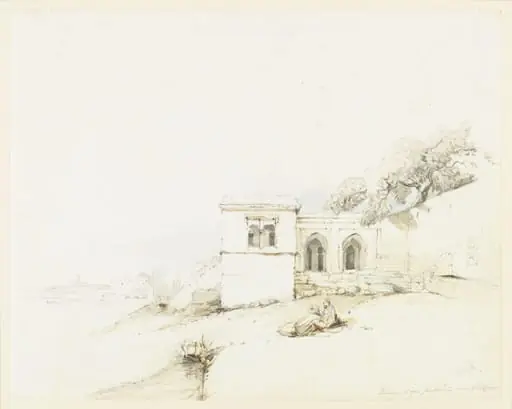 Ruines dune fontaine près dAlger
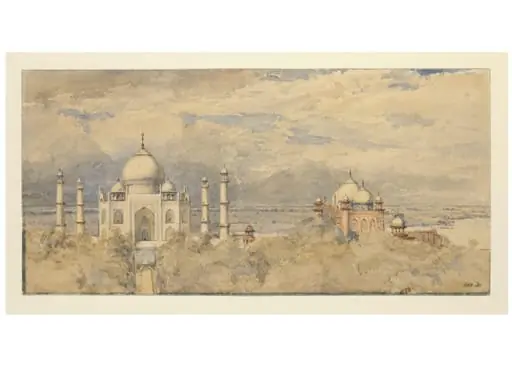 The Taj Mahal
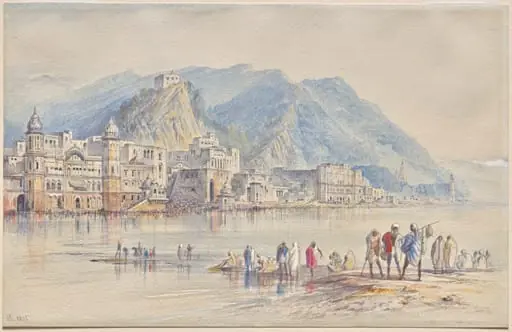 Hardwar, India
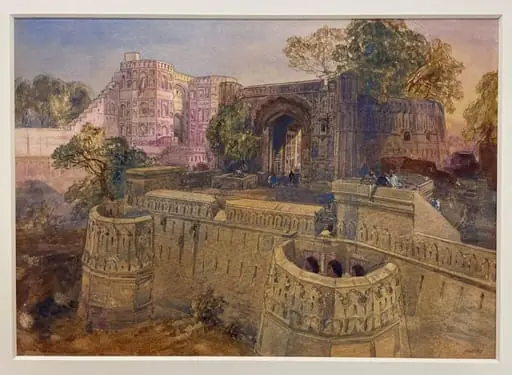 Taxali Darwaza, Lahore
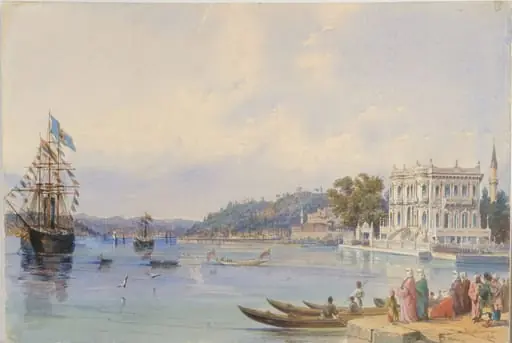 Vedere din Bosfor