Artwork
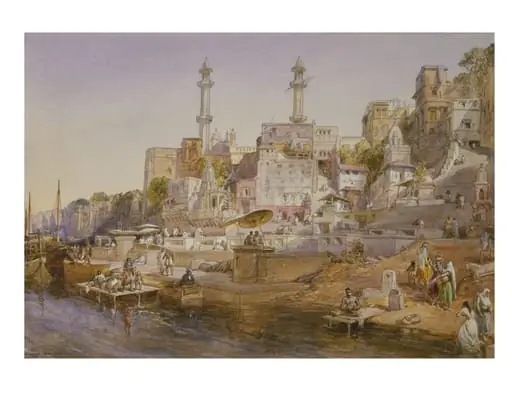
View of Pushkar Lake and the bathing ghats, near Ajmer
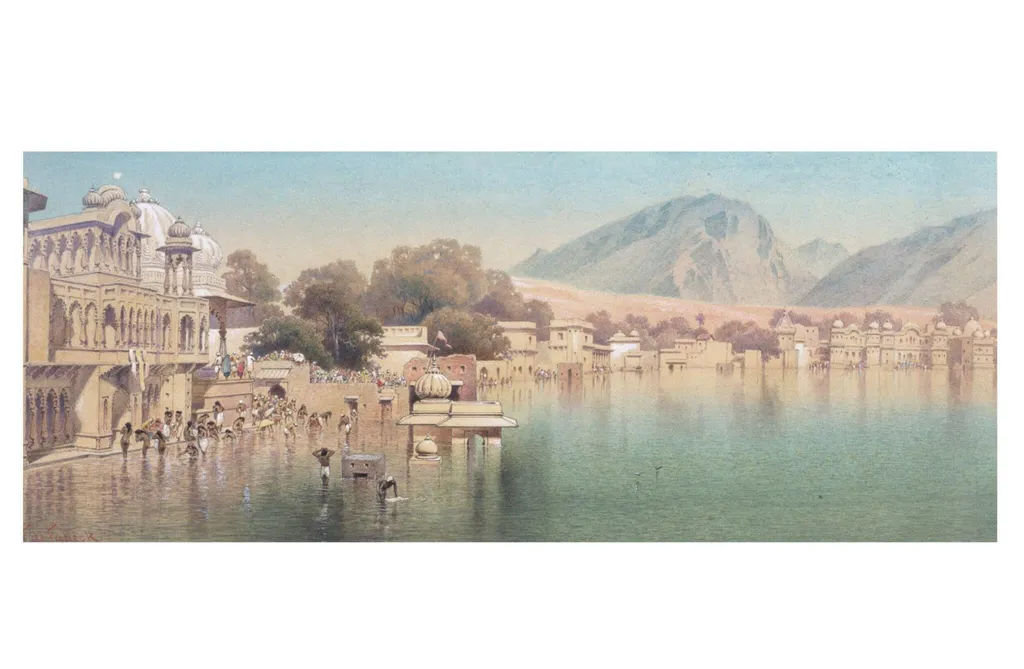
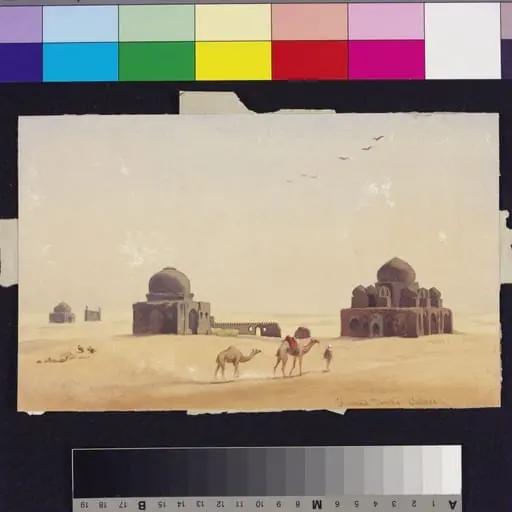
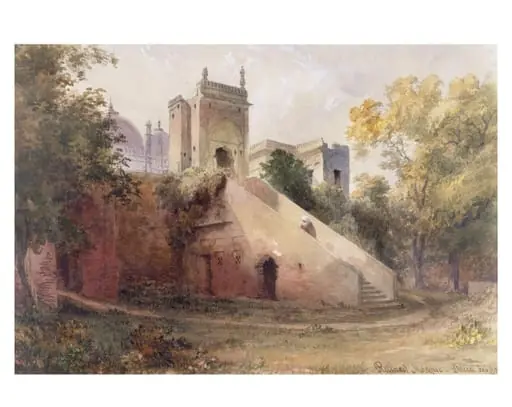
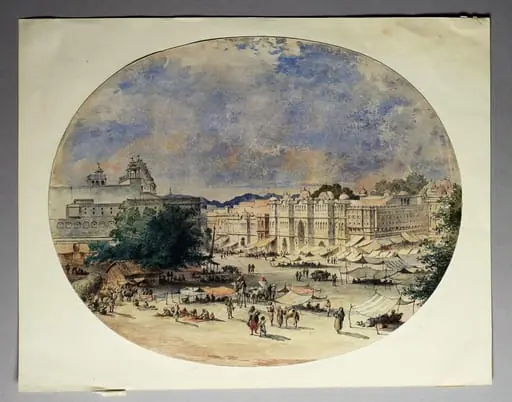
View of Pushkar Lake and the bathing ghats, near Ajmer is a paint painting by the Impressionist artist Frederick William Alexander De Fabeck. It dates from 1860 and is held in the collection of the Victoria and Albert Museum.
About this work
Overview
The work depicts the tranquil waters of Pushkar Lake, situated near Ajmer in Rajasthan, framed by a series of bathing ghats on the left and a distant mountain range. Executed in oil on canvas, the composition balances the reflective surface of the lake with architectural elements and natural scenery, offering a quiet glimpse of a sacred Indian locale.
Subject & Meaning
Pushkar Lake has long served as a pilgrimage site, its ghats used for ritual bathing and religious ceremonies. By foregrounding these structures, the painting emphasizes the interplay between human devotion and the surrounding landscape, suggesting a harmonious relationship between culture and nature.
Technique & Style
The artist employs a restrained palette and careful modeling of light to convey depth, using subtle chiaroscuro to render the water’s sheen and the stone steps of the ghats. The handling of atmospheric perspective in the distant hills creates a sense of distance without sacrificing detail.
History & Provenance
Created by Frederick William Alexander de Fabeck (1830–1912), a surgeon in the Indian Medical Service who studied in Paris before his appointment in Bengal, the painting likely originates from his years stationed in India. After his death in Alassio, Italy, the work entered private collections before being acquired by the museum.
Context
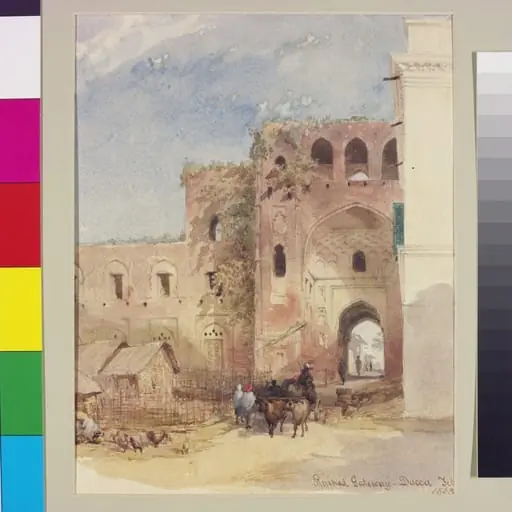
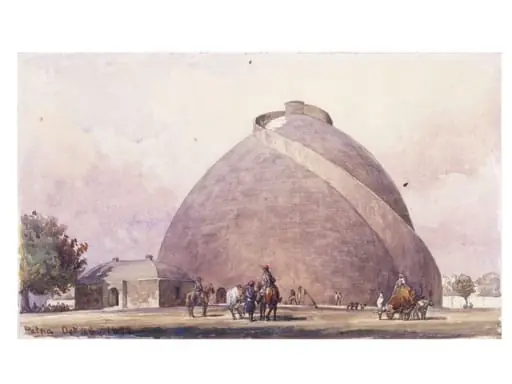
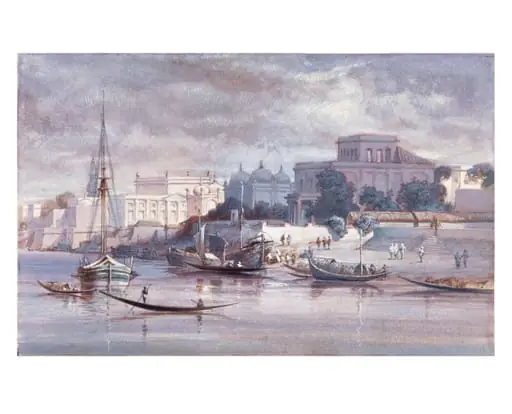
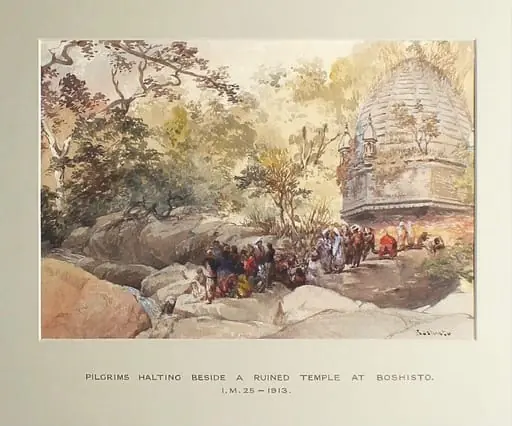
During the mid‑19th century, British medical officers in India often recorded local architecture and scenery, blending scientific observation with artistic practice. De Fabeck’s contemporaries similarly produced topographical works that served both documentary and aesthetic purposes, reflecting colonial interest in the subcontinent’s visual culture.
Legacy
The painting stands as a visual record of Pushkar’s 19th‑century environment, offering scholars insight into colonial-era representations of Indian sacred sites. It also illustrates how medical professionals contributed to the visual archive of the British Empire’s overseas territories.
Own this work as a print
Artist & collection
Artist
Frederick William Alexander De Fabeck
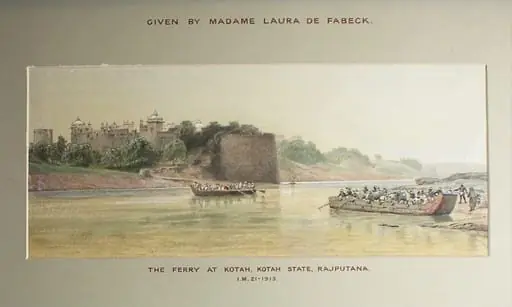
Frederick William Alexander De Fabeck painted scenes of crumbling buildings and busy river crossings in India.