Artwork
Bas-relief depicting the Virgin and Child attributed to Rosellino
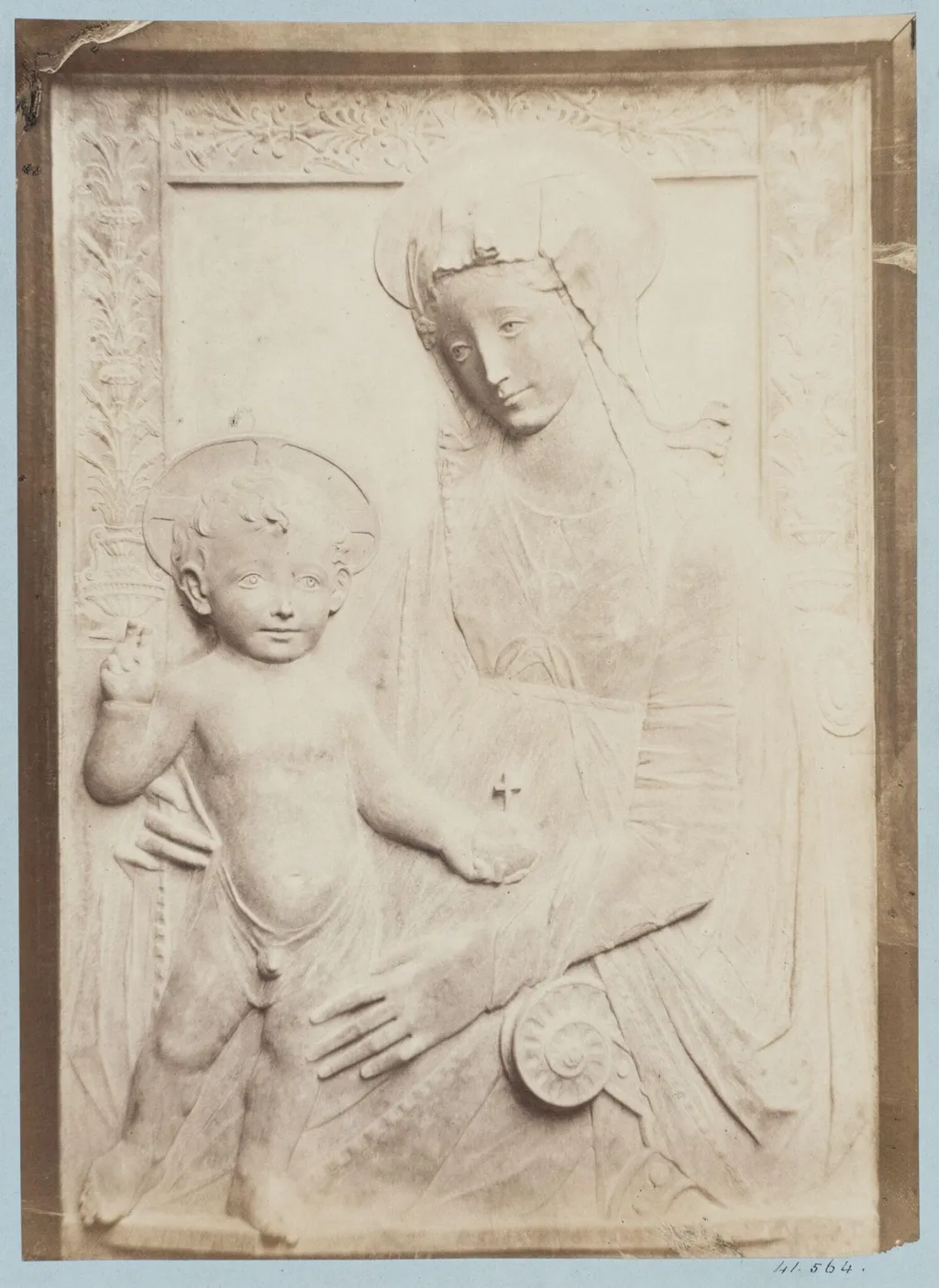
Bas-relief depicting the Virgin and Child attributed to Rosellino is a photographic photography by the Impressionist artist Louise Laffon. It dates from 1864 and is held in the collection of the Victoria and Albert Museum.
About this work
Overview
It was one of many photographic reproductions systematically gathered to support study and teaching within the museum’s art school and curatorial departments.
A photograph of a bas-relief depicting the Virgin and Child, attributed to Rosellino, entered the Victoria and Albert Museum’s collection in 1864. Acquired as part of a larger group of 500 images from Louise Laffon’s documentation of the Campana Collection, the photograph served an educational function rather than being valued as an artistic object in its own right. It was one of many photographic reproductions systematically gathered to support study and teaching within the museum’s art school and curatorial departments.
Subject & Meaning
The relief portrays the Virgin Mary with the infant Jesus, a common devotional subject in Renaissance sculpture. Attributed to the workshop of Bernardo Rosellino, the composition reflects early Renaissance ideals of serenity and naturalism. The photograph does not interpret the religious symbolism but preserves its formal qualities—drapery, facial expression, and spatial depth—for scholarly analysis by students and curators.
Technique & Style
The photograph is a gelatin silver print, likely produced using the albumen process, common in mid-19th-century archival documentation. Laffon’s approach emphasized clarity and tonal accuracy, minimizing artistic embellishment to ensure faithful reproduction of the relief’s surface details. The composition is centered and evenly lit, prioritizing record-keeping over aesthetic expression.
History & Provenance
The image originated in a series commissioned by the Musée Napoléon III in Paris, documenting sculptures from the Campana Collection. In 1864, the South Kensington Museum purchased 500 photographs from this series through the Parisian agent E. Cappe. Louise Laffon, one of the earliest professional female photographers in France, was credited as the photographer, though her role was often obscured in institutional records.
Context
The V&A’s early adoption of photography aligned with its mission to elevate design education. By collecting reproductions of sculptures, paintings, and decorative arts from across Europe, the museum enabled access to works otherwise inaccessible to students. Laffon’s photographs, alongside those by Isabel Agnes Cowper and others, formed a vital visual archive that supported comparative study and technical training.
Legacy
This photograph exemplifies how institutional photography in the 19th century reshaped art education. Though originally functional, such images now serve as historical records of artworks’ condition and display at the time. Laffon’s contribution, once overlooked, is increasingly recognized as part of a broader, under-documented network of women who shaped museum practices through technical expertise.
Artist & collection
Artist
Louise Laffon (1828–1885), was a French photographer and painter. She was one of the first female professional photographers in France. She had a studio in Paris between 1859 and 1876.

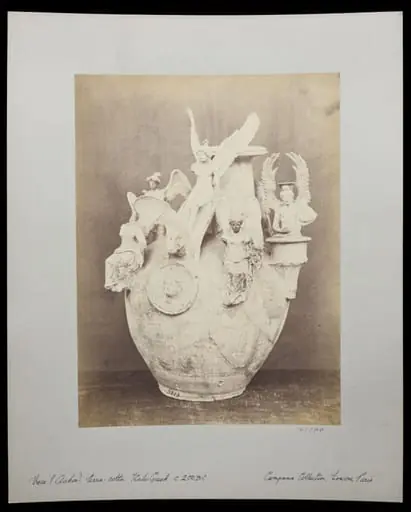 Perfume Burner in terra cotta
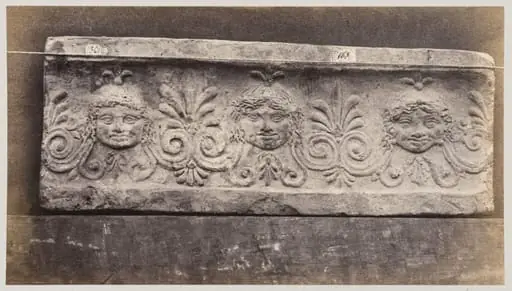 Three masques of gorgons in terra cotta
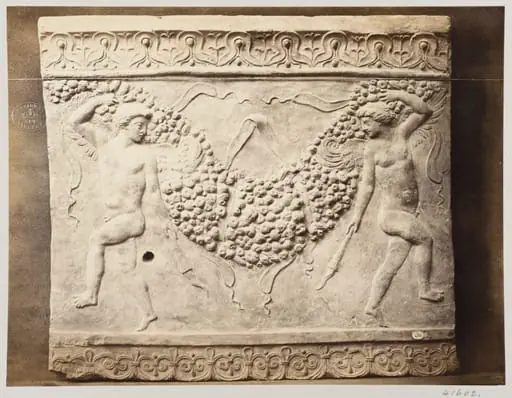 Bas-relief of portion of frieze of dancing figures with torches bearing festoon of fruit in terra cotta
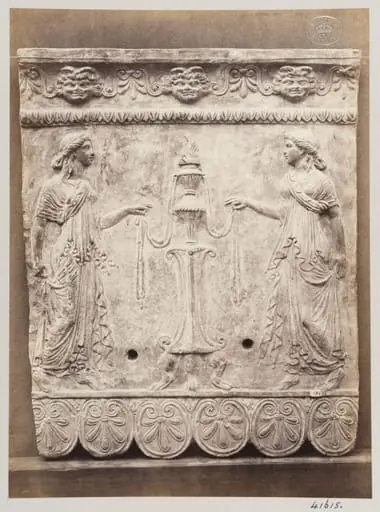 Bas-relief portion of a frieze of two draped females and an altar in terra cotta
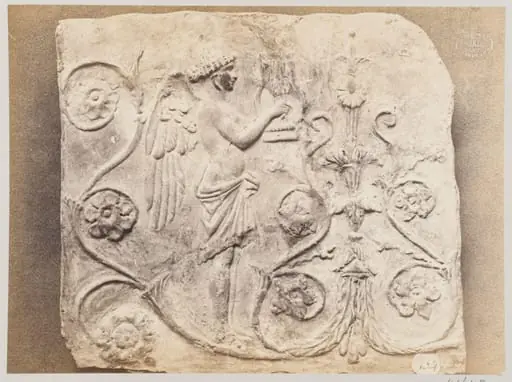 Bas-relief of a geni and a lyre in terra cotta
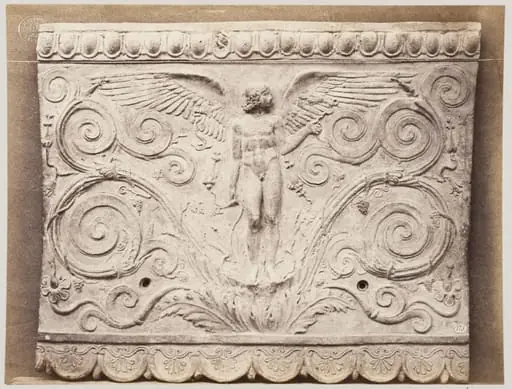 Bas-relief of a portion of frieze of Eros with scrollwork in terra cotta
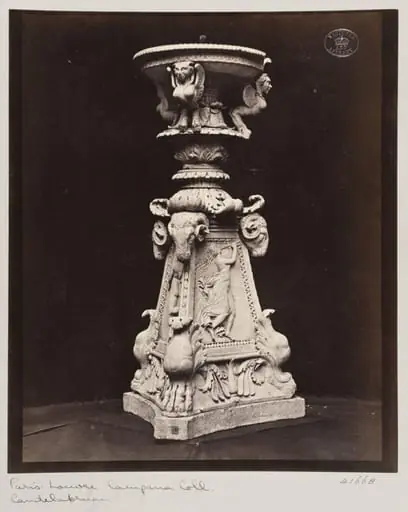 Marble sculptured fountain
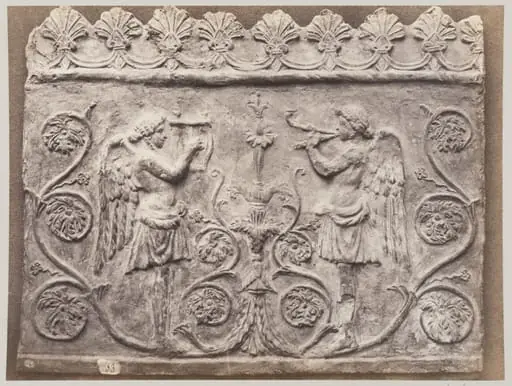 Bas-relief portion of frieze of Genii with double flutes and lyre
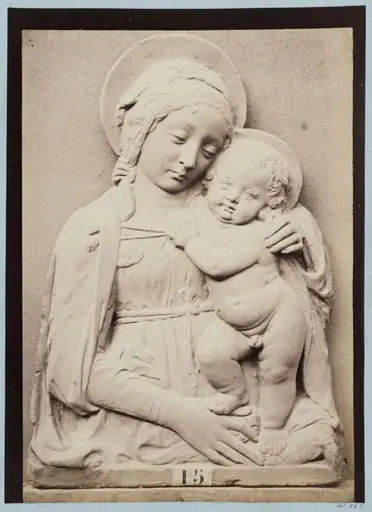 Bas-relief depicting the Virgin and Child by Donatello in red terra cotta
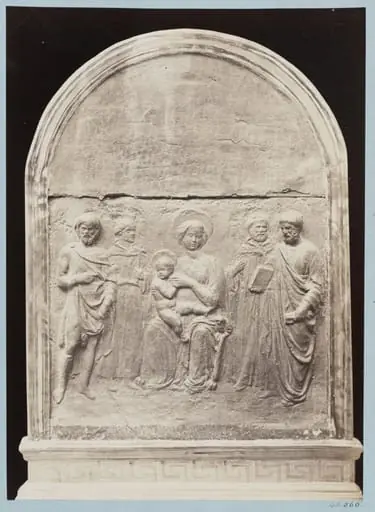 Bas-relief depicting the Virgin and Child in terra cotta
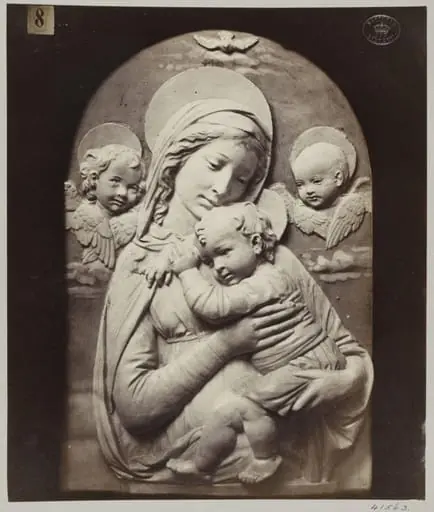 Bas-relief depicting the Virgin and Child in enamelled earthenware
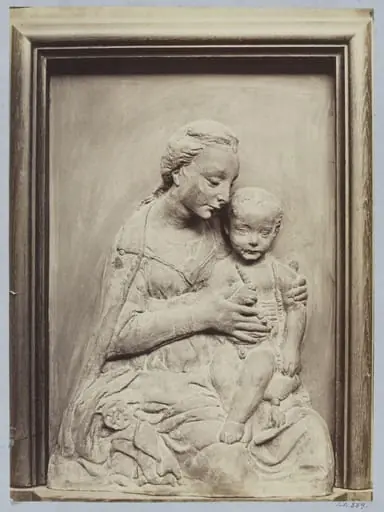 Bas-relief Virgin and Child in terra cotta of the school of Ghiberti
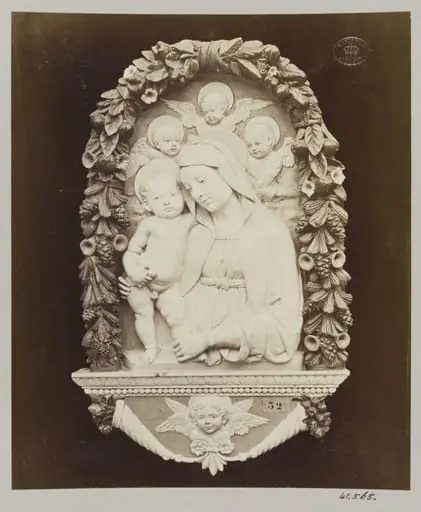 Bas-relief depicting the Virgin and Child on blue ground Luca della Robbia ware
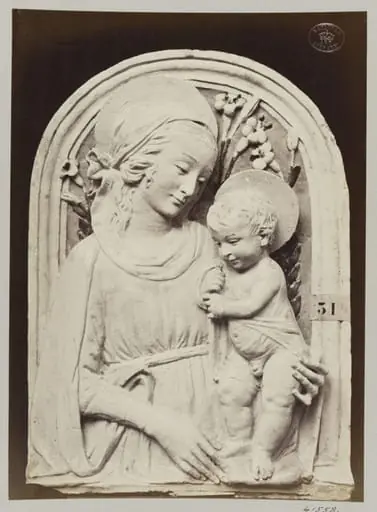 Bas-relief Virgin and Child in enamelled earthenware by Luca della Robbia