Artwork
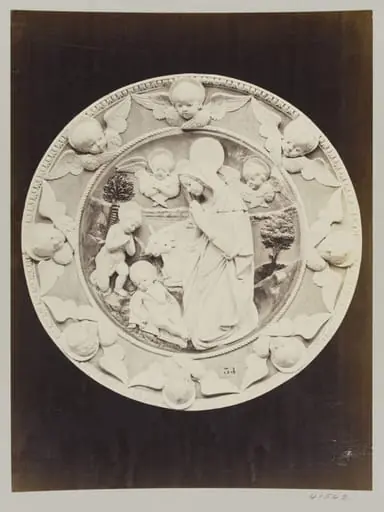
Bas-relief Virgin and Child in terra cotta of the school of Ghiberti
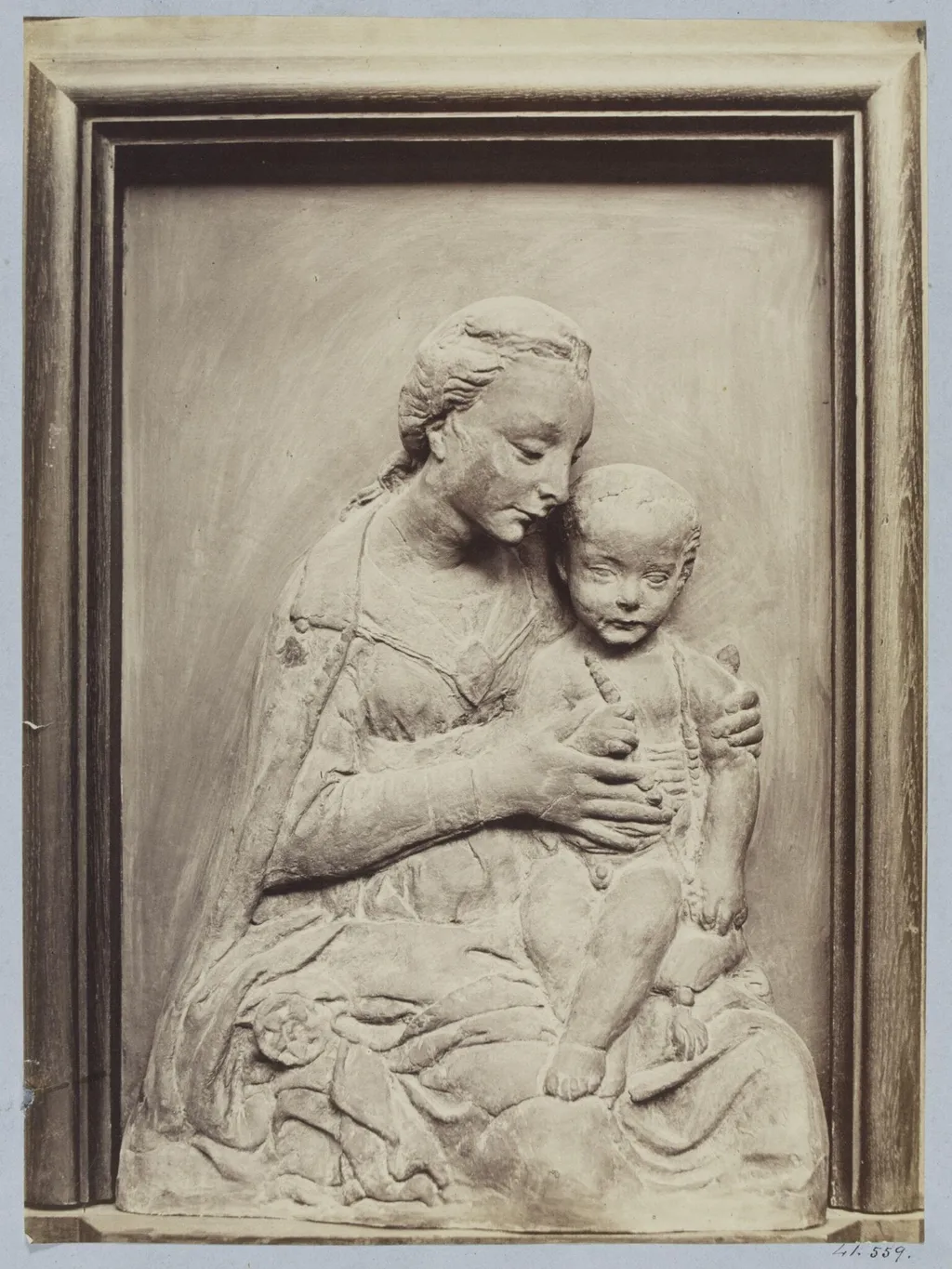
Bas-relief Virgin and Child in terra cotta of the school of Ghiberti is a photographic photography by the Impressionist artist Louise Laffon. It dates from 1864 and is held in the collection of the Victoria and Albert Museum.
About this work
The sculpture looks like it’s from Ghiberti’s school, but Laffon froze that old style in a new medium.
Louise Laffon made this photograph in 1863–64. It’s a black-and-white image of a terra-cotta bas-relief Virgin and Child. The sculpture looks like it’s from Ghiberti’s school, but Laffon froze that old style in a new medium.
The Victoria and Albert Museum has collected photos since 1852. They were the first museum to both buy and show photographs. Henry Cole, their first director, wanted artists and students to use photos as visual training.
Check out Louise Laffon’s other work.
Overview
This photograph, taken by Louise Laffon between 1863 and 1864, captures a terra-cotta bas-relief of the Virgin and Child, attributed to the circle of Lorenzo Ghiberti. Produced for the Victoria and Albert Museum, it was part of a larger acquisition of five hundred images sourced from Laffon’s documentation of the Campana Collection in Paris. The image reflects the museum’s early commitment to using photography as an educational tool, extending access to sculptural works beyond physical visitation.
Subject & Meaning
The relief depicts the Virgin Mary holding the infant Jesus, rendered in the restrained, elegant style characteristic of early Renaissance Florence. Though not by Ghiberti himself, the work embodies his workshop’s influence in its delicate modeling and harmonious composition. Laffon’s photograph preserves this devotional subject not as a sacred object, but as a study in form, line, and spatial depth—valued for its artistic lineage rather than religious function.
Technique & Style
Laffon’s photograph is a gelatin silver print, rendered in monochrome to emphasize tonal gradations and surface texture. The composition is carefully framed to isolate the relief against a neutral background, minimizing distractions and enhancing its sculptural qualities. The lighting is even and controlled, typical of museum documentation practices of the period, designed to reveal detail without dramatic shadow or emphasis.
History & Provenance
In 1864, the Victoria and Albert Museum acquired 500 photographs from Laffon’s series through the Parisian agent E. Cappe. These images originated from her work documenting the Campana Collection at the Musée Napoléon III. Laffon, one of the earliest female members of Le Société Française de la Photographie, was commissioned for her technical precision. The V&A integrated these photographs into its National Art Library collection, where they served academic and curatorial purposes.
Context
During the 1850s and 1860s, the V&A, under Henry Cole’s leadership, pioneered the use of photography in art education. Rather than relying solely on drawings or casts, the museum sought photographic reproductions to provide students and faculty with accurate visual references. Laffon’s work was part of an international network of photographers whose images helped democratize access to European sculpture, particularly works not easily transportable or visible to British audiences.
Legacy
Laffon’s photograph exemplifies the quiet but vital role women played in the institutionalization of photographic documentation in museums. Though her name was long overlooked, her work contributed to the V&A’s foundational collection of photographic reproductions. Today, such images remain essential for art historical research, preserving the appearance of objects that may have since been altered, lost, or relocated.
Artist & collection
Artist
Louise Laffon (1828–1885), was a French photographer and painter. She was one of the first female professional photographers in France. She had a studio in Paris between 1859 and 1876.

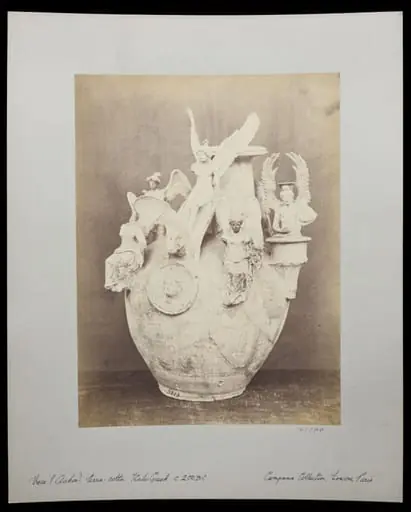 Perfume Burner in terra cotta
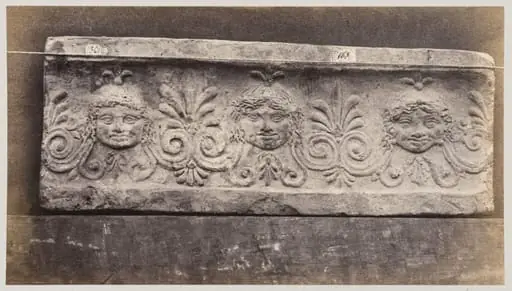 Three masques of gorgons in terra cotta
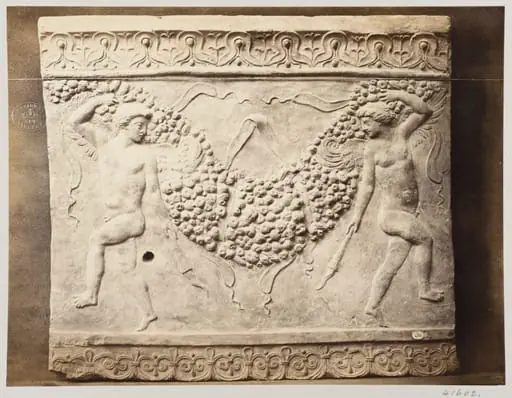 Bas-relief of portion of frieze of dancing figures with torches bearing festoon of fruit in terra cotta
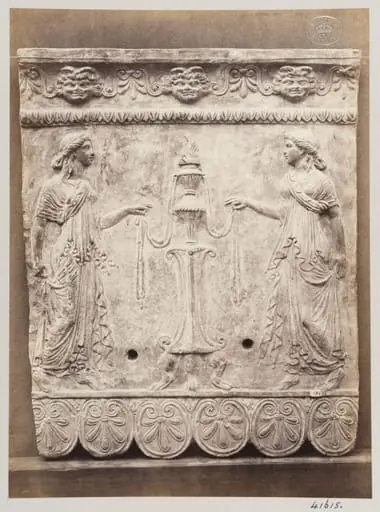 Bas-relief portion of a frieze of two draped females and an altar in terra cotta
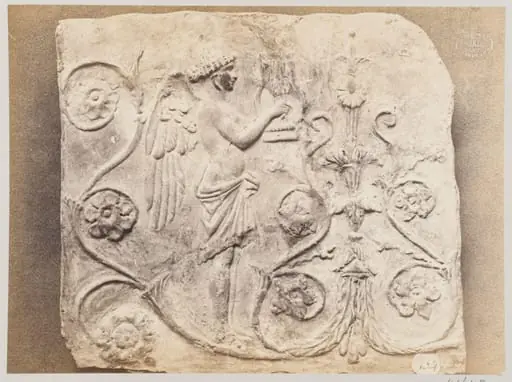 Bas-relief of a geni and a lyre in terra cotta
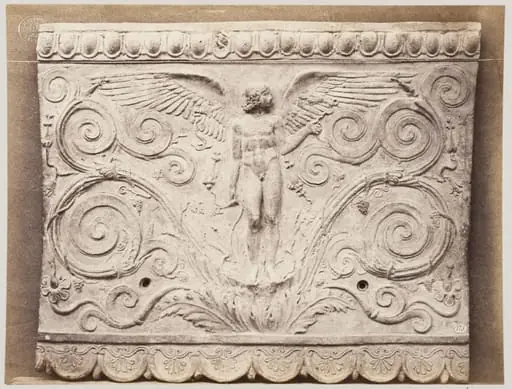 Bas-relief of a portion of frieze of Eros with scrollwork in terra cotta
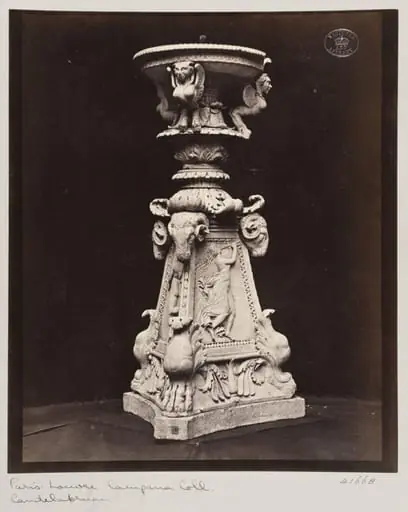 Marble sculptured fountain
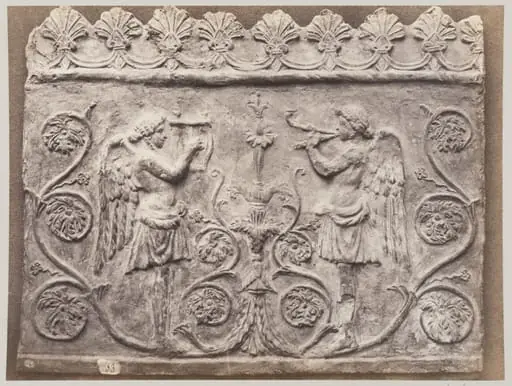 Bas-relief portion of frieze of Genii with double flutes and lyre
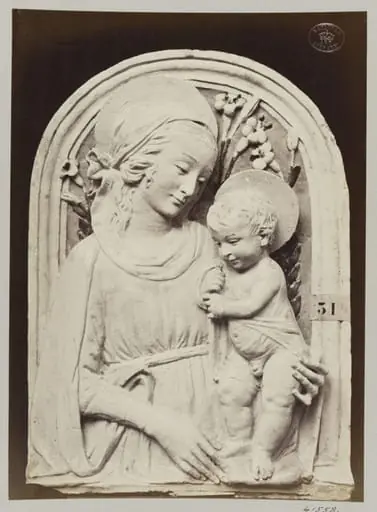 Bas-relief Virgin and Child in enamelled earthenware by Luca della Robbia
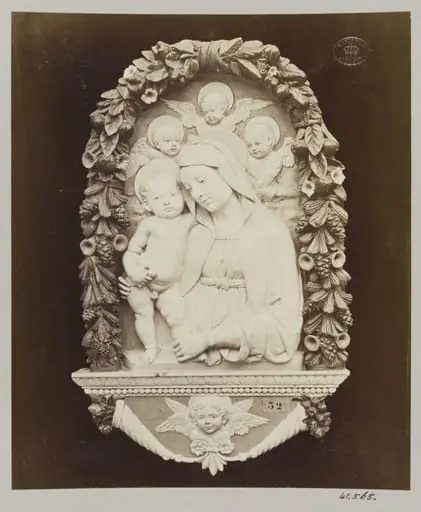 Bas-relief depicting the Virgin and Child on blue ground Luca della Robbia ware
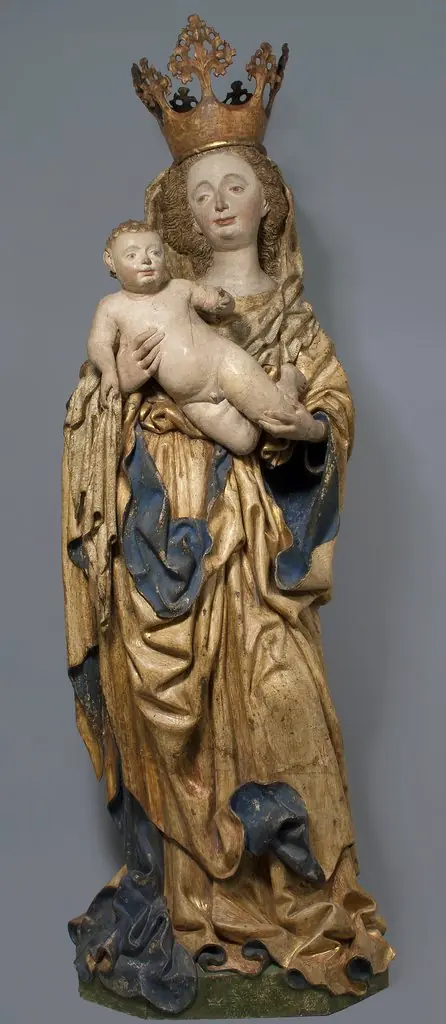 Standing Virgin and Child
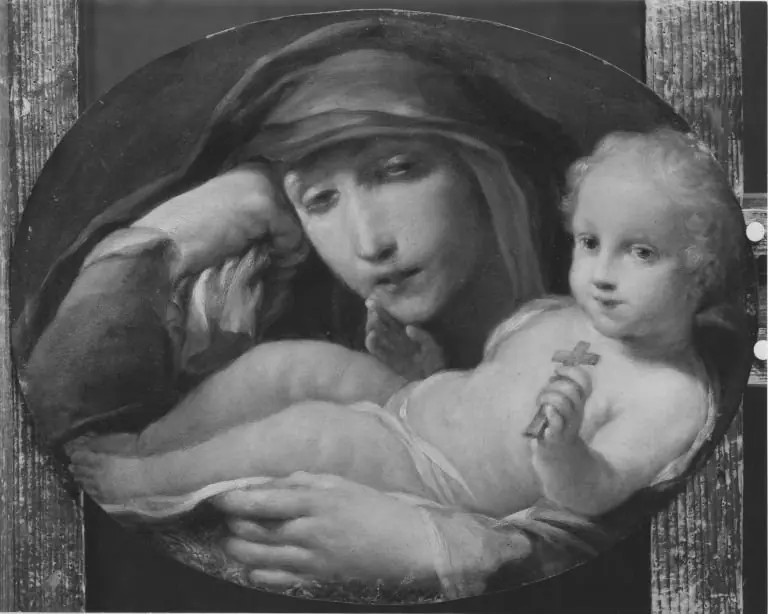 Maria mit Kind
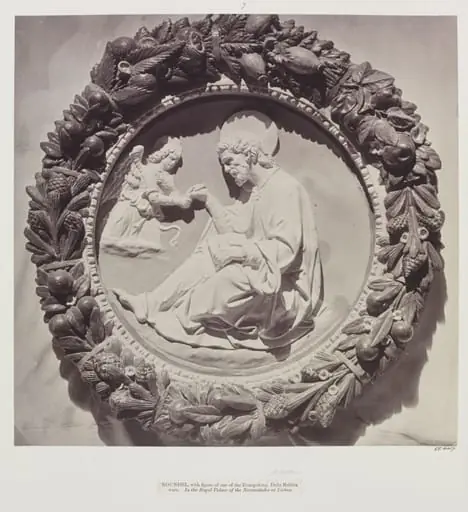 Roundel, St. Matthew, by della Robbia, Palace of Necessidades
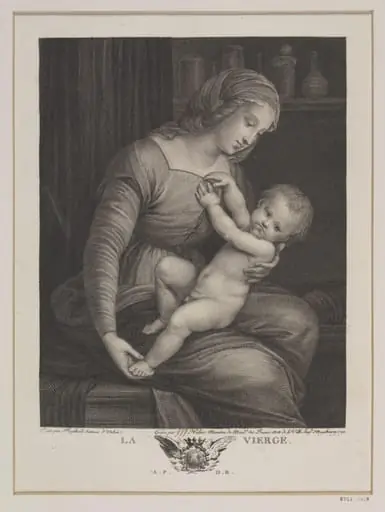 The Virgin Mary
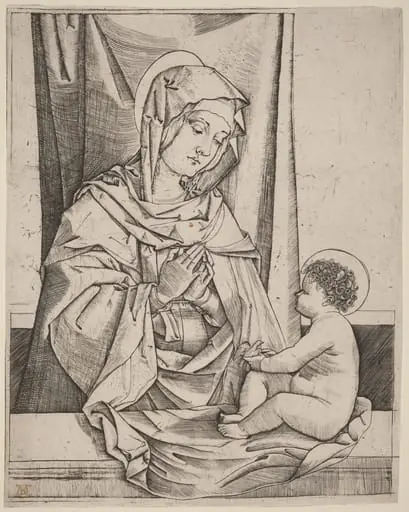 The Virgin and Child
 Circular bas-relief depicting the Nativity in enamelled earthenware