Artwork
Bas-relief depicting the Virgin and Child on blue ground Luca della Robbia ware
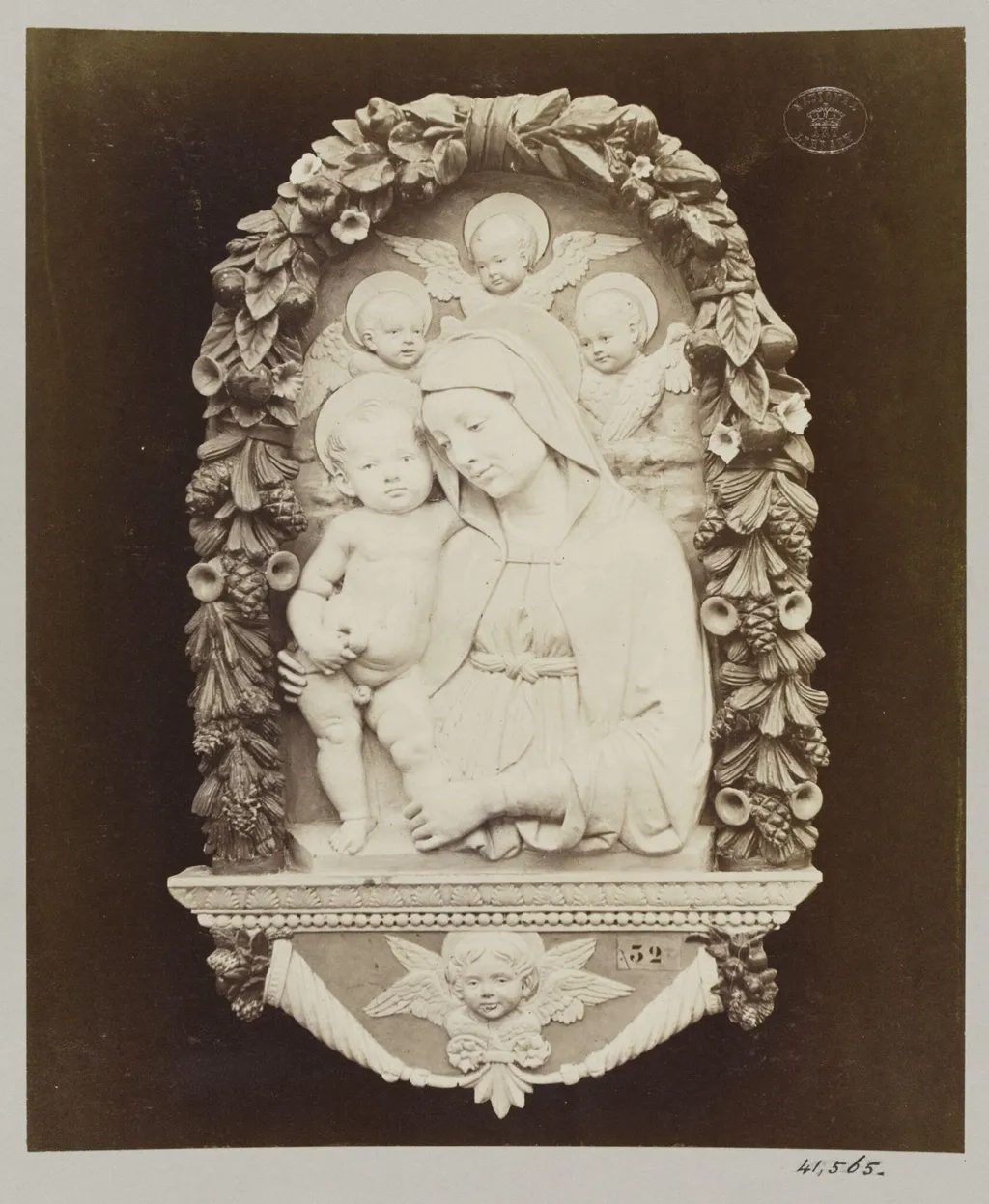
Bas-relief depicting the Virgin and Child on blue ground Luca della Robbia ware is a photographic photography by the Impressionist artist Louise Laffon. It dates from 1864 and is held in the collection of the Victoria and Albert Museum.
About this work
Louise Laffon’s 1863-1864 photo shows a terracotta bas-relief of the Virgin and Child against a blue background. The shot is part of the Victoria and Albert’s early photo collection, started in 1852.
The museum was the first to collect and exhibit photographs in 1858, using them as teaching tools for artists and students.
Check out the Victoria and Albert Museum.
Overview
It was acquired by the Victoria and Albert Museum in 1864 as part of a larger purchase of 500 images from Laffon’s series of the Campana Collection.
This photograph, taken by Louise Laffon between 1863 and 1864, documents a terracotta bas-relief of the Virgin and Child on a blue-glazed ground, characteristic of Luca della Robbia’s workshop. It was acquired by the Victoria and Albert Museum in 1864 as part of a larger purchase of 500 images from Laffon’s series of the Campana Collection. The image was intended for educational use, reflecting the museum’s early commitment to photography as a tool for study and documentation.
Subject & Meaning
The bas-relief depicts the Virgin Mary holding the Christ Child, rendered in glazed terracotta with a vivid blue background—a signature of della Robbia’s workshop. The composition emphasizes serenity and divine tenderness, typical of Renaissance devotional imagery. Laffon’s photograph preserves the object’s formal qualities and surface detail, serving not as an artistic interpretation but as a neutral record for scholarly and pedagogical reference.
Technique & Style
Laffon’s photograph captures the relief with careful lighting and focus, highlighting the contrast between the matte white figures and the lustrous blue glaze. The image is a gelatin silver print, consistent with mid-19th-century photographic practice. Its composition is straightforward, avoiding dramatic angles or embellishment, aligning with the museum’s goal of creating accurate visual references for artists and students rather than aesthetic expression.
History & Provenance
The photograph was acquired by the Victoria and Albert Museum in 1864 through the Parisian agent E. Cappe, as part of a batch of 500 images from Laffon’s documentation of the Campana Collection at the Musée Napoléon III. Laffon, one of the earliest female members of Le Société Française de la Photographie, was commissioned to record antiquities for scholarly circulation. The V&A’s acquisition underscores its early institutional investment in photographic archives for educational purposes.
Context
In the 1850s and 60s, the V&A was pioneering the use of photography in museum education, becoming the first institution to collect and exhibit photographs. Under Henry Cole’s leadership, images like Laffon’s were integrated into the National Art Library’s resources to support design students and curators. This practice complemented traditional casts and drawings, expanding access to artworks beyond physical travel or original objects.
Legacy
Laffon’s photograph remains part of the V&A’s foundational photographic archive, illustrating the museum’s early recognition of photography’s role in art historical documentation. Her work, alongside other female photographers employed by the institution, contributed to a quiet but significant shift in how visual knowledge was produced and shared. These images laid groundwork for modern museum photography practices focused on accuracy and accessibility.
Artist & collection
Artist
Louise Laffon (1828–1885), was a French photographer and painter. She was one of the first female professional photographers in France. She had a studio in Paris between 1859 and 1876.

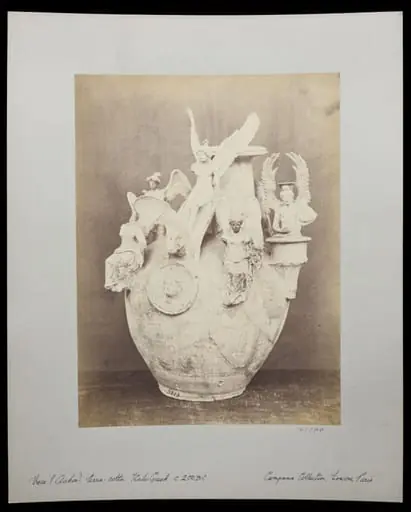 Perfume Burner in terra cotta
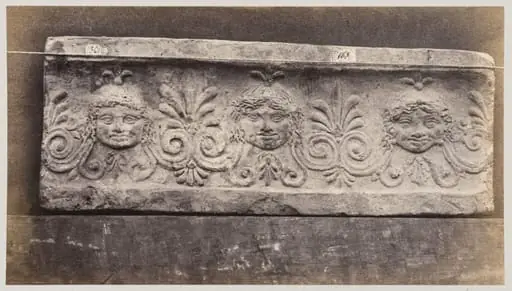 Three masques of gorgons in terra cotta
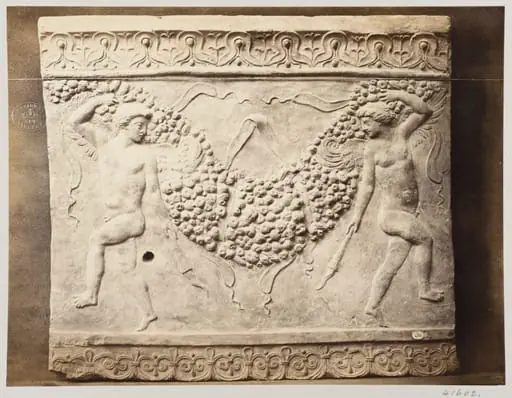 Bas-relief of portion of frieze of dancing figures with torches bearing festoon of fruit in terra cotta
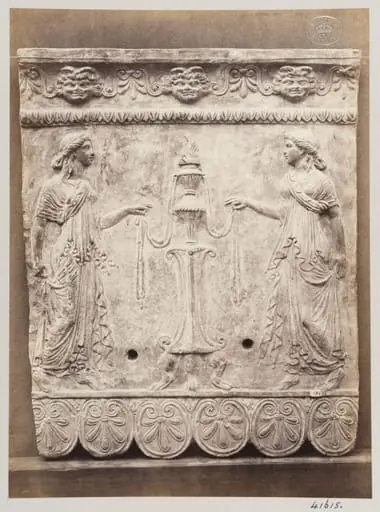 Bas-relief portion of a frieze of two draped females and an altar in terra cotta
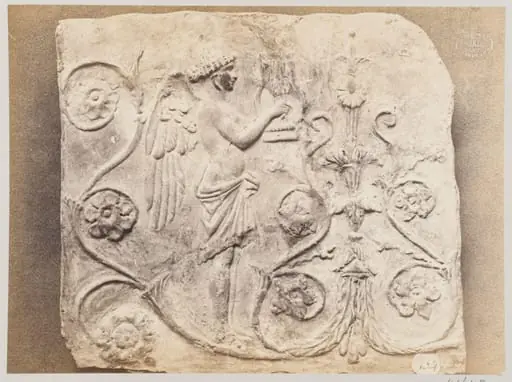 Bas-relief of a geni and a lyre in terra cotta
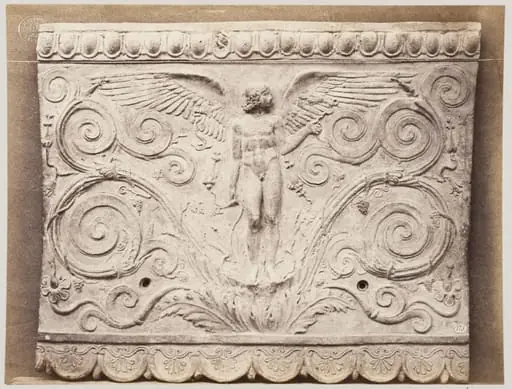 Bas-relief of a portion of frieze of Eros with scrollwork in terra cotta
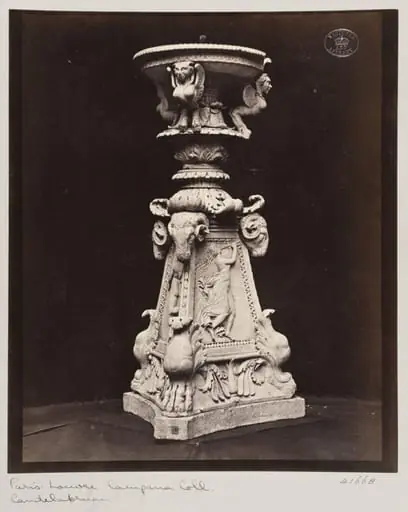 Marble sculptured fountain
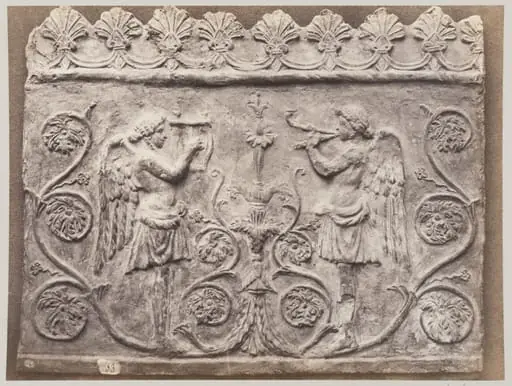 Bas-relief portion of frieze of Genii with double flutes and lyre
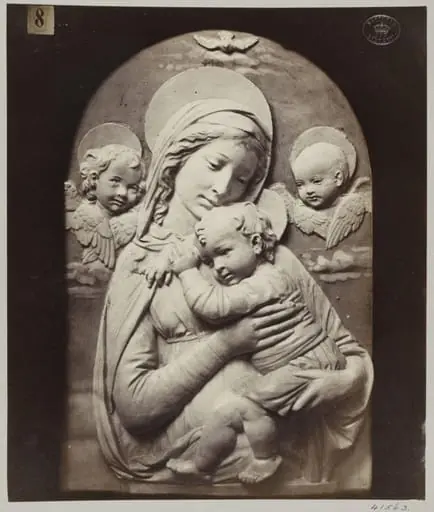 Bas-relief depicting the Virgin and Child in enamelled earthenware
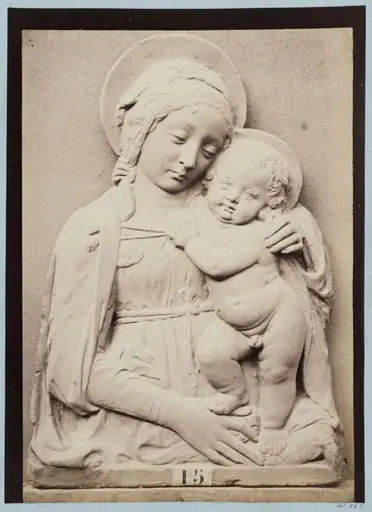 Bas-relief depicting the Virgin and Child by Donatello in red terra cotta
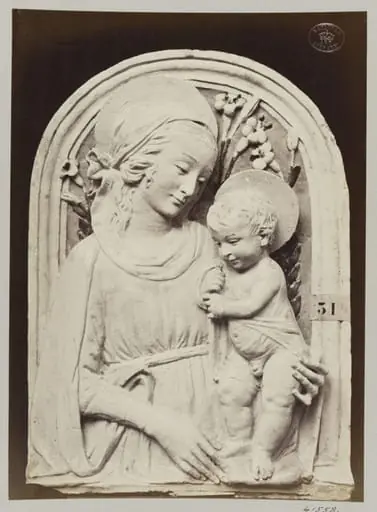 Bas-relief Virgin and Child in enamelled earthenware by Luca della Robbia
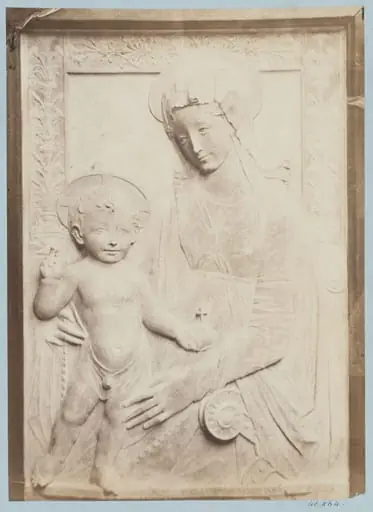 Bas-relief depicting the Virgin and Child attributed to Rosellino
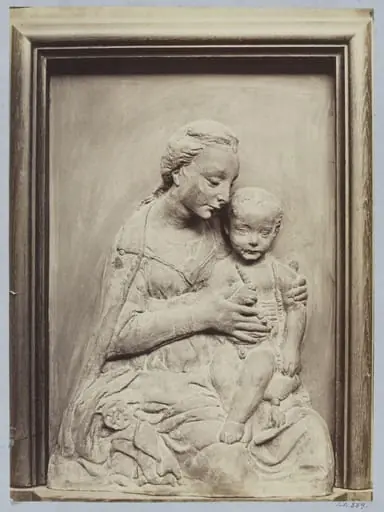 Bas-relief Virgin and Child in terra cotta of the school of Ghiberti
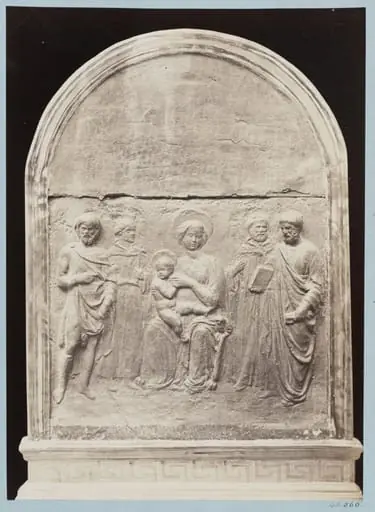 Bas-relief depicting the Virgin and Child in terra cotta
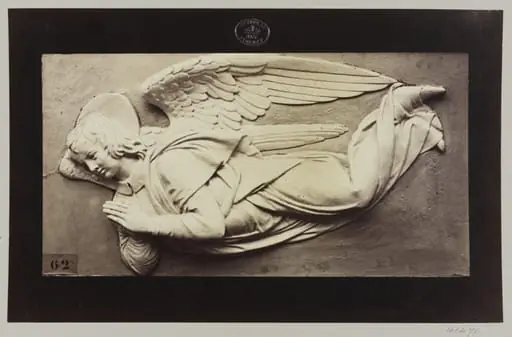 Bas-relief figure of a Flying Angel