Artwork
Bas-relief figure of a Flying Angel
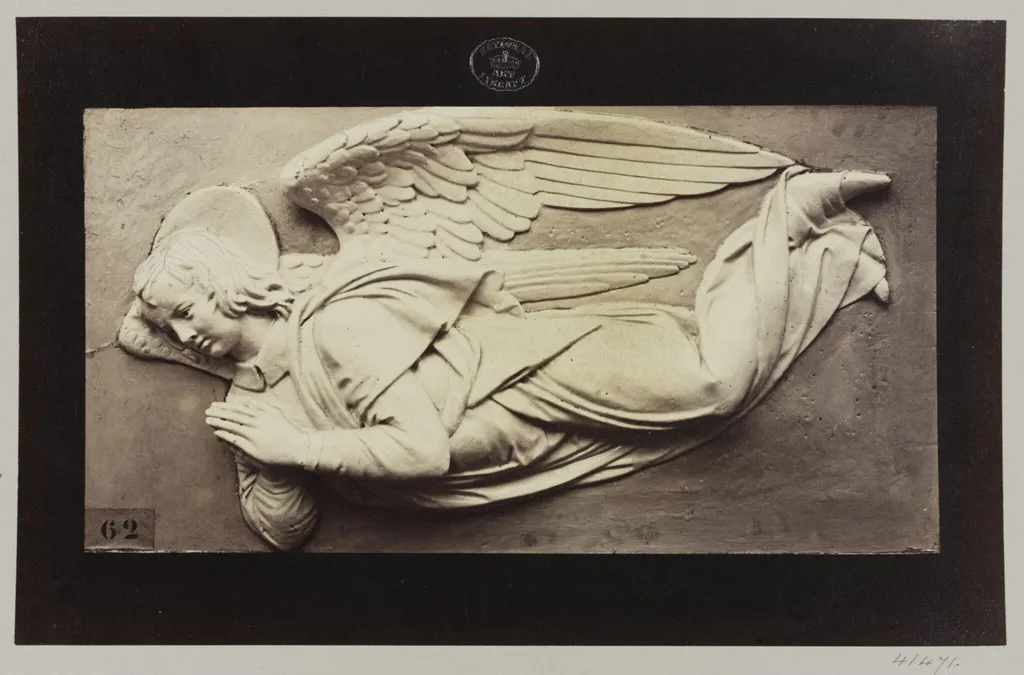
Bas-relief figure of a Flying Angel is a photographic photography by the Impressionist artist Louise Laffon. It dates from 1864 and is held in the collection of the Victoria and Albert Museum.
About this work
The image fits between Impressionism and Realism, two movements that shaped 19th-century art.
This is a photograph from the 1860s by Louise Laffon. It shows a bas-relief figure of a flying angel. The image fits between Impressionism and Realism, two movements that shaped 19th-century art.
The Victoria and Albert Museum holds this work. The museum began collecting photographs in 1852 and was the first to exhibit them in 1858. It used photography to help artists and students learn.
Look up the Victoria and Albert Museum.
Overview
This 1860s photograph, taken by French photographer Louise Laffon, records a bas‑relief sculpture depicting a winged angel in flight. The image is part of a larger series of documentary photographs of objects from the Campana collection, then housed in the Musée Napoléon III. The work belongs to the Victoria and Albert Museum’s early photographic holdings, a collection that began in 1852 and was first publicly shown in 1858.
Subject & Meaning
The relief shows a solitary angel, rendered in low relief, with outstretched wings that suggest motion through the air. While the sculpture itself is a decorative object, the photograph captures its three‑dimensional qualities, allowing viewers to study the interplay of light and shadow on the carved surface, and to contemplate the 19th‑century fascination with celestial motifs.
Technique & Style
Laffon employed the wet‑collodion process, standard for the period, to produce a sharp, detailed negative that faithfully reproduces the texture of stone. The composition balances the sculptural form against a neutral background, emphasizing the realism of the carving while retaining a slightly romantic atmosphere characteristic of mid‑century French photography.
History & Provenance
In 1864 the Victoria and Albert Museum acquired 500 photographs from Laffon’s Campana series through the dealer Monsieur E. Cappe. These images entered the museum’s National Art Library collection, where they were used as reference material for artists, students, and museum staff. The photograph of the flying angel has remained in the V&A’s holdings since that purchase.
Context
Louise Laffon was one of the few women recognized by the Société Française de la Photographie, reflecting the growing but still limited role of female photographers in the 19th century. Her work for the V&A illustrates how photography was employed as an educational and documentary tool, complementing traditional reprographic methods and expanding access to artworks across Europe.
Artist & collection
Artist
Louise Laffon (1828–1885), was a French photographer and painter. She was one of the first female professional photographers in France. She had a studio in Paris between 1859 and 1876.

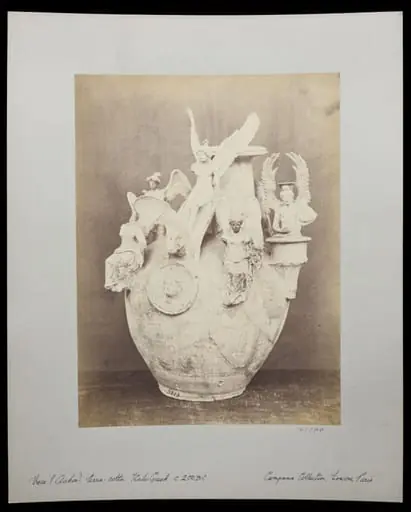 Perfume Burner in terra cotta
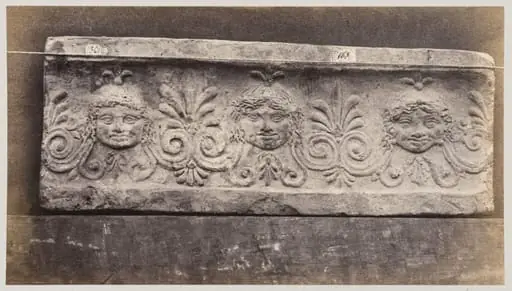 Three masques of gorgons in terra cotta
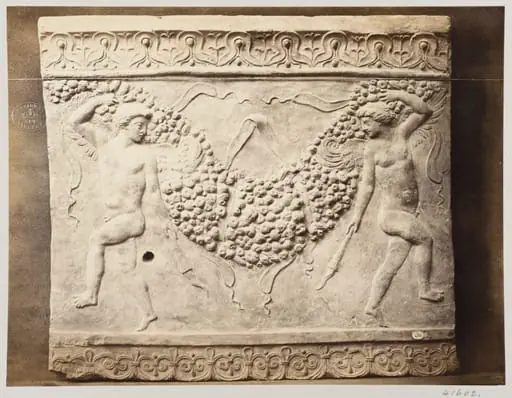 Bas-relief of portion of frieze of dancing figures with torches bearing festoon of fruit in terra cotta
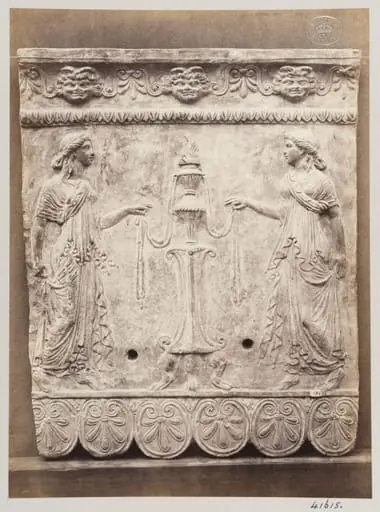 Bas-relief portion of a frieze of two draped females and an altar in terra cotta
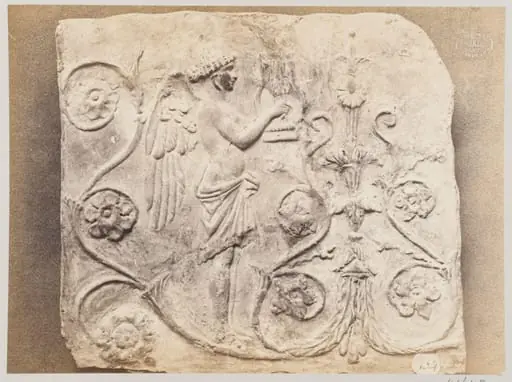 Bas-relief of a geni and a lyre in terra cotta
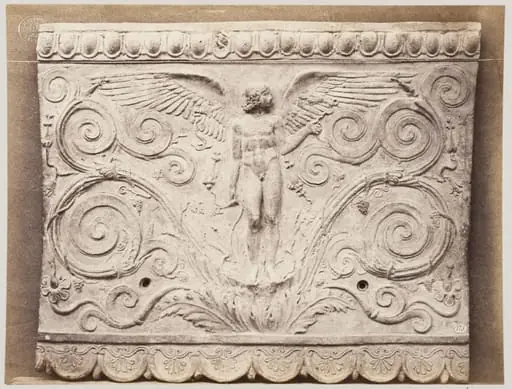 Bas-relief of a portion of frieze of Eros with scrollwork in terra cotta
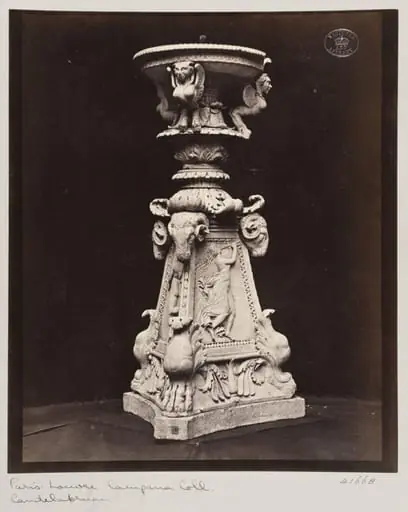 Marble sculptured fountain
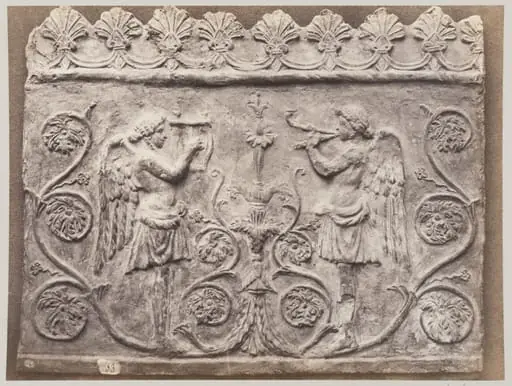 Bas-relief portion of frieze of Genii with double flutes and lyre
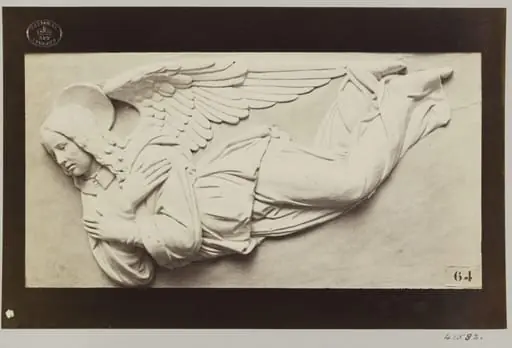 Bas-relief of enamelled flying angel
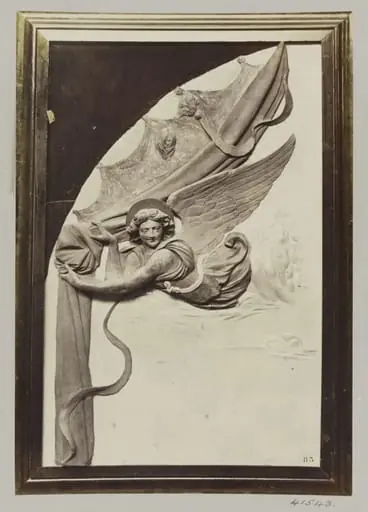 Bas-relief detail depicting an Angel drawing back a curtain in enamelled terra cotta and gilt
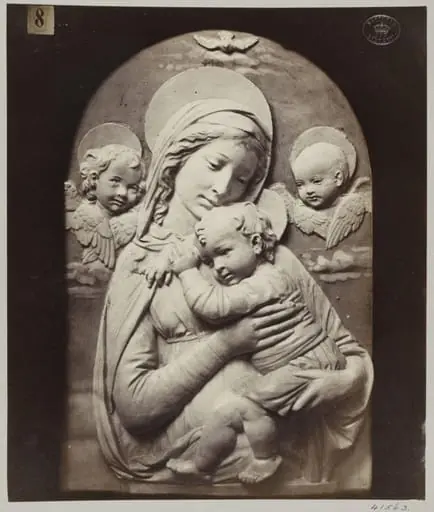 Bas-relief depicting the Virgin and Child in enamelled earthenware
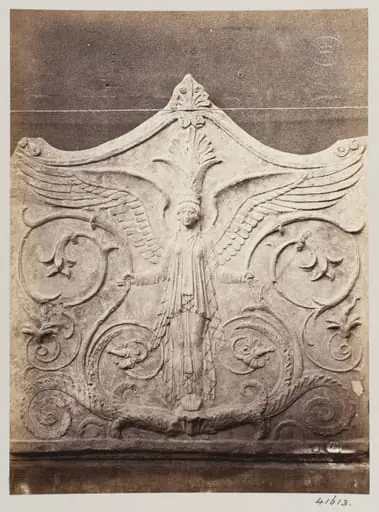 Bas-relief portion of a frieze of a winged figure with foliage in terra cotta
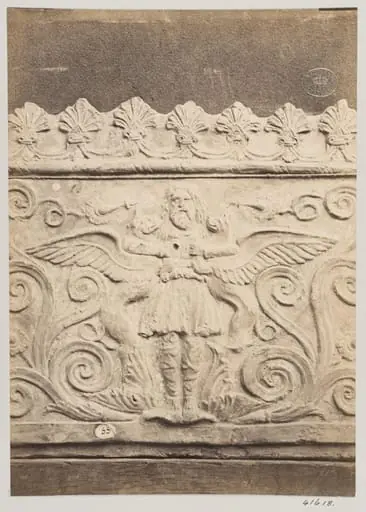 Bas-relief portion of a frieze of a flying genie in terra cotta
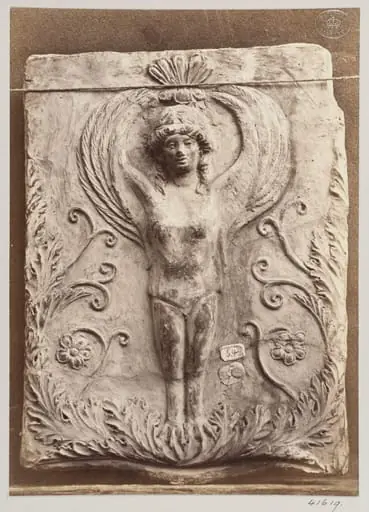 Bas-relief of a Siren in terra cotta
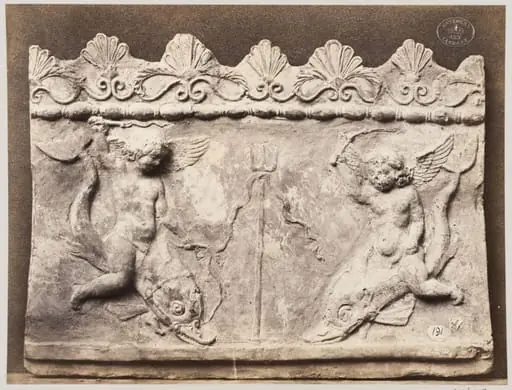 Bas-relief of two figures of Neptune in terra cotta
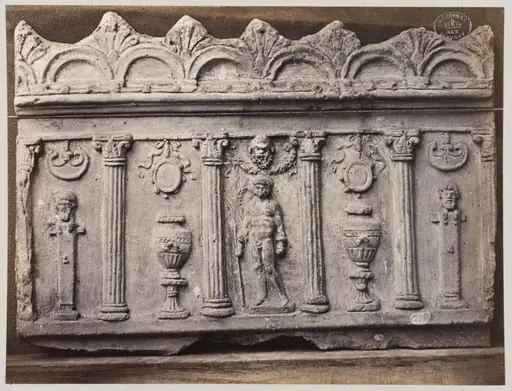 Bas-relief of a figure with bust, vessels and columns in terra cotta
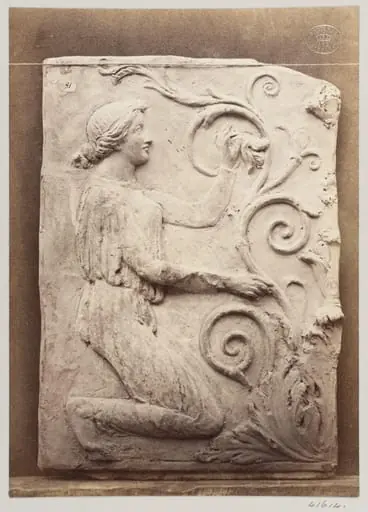 Bas-relief portion of a frieze of a female figure and foliage in terra cotta