Artwork
Etruscan tomb known as the Lydien tomb
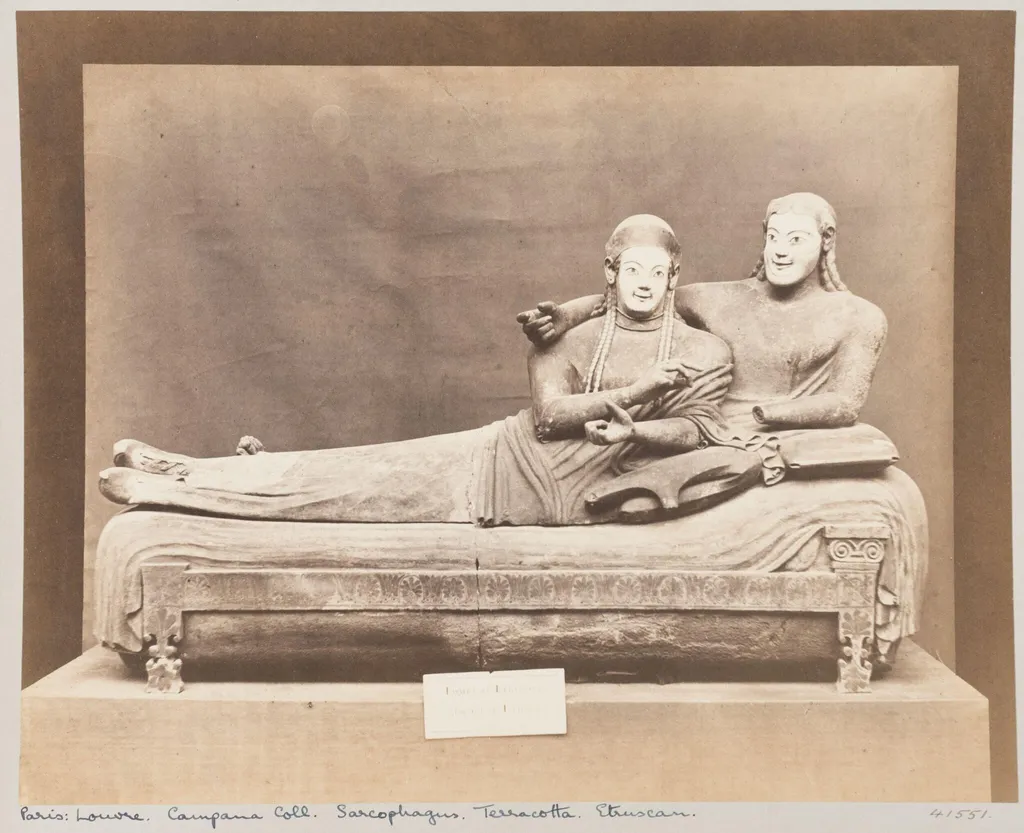
Etruscan tomb known as the Lydien tomb is a photographic photography by the Impressionist artist Louise Laffon. It dates from 1864 and is held in the collection of the Victoria and Albert Museum.
About this work
The museum's founding Director, Henry Cole, played a key role in sourcing these photographs.
The photograph is titled Etruscan tomb known as the Lydien tomb.
It was taken by Louise Laffon in 1863-1864.
The photograph is held at the Victoria and Albert Museum, which has a long history of collecting photographs, starting from 1852, and was the first museum to exhibit them in 1858, recognizing their potential to aid artists and students.
The museum's founding Director, Henry Cole, played a key role in sourcing these photographs.
You can learn more about this by looking at the movement: Realism.
Overview
The image depicts the Lydien tomb, an Etruscan burial chamber, captured in a black‑and‑white photograph taken by Louise Laffon around 1863‑1864. The print is part of the Victoria and Albert Museum’s early photographic collection, a group assembled shortly after the museum began acquiring photographs in the early 1850s.
Subject & Meaning
The Lydien tomb is a rock‑cut funerary space typical of Etruscan necropoleis, notable for its architectural form and interior decoration. The photograph records the tomb’s structural details, offering a visual record of a site that would otherwise be accessible only to scholars able to travel to the Italian peninsula.
Technique & Style
Laffon employed the wet‑collodion process, the dominant photographic method of the 1860s, which produced sharp, detailed negatives on glass plates. The resulting image shows a high degree of clarity, emphasizing the tomb’s stonework and spatial depth, aligning with the realist impulse to document objects faithfully.
History & Provenance
Louise Laffon, a French photographer and one of the first women admitted to the Société Française de Photographie, created a series of images of the Campana Collection for the Musée Napoléon III. In 1864 the Victoria and Albert Museum purchased 500 of these prints through the dealer Monsieur E. Cappe, incorporating them into its National Art Library holdings.
Context
The V&A’s early embrace of photography reflected Director Henry Cole’s belief that the medium could extend the visual resources available to artists, students, and curators. By acquiring works like Laffon’s tomb photograph, the museum built a reference archive that complemented traditional drawings and casts.
Artist & collection
Artist
Louise Laffon (1828–1885), was a French photographer and painter. She was one of the first female professional photographers in France. She had a studio in Paris between 1859 and 1876.

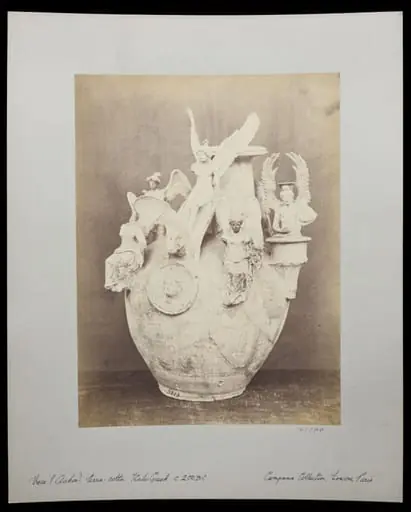 Perfume Burner in terra cotta
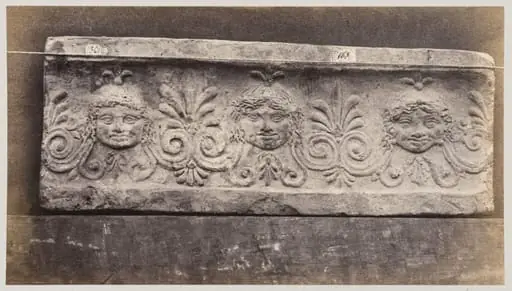 Three masques of gorgons in terra cotta
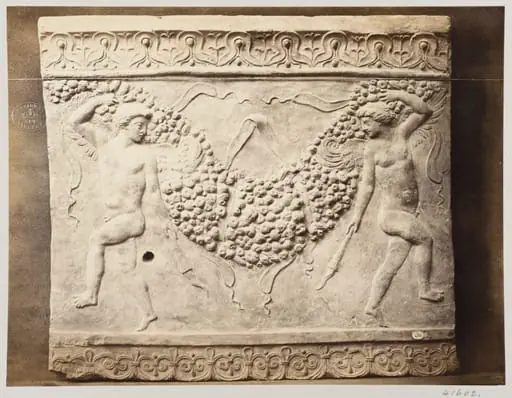 Bas-relief of portion of frieze of dancing figures with torches bearing festoon of fruit in terra cotta
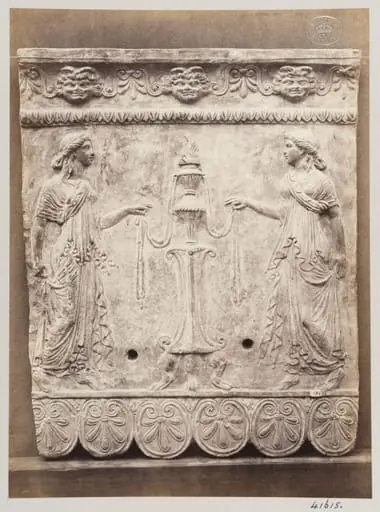 Bas-relief portion of a frieze of two draped females and an altar in terra cotta
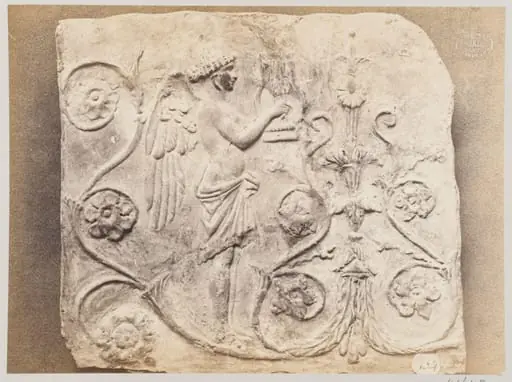 Bas-relief of a geni and a lyre in terra cotta
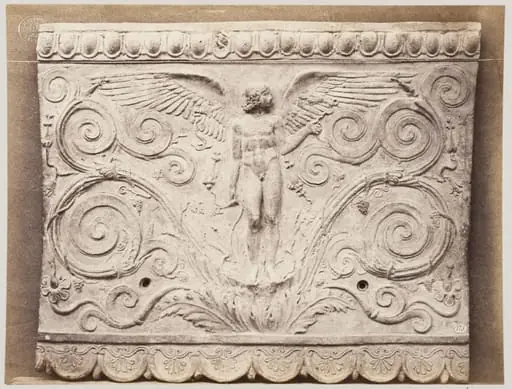 Bas-relief of a portion of frieze of Eros with scrollwork in terra cotta
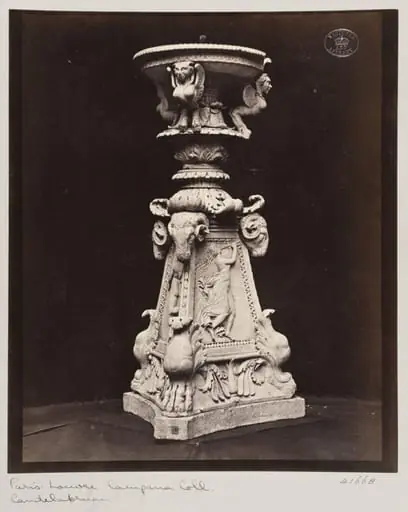 Marble sculptured fountain
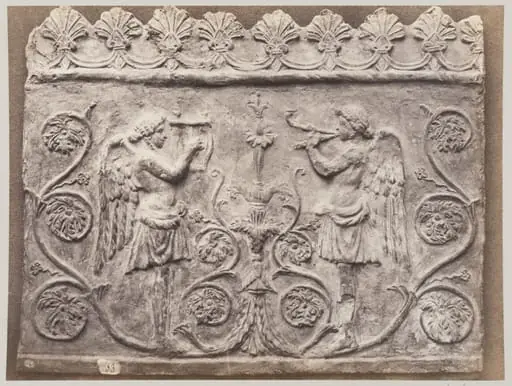 Bas-relief portion of frieze of Genii with double flutes and lyre
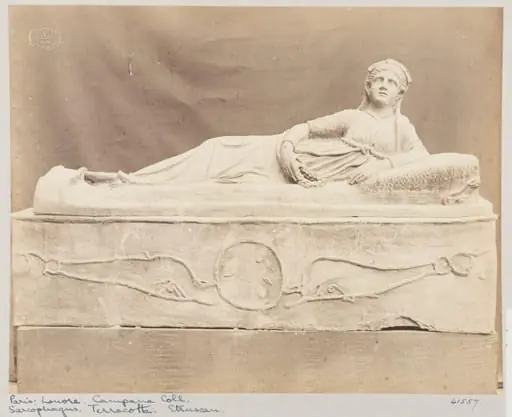 Tomb in terra cotta
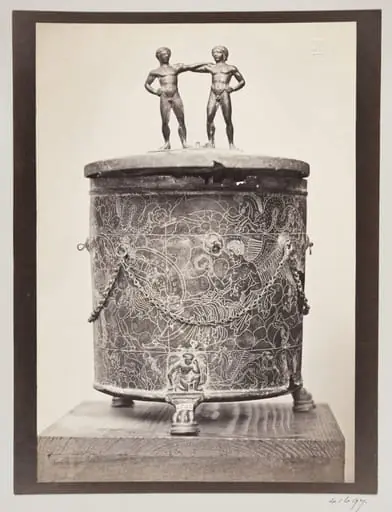 Etruscan cyste in bronze
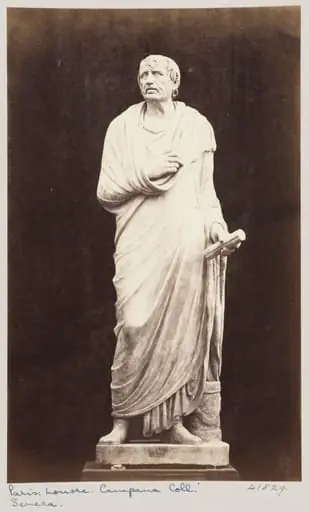 Marble Statue of Seneca
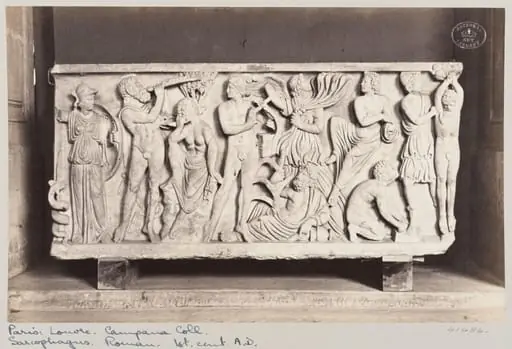 Marble Sarcophagus showing the trial of skill between Apollo and Marsyas, bas-relief
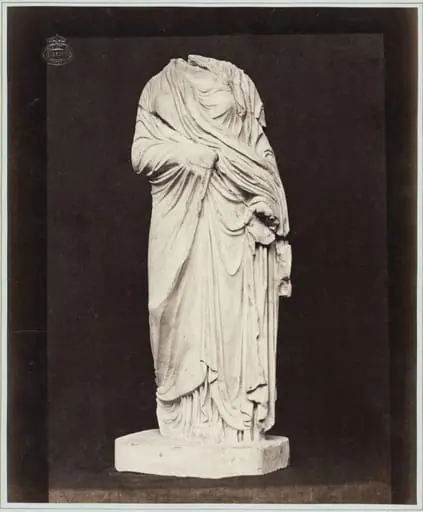 Marble statue of a headless draped figure
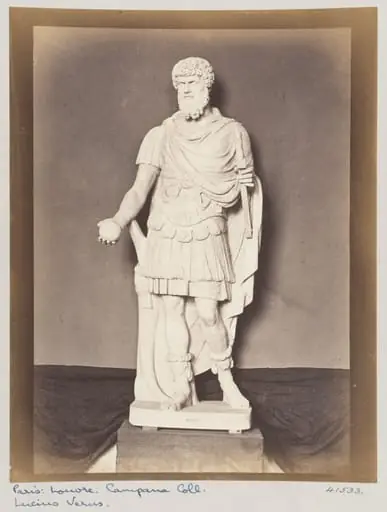 Marble Statue of Lucius Verus
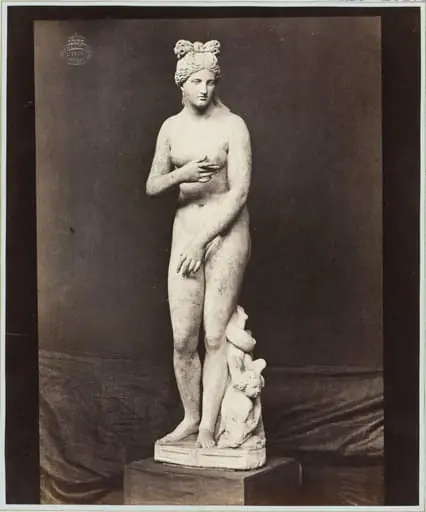 Marble Statue of Venus de Medici
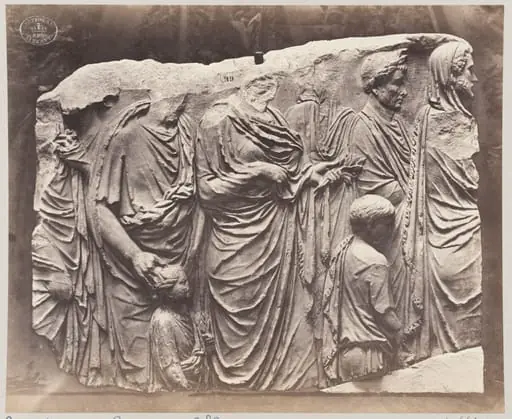 Portion of a marble sarcophagus of procession of draped figures