Artwork
Two heads of Seraphs
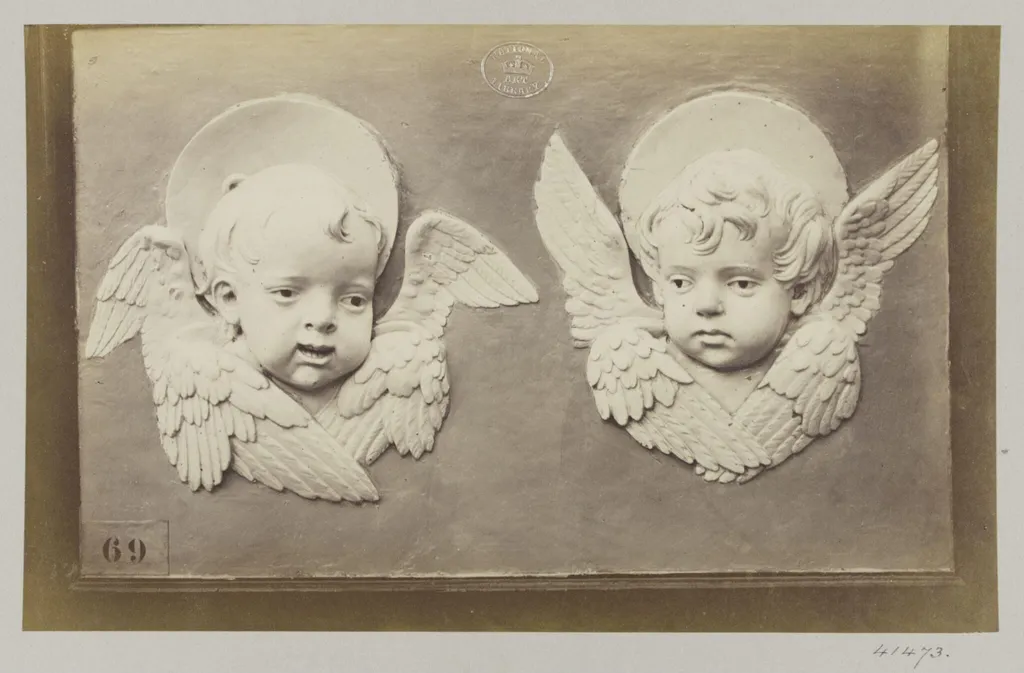
Two heads of Seraphs is a photographic photography by the Impressionist artist Louise Laffon. It dates from 1864 and is held in the collection of the Victoria and Albert Museum. The Victoria and Albert Museum began collecting photographs in 1852, making it the first museum to do so.
About this work
Louise Laffon made a photograph in 1863–64 called Two Heads of Seraphs.
It shows putto, little angel children, in calm poses.
Photographers were new at this time.
Laffon was a French photographer who worked when the Victoria and Albert Museum first collected photos.
The museum wanted art students to use photographs as study tools.
Look up the museum itself next.
Overview
Under Director Henry Cole, photographs were acquired not as art objects but as educational tools for artists and students.
The Victoria and Albert Museum began collecting photographs in 1852, making it the first museum to do so. Under Director Henry Cole, photographs were acquired not as art objects but as educational tools for artists and students. The museum’s early photographic holdings, initially housed in the National Art Library, included works from both in-house and external photographers, reflecting a pragmatic approach to visual learning across disciplines.
Subject & Meaning
The photograph 'Two Heads of Seraphs' depicts two cherubic figures, rendered in calm, frontal poses. These angelic forms, drawn from religious iconography, were selected for their clarity of form and idealized anatomy. They served as reference models for students studying drapery, facial expression, and classical composition, aligning with the museum’s goal of providing accessible visual resources for artistic training.
Technique & Style
Created by Louise Laffon in 1863–64, the image is a gelatin silver print, typical of mid-century photographic practice. Laffon’s approach emphasizes precise detail and even lighting, minimizing artistic interpretation to prioritize documentary accuracy. The composition is static and symmetrical, reflecting the instructional intent: to capture form without distraction, enabling direct study by art students.
History & Provenance
In 1864, the V&A acquired 500 photographs from Laffon’s series documenting the Campana Collection in Paris, purchased through agent E. Cappe. 'Two Heads of Seraphs' was one of these works. Laffon, among the earliest female members of Le Société Française de la Photographie, contributed to institutional efforts to expand visual pedagogy. The photograph entered the museum’s collection as part of a broader strategy to supplement drawing instruction with photographic references.
Context
During the 1860s, photography was emerging as a tool for art education, not yet accepted as fine art. The V&A’s initiative to collect photographs was part of a wider movement to democratize access to visual culture. Female photographers like Laffon, though often uncredited, played a key role in this system, producing images that supported administrative and pedagogical goals across European institutions.
Legacy
Laffon’s work, including 'Two Heads of Seraphs,' exemplifies how early photographic documentation shaped art pedagogy. Though overlooked in later narratives, these images formed the foundation of museum-based visual archives. Their preservation underscores the institutional recognition of photography’s utility in training artists, long before its acceptance as an art form in its own right.
Artist & collection
Artist
Louise Laffon (1828–1885), was a French photographer and painter. She was one of the first female professional photographers in France. She had a studio in Paris between 1859 and 1876.

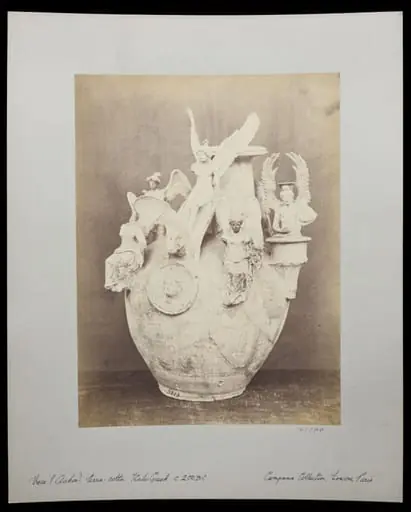 Perfume Burner in terra cotta
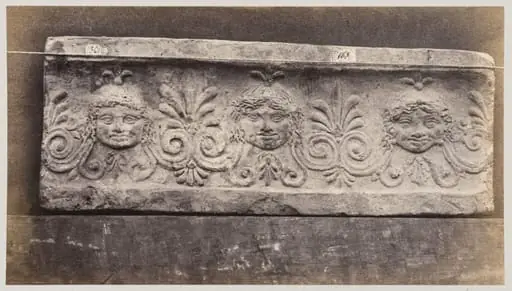 Three masques of gorgons in terra cotta
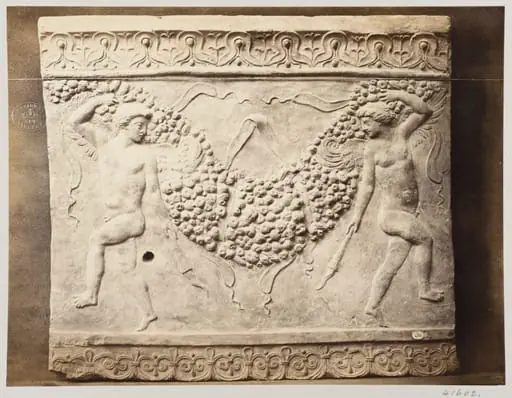 Bas-relief of portion of frieze of dancing figures with torches bearing festoon of fruit in terra cotta
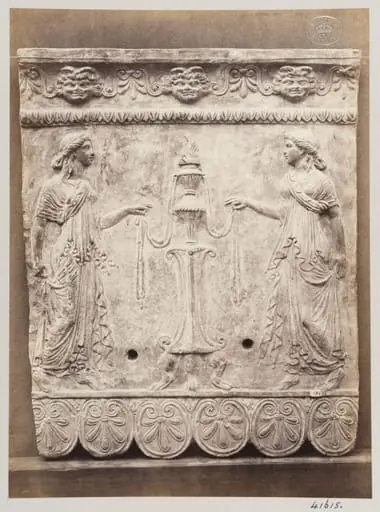 Bas-relief portion of a frieze of two draped females and an altar in terra cotta
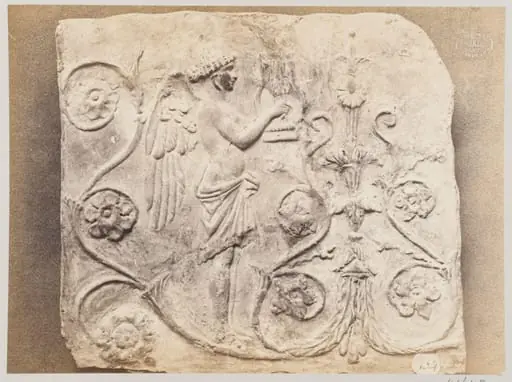 Bas-relief of a geni and a lyre in terra cotta
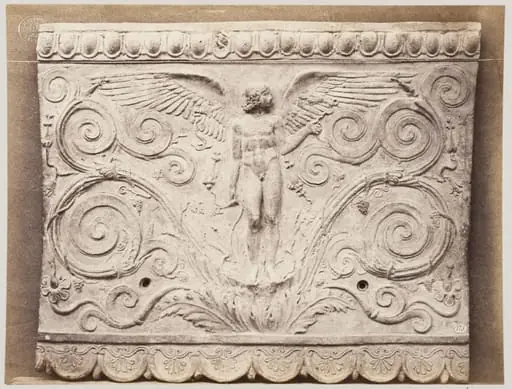 Bas-relief of a portion of frieze of Eros with scrollwork in terra cotta
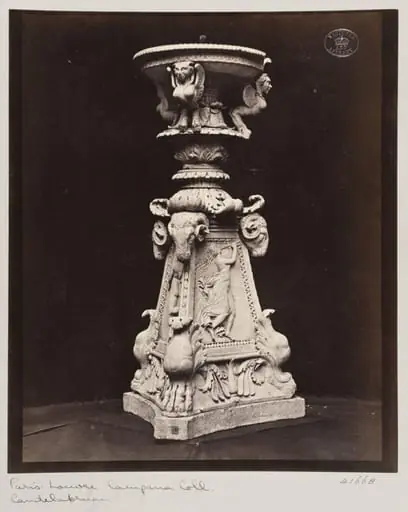 Marble sculptured fountain
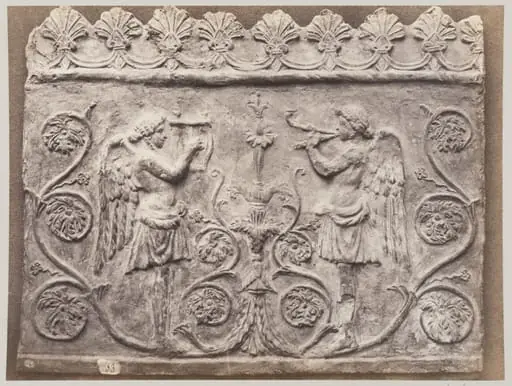 Bas-relief portion of frieze of Genii with double flutes and lyre
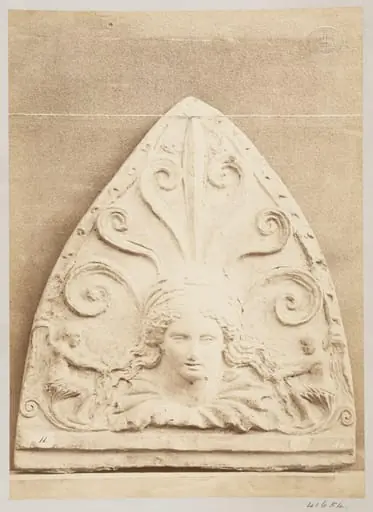 Antifixa of Venus in terra cotta
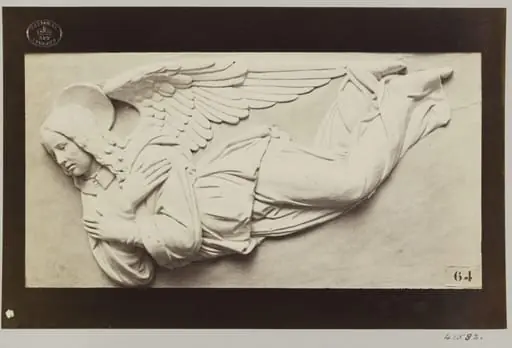 Bas-relief of enamelled flying angel
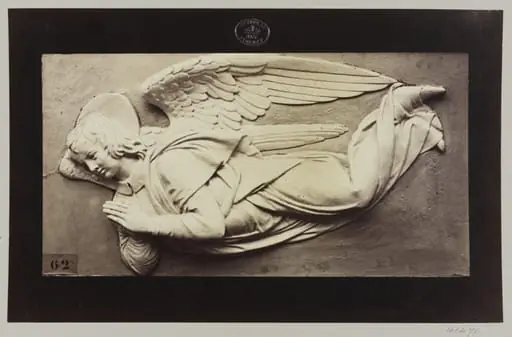 Bas-relief figure of a Flying Angel
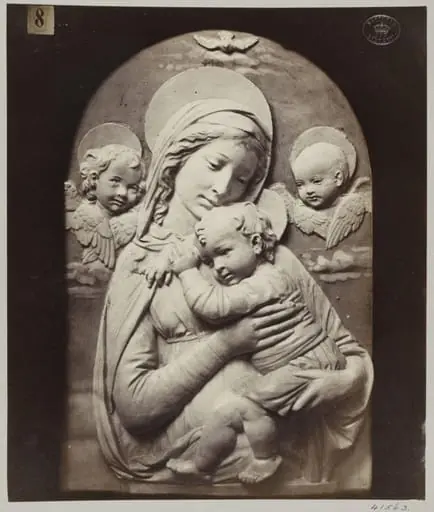 Bas-relief depicting the Virgin and Child in enamelled earthenware
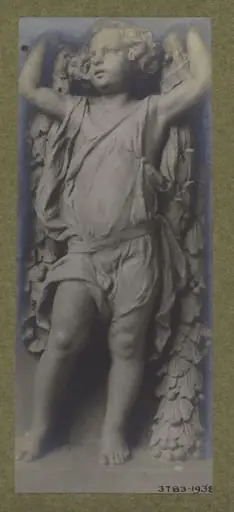 Untitled
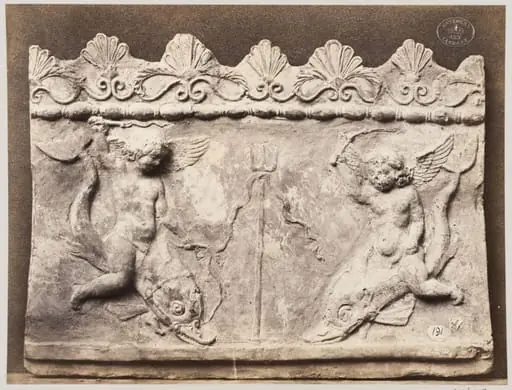 Bas-relief of two figures of Neptune in terra cotta
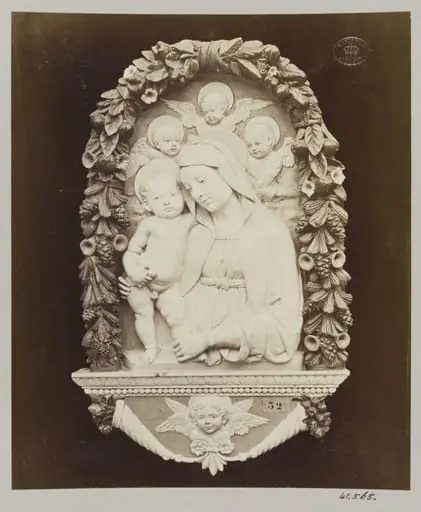 Bas-relief depicting the Virgin and Child on blue ground Luca della Robbia ware
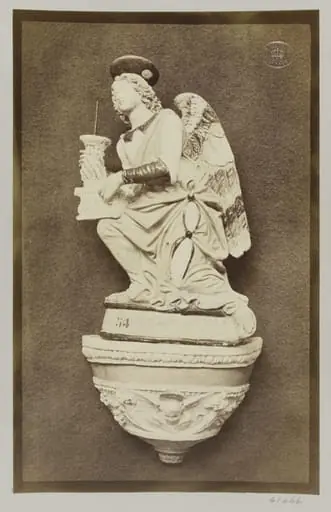 Figure of an Angel holding pricket candlestick by Luca della Robbia Ware
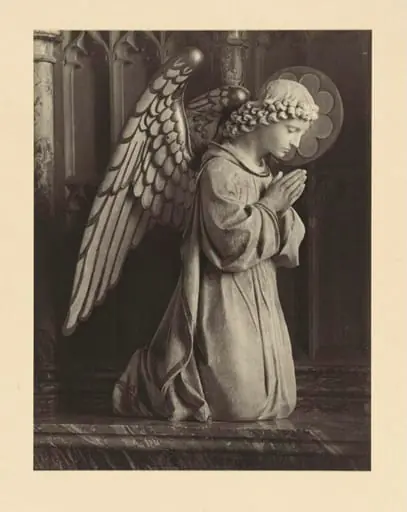 Angel - Kenn Church