Artwork
Glass Design with Saint John the Baptist and Saint John the Evangelist
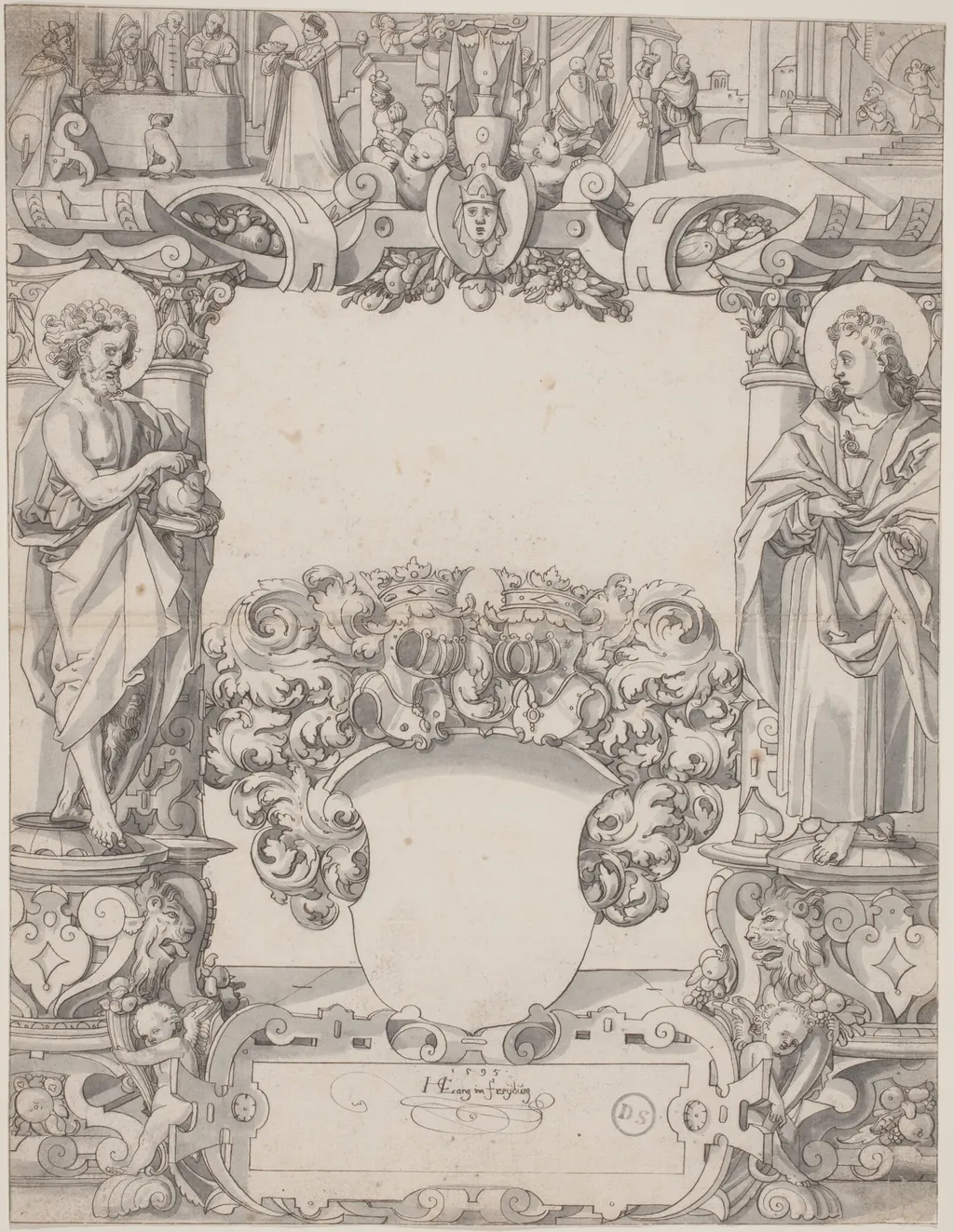
Glass Design with Saint John the Baptist and Saint John the Evangelist is an ink drawing by the Renaissance artist Hans Kaspar Lang the Elder. It dates from 1595 and is held in the collection of the National Gallery of Art.
About this work
The painting is called Glass Design with Saint John the Baptist and Saint John the Evangelist.
It was created in 1595. The artist used pen and black ink with gray wash on laid paper. This combination of materials is notable because it allowed for detailed and expressive drawings.
You can learn more about this style by looking into the movement: Renaissance.
Overview
Executed in pen and black ink with gray wash on laid paper, it reflects the precision and tonal subtlety characteristic of late Renaissance draftsmanship.
Created in 1595, this drawing by Hans Kaspar Lang the Elder serves as a preparatory design for stained glass. Executed in pen and black ink with gray wash on laid paper, it reflects the precision and tonal subtlety characteristic of late Renaissance draftsmanship. Unlike finished paintings, such works were functional templates for artisans translating two-dimensional compositions into colored glass.
Subject & Meaning
The drawing depicts Saint John the Baptist and Saint John the Evangelist, two key figures in Christian tradition. John the Baptist, often identified by his camel-hair garment and staff, heralds Christ’s arrival; John the Evangelist, traditionally shown with a chalice or book, is the author of the Gospel bearing his name. Their pairing underscores themes of witness and divine revelation, common in ecclesiastical art of the period.
Technique & Style
Lang employed fine pen lines to define contours and drapery, while gray wash added depth and volume without color. The use of laid paper, with its subtle chain-line texture, enhanced the ink’s absorption and lent a tactile quality to the surface. This technique allowed for both clarity in form and atmospheric modulation, typical of Northern Renaissance preparatory drawings intended for translation into glass.
History & Provenance
The drawing originates from the workshop of Hans Kaspar Lang the Elder, a documented designer of stained glass in southern Germany during the late 16th century. While its exact commission remains unrecorded, its style aligns with ecclesiastical projects in Swabia and Bavaria. It likely served as a model for a church window, though the final glass panel has not been definitively identified.
Context
In the decades following the Reformation, Catholic regions continued to commission religious imagery for liturgical spaces. Though Protestant areas rejected figural glass, Catholic patrons in the Holy Roman Empire sustained demand for narrative windows. Lang’s work reflects this cultural persistence, blending traditional iconography with the refined draftsmanship of Renaissance humanism.
Legacy
This drawing exemplifies the role of preparatory designs in the production of stained glass, a practice often overlooked in favor of finished windows. Its survival offers insight into the collaborative nature of medieval and early modern workshops, where artists translated theological themes into visual language for artisans skilled in glass cutting and firing.
Artist & collection


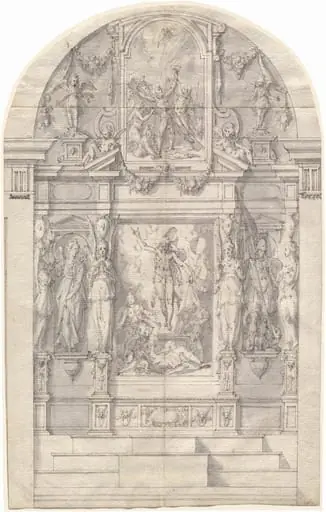 An Elaborate Altar with the Resurrection of Christ and the Martyrdom of Saint Andrew
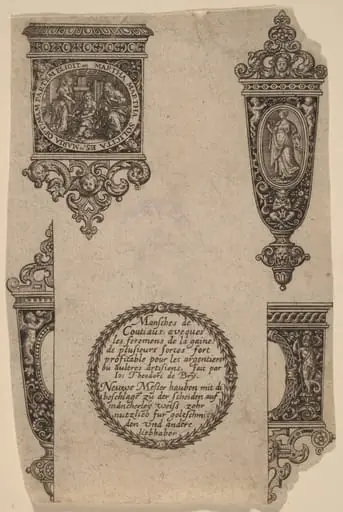 Ornament for Knife Handle
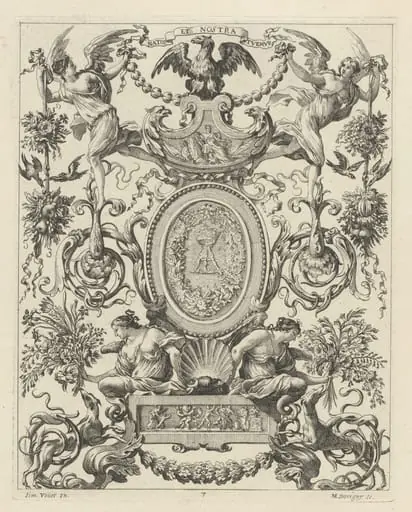 Ornamental Panel Surmounted by an Eagle and the Motto NATOS ET NOSTRA TUEMUR
 Rococo Cartouche with Allegorical Figures
 Architectural Motif with Bust and Two Lamps
 Upright Ornament with Two Sirens
 Upright Ornament with Eight Naked Men
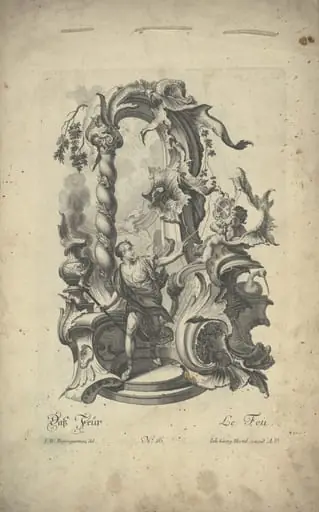 Das Feur
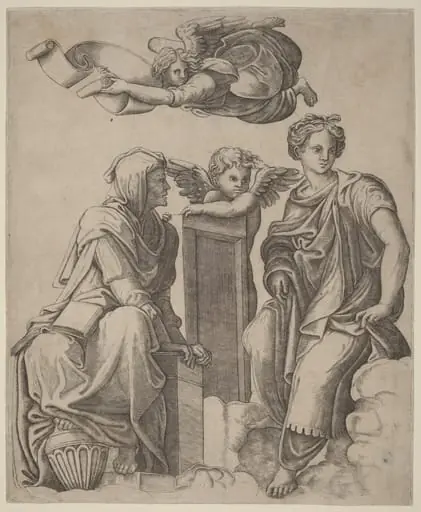 Two Sibyls and an Angel
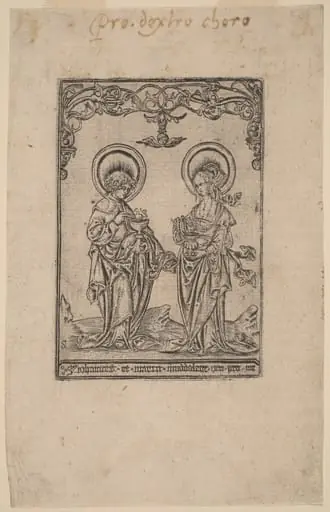 Saint Mary Magdalene and Saint John the Evangelist
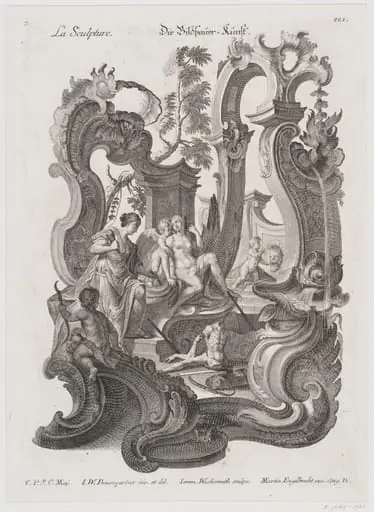 The Seven Liberal Arts
 Ornamental Panel Surmounted by a Naiad and a River God