Artwork
John Barclay
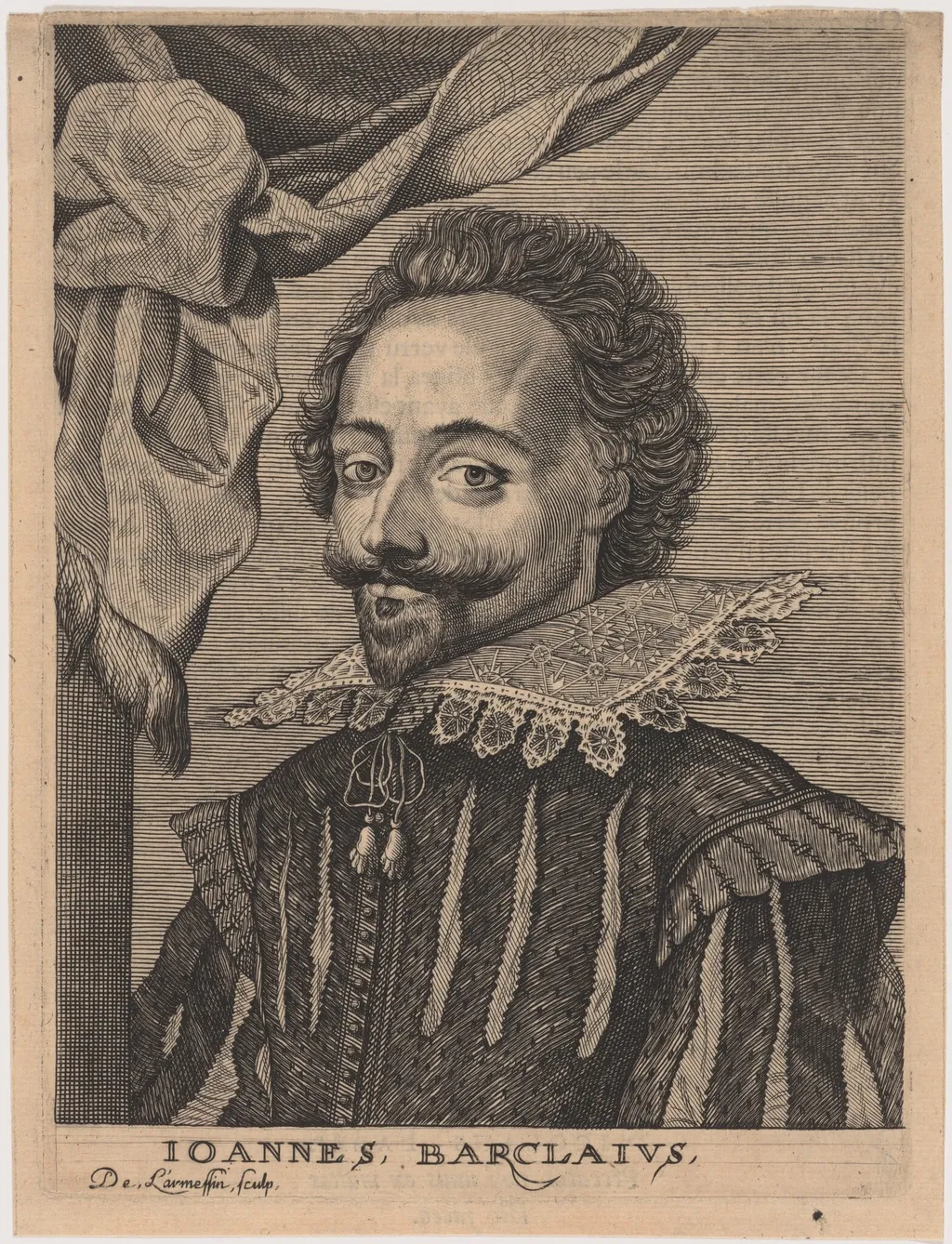
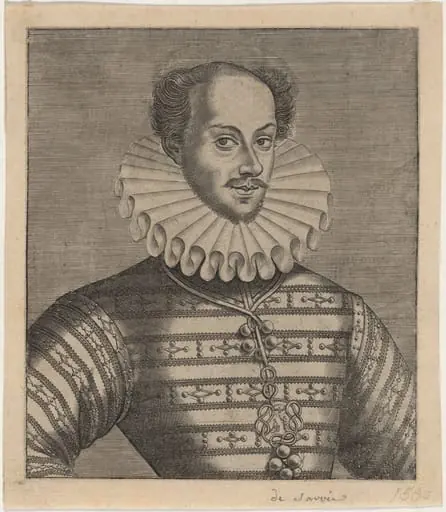
John Barclay is an ink print by the Baroque artist Nicolas de Larmessin IV. It dates from 1720 and is held in the collection of the National Gallery of Art.
About this work
Overview
The medium—engraving on metal—allowed for detailed reproduction, making such portraits accessible beyond original paintings.
This black-and-white print, made in 1720, is an engraving by Nicolas de Larmessin IV depicting John Barclay. Executed with fine, precise lines, the image captures a formal portrait of a man in early 18th-century attire. The medium—engraving on metal—allowed for detailed reproduction, making such portraits accessible beyond original paintings. The inscription 'Ioannes Barclayus' and the artist’s signature 'De Larmessin sculp.' confirm its origin and purpose as a printed likeness.
Subject & Meaning
The subject, John Barclay, was a Scottish writer and satirist known for his Latin poetry and scholarly reputation. The portrait presents him with a composed, serious demeanor, reflecting his intellectual stature. His ruffled collar and neatly trimmed beard align with scholarly dress of the period, emphasizing his academic identity rather than social status. The image functions as a visual tribute to his literary contributions, intended for circulation among educated audiences.
Technique & Style
The portrait was created using the engraving technique, in which lines are incised into a metal plate with a burin. De Larmessin employed fine, controlled strokes to render texture in the lace collar, the curl of hair, and the subtle shadows on the face. The contrast between light and dark areas is achieved through line density rather than tone, characteristic of intaglio printing. The sharpness and clarity suggest a skilled hand and high-quality presswork.
History & Provenance
Created in 1720, the engraving likely served to disseminate Barclay’s image among European scholars, as his Latin works remained influential decades after his death. Nicolas de Larmessin IV, part of a family of Parisian printmakers, specialized in portraits of notable figures. The print’s survival in institutional collections indicates its continued relevance in academic circles, though its original commission or publication context remains undocumented.
Context
In the early 18th century, engraved portraits were a primary means of visually preserving the likenesses of scholars, artists, and public figures. Unlike painted portraits, engravings could be reproduced in quantity and distributed widely, supporting the spread of intellectual networks. Barclay’s image, rendered in this format, reflects the era’s emphasis on print culture as a vehicle for scholarly recognition and legacy.
Legacy
This engraving endures as a record of how intellectual figures were visually represented in the Enlightenment era. It exemplifies the role of printmakers like de Larmessin in shaping public perception of scholars through standardized, reproducible imagery. While not widely known today, it remains a valuable artifact for understanding the intersection of literature, portraiture, and print technology in early modern Europe.
Artist & collection