Artwork
L'apres-diner
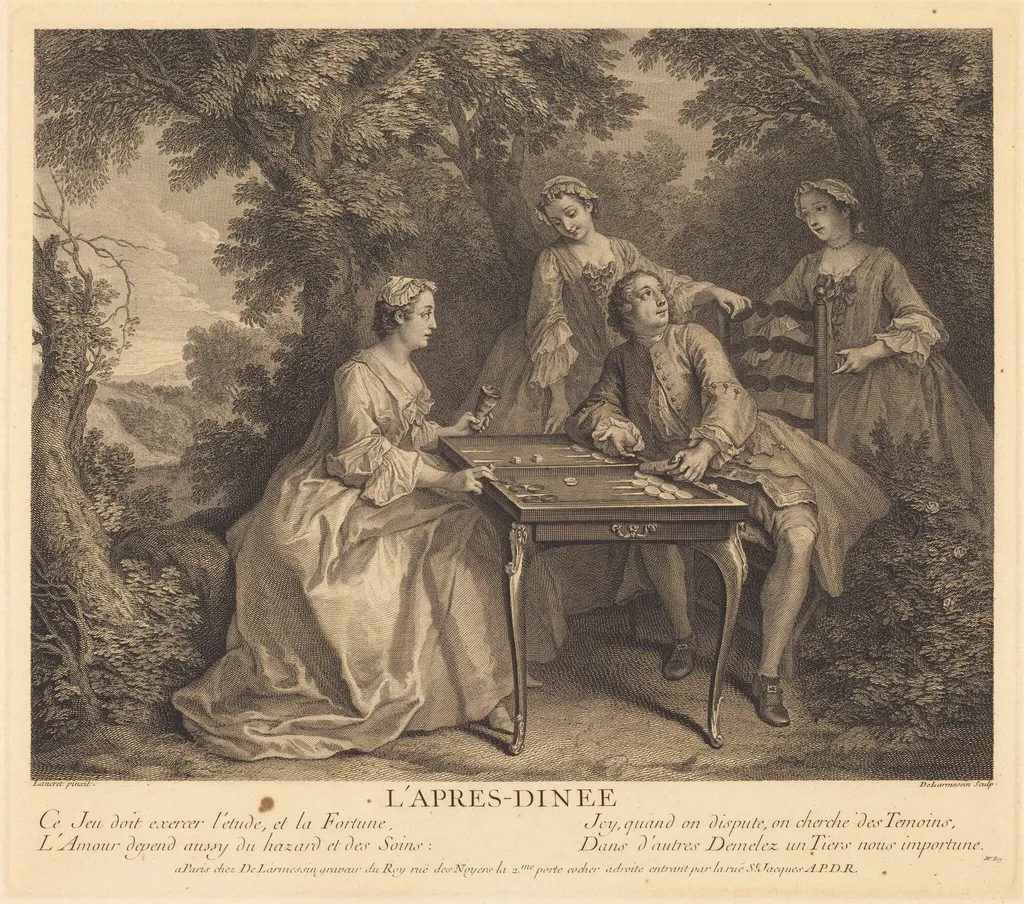
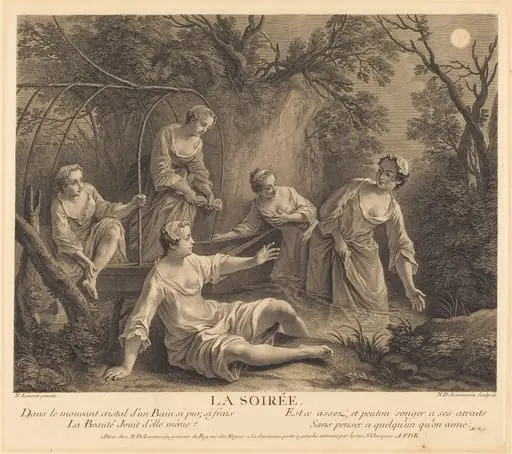
L'apres-diner is an ink print by the Baroque artist Nicolas de Larmessin IV. It dates from 1741 and is held in the collection of the National Gallery of Art.
About this work
Overview
Created in 1741 by Nicolas de Larmessin IV, L'apres-diner is an engraved and etched print depicting a quiet domestic moment.
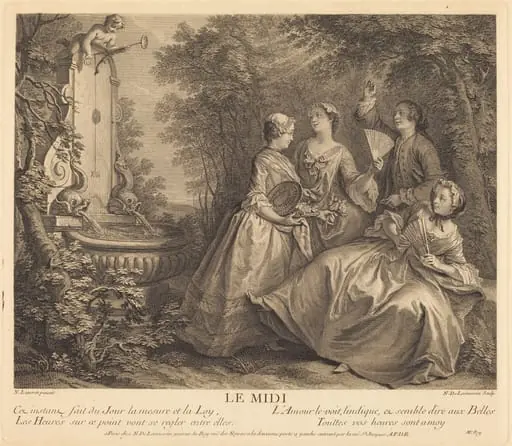
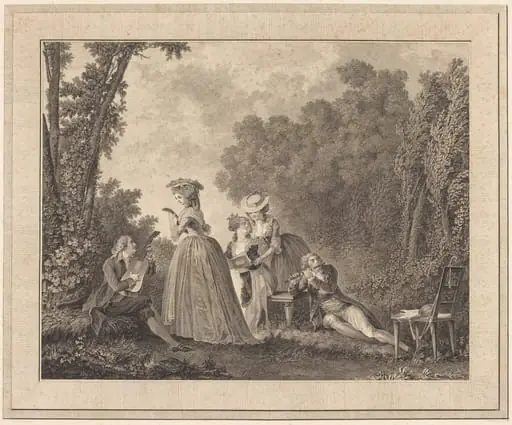
Created in 1741 by Nicolas de Larmessin IV, L'apres-diner is an engraved and etched print depicting a quiet domestic moment. The scene unfolds in a garden setting, where three figures engage in a tranquil post-meal interlude. The composition emphasizes stillness and subtle interaction, capturing a private relaxation rather than a formal event. The artist’s precision in line work defines the figures and environment with clarity and restraint.
Subject & Meaning
The title, meaning 'after dinner,' frames the image as a moment of leisure following a meal. A woman plays a small keyboard, while a man leans close, guiding her with a gesture toward the sheet music. A third woman observes silently, her expression suggesting quiet interest. The scene conveys intimacy and shared calm, reflecting 18th-century ideals of refined domestic life, where music and companionship reinforced social bonds.
Technique & Style
Larmessin employed fine engraving and etching techniques to render delicate textures in fabric, foliage, and skin. The lines are controlled and precise, building form through cross-hatching and subtle tonal gradations rather than broad shading. Background elements like trees and distant hills are suggested with minimal strokes, keeping focus on the figures. The method highlights the artist’s skill in translating observational detail into a printed medium.
History & Provenance
The print was produced during the height of Larmessin’s career, a period when French printmakers specialized in scenes of everyday life for a growing middle-class audience. While specific early ownership records are not documented, the work aligns with a broader trend of domestic genre prints circulating in Parisian circles. It was likely distributed as a standalone image or bound in collections of similar subjects.
Context
In mid-18th-century France, prints like this served as both art and social commentary, reflecting the rising interest in private, genteel moments outside courtly life. Music-making at home was a valued pastime among the bourgeoisie, and such images reinforced ideals of modest elegance. Larmessin’s work fits within a tradition of printmakers who documented the quiet rituals of daily existence with observational accuracy.
Legacy
L'apres-diner remains a representative example of French genre printmaking from the Rococo era, valued for its understated narrative and technical finesse. Though not widely exhibited today, it contributes to scholarly understanding of how ordinary life was visualized and circulated in pre-revolutionary France. Its preservation offers insight into the aesthetic preferences and domestic culture of its time.
Artist & collection