Artwork
Planets on the ceiling of the Sala Borgia in the Vatican
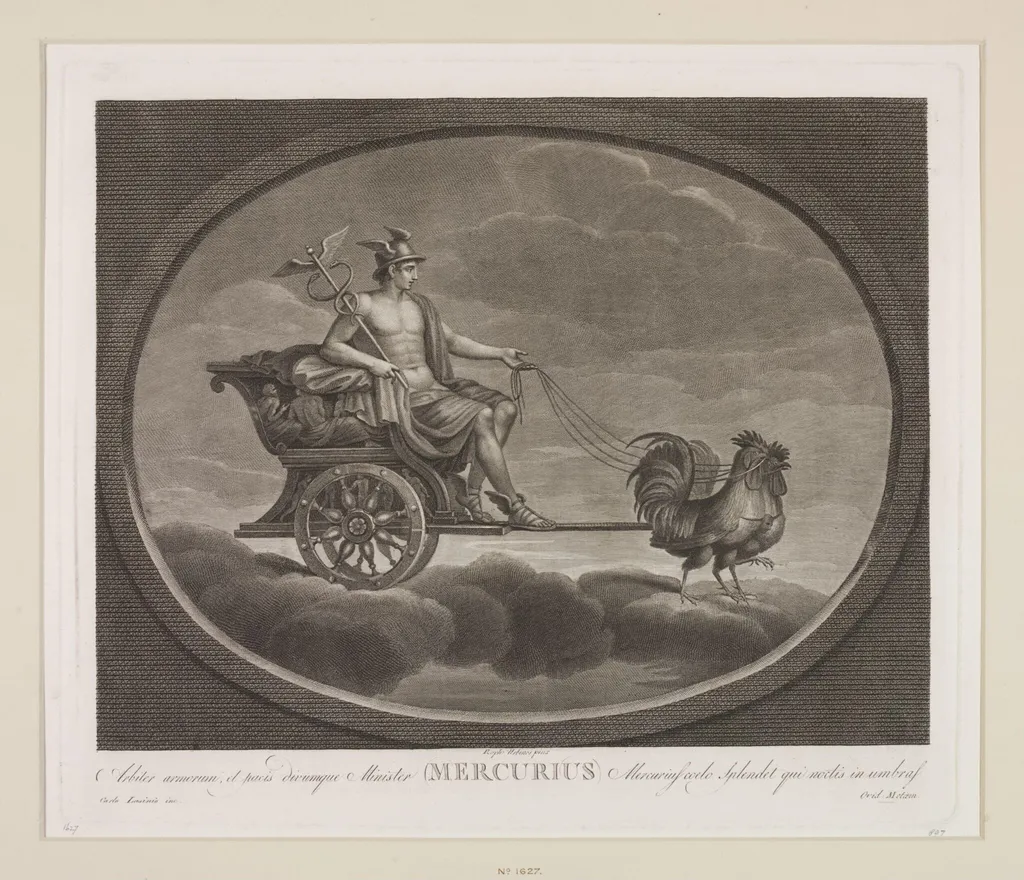
Planets on the ceiling of the Sala Borgia in the Vatican is a print by Carlo Lasinio. It dates from 1850 and is held in the collection of the Victoria and Albert Museum.
About this work
Overview
It captures one panel from a larger cycle depicting the classical planets, originally painted by Pinturicchio and Giovanni da Udine in the late 15th century.
This print is a reproductive engraving of the ceiling frescoes in the Sala Borgia, Vatican, created by Carlo Lasinio around 1850. It captures one panel from a larger cycle depicting the classical planets, originally painted by Pinturicchio and Giovanni da Udine in the late 15th century. Lasinio’s work preserves details of the frescoes before significant deterioration occurred, offering a precise record of their original appearance.
Subject & Meaning
The image portrays Mercurius, the Roman god of communication and travel, represented as a planetary deity within a cosmological framework. He is integrated into a decorative program that aligns celestial bodies with mythological figures, reflecting Renaissance humanist interests in classical antiquity and astrological symbolism. His presence among other planetary deities reinforces a worldview where divine order mirrors cosmic harmony.
Technique & Style
Lasinio employed fine-line engraving to replicate the fresco’s intricate forms and vivid palette. The print retains the sharp contours and luminous hues of the original, despite the medium’s limitations. Gold and red architectural frames, visible at the edges, are rendered with precision, mimicking the gilded stucco borders of the actual ceiling and emphasizing the illusion of three-dimensional space.
History & Provenance
The original frescoes were commissioned by Pope Alexander VI and completed around 1494–1495. By the early 19th century, fading and environmental damage threatened their legibility. Lasinio, a noted engraver and antiquarian, undertook systematic documentation of Vatican decorations. His prints served scholarly and preservationist ends, ensuring the imagery survived beyond the physical decay of the source.
Context
The Sala Borgia’s ceiling was part of a broader Renaissance effort to revive classical iconography within papal spaces. Pinturicchio’s team blended mythological figures with Christian symbolism, reflecting the era’s syncretic tendencies. Lasinio’s prints emerged during a period of heightened interest in art historical preservation, aligning with emerging practices in museum curation and archival reproduction.
Legacy
Lasinio’s engravings remain valuable for art historians studying the Sala Borgia’s original condition. They provide a baseline for understanding how the frescoes appeared before later restorations and natural wear. Though not original works, they function as critical intermediaries between Renaissance art and modern study, preserving visual data otherwise lost.
Artist & collection


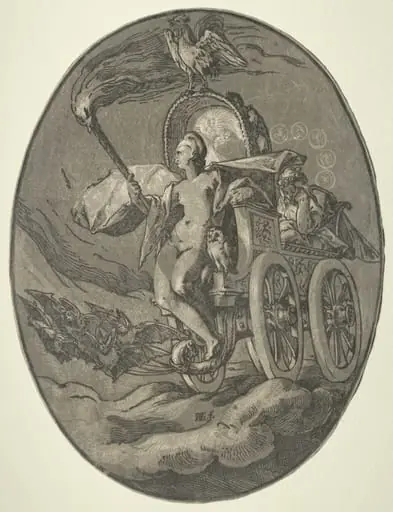 Seven Deities: Nox (Night)
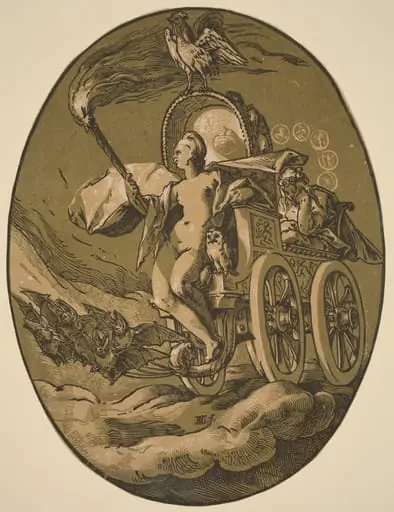 Nox
Nox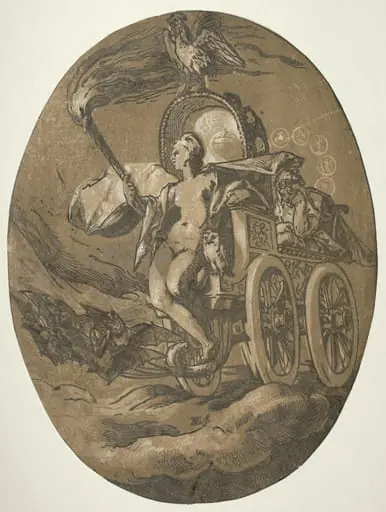 The Deities: Nox
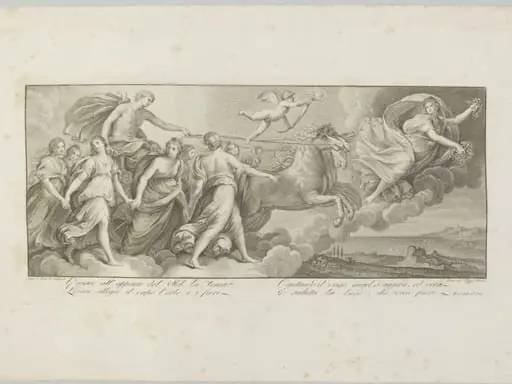 The Chariot of Aurora
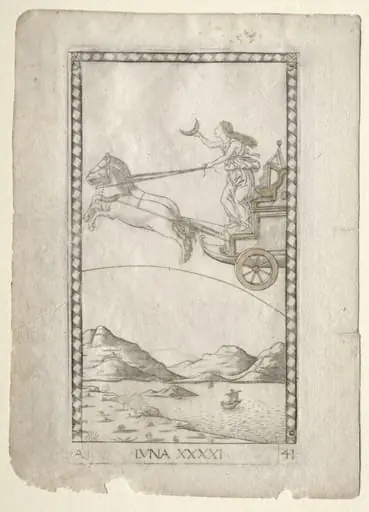 Luna (from the Tarocchi, series A: Firmaments of the Universe, #41)
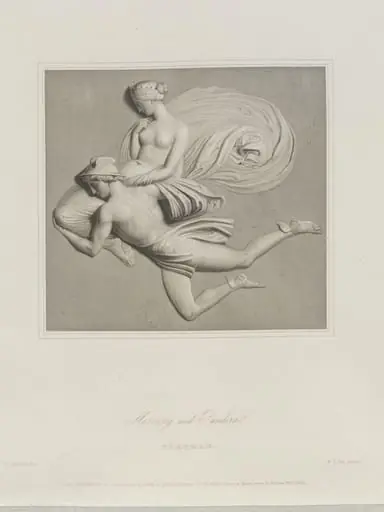 Mercury and Pandora
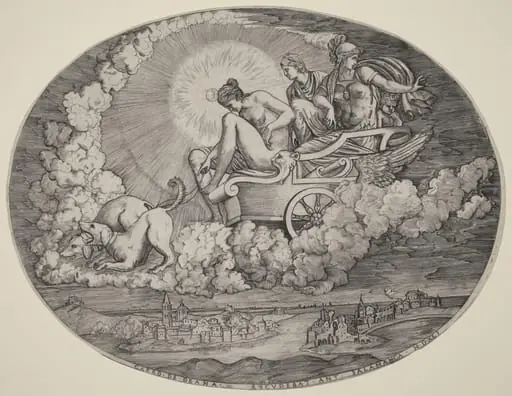 The Chariot of Diana
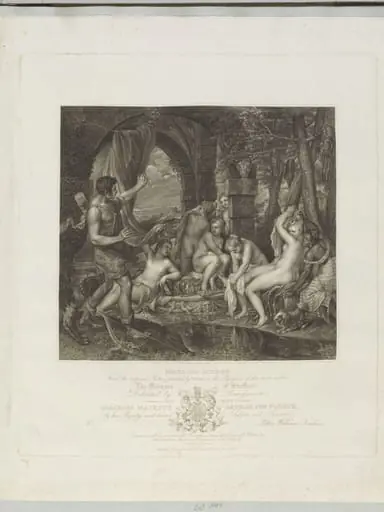 Diana and Actæon
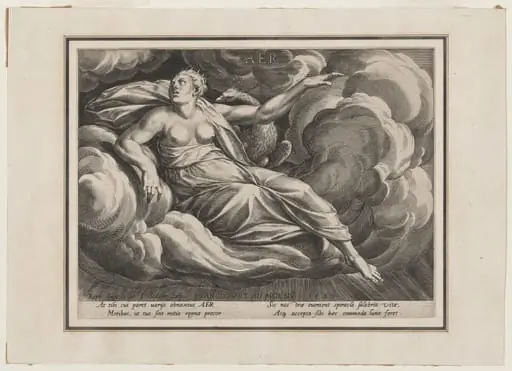 Air
Air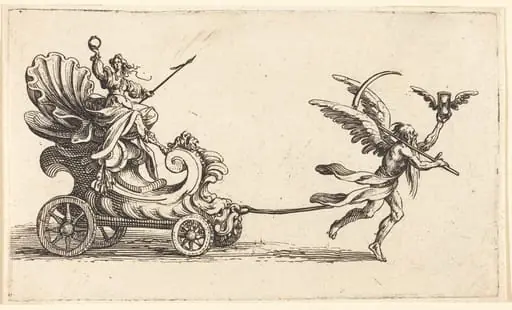 Entry of Monseigneur Henry de Lorraine, Marquis de Moy, under the Name of Pirandre
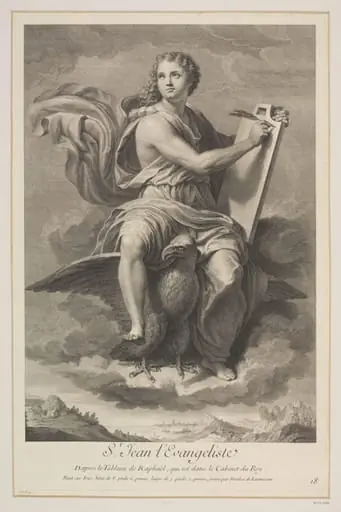 St. John the Evangelist
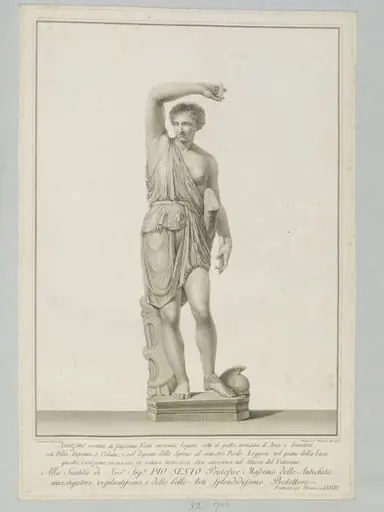 Statue of an Amazon