Artwork
Panoramic View of Nuremberg: Center Portion
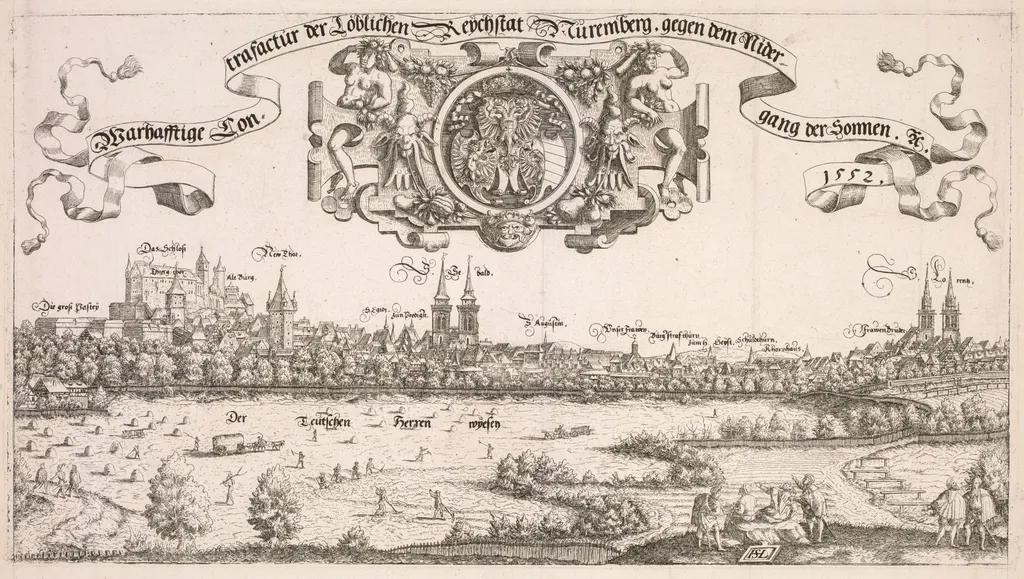
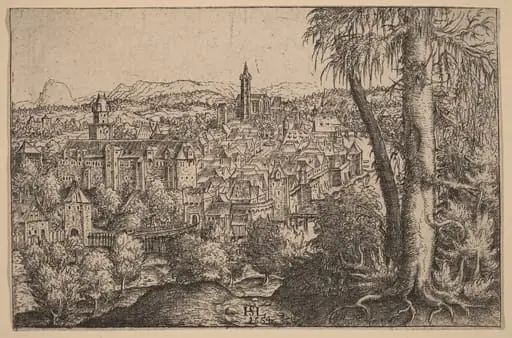
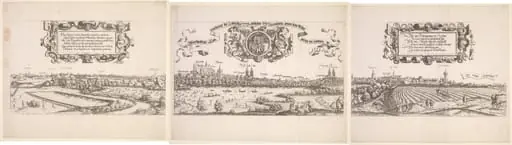
Panoramic View of Nuremberg: Center Portion is a print by the Renaissance artist Hanns Lautensack. It dates from 1552 and is held in the collection of the Cleveland Museum of Art.
About this work
This view was made in 1552 by Hanns Lautensack, who sketched the city as it really looked.
You see a long, detailed drawing of Nuremberg from above. The city spreads out with rooftops, towers, and streets, all carefully drawn.
This view was made in 1552 by Hanns Lautensack, who sketched the city as it really looked. He included real buildings and city walls, not an imaginary scene.
His work helps us see how German cities were built over 450 years ago. The level of detail shows careful handwork, not just art but also record-keeping.
Look next at the subject: germany.
Overview
Hanns Lautensack, a German etcher born in Bamberg in 1524, produced the print *Panoramic View of Nuremberg: Center Portion* in 1552. The work presents an aerial perspective of Nuremberg, rendered with meticulous line work that records the city’s layout, architecture, and fortifications as they existed in the mid‑16th century.
Subject & Meaning
The image functions as a topographical record rather than an imaginative landscape. By depicting actual rooftops, towers, streets and walls, Lautensack offers a visual document of Nuremberg’s urban structure, providing insight into the spatial organization of a major German city during the Renaissance.
Technique & Style
Executed as an etching, the print relies on fine incised lines to convey texture and depth. Lautensack’s draughtsmanship is evident in the precise rendering of architectural details, while the panoramic composition creates a continuous, bird‑s‑eye view that guides the viewer across the cityscape.
History & Provenance
After completing the Nuremberg panorama, Lautensack relocated to Vienna, where he may have been invited by Emperor Ferdinand I to document antiquities. He remained in Vienna until his death between 1564 and 1566. The print reflects the period when German artists were increasingly employed for documentary purposes.
Context
The work belongs to a broader tradition of 16th‑century German city views, which combined artistic skill with emerging interests in cartography and urban planning. Such prints served both as records for municipal authorities and as visual souvenirs for travelers and patrons.
Artist & collection
Artist
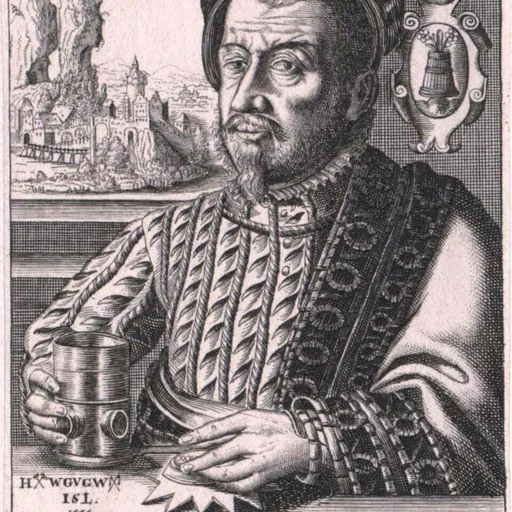
Hanns Lautensack (sometimes erroneously referred to as Hans Sebald Lautensack) (1524 – c.

![View of Nuremberg from the West [center section], by Hanns Lautensack](https://artifactworldgallery.com/img/hanns-lautensack--view-of-nuremberg-from-the-west-center-section--12422dca269411c0-w320.webp)
 Panoramic View of Nuremberg
![View of Nuremberg from the East [center section], by Hanns Lautensack](https://artifactworldgallery.com/img/hanns-lautensack--view-of-nuremberg-from-the-east-center-section--7aaed3dd23c167ee-w320.webp) View of Nuremberg from the East [center section]
View of Nuremberg from the East [center section]![View of Nuremberg from the East [right section], by Hanns Lautensack](https://artifactworldgallery.com/img/hanns-lautensack--view-of-nuremberg-from-the-east-right-section--cd9d20af411c0891-w320.webp) View of Nuremberg from the East [right section]
View of Nuremberg from the East [right section]![View of Nuremberg from the East [left section], by Hanns Lautensack](https://artifactworldgallery.com/img/hanns-lautensack--view-of-nuremberg-from-the-east-left-section--53a897f84943df87-w320.webp) View of Nuremberg from the East [left section]
View of Nuremberg from the East [left section]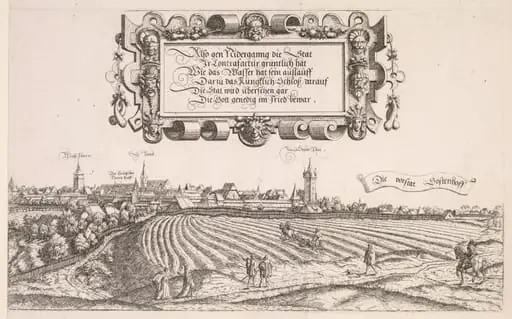 Panoramic View of Nuremberg: Right Portion
![View of Nuremberg from the West [left section], by Hanns Lautensack](https://artifactworldgallery.com/img/hanns-lautensack--view-of-nuremberg-from-the-west-left-section--8ac5006101a371ac-w320.webp) View of Nuremberg from the West [left section]
View of Nuremberg from the West [left section]![View of Nuremberg from the West [right section], by Hanns Lautensack](https://artifactworldgallery.com/img/hanns-lautensack--view-of-nuremberg-from-the-west-right-section--8f7bb033ee717b8e-w320.webp) View of Nuremberg from the West [right section]
View of Nuremberg from the West [right section]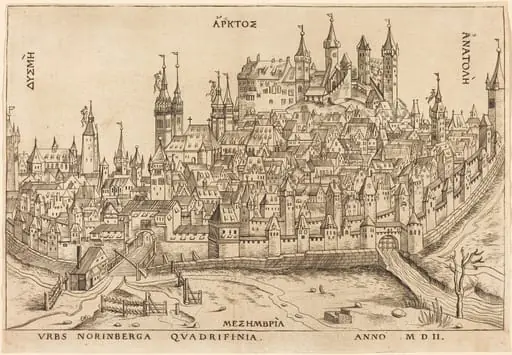 Nuremberg
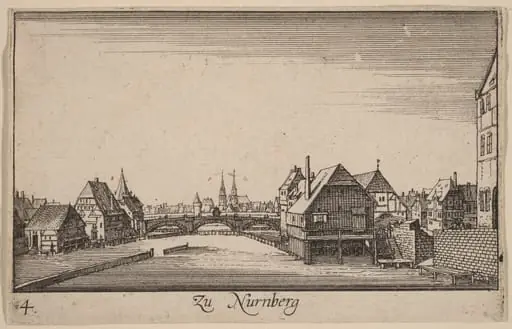 Nuremberg
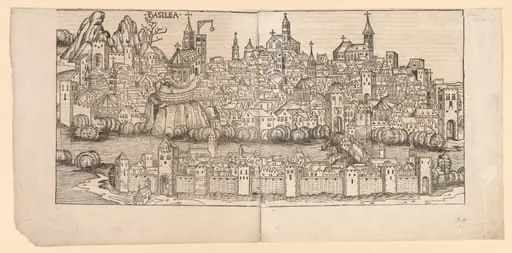 Nuremberg Chronicle: Topographical View of Basle, Switzerland