Artwork
Carolina Cuckoo, Black-billed Cuckoo, Blue Yellow-backed Warbler, and Yellow Red-poll Warbler
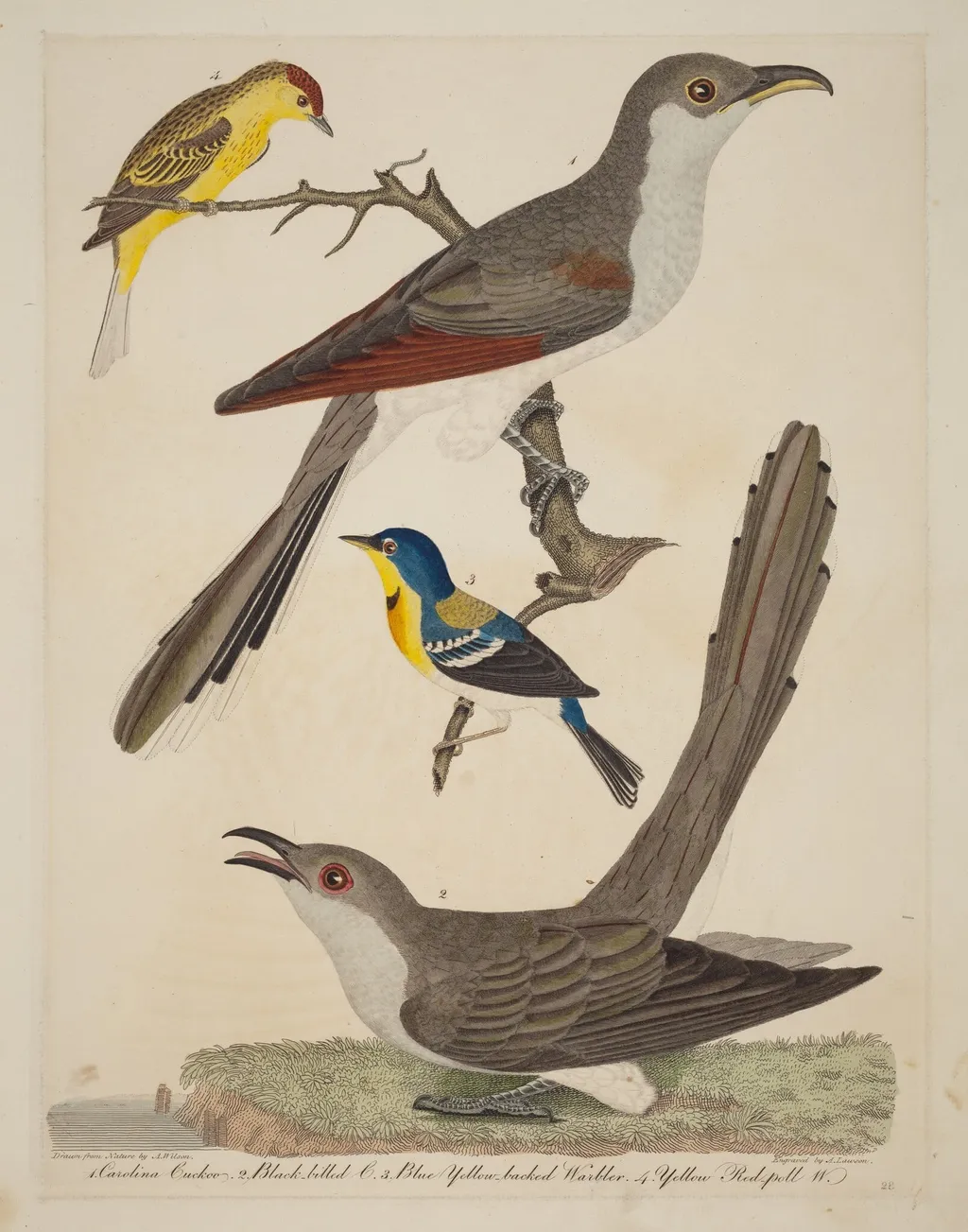
Carolina Cuckoo, Black-billed Cuckoo, Blue Yellow-backed Warbler, and Yellow Red-poll Warbler is an ink print by the Romanticist artist Alexander Lawson. It dates from 1811 and is held in the collection of the National Gallery of Art.
About this work
Overview
Alexander Lawson’s 1811 hand‑colored engraving presents four North American bird species—Carolina Cuckoo, Black‑billed Cuckoo, Blue‑Yellow‑backed Warbler and Yellow‑Red‑poll Warbler—arranged against a simple foliage backdrop. Each bird is rendered in a distinct pose, allowing the viewer to compare their differing beak shapes and plumage patterns within a unified natural setting.
Subject & Meaning
The work functions as a comparative study of avian form, highlighting variations in beak morphology and feather coloration among the selected species. By placing the birds together, Lawson invites observation of both their individual characteristics and their collective representation of North American wildlife.
Technique & Style
Created through a combination of etching and engraving on wove paper, the image was subsequently hand‑colored, yielding muted earth tones of brown, gray and yellow. The precise line work of the engraving conveys fine details of feathers and anatomy, while the limited palette reflects the early‑19th‑century interest in naturalistic yet restrained illustration.
History & Provenance
The print was produced in 1811, a period when scientific illustration was gaining prominence in Europe and America. It was likely circulated among naturalists and collectors interested in ornithology, though specific ownership records for this particular impression are not documented.
Context
Lawson’s engraving belongs to the broader Romantic era’s fascination with nature, wherein artists and scientists alike sought to document the natural world with accuracy and aesthetic sensitivity. The work aligns with contemporary publications that combined artistic skill with emerging taxonomic knowledge.
Artist & collection


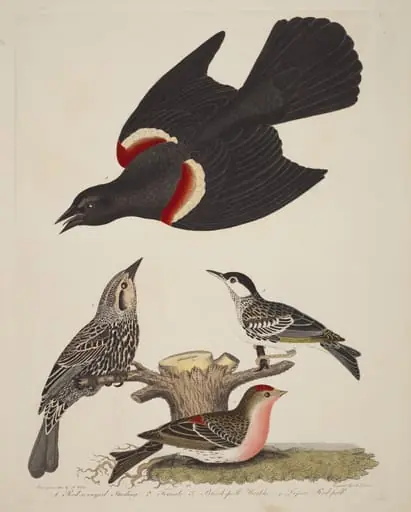 Red-winged Starling, Female Red-winged Starling, Black-poll Warbler, and Lesser Red-poll
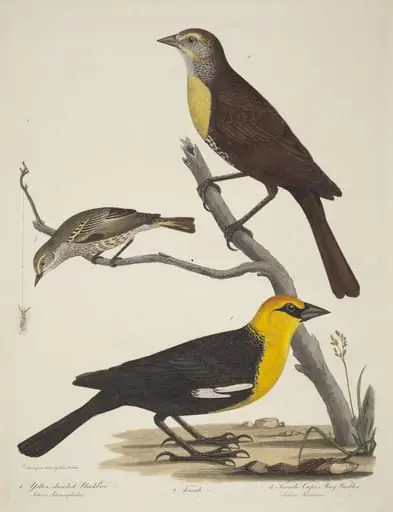 Yellow-headed Blackbird, Female Blackbird, and Female Cape May Warbler
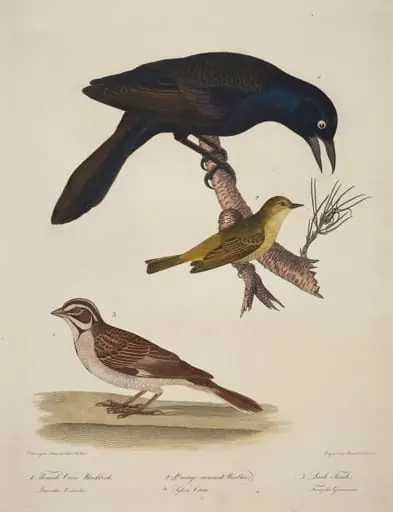 Female Crow Blackbird, Orange-Crowned Warbler, Lark Finch
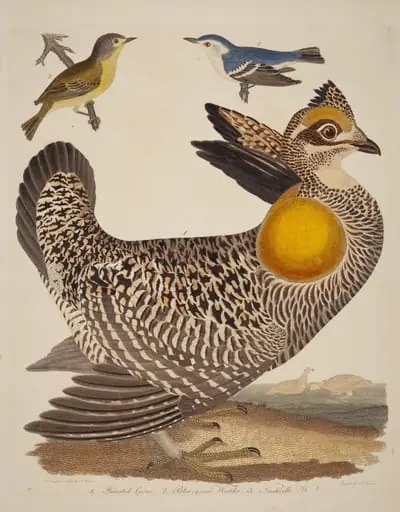 Pinnated Grous, Blue-green Warbler, and Nashville Warbler
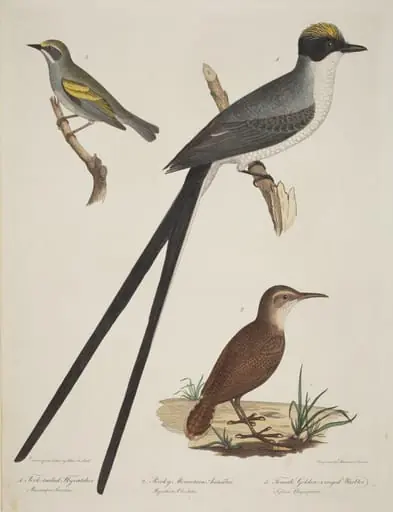 Fork-tailed Flycatcher, Rocky Mountain Anteater, and Female Golden-winged Warbler
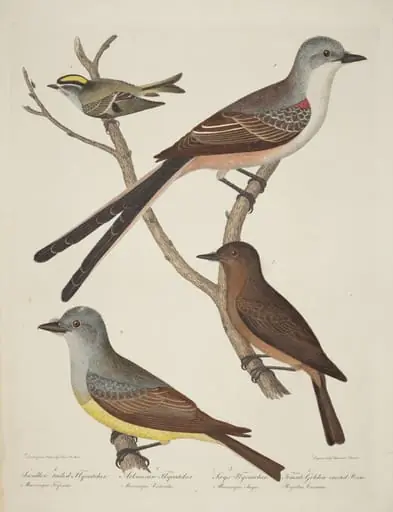 Swallow-tailed Flycatcher, Arkansas Flycatcher, Say's Flycatcher, and Female Golden-crested Wren
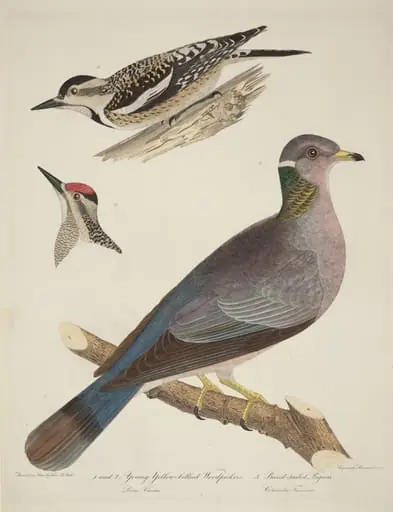 Young Yellow-bellied Woodpeckers and Band-tailed Pigeon
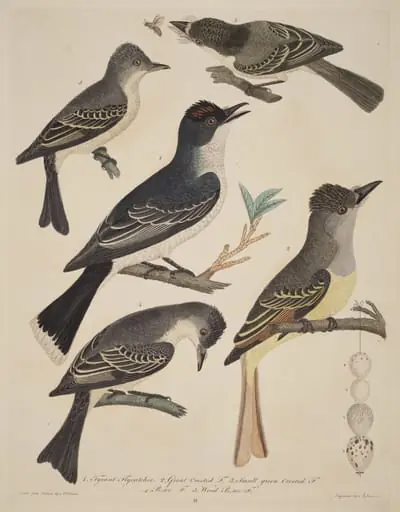 Five Birds with Their Eggs and an Insect
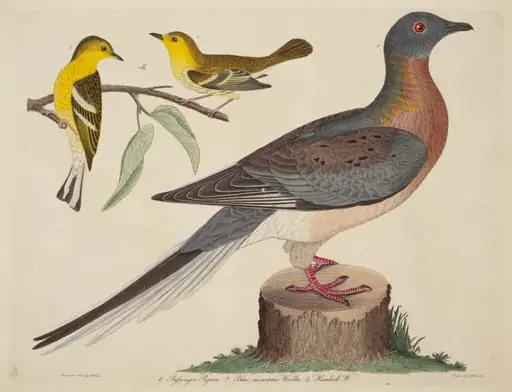 Passenger Pigeon, Blue-mountain Warbler, and Hemlock Warbler
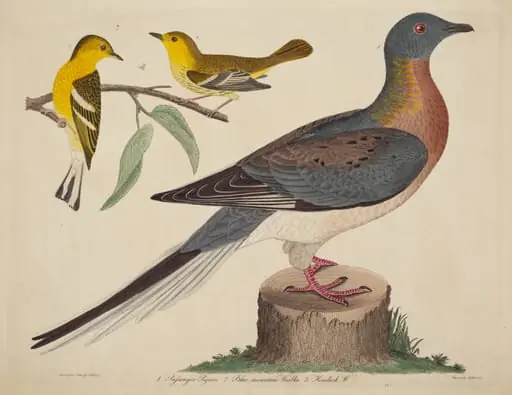 Passenger Pigeon, Blue-mountain Warbler, and Hemlock Warbler
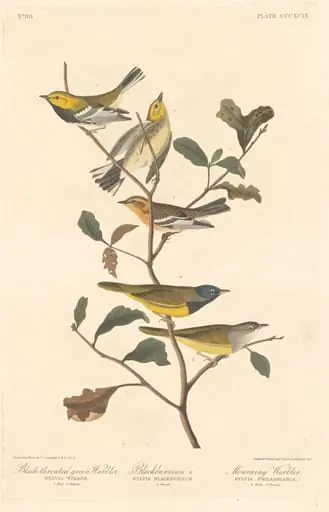 Black-throated Green Warbler, Blackburnian Warbler and Mourning Warbler
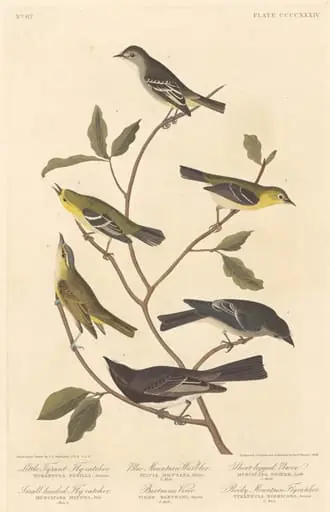 Little Tyrant Flycatcher, Small-Headed Flycatcher, Blue Mountain Warbler, Bartram's Vireo, Short-Legged Pewee, and Rocky Mountain Flycatcher
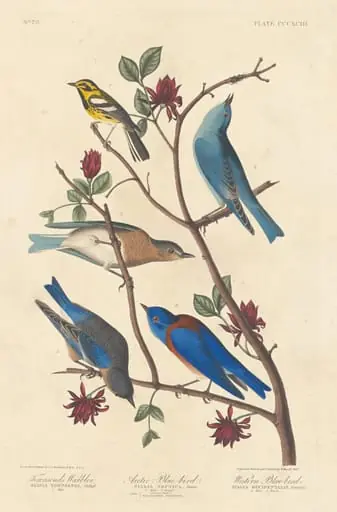 Townsend's Warbler, Arctic Blue Bird and Western Blue Bird
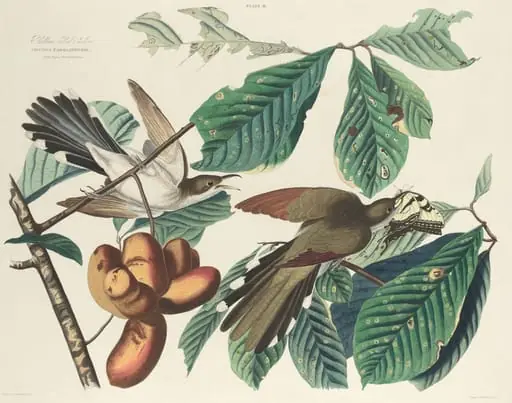 Yellow-billed Cuckoo
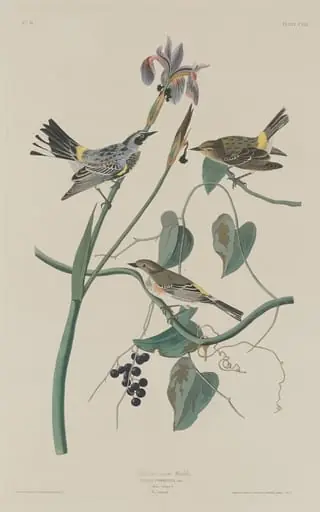 Yellow-crown Warbler