Artwork
Red-winged Starling, Female Red-winged Starling, Black-poll Warbler, and Lesser Red-poll
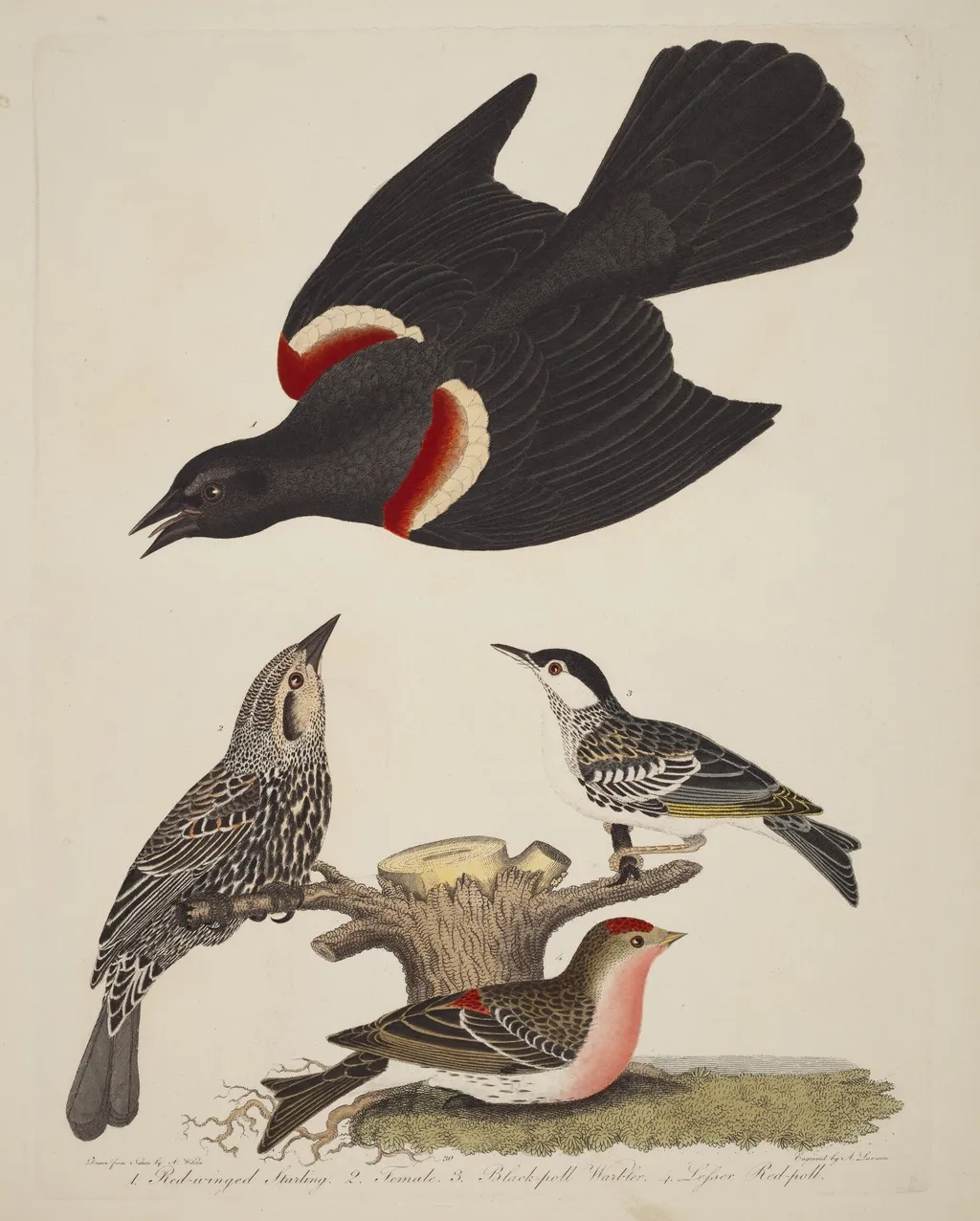
Red-winged Starling, Female Red-winged Starling, Black-poll Warbler, and Lesser Red-poll is an ink print by the Romanticist artist Alexander Lawson. It dates from 1811 and is held in the collection of the National Gallery of Art.
About this work
Overview
This 1811 print by Alexander Lawson depicts four bird species rendered in hand-colored engraving and etching on wove paper.
This 1811 print by Alexander Lawson depicts four bird species rendered in hand-colored engraving and etching on wove paper. The composition presents each specimen with scientific precision, arranged in a clear, uncluttered layout. The absence of a detailed background directs attention to the birds’ forms and plumage, reflecting the era’s emphasis on natural history documentation through visual accuracy.
Subject & Meaning
The image includes the Red-winged Starling, its female counterpart, the Black-poll Warbler, and the Lesser Red-poll. Each bird is labeled beneath, underscoring a taxonomic intent. The selection of species—some with vivid coloration, others more muted—suggests a focus on distinguishing features critical for identification. This was not ornamental art but a systematic record, aligned with Enlightenment-era efforts to classify the natural world.
Technique & Style
Lawson employed etching to define fine lines and contours, then applied hand-colored inks to replicate the birds’ natural hues. The wove paper’s smooth surface allowed for delicate tonal transitions, while the coloring was applied with restraint, avoiding excess. Details like feather texture and wing patterns were rendered with methodical care, prioritizing clarity over artistic flourish, typical of scientific illustration of the period.
History & Provenance
Created in 1811, the print emerged during a surge in natural history publishing in Britain. Lawson, active in London, contributed to illustrated works documenting local and exotic fauna. Though not widely known today, such prints were circulated among scholars, collectors, and institutions. Its survival reflects its role as a reference tool rather than a decorative object.
Context
This work belongs to a broader movement in early 19th-century Europe where naturalists collaborated with artists to produce accurate visual records of species. With limited photography, engraved illustrations were essential for disseminating biological knowledge. The inclusion of both sexes and multiple species in one plate aligns with contemporary field guides aimed at aiding identification in the wild.
Legacy
Though overshadowed by larger ornithological works, Lawson’s print exemplifies the quiet rigor of pre-photographic natural history. Its method—combining precise engraving with careful hand-coloring—remains a benchmark for accuracy in biological illustration. Such prints laid groundwork for modern field guides, preserving visual data before the advent of color photography.
Artist & collection


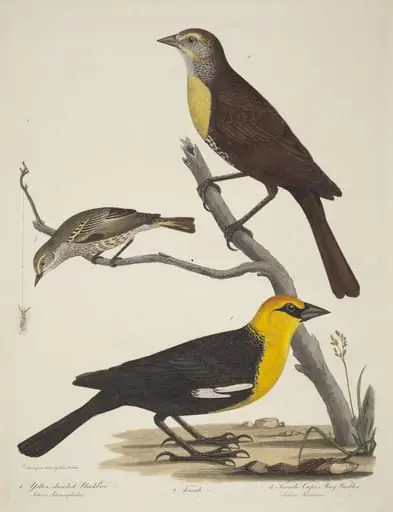 Yellow-headed Blackbird, Female Blackbird, and Female Cape May Warbler
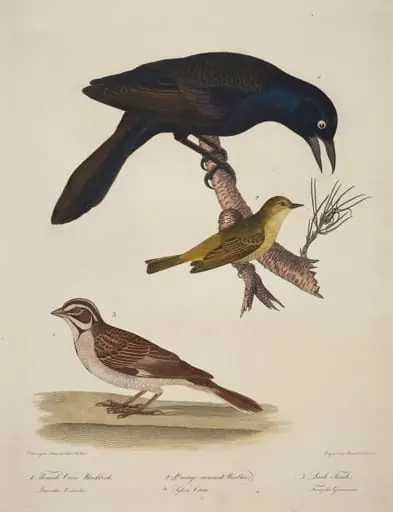 Female Crow Blackbird, Orange-Crowned Warbler, Lark Finch
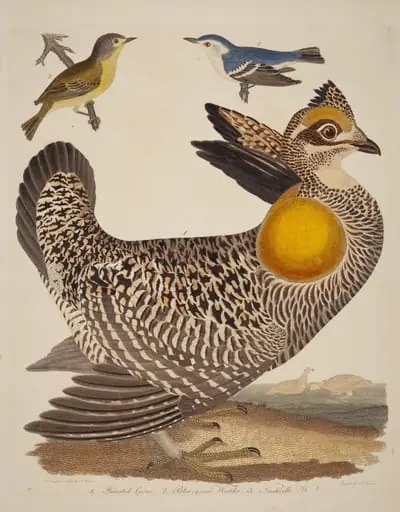 Pinnated Grous, Blue-green Warbler, and Nashville Warbler
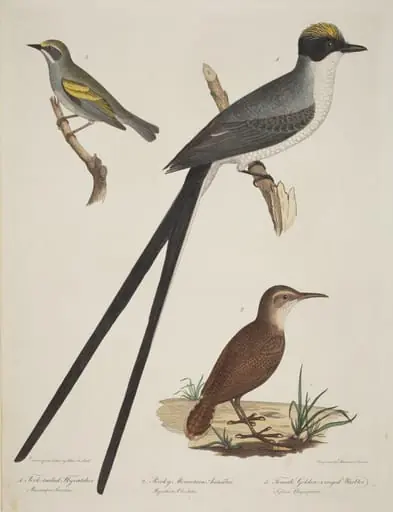 Fork-tailed Flycatcher, Rocky Mountain Anteater, and Female Golden-winged Warbler
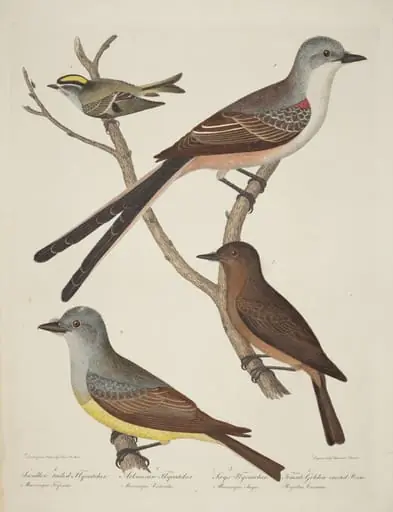 Swallow-tailed Flycatcher, Arkansas Flycatcher, Say's Flycatcher, and Female Golden-crested Wren
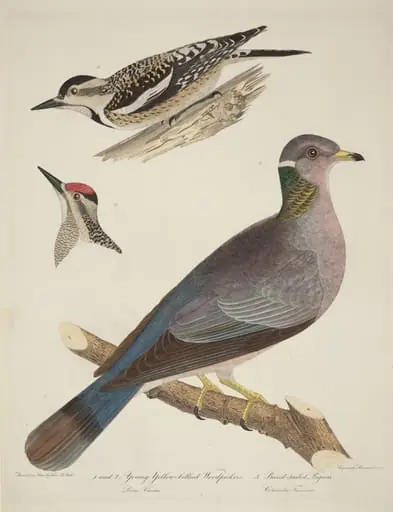 Young Yellow-bellied Woodpeckers and Band-tailed Pigeon
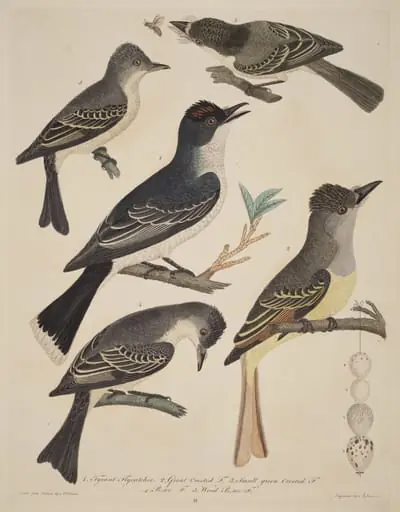 Five Birds with Their Eggs and an Insect
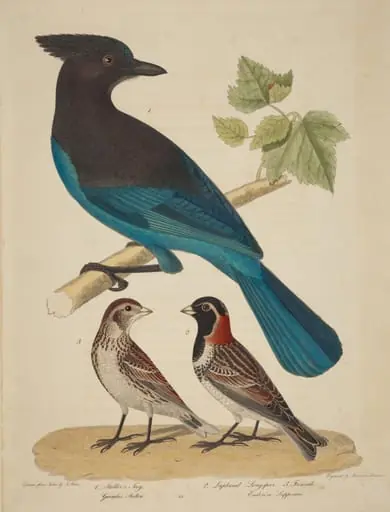 Stellar's Jay, Lapland Longspur and Female
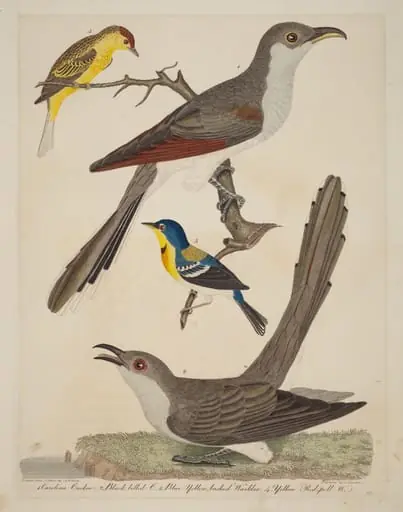 Carolina Cuckoo, Black-billed Cuckoo, Blue Yellow-backed Warbler, and Yellow Red-poll Warbler
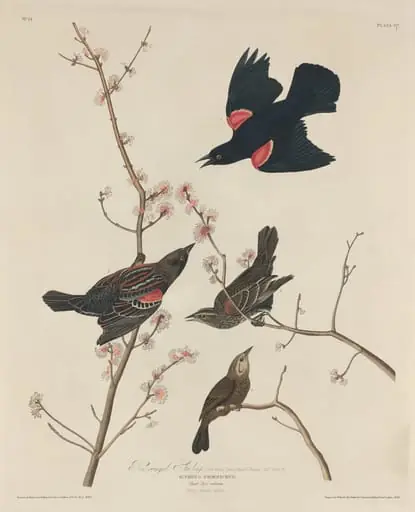 Red-winged Starling
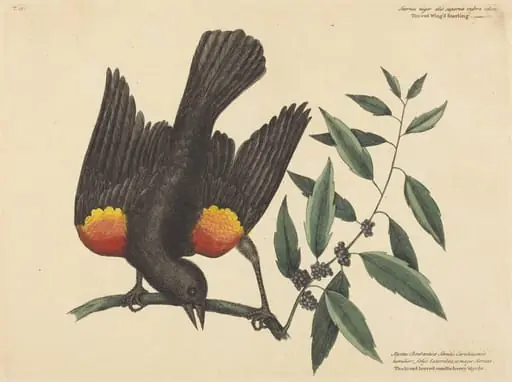 The Red Winged Starling (Oriolus phoeniceus)
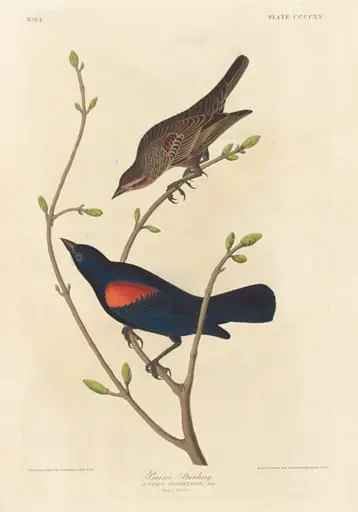 Prairie Starling
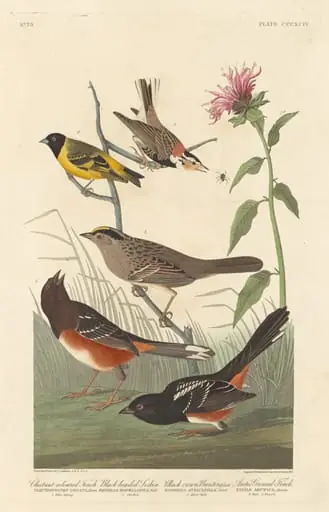 Chestnut-colored Finch, Black-headed Siskin, Black Crown Bunting and Arctic Ground Finch
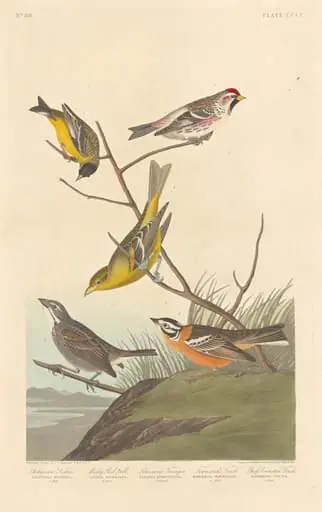 Arkansaw Siskin, Mealy Red-poll, Louisiana Tanager, Townsend's Finch and Buff-breasted Finch