Artwork
Yellow-billed Magpie, Stellers Jay, Ultramarine Jay and Clark's Crow
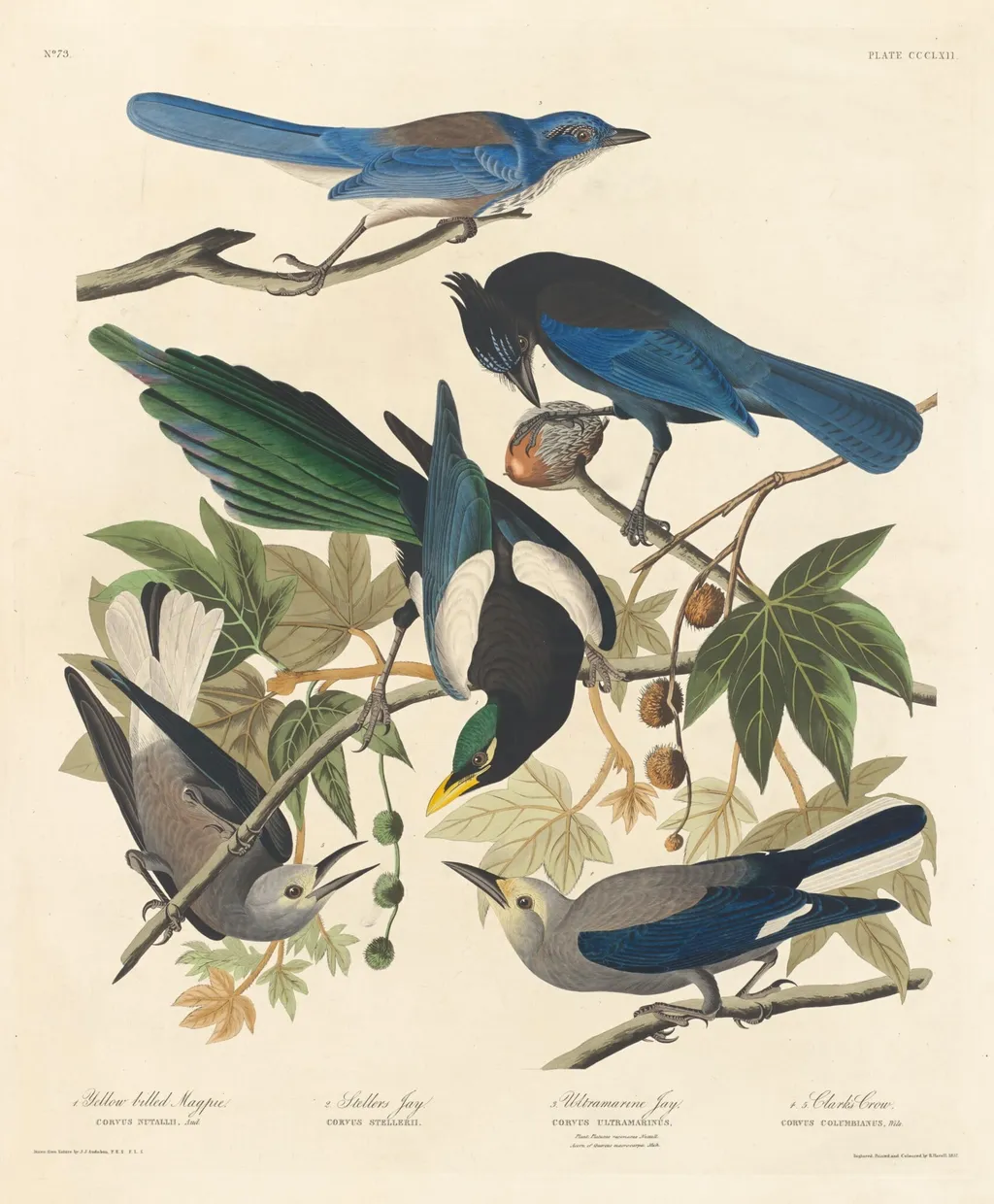
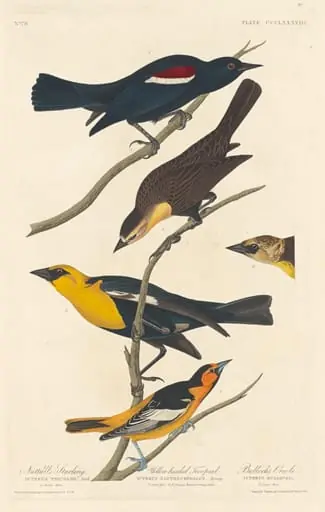
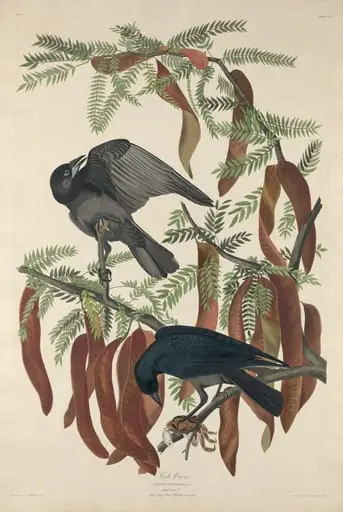
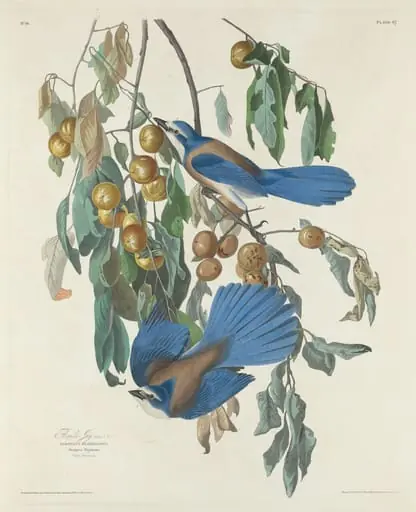
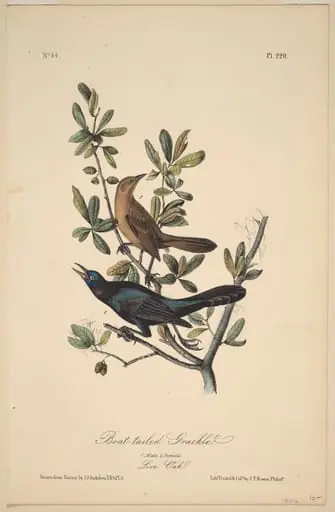
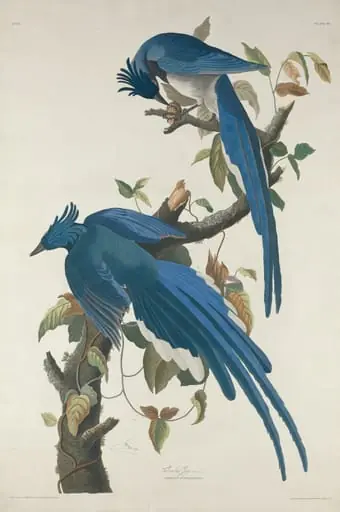
Yellow-billed Magpie, Stellers Jay, Ultramarine Jay and Clark's Crow is an ink print by the Romanticist artist Robert Havell Jr.. It dates from 1837 and is held in the collection of the National Gallery of Art.
About this work
Overview
Executed with technical precision, the work belongs to a broader tradition of natural history illustration that flourished in the early 19th century.
This 1837 print by Robert Havell Jr. presents four North American corvid species in hand-colored engraving and aquatint on Whatman wove paper. Executed with technical precision, the work belongs to a broader tradition of natural history illustration that flourished in the early 19th century. Havell, trained in the family’s engraving practice, employed fine lines and subtle tonal gradations to render the birds with scientific clarity, aligning with contemporary efforts to document avian biodiversity.
Subject & Meaning
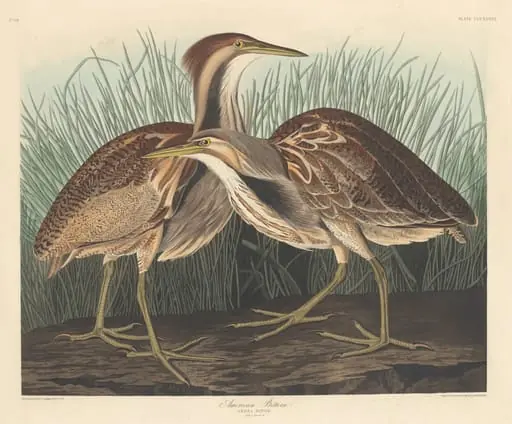
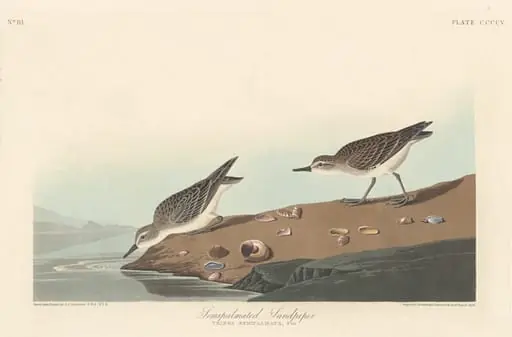
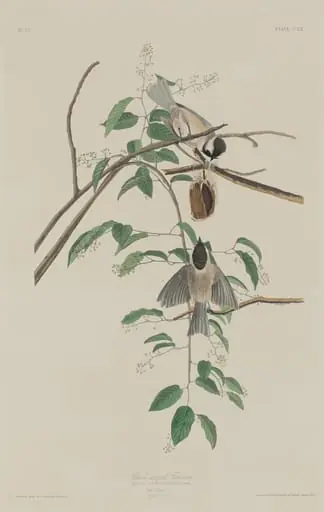
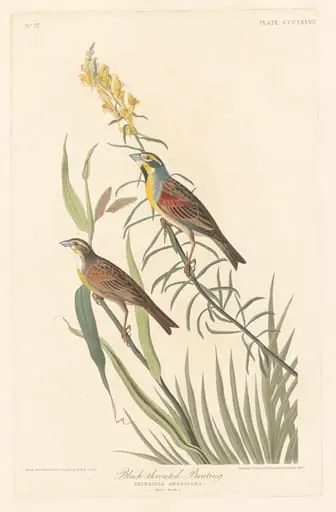
The composition features the Yellow-billed Magpie, Steller’s Jay, Ultramarine Jay, and Clark’s Crow, each labeled by scientific nomenclature. Perched among foliage and pine cones, the birds are arranged to emphasize their distinct plumage and postures. The inclusion of native vegetation situates them within their ecological context, reflecting the period’s emphasis on accurate habitat representation. No symbolic or allegorical layer is present—focus remains on taxonomic identification.
Technique & Style
Havell used engraving for crisp linear detail and aquatint to achieve soft tonal transitions, particularly in feather textures. Hand-coloring enhanced natural hues without obscuring the underlying line work. The background foliage is rendered with delicate, varied strokes, creating depth without distraction. The birds’ plumage is meticulously shaded to suggest volume and light, demonstrating mastery of printmaking methods favored in scientific illustration of the era.
History & Provenance
Robert Havell Jr. was part of a multi-generational family of English engravers known for their work in natural history publications. This print likely originated from a larger ornithological project, possibly linked to European efforts to catalog New World species. Though its original publication context is unconfirmed, its technique and subject align with works produced for academic and private collectors during the 1830s.
Context
During the 1830s, aquatint and hand-coloring were standard for high-quality natural history prints, especially in Europe and North America. Scientific expeditions and colonial expansion fueled demand for accurate visual records of unfamiliar fauna. Havell’s work reflects this trend, contributing to a visual archive that supported emerging fields like ornithology and zoology, even as it remained distinct from artistic expression.
Legacy
Havell’s print endures as a technical example of early 19th-century natural history printing. While not widely exhibited today, it represents the convergence of art and science in pre-photographic documentation. Its survival in institutional collections underscores its role in preserving visual records of species before widespread habitat change and taxonomic revision altered their classification.
Artist & collection

Artist
The Havell family of Reading, Berkshire, England, included a number of notable engravers, etchers and painters, as well as writers, publishers, educators, and musicians.