Artwork
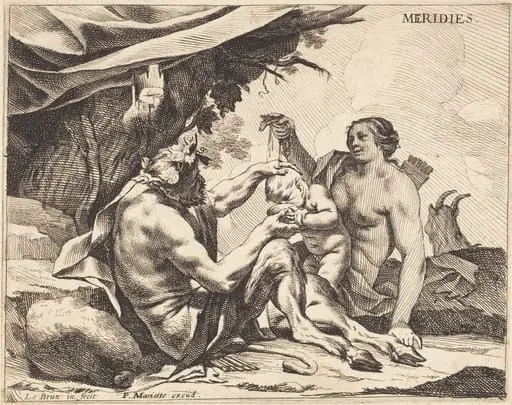
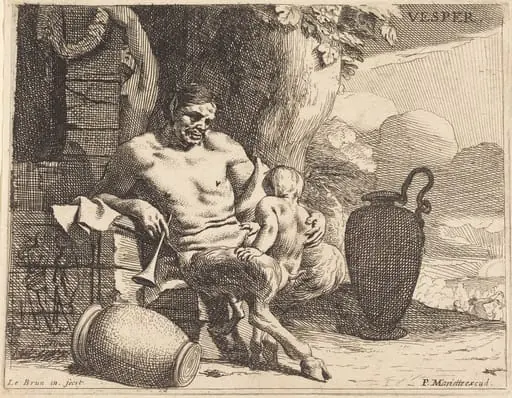
The Four Times of Day
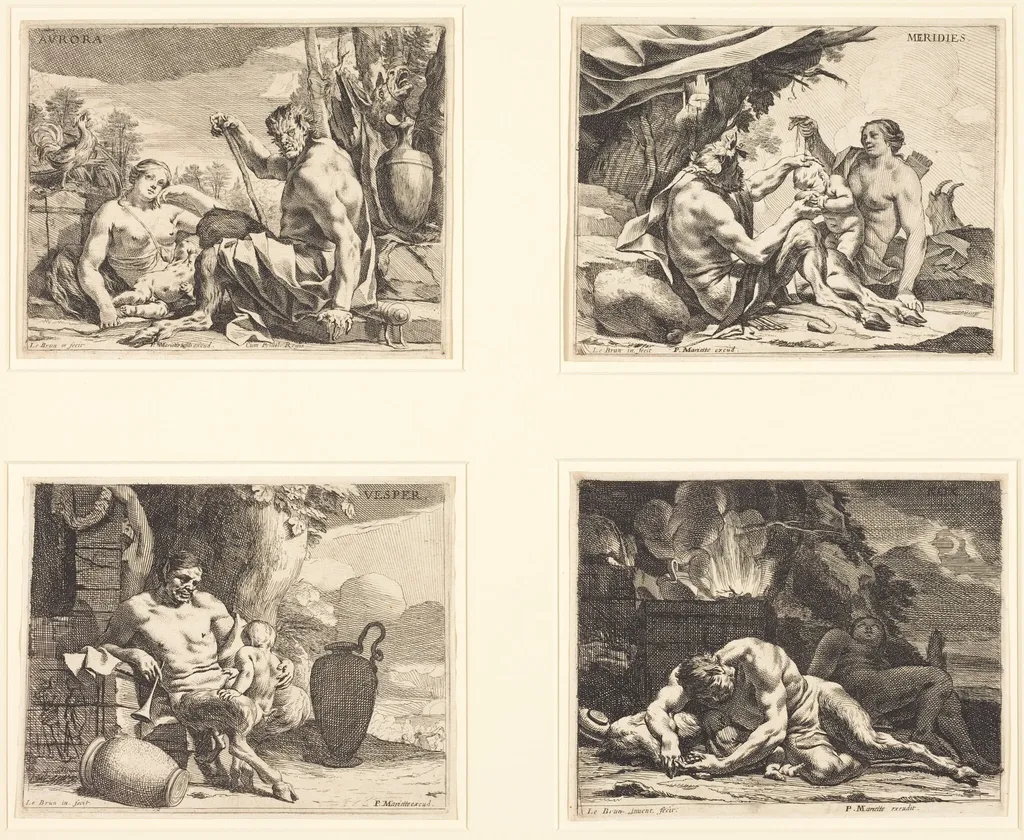
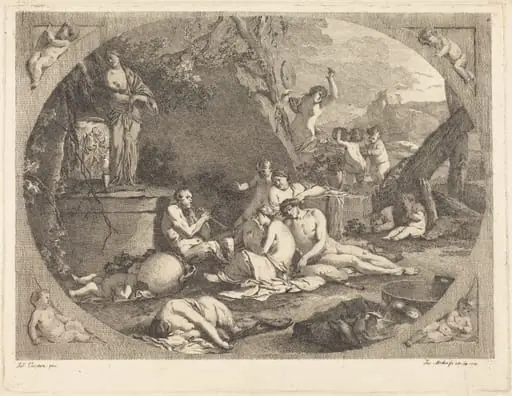
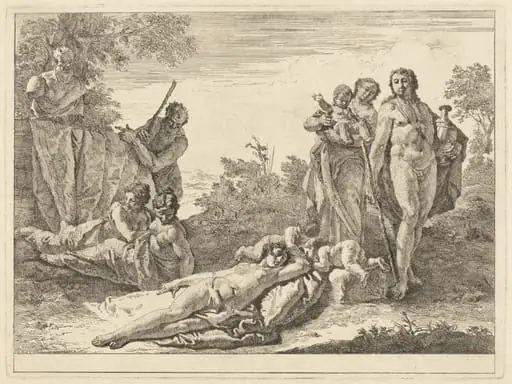
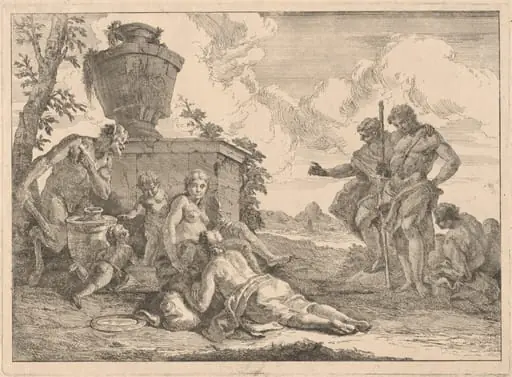
The Four Times of Day is an ink print by the Baroque artist Charles Le Brun. It dates from 1640 and is held in the collection of the National Gallery of Art.
About this work
Overview
The titles—Aurora, Meridies, Vesper, and Nox—suggest a progression through the day, aligning each scene with a classical temporal division.
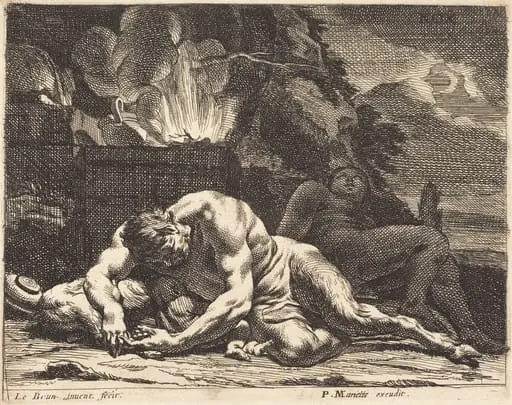
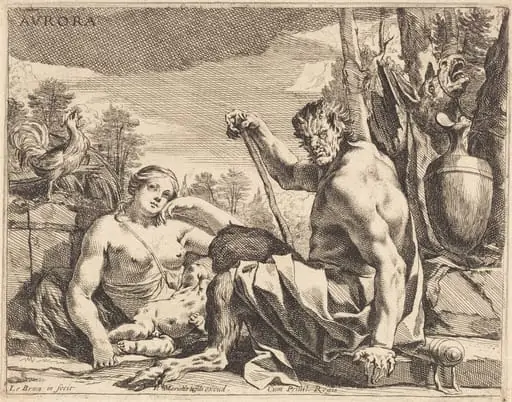
The Four Times of Day is a set of four printed works produced around 1640 by Charles Le Brun, each depicting a different hour through mythologically inflected human figures. Executed in black-and-white etching and engraving on laid paper, the series presents dynamic, nude or partially draped figures in dramatic poses against natural backdrops. The titles—Aurora, Meridies, Vesper, and Nox—suggest a progression through the day, aligning each scene with a classical temporal division.
Subject & Meaning
Each print personifies a time of day through allegorical figures drawn from classical tradition. Aurora, the dawn, is shown awakening; Meridies, midday, features vigorous activity; Vesper, evening, captures quiet reflection; and Nox, night, portrays rest or slumber. The muscular forms and emotional intensity evoke ancient ideals of human vigor and divine order, transforming time into a narrative of cosmic rhythm rather than mere chronology.
Technique & Style
Le Brun designed the compositions, while Pierre Mandle executed the engraving, as indicated by the inscriptions 'Le Brun invt.' and 'P. Mandle sculps.' The prints combine fine etched lines with precise engraving to render texture in skin, foliage, and rock. Dramatic lighting and exaggerated musculature reflect the influence of Italian Mannerism and classical sculpture, emphasizing movement and emotional gravity over naturalistic detail.
History & Provenance
Created during Le Brun’s early career in Paris, the series predates his later royal commissions under Louis XIV. The prints circulated among collectors and artists, serving as studies in human form and allegorical expression. Their collaborative production—design by Le Brun, engraving by Mandle—was typical of the period, reflecting the division of labor common in printmaking workshops of 17th-century France.
Context
These prints emerged in a cultural moment when classical mythology was revived as a framework for intellectual and artistic expression. Le Brun’s engagement with ancient themes aligned with broader European trends, particularly in France, where the court and academies promoted mythological allegory as a vehicle for moral and philosophical reflection. The series reflects the growing prestige of print as a medium for disseminating artistic ideas beyond painting.
Legacy
The Four Times of Day established Le Brun’s reputation as a designer of allegorical imagery and influenced later academic approaches to figure composition. Though not widely exhibited today, the set remains a documented example of early French printmaking that bridged classical subject matter with technical precision. Its structure—four unified yet distinct scenes—became a model for thematic print series in the following century.
Artist & collection


 Apollo and Nymphs in a Landscape with a Bust of Pan
 Bacchanal
 Nine Figures around a Herm of Pan
 A Satyr with a Staff and Seven Other Figures
 Burying the Dead
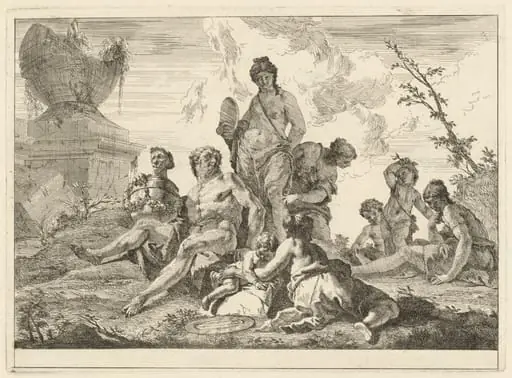 Venus and Vulcan with Three Nymphs and Three Cupids
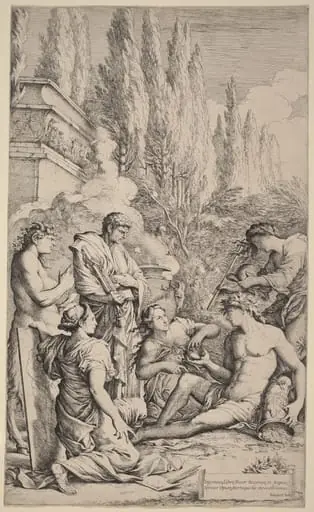 The Genius of Salvator Rosa
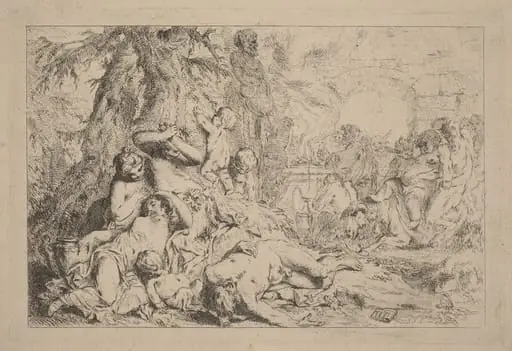 The March of Silenus
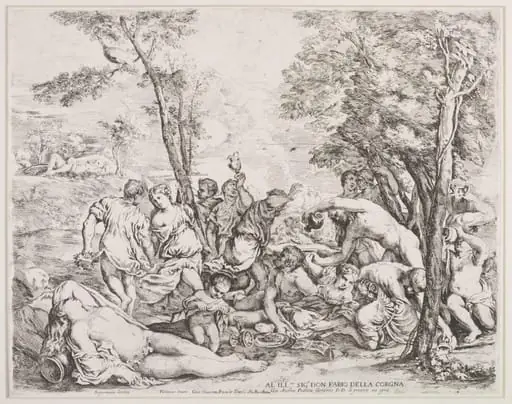 The Triumph of Bacchus
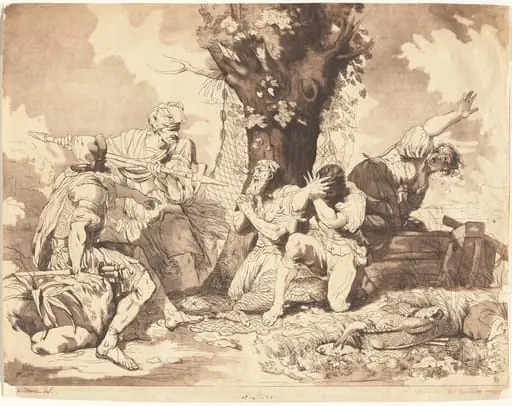 Banditti Robbing Fishermen
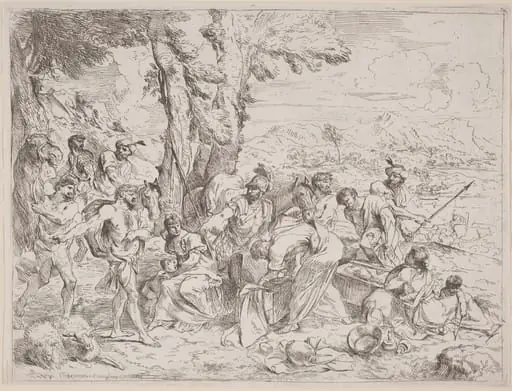 Rachel Concealing Laban's Idols
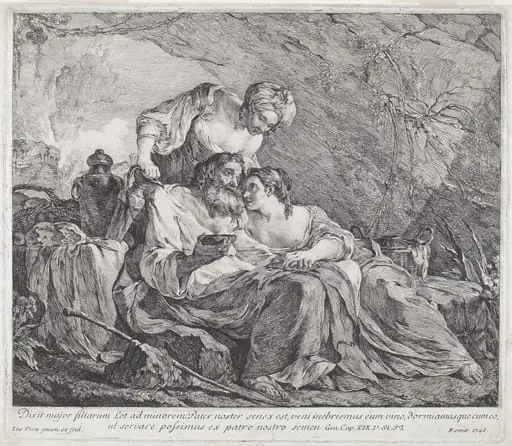 Lot and His Daughters