Artwork
Lily of the valley; Pinks
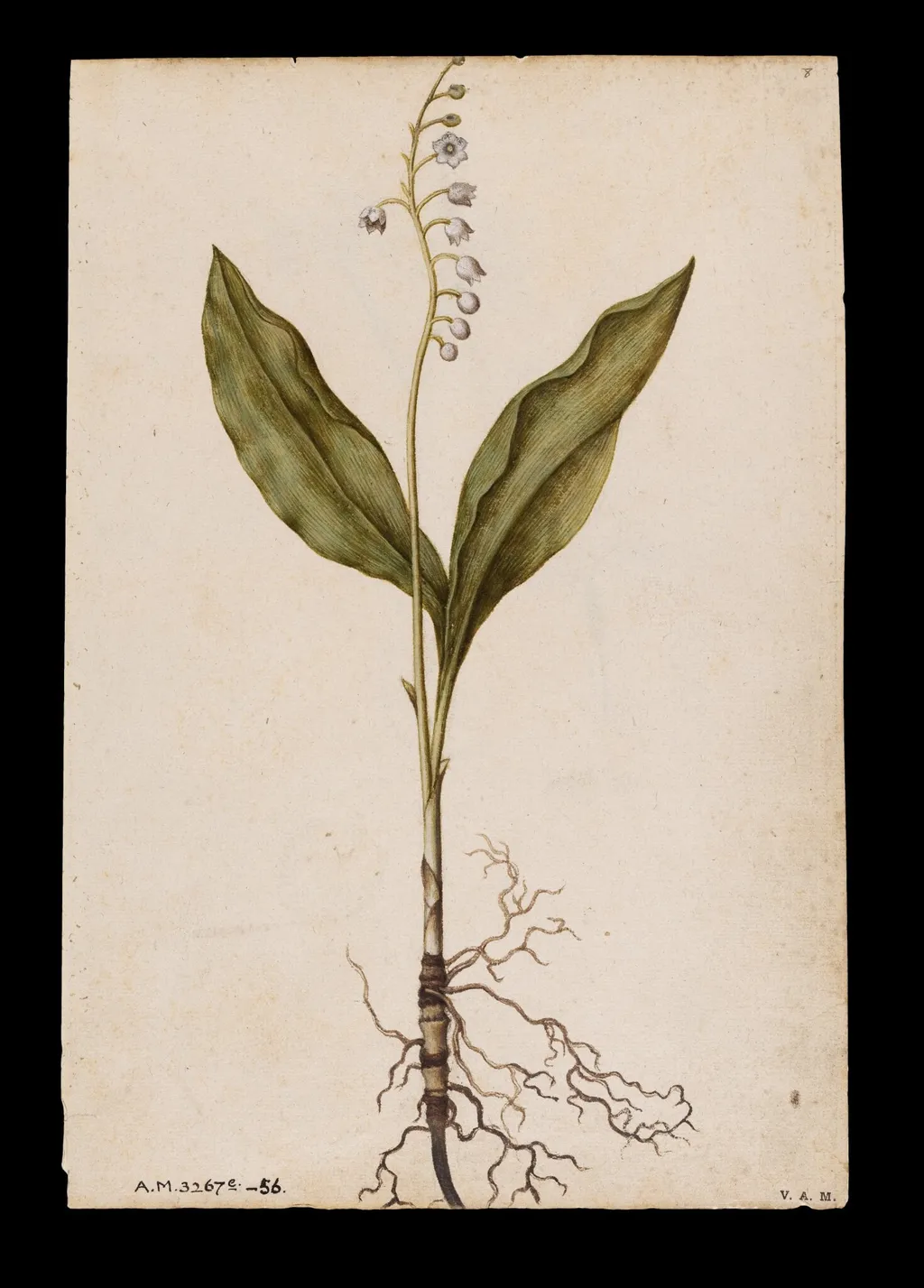
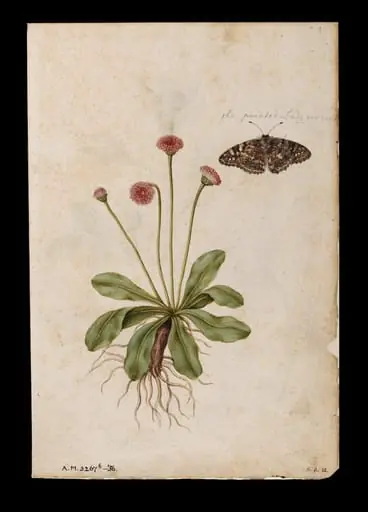
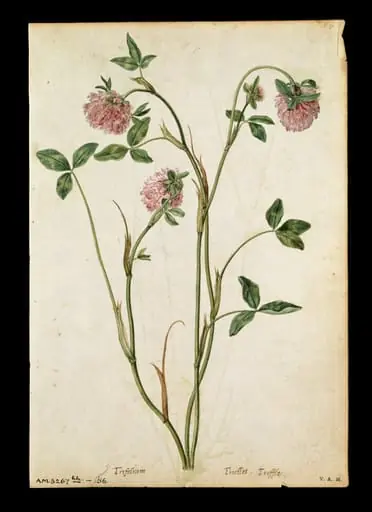
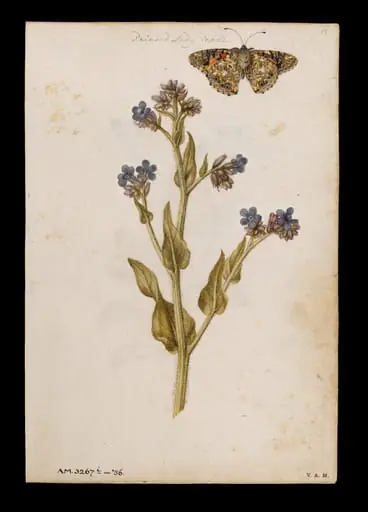
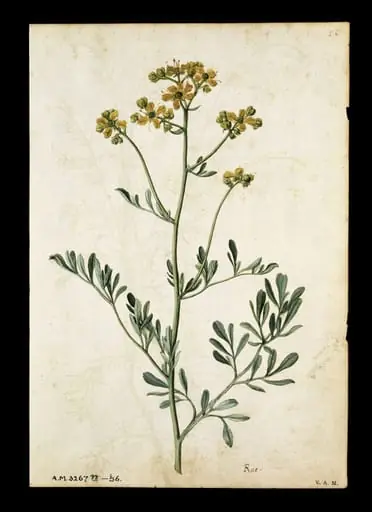
Lily of the valley; Pinks is a watercolor work on paper by the Early Baroque Italian artist Jacques Le Moyne de Morgues. It dates from 1568 and is held in the collection of the Victoria and Albert Museum. This watercolour is one of fifty-nine botanical studies in a bound album, attributed to Jacques Lemoyne de Morgues.
About this work
Overview
Its survival offers rare insight into early European attempts to document unfamiliar flora with scientific precision.
This watercolour is one of fifty-nine botanical studies in a bound album, attributed to Jacques Lemoyne de Morgues. Created around 1575, the sheet is double-sided: one face depicts lily of the valley, the reverse shows pinks. The album represents a systematic observation of plants, likely compiled during Lemoyne’s time in the New World. Its survival offers rare insight into early European attempts to document unfamiliar flora with scientific precision.
Subject & Meaning
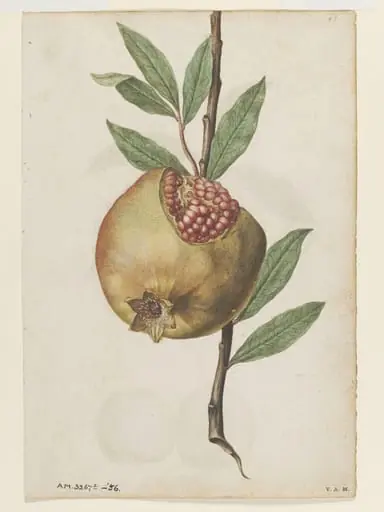
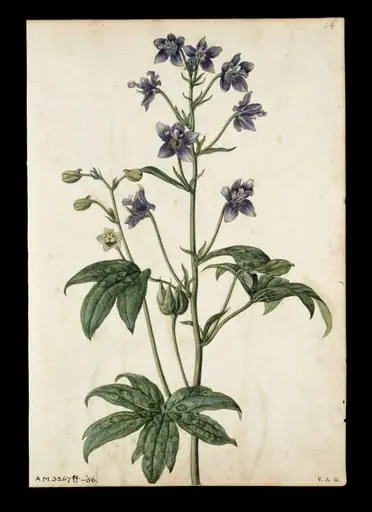
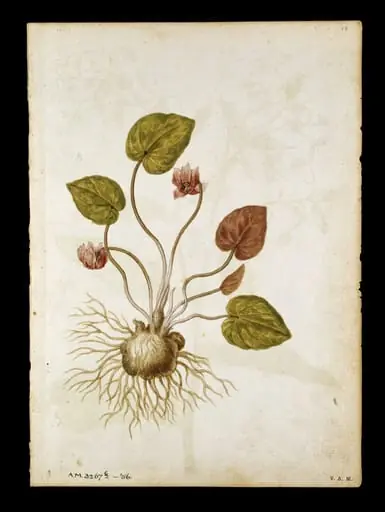
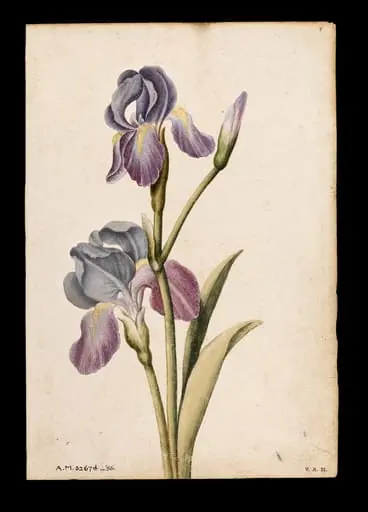
The two flowers depicted—lily of the valley and pinks—are common in European gardens but held different symbolic weight. Lily of the valley, associated with purity and renewal, and pinks, linked to devotion and divine love, were chosen for their botanical distinctiveness rather than allegory. Lemoyne’s focus was on accurate representation, capturing each plant’s form, leaf structure, and bloom with minimal embellishment, reflecting a shift toward empirical observation.
Technique & Style
Lemoyne employed transparent watercolour on paper, layering delicate washes to suggest texture and light. His lines are precise but unobtrusive, allowing the pigment to define form. The absence of background or scale references isolates each specimen, emphasizing botanical clarity. The double-sided format suggests efficiency in material use and a methodical approach, possibly intended for study or reference rather than display.
History & Provenance
The album remained largely unknown until its rediscovery in the early 20th century. Previously dismissed as crude preparatory sketches, the watercolours were reevaluated as significant records of early natural history. Lemoyne’s role as a Huguenot artist and cartographer in French Florida lent credibility to his observations. The album’s survival through centuries of political and religious upheaval underscores its quiet endurance as a document of scientific curiosity.
Context
Created during a period of expanding European exploration, Lemoyne’s work aligns with the growing interest in classifying New World flora. Unlike later botanical illustrators, he worked without the aid of printing technology, relying on direct observation. His images predate the formal establishment of botanical illustration as a discipline, making them among the earliest surviving examples of field-based plant recording by a European artist in the Americas.
Legacy
Lemoyne’s watercolours reshaped his historical standing, moving him from obscurity to recognition as a pioneer in botanical art. The album’s attention to anatomical detail and its use of watercolour as a medium for scientific accuracy influenced later illustrators. Though few of his works survive, this album stands as a testament to the quiet, methodical work that underpinned the development of natural history as a visual science.
Artist & collection
Artist
Jacques Le Moyne de Morgues (French pronunciation: ; c. 1533–1588) was a French artist and member of Jean Ribault's expedition to the New World. His depictions of Native American life and culture, colonial life, and…