Artwork
Curious Man (Un curieux)
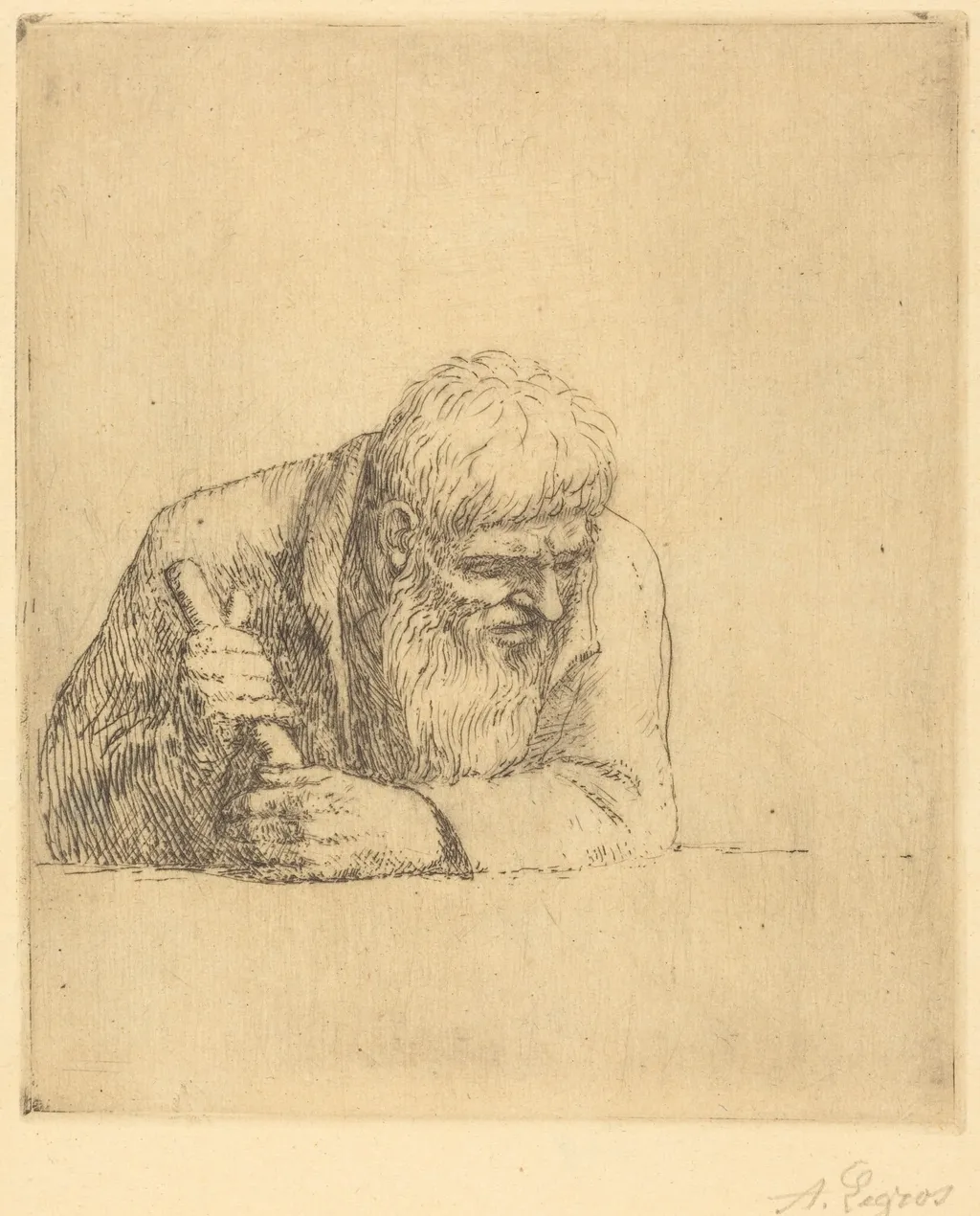
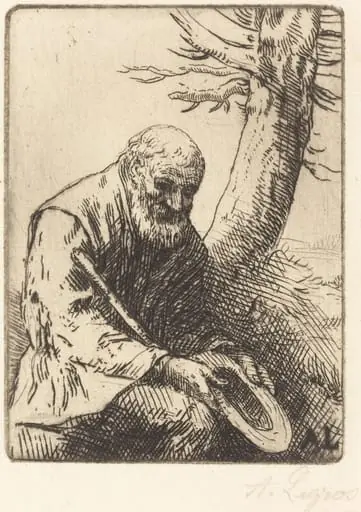
Curious Man (Un curieux) is an ink print by the Romanticist artist Alphonse Legros. It dates from 1874 and is held in the collection of the National Gallery of Art.
About this work
Overview
Alphonse Legros produced the print *Curious Man (Un curieux)* in 1874, employing a combination of etching and drypoint. The work presents a solitary figure, his head inclined on his right hand, captured in a moment of quiet contemplation.
Subject & Meaning
The composition centers on a man whose thoughtful expression is emphasized by the deep lines etched around his forehead and eyes. His unkempt hair and full beard contribute to an atmosphere of introspection, suggesting a pause for reflection rather than a narrative scene.
Technique & Style
Legros merged traditional etching with drypoint, allowing him to render fine facial details alongside richer, velvety shadows. The drypoint’s burr creates softer edges in the beard and hair, while the etched lines define the furrowed brow, demonstrating his command of tonal variation within a single print.
History & Provenance
Born in France in 1837, Legros moved to London in 1863 and later became a British citizen. His teaching activities were instrumental in reviving interest in etching among British artists, and *Curious Man* reflects the technical expertise he promoted during that period.
Context
Created during the mid‑19th‑century resurgence of printmaking, the work aligns with contemporary interests in portraying everyday subjects with psychological depth. Legros’s focus on a solitary, pensive figure mirrors broader artistic trends that favored intimate, observational studies over grand historical themes.
Artist & collection

Artist
Alphonse Legros (French pronunciation: ; 8 May 1837 – 8 December 1911) was a French, later British, painter, etcher, sculptor, and medallist.

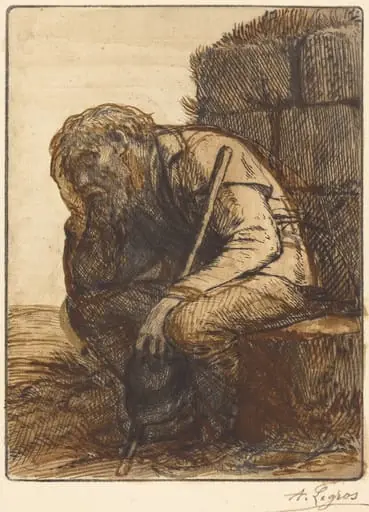 Desperate Man (Le desespere)
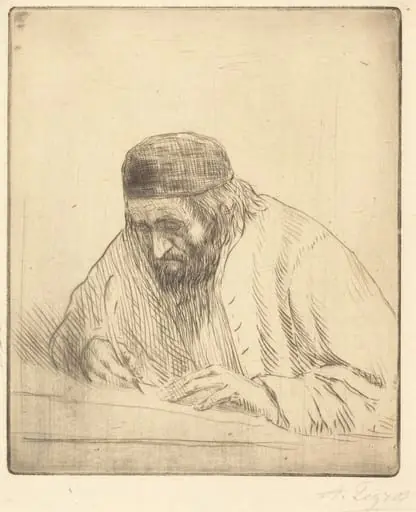 Writer (L'ecrivain)
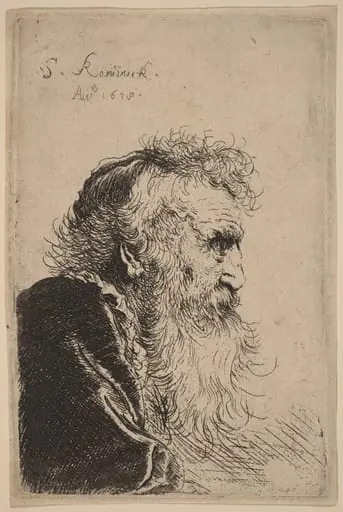 Bust of an Old Man in Profile, Facing Right
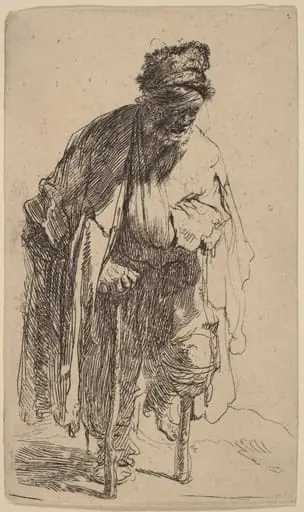 Beggar with a Wooden Leg
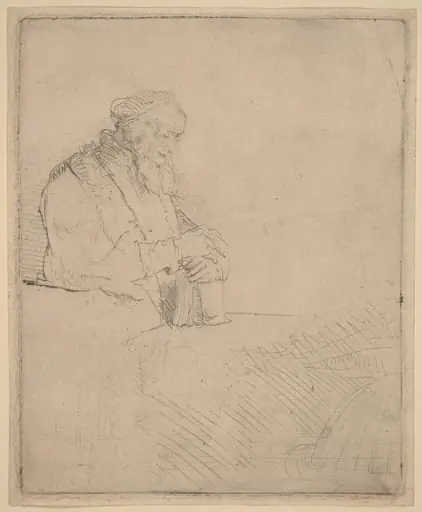 Old Man in Meditation, Leaning on a Book
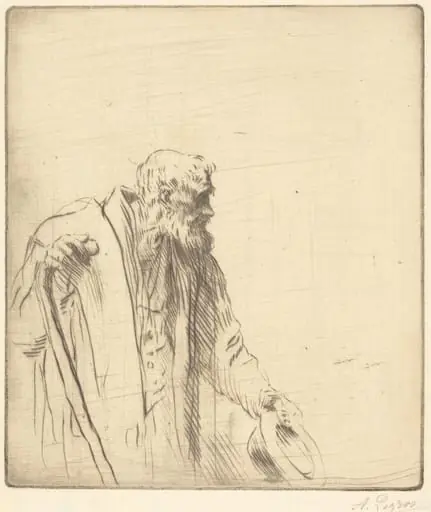 Beggar (Un mendiant)
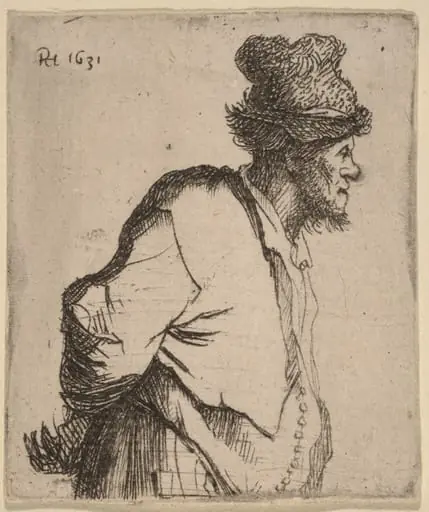 Peasant with His Hands behind His Back
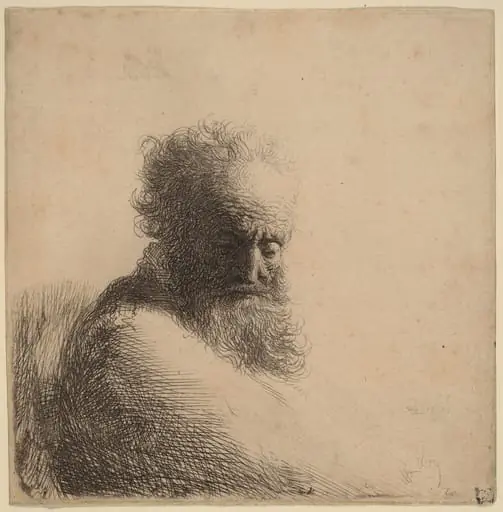 Bust of an Old Bearded Man, Looking Down, Three Quarters Right
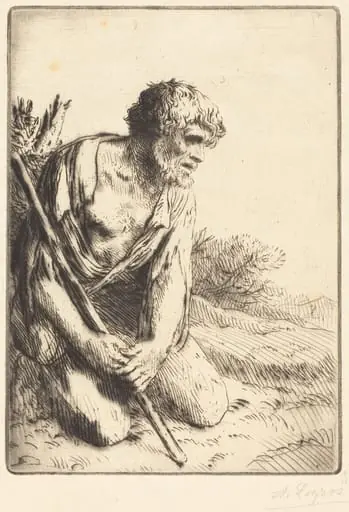 The Prodigal Son, 3rd plate (L'enfant prodigue)
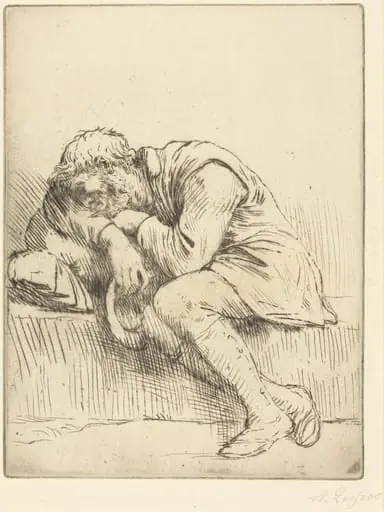 Sleeping Beggar (Mendiant endormi)
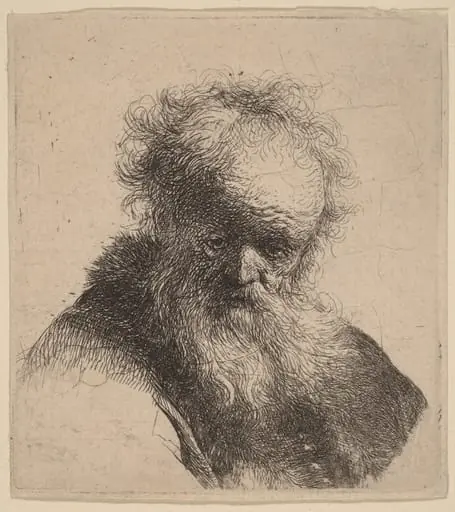 Bust of an Old Man with Flowing Beard and White Sleeve
 Beggar with Hat in Hand (Mendiant avec son chapeau a la main)