Artwork
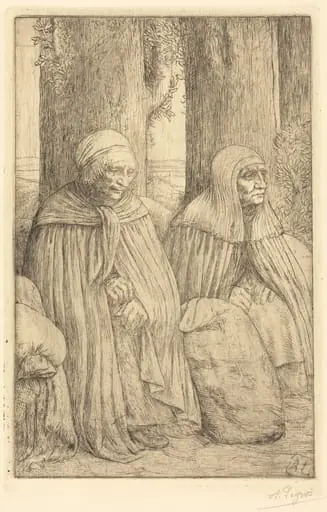
Peasants (Paysannes)
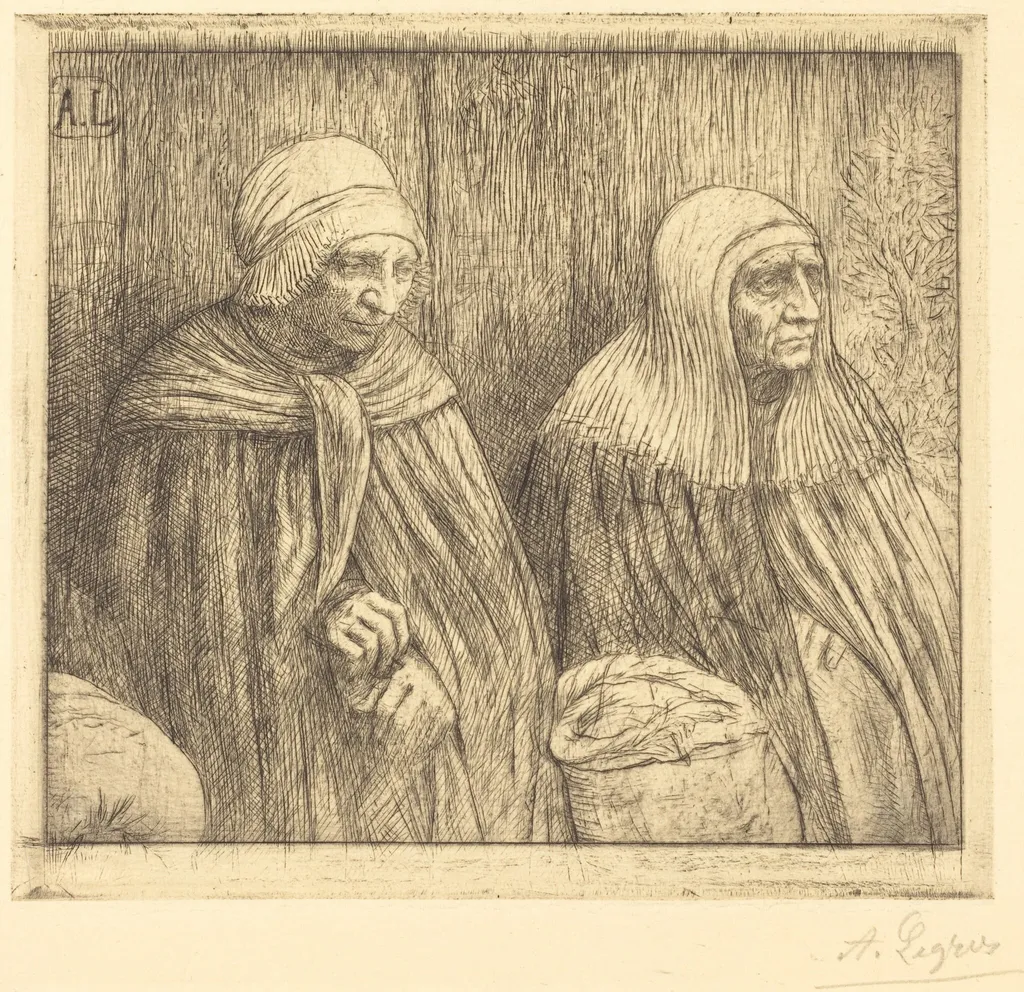
Peasants (Paysannes) is an ink print by the Romanticist artist Alphonse Legros. It dates from 1874 and is held in the collection of the National Gallery of Art.
About this work
Overview
The work belongs to a broader revival of printmaking in the late 19th century, where artists returned to handcrafted techniques over industrial reproduction.
Created in 1874, *Peasants (Paysannes)* is an etching and drypoint by Alphonse Legros, a French artist who spent much of his career in Britain. The work belongs to a broader revival of printmaking in the late 19th century, where artists returned to handcrafted techniques over industrial reproduction. Legros used direct, tactile methods to capture the physicality of rural life, emphasizing texture and form over idealization.
Subject & Meaning
The print portrays two elderly peasant women standing side by side, their postures conveying quiet endurance. One clasps her hands; the other rests a hand on a basket, suggesting labor and stillness in equal measure. Their expressions are unadorned, avoiding sentimentality. Legros presents them not as symbols but as individuals shaped by hardship, reflecting his interest in the dignity of ordinary lives.
Technique & Style
Legros employed drypoint and etching to build dense, irregular lines that mimic the roughness of worn fabric and weathered skin. The plate was scratched directly with a needle, creating burrs that hold ink and produce rich, fuzzy edges. This method rejects smoothness, favoring a tactile, almost haptic surface that echoes the texture of the subjects themselves—handmade, unpolished, and grounded in physical reality.
History & Provenance
Legros moved to London in the 1860s and became a central figure in the British etching revival, teaching at the Slade School of Art. *Peasants* emerged during a period when he was deeply engaged with printmaking as both art and pedagogy. The work was likely produced for a small circle of collectors and fellow artists, circulating among those interested in the renewed value of original prints over mass-produced images.
Context
In the 1870s, European artists increasingly turned to rural subjects as industrialization reshaped society. Legros aligned with this trend but avoided picturesque nostalgia. His focus on aging laborers reflected a broader interest in realism, influenced by French naturalism and the social consciousness of the time. Unlike romanticized depictions, his figures carry the weight of lived experience without embellishment.
Legacy
Legros’s prints, including *Peasants*, helped reestablish etching as a serious artistic medium in Britain. His emphasis on direct, expressive mark-making influenced a generation of printmakers who valued process over polish. Though less widely known today, his work remains a touchstone for those exploring the intersection of craft, realism, and the human condition in 19th-century print culture.
Artist & collection

Artist
Alphonse Legros (French pronunciation: ; 8 May 1837 – 8 December 1911) was a French, later British, painter, etcher, sculptor, and medallist.

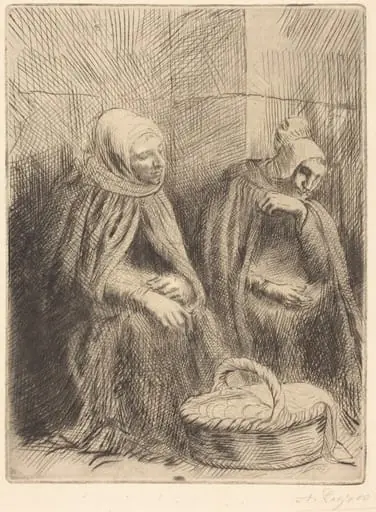 Egg-sellers, 1st plate (Les marchandes d'oeufs)
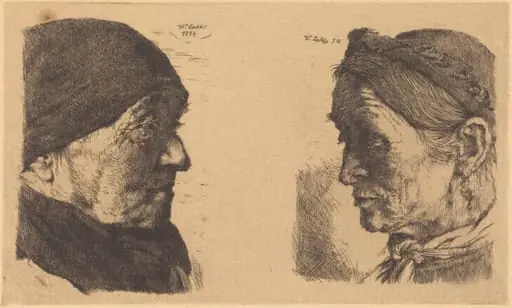 Portrait of an Old Peasant Woman, in Profile to the Right, and Peasant Woman with Closed Eyes
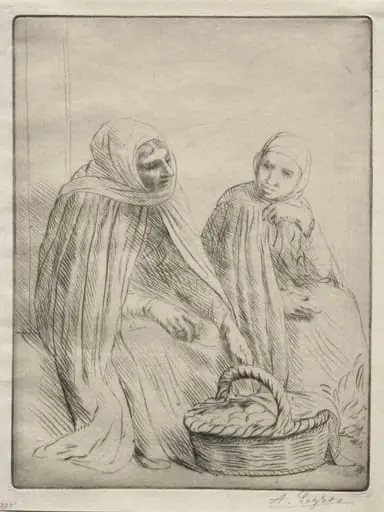 The Egg Merchants (1st Plate)
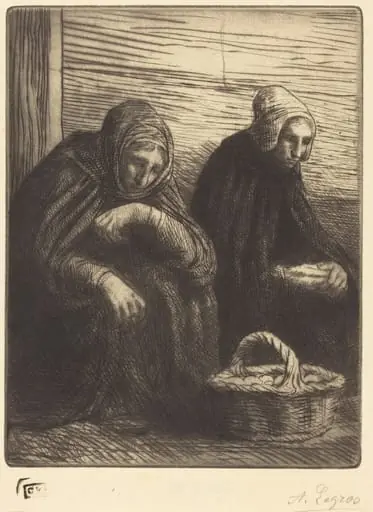 Egg-sellers, 2nd plate (Les marchandes d'oeufs)
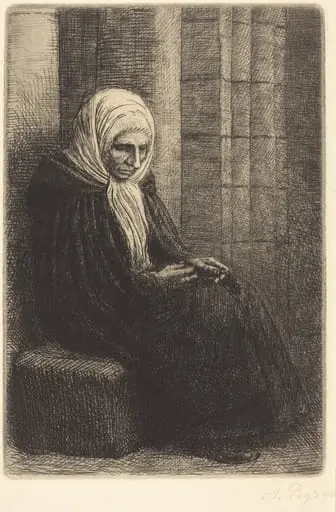 Woman Seated against a Wall, Child with His Head in Her Lap (Femme assis, muraille au fond, enfant la tete dans son giron)
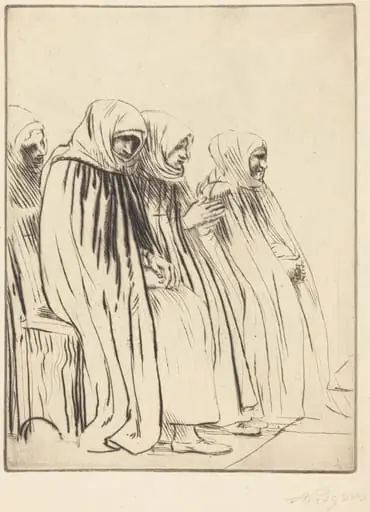 Women of Brussels (Femmes de Bruges)
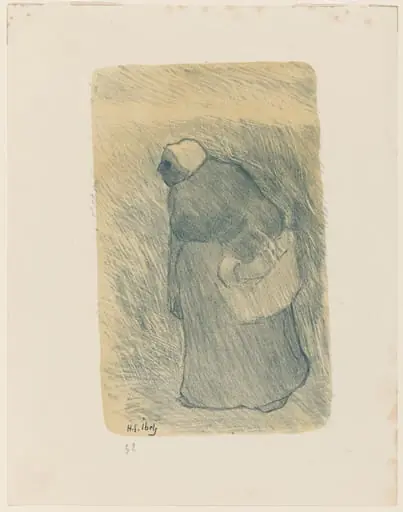 Paysanne avec pannier
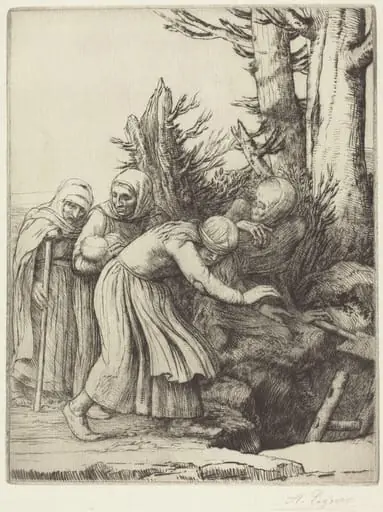 The Triumph of Death: Death Prepares a Dwelling for the Homeless (Le triomphe de la Mort: Lamort a prepare une demeure a des abandonnees)
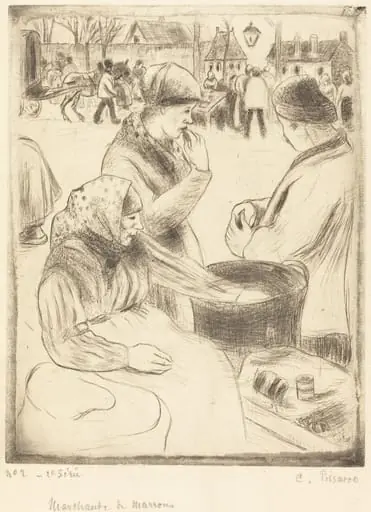 Chestnut Vendors (Marchands de marrons)
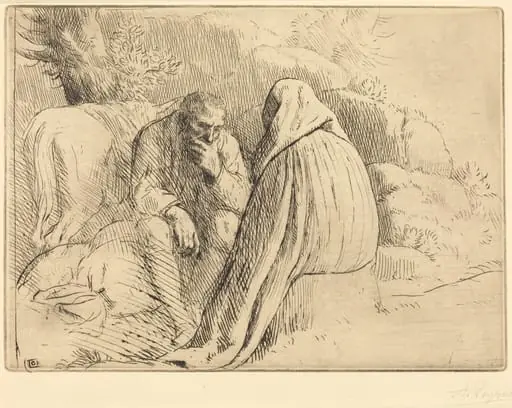 Bohemien Encampment (Campement de bohemiens)
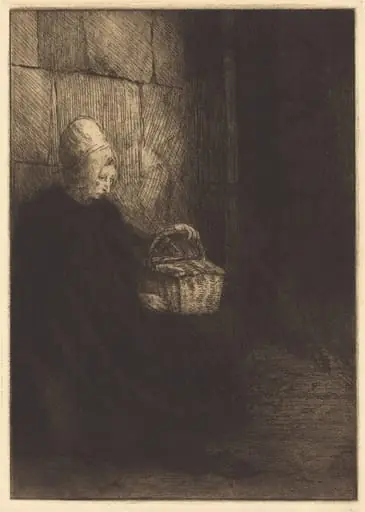 Peasant Woman of Boulogne (Paysanne des environs de Boulogne dite La femme au panier)
 Peasants (Paysannes)