Artwork
Justice
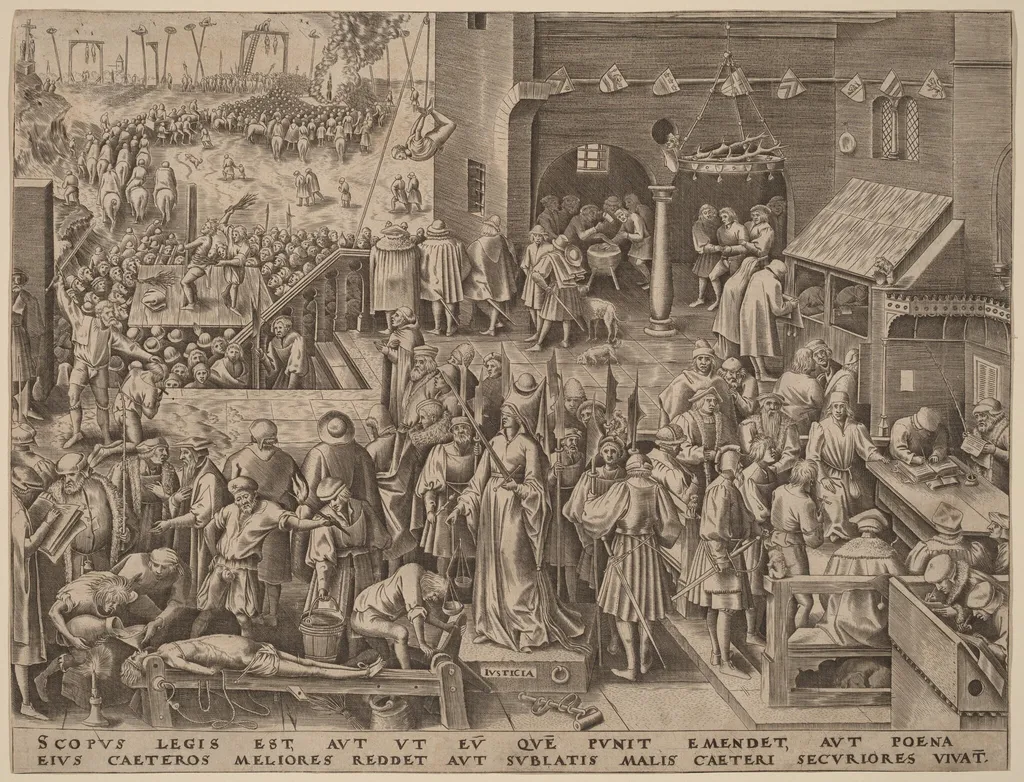
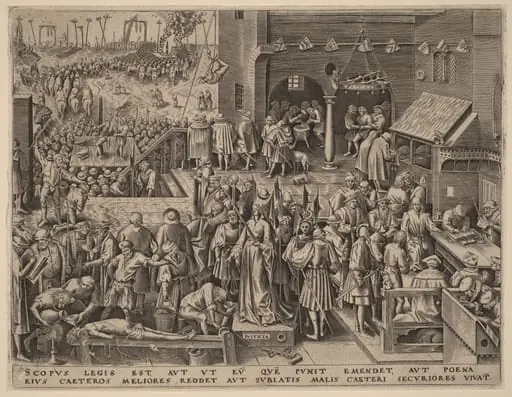
Justice is an ink print by the Renaissance artist Philip Galle. It dates from 1559 and is held in the collection of the National Gallery of Art.
About this work
Overview
Its dense imagery and textual inscription align with the Northern Renaissance tradition of using print to convey moral and civic ideals to a broad audience.
Philip Galle’s 1559 engraving *Justice* is a reproductive print derived from an earlier design, reflecting his role as a publisher and engraver who disseminated visual narratives across Europe. Executed in fine black-line technique, the work translates a complex allegorical scene into a detailed monochrome composition. Its dense imagery and textual inscription align with the Northern Renaissance tradition of using print to convey moral and civic ideals to a broad audience.
Subject & Meaning
The scene presents justice not as a serene figure but as a turbulent social order. Amid a crowded town square, acts of violence, punishment, and public observation unfold simultaneously. A scaffold dominates the center, flanked by figures bound or fallen, while onlookers and armed individuals suggest societal chaos. The Latin inscription below frames the image as a cautionary lesson, linking disorder with the failure of equitable judgment and emphasizing justice as a fragile, actively maintained ideal.
Technique & Style
Galle employed fine, controlled engraving lines to render intricate details across the entire surface—weapons, architecture, animals, and expressions are rendered with precision. The absence of tone relies entirely on line density and cross-hatching to suggest depth and movement. The composition is tightly packed, leaving no empty space, a hallmark of Northern Mannerist printmaking. This method allowed for high reproducibility and clarity, suited for wide distribution and public viewing.
History & Provenance
Created in Antwerp during the height of Galle’s publishing career, the print was part of a series of moral and allegorical subjects produced for an educated, urban market. As a reproductive engraver, Galle often worked from designs by other artists, adapting their compositions for print. This particular image likely drew from contemporary civic ideals or earlier iconographic traditions, circulating widely through his workshop and influencing later visual treatments of justice in Northern Europe.
Context
In mid-16th century the Low Countries, images of justice were frequently used to comment on governance amid religious and political unrest. Public executions and civic order were daily concerns, and prints like this served as visual sermons. The crowded, chaotic square mirrors real urban spaces where justice was administered, making the allegory immediate and relatable. Galle’s work reflects a broader trend of using print to reinforce moral and legal norms during a time of social instability.
Legacy
Galle’s *Justice* contributed to the standardization of allegorical imagery in print culture, influencing later engravers and moralizing series. Its emphasis on narrative density and civic warning became a model for similar works across Europe. Though not attributed to a single painter, the print’s widespread circulation helped embed its visual language into the collective understanding of justice as both an ideal and a fragile social mechanism.
Artist & collection
Artist
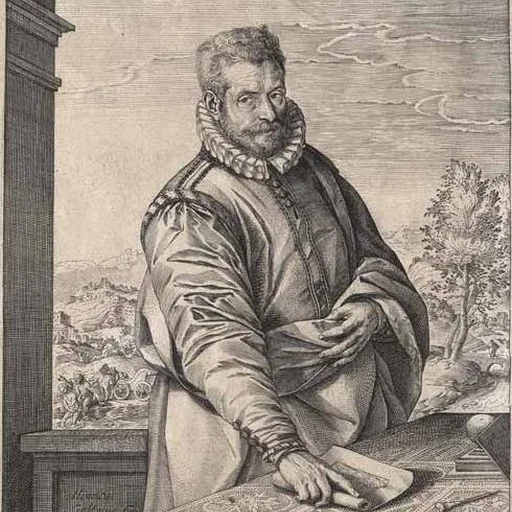
Philip (or Philips) Galle (1537 – March 1612) was a Dutch publisher, best known for publishing old master prints, which he also produced as designer and engraver. He is especially known for his reproductive engravings of paintings.

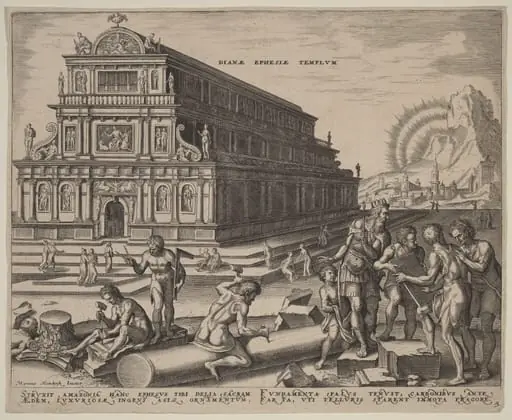 Dianae Ephesiae Templum (The Temple of Diana at Ephesus)
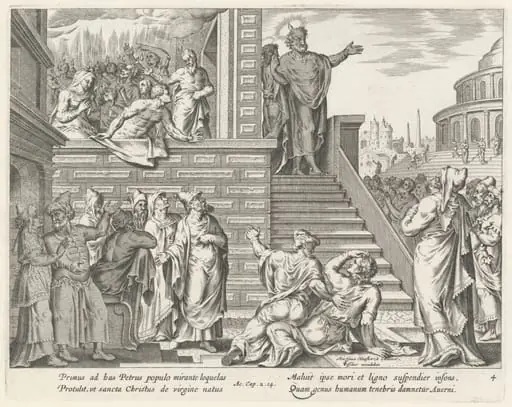 Saint Peter Speaks to the People about Christ
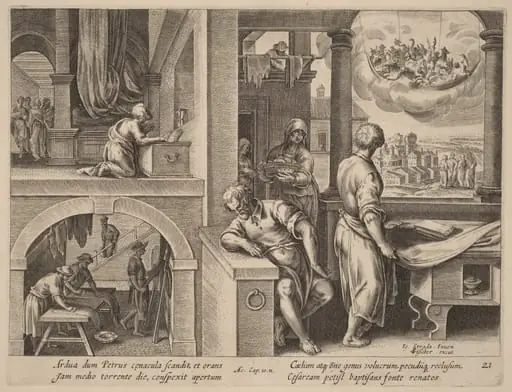 The Vision of Saint Peter
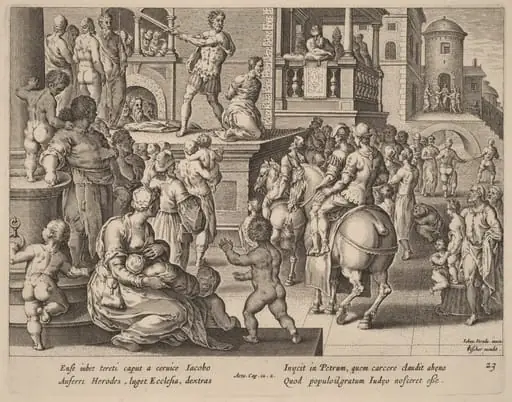 Beheading of Saint James
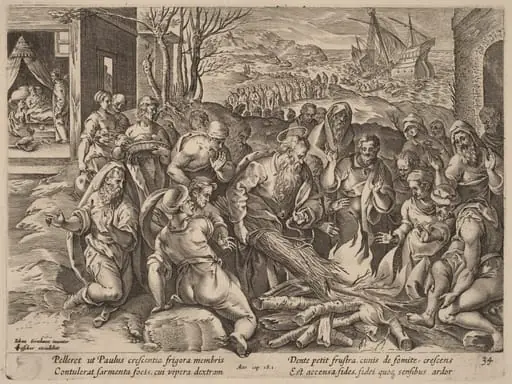 Saint Paul Shipwrecked on the Island of Melita
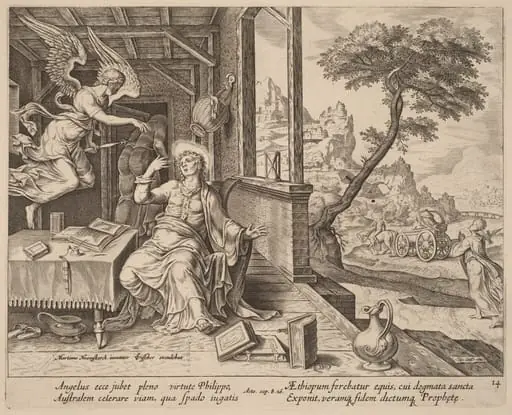 The Angel Orders Saint Philip to Accompany the Ethiopian Eunuch
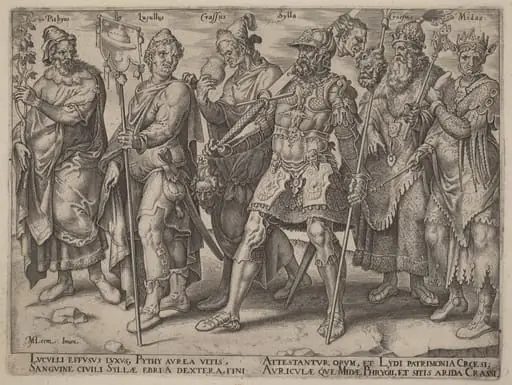 Notorious Examples of Wealth from Antiquity
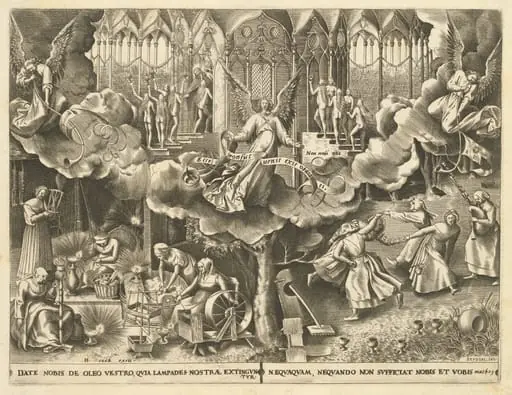 The Parable of the Wise and Foolish Virgins
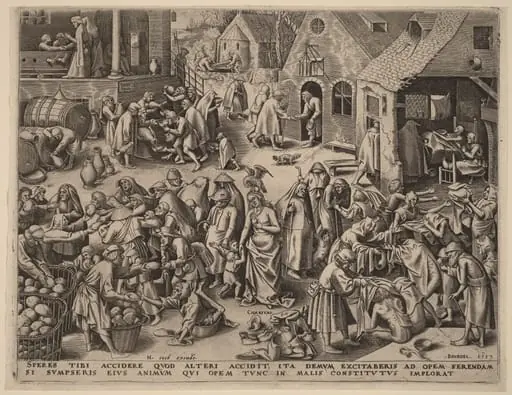 Charity
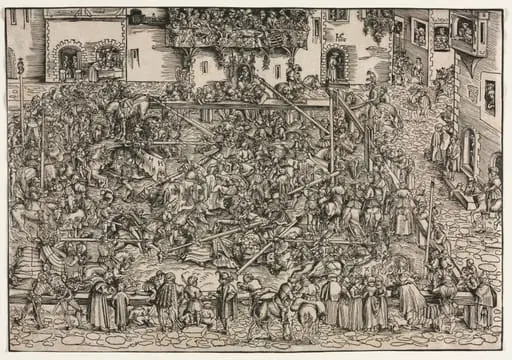 A Tournament
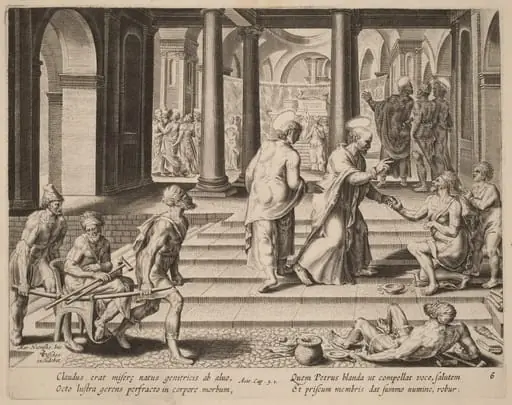 Saints Peter and John Heal a Cripple at the Gate of the Temple
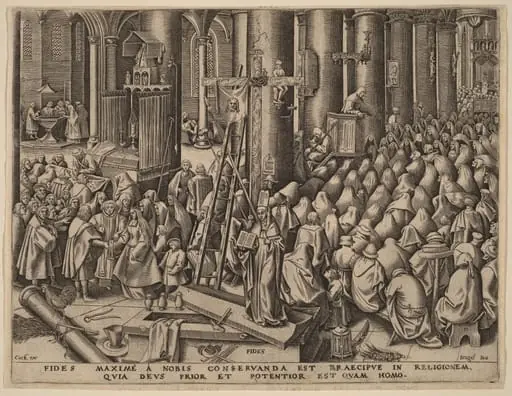 Faith
Faith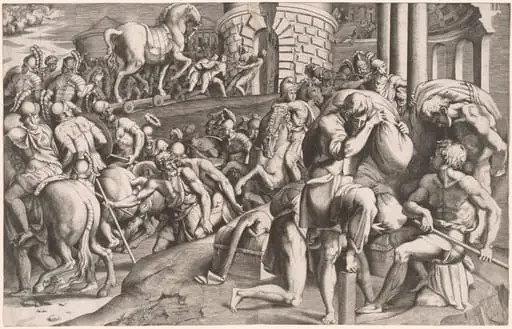 The Trojans Hauling the Wooden Horse into Troy
![Charity [recto], by Philip Galle](https://artifactworldgallery.com/img/philip-galle--charity-recto--5c20ea2a094179e0-w320.webp) Charity [recto]
Charity [recto]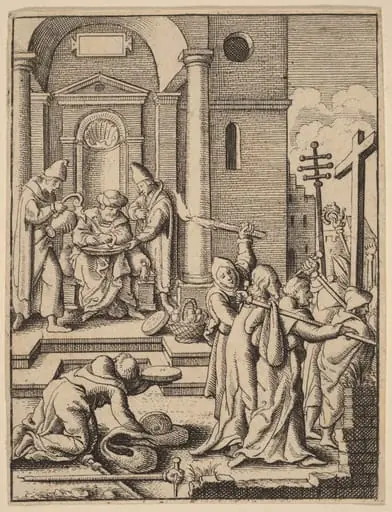 The Washing of Hands
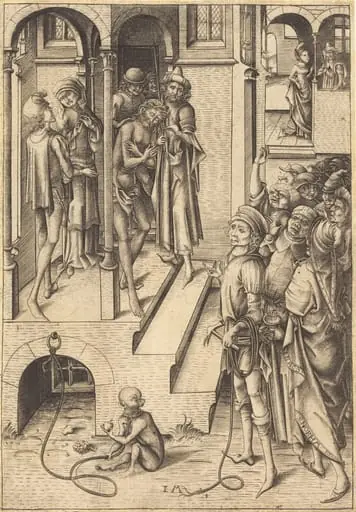 Ecce Homo
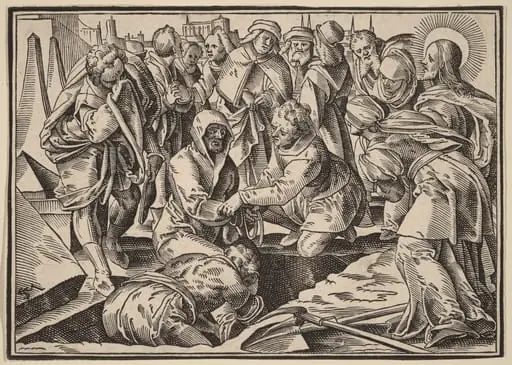 Christ Tells His Disciples of the Last Judgment
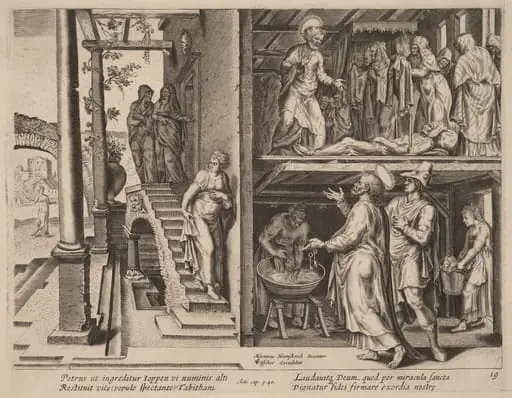 The Raising of Tabitha
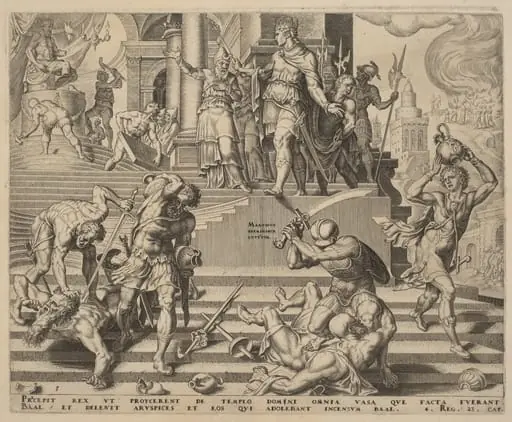 The Destruction of the Temple of Baal and the Slaughter of His Priests
 Justice