Artwork
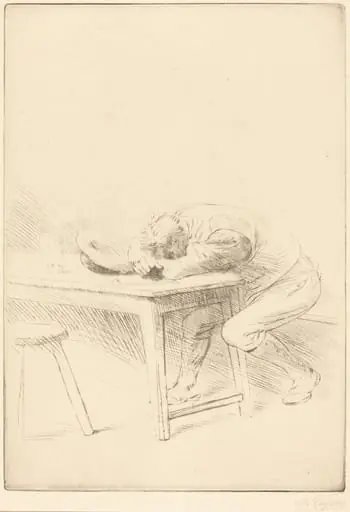
Siesta of a Laborer (Sieste d'un Ouvrier)
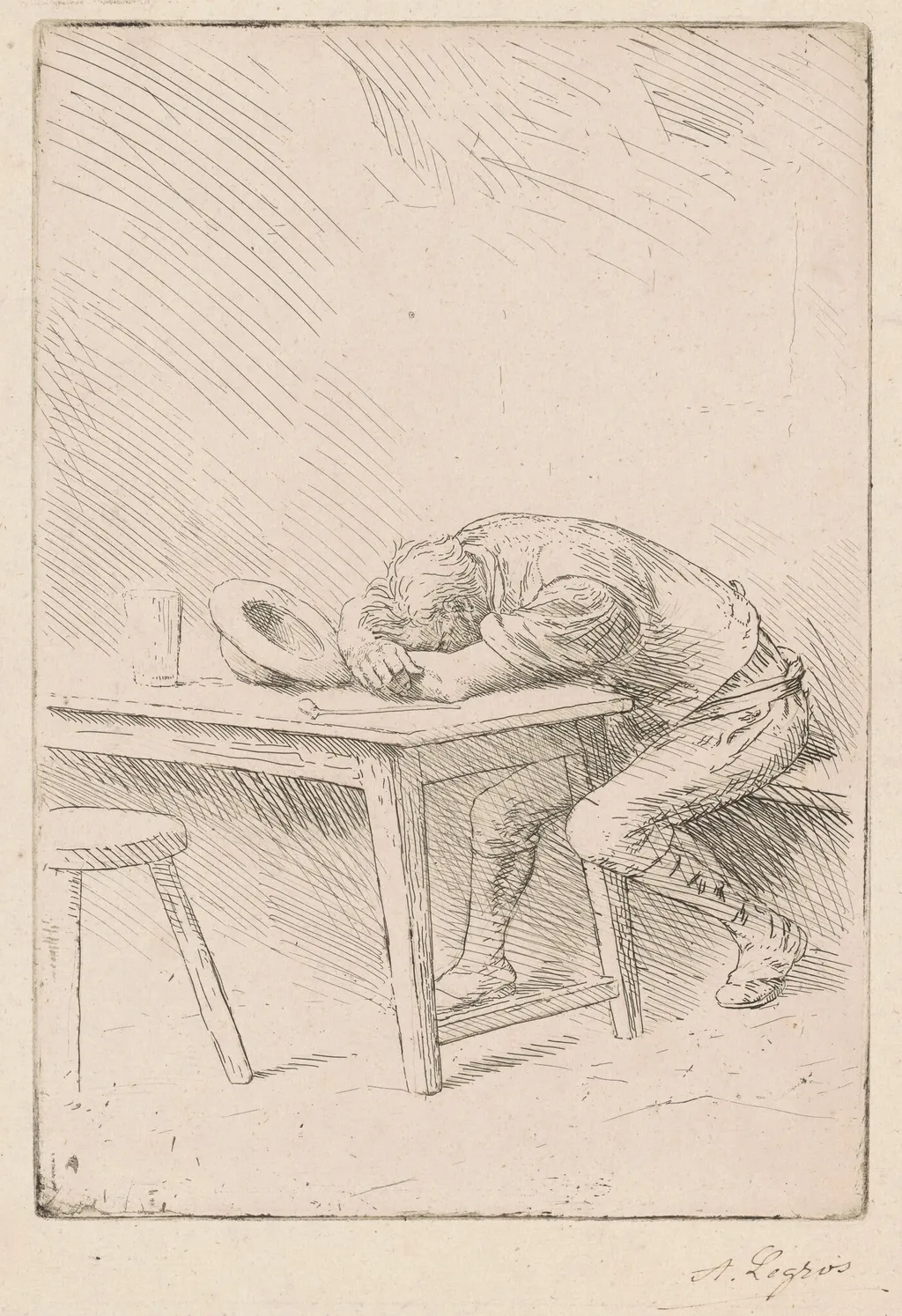
Siesta of a Laborer (Sieste d'un Ouvrier) is an ink print by the Impressionist artist Alphonse Legros. It dates from 1888 and is held in the collection of the National Gallery of Art.
About this work
Overview
Created in 1888 by Alphonse Legros, *Siesta of a Laborer* is a drypoint and etching print that captures a moment of stillness in an ordinary worker’s day.
Created in 1888 by Alphonse Legros, *Siesta of a Laborer* is a drypoint and etching print that captures a moment of stillness in an ordinary worker’s day. Legros, originally French but based in London since 1863, was instrumental in revitalizing printmaking in Britain. This work exemplifies his commitment to depicting everyday life with quiet dignity, using the intimate, tactile qualities of drypoint to render subtle textures and tonal depth.
Subject & Meaning
The print portrays a laborer seated at a plain table, head resting on folded arms, his hat nearby. His posture suggests fatigue or brief respite, not idleness. The absence of narrative detail or symbolic elements directs focus to the physicality of rest. The scene’s simplicity underscores the dignity of manual labor, presenting a private, unidealized moment that aligns with Realist principles—honoring the quiet rhythms of working-class life.
Technique & Style
Legros employed drypoint with etching to achieve rich, velvety blacks and fine, incised lines that model form through shadow rather than outline. The texture of the worker’s clothing and the rough surface of the table emerge through deliberate, hand-drawn marks. Background diagonals suggest architectural space without detail, isolating the figure in a hushed, intimate atmosphere. The technique enhances the tactile realism, emphasizing weight, stillness, and the physical presence of the subject.
History & Provenance
The print was made during Legros’s tenure as a professor at the Slade School of Art in London, where he influenced a generation of British printmakers. It entered the National Gallery of Art, Washington, through the A.W. Mellon Collection, a major bequest that brought significant European prints to American institutions. Its preservation reflects its status as a representative work of late 19th-century realist printmaking in Britain.
Context
In the late 1880s, European art increasingly turned toward the lives of laborers, moving away from romanticized or heroic depictions. Legros’s work aligned with this shift, influenced by French Realism and the social consciousness of artists like Millet. Unlike many contemporaries, he avoided overt political messaging, instead conveying empathy through restrained observation—making his prints quiet but potent documents of everyday endurance.
Legacy
Legros’s prints, including *Siesta of a Laborer*, helped reestablish etching as a serious artistic medium in Britain, countering the dominance of photography and mass reproduction. His emphasis on handcrafted mark-making and psychological realism influenced later printmakers and contributed to the revival of the artist-printmaker tradition. The work remains a touchstone for its unadorned humanity and technical restraint.
Artist & collection

Artist
Alphonse Legros (French pronunciation: ; 8 May 1837 – 8 December 1911) was a French, later British, painter, etcher, sculptor, and medallist.

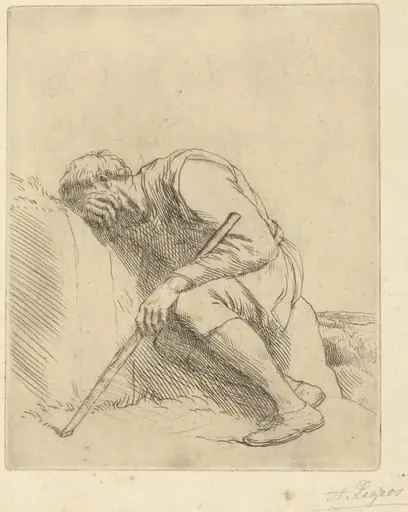 Sinbad the Sailor (Sinbad le marin)
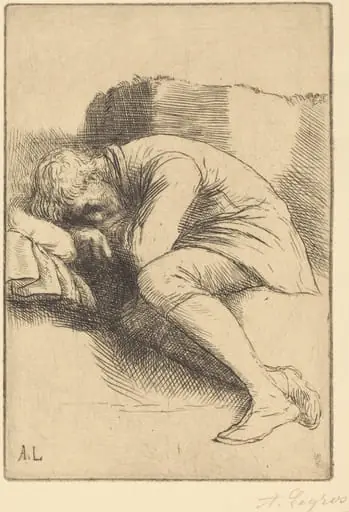 Sleeper (Un dormeur)
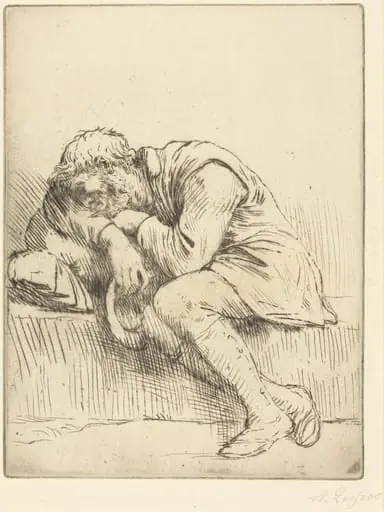 Sleeping Beggar (Mendiant endormi)
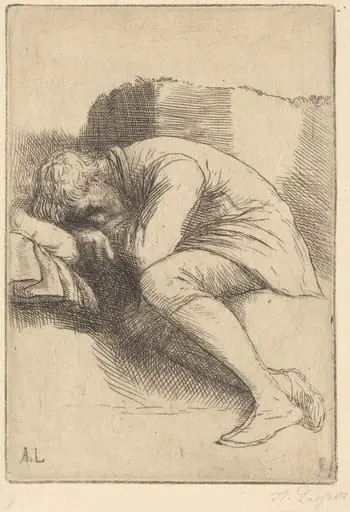 Sleeper (Un dormeur)
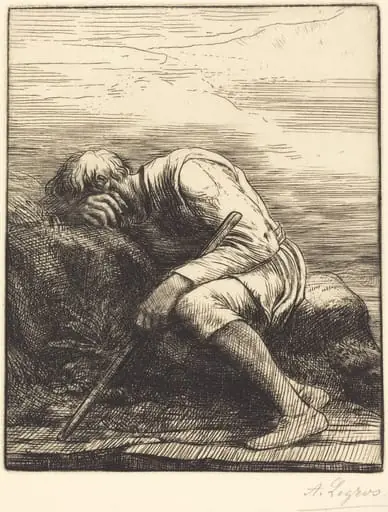 Sinbad the Sailor (Sinbad le marin)
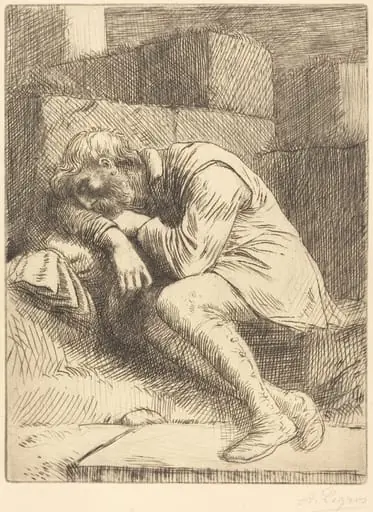 Sleeping Beggar (Mendiant endormi)
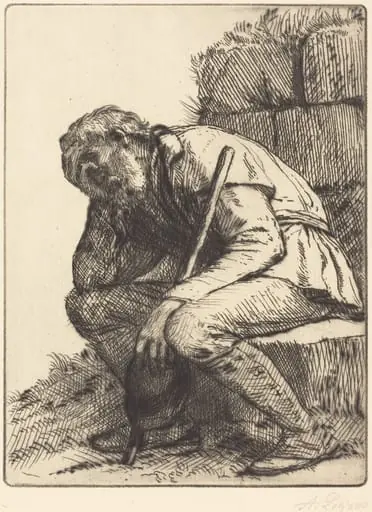 Desperate Man (Le desespere)
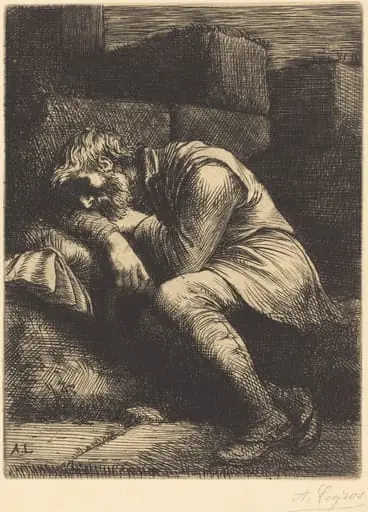 Sleeping Beggar (Mendiant endormi)
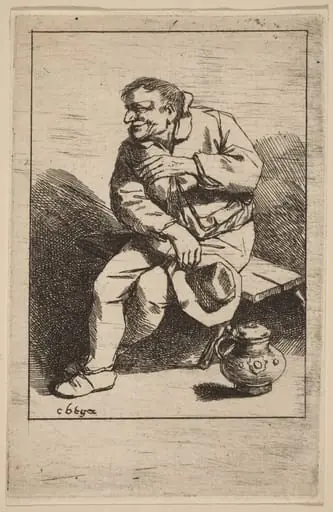 Sitting Man with His Hat in His Right Hand
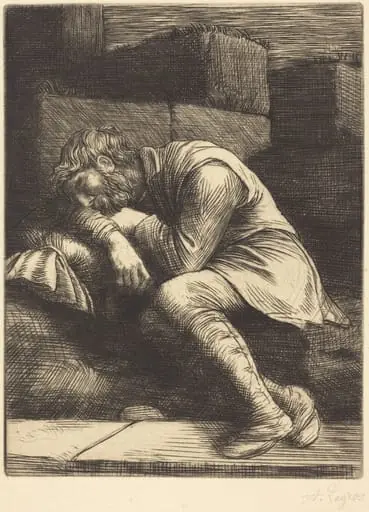 Sleeping Beggar (Mendiant endormi)
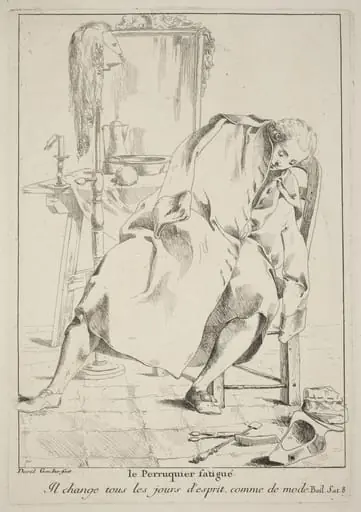 Le Perruquier fatigué (The Tired Wigmaker)
 Siesta of a Laborer (Sieste d'un ouvrier)