Artwork
Woman's Dream (Der Traum des Weibes)
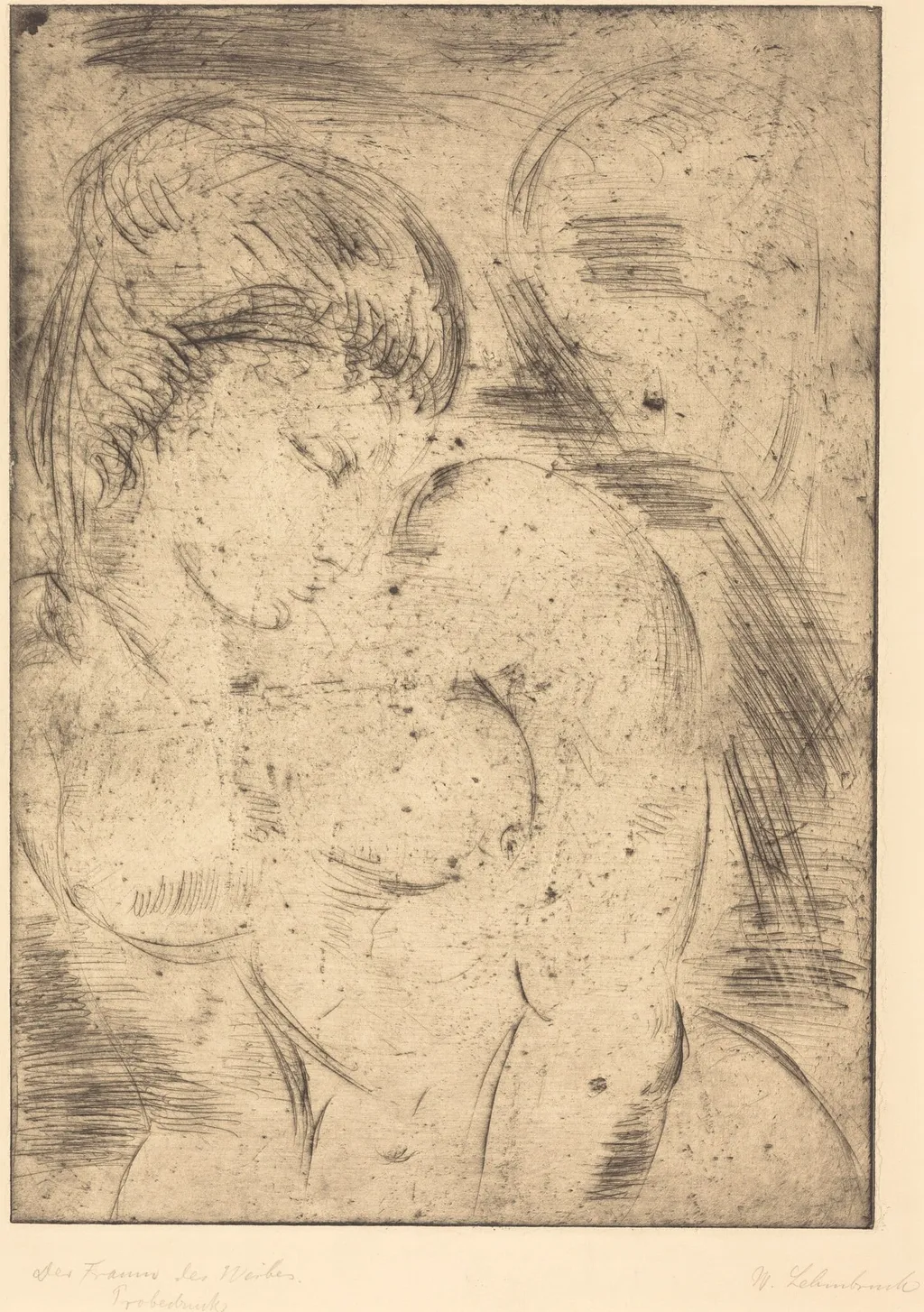
Woman's Dream (Der Traum des Weibes) is an ink print by Wilhelm Lehmbruck. It dates from 1914 and is held in the collection of the National Gallery of Art.
About this work
Overview
Wilhelm Lehmbruck’s 1914 drypoint, *Woman’s Dream (Der Traum des Weibes)*, presents a solitary female figure in a reclined, sleep‑like posture. Executed as a proof print, the image captures a moment of quiet introspection through a combination of loose, jagged lines and a textured paper surface.
Subject & Meaning
The composition shows a woman curled in repose, her head tipped back and an arm supporting her cheek. The title suggests a dream state, and the figure’s relaxed pose conveys a sense of rest, while the unsettled, scratchy marks hint at an underlying tension or subconscious activity.
Technique & Style
Lehmbruck employed drypoint, incising a metal needle into a plate to produce burr‑laden lines that transfer as dark, uneven strokes. The resulting marks are sharp and nervous, giving the surface a rough, tactile quality that emphasizes the figure’s bodily presence.
History & Provenance
Created during a period when Lehmbruck was navigating between realist representation and emerging expressionist tendencies, the print reflects his sculptural concerns with the human form. As a proof, it likely served as a preliminary stage before wider editioning, though specific ownership details remain limited.
Context
The work emerges from early‑20th‑century German art, a time of intense exploration of psychological depth and bodily distortion. Lehmbruck, primarily known as a sculptor, extended his interest in anatomy and emotive posture into the graphic medium, aligning with broader expressionist currents.
Artist & collection
Artist
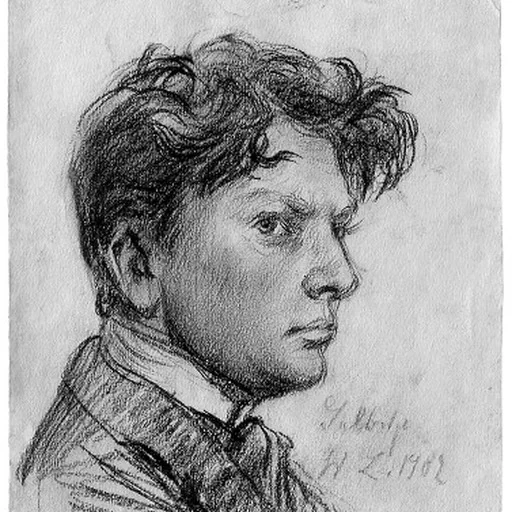
Wilhelm Lehmbruck (4 January 1881 – 25 March 1919) was a German sculptor. One of the most important of his generation, he was influenced by realism and expressionism.

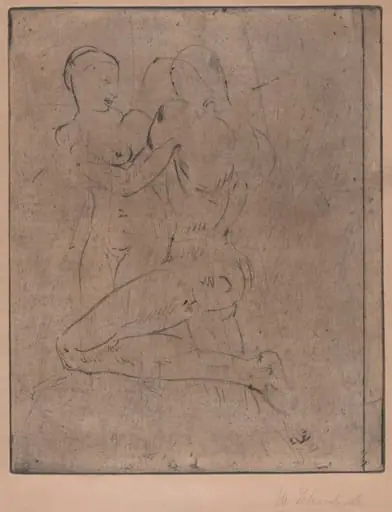
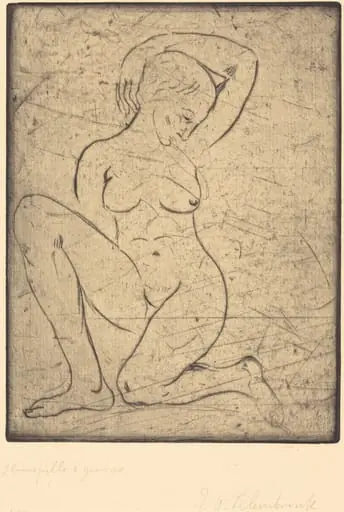
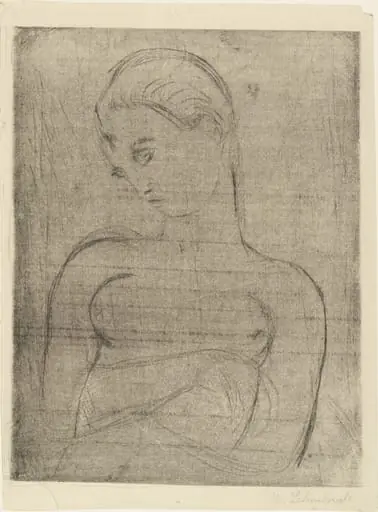 Untitled
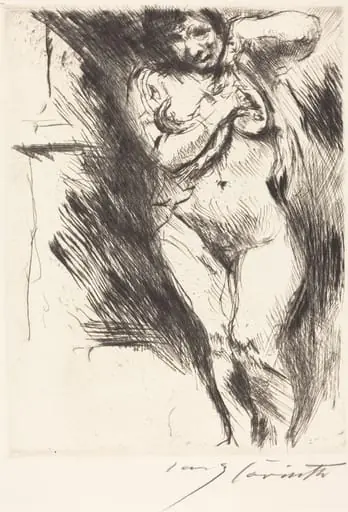 Akt mit hochgehobenem Hemd (Woman Undressing)
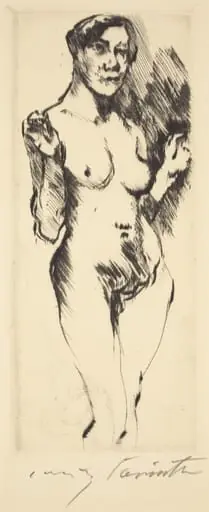 Stehende Weibliche akte (Standing Female Nude)
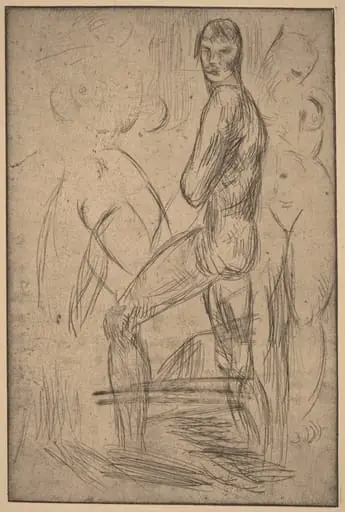 Standing Male Nude and Two Female Nudes
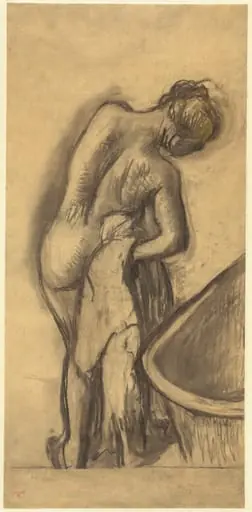 After the Bath: Woman Drying Herself
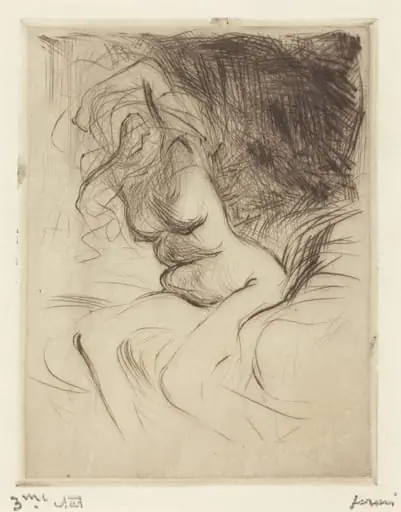 Femme nue passant sa chemise (Nude Woman Taking Off Her Chemise)
 Büsser
 Nude Man Standing, with Left Hand Raised
 Study for "Stars and Dews and Dreams of Night"
 Woman and Child (Weib und Kind)