Artwork
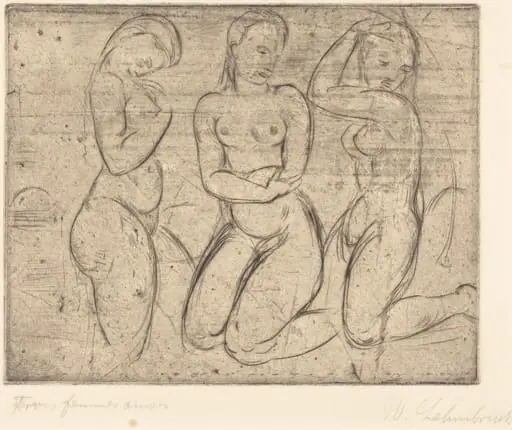
Three Women
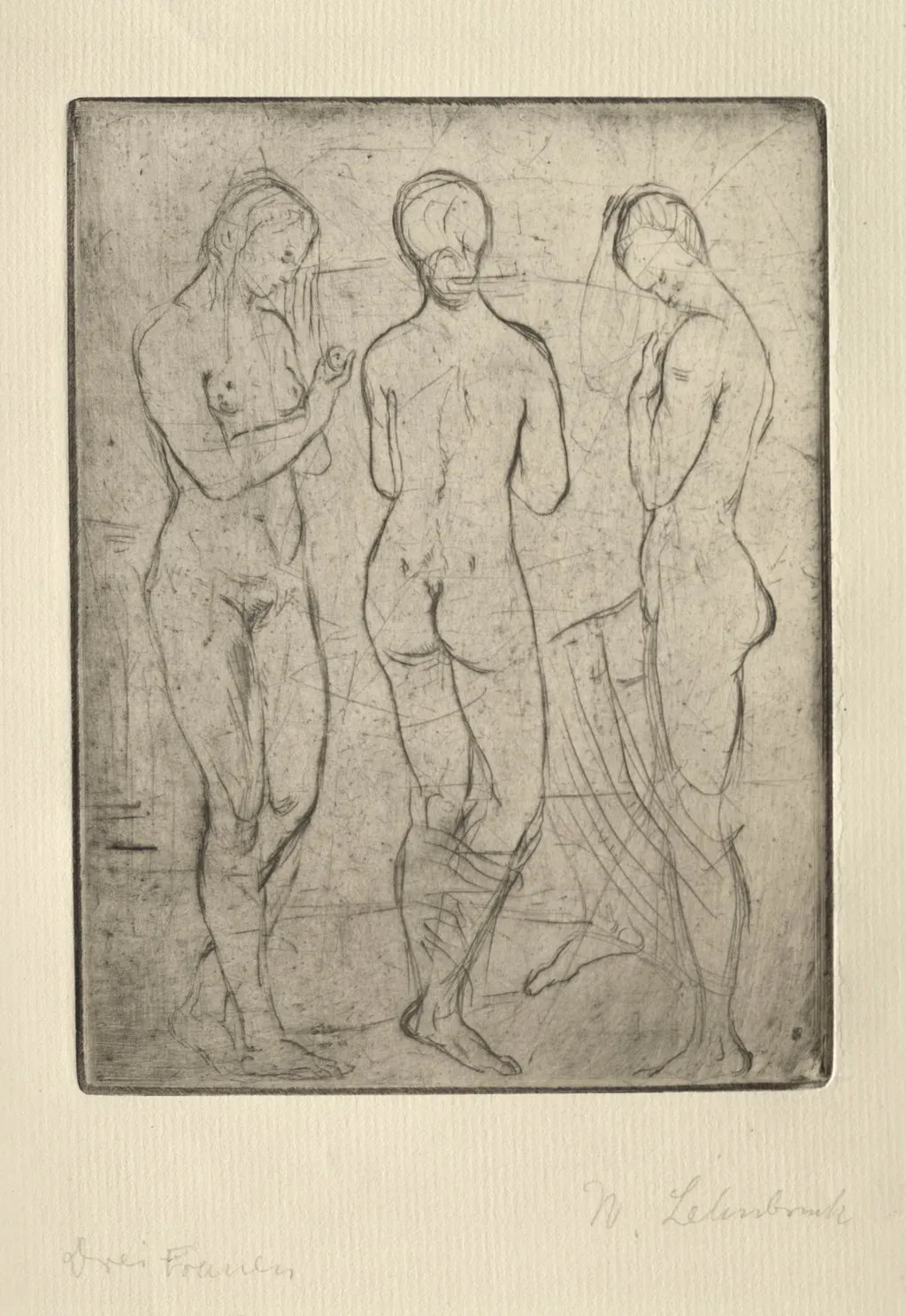
Three Women is a print by Wilhelm Lehmbruck. It dates from 1912 and is held in the collection of the Cleveland Museum of Art.
About this work
Overview
Created in 1912 by German sculptor Wilhelm Lehmbruck, *Three Women* is a drawing that captures a moment of quiet contemplation among three figures.
Created in 1912 by German sculptor Wilhelm Lehmbruck, *Three Women* is a drawing that captures a moment of quiet contemplation among three figures. Though often associated with his sculptural work, this piece reveals his approach to form through rapid, expressive line work. The sketch lacks finish, suggesting it was made as a study rather than a polished composition, emphasizing gesture over detail.
Subject & Meaning
The three nude female figures stand in close proximity, their postures suggesting introspection or shared solitude. One holds a small, indistinct object, while the others remain still, arms at their sides. The absence of narrative context invites interpretation centered on presence and vulnerability. Lehmbruck’s focus on the human form conveys emotional resonance without theatricality, aligning with early 20th-century interests in inner experience.
Technique & Style
Lehmbruck employed loose, uneven lines to suggest volume and movement, avoiding precise contours or shading. The figures appear hastily rendered, with inconsistent proportions and imperfect alignment, reinforcing the sense of immediacy. This approach prioritizes emotional expression over anatomical accuracy, reflecting a shift toward expressive abstraction in his draftsmanship during this period.
History & Provenance
The drawing emerged during Lehmbruck’s productive years in Berlin and Paris, a time when he was refining his sculptural language through frequent sketching. While the exact provenance of this sheet is not widely documented, it aligns with his known practice of using drawing as a preparatory and independent medium. Its informal quality suggests it was part of his personal artistic process rather than a commissioned work.
Context
In the early 1910s, European artists were redefining representation through emotional intensity and formal simplification. Lehmbruck’s work responded to broader currents in Expressionism and early modernism, where the human figure became a vessel for psychological states. His sketches like *Three Women* reflect a departure from academic tradition toward more intuitive, inward-looking modes of depiction.
Legacy
Though less known than his sculptures, Lehmbruck’s drawings reveal the foundation of his sculptural vision. *Three Women* exemplifies how his commitment to elongated form and emotional restraint influenced later modernist approaches to the figure. The sketch’s rawness continues to resonate as an example of how immediacy in drawing can convey depth without embellishment.
Artist & collection
Artist
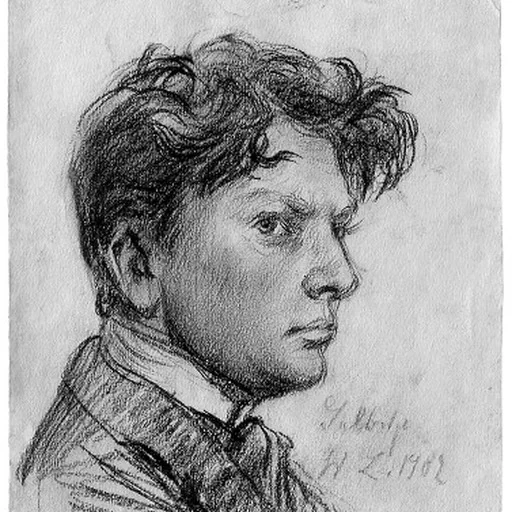
Wilhelm Lehmbruck (4 January 1881 – 25 March 1919) was a German sculptor. One of the most important of his generation, he was influenced by realism and expressionism.

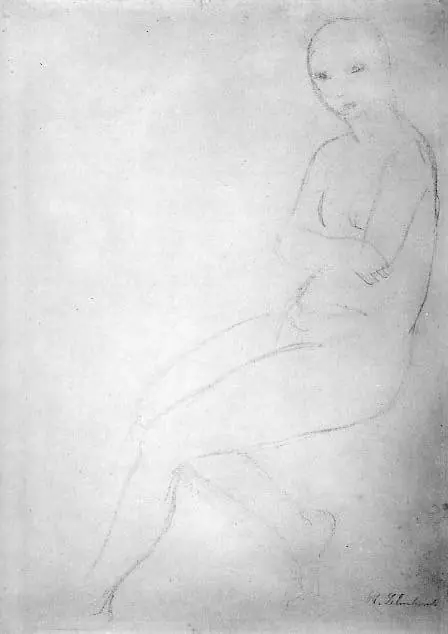
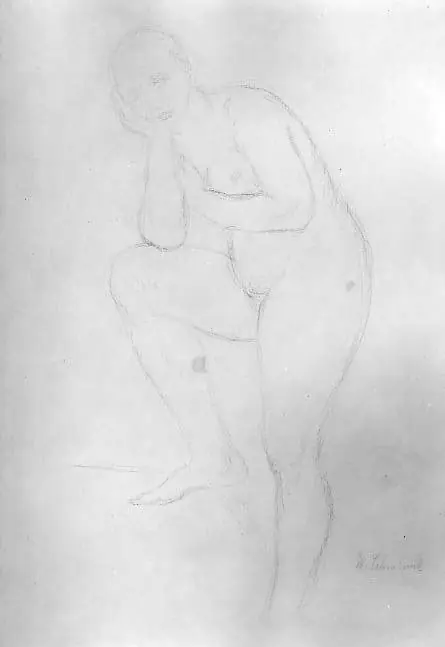
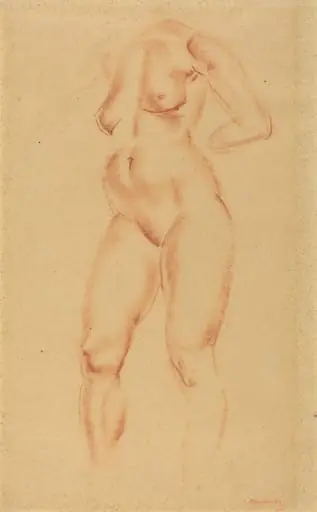
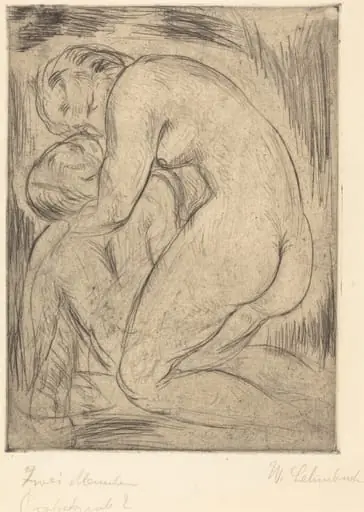
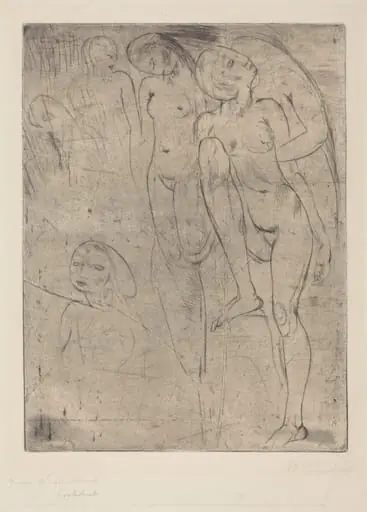
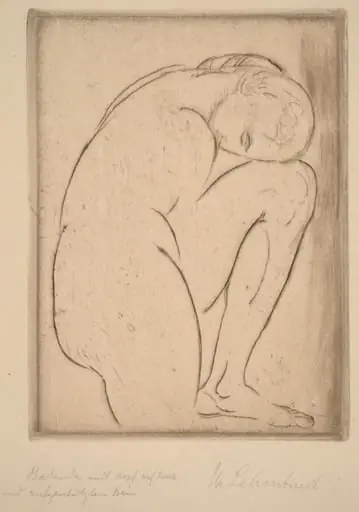
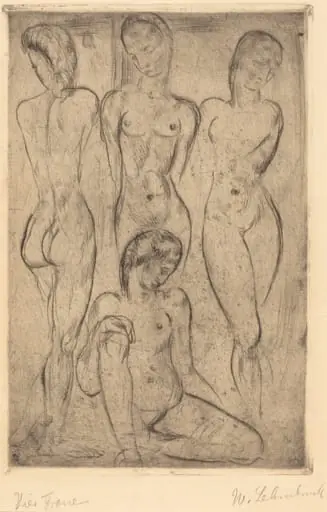 Four Women; Three Standing, One Sitting (VierFrauen; drei stehend, eine sitzend)
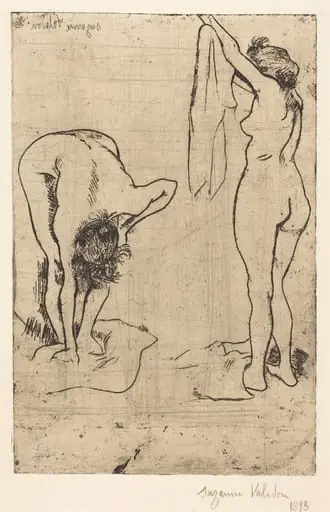 Femmes s'essuyant (Women Drying Themselves)
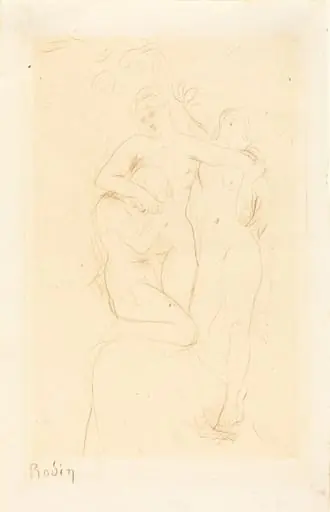 Ames du Purgatoire
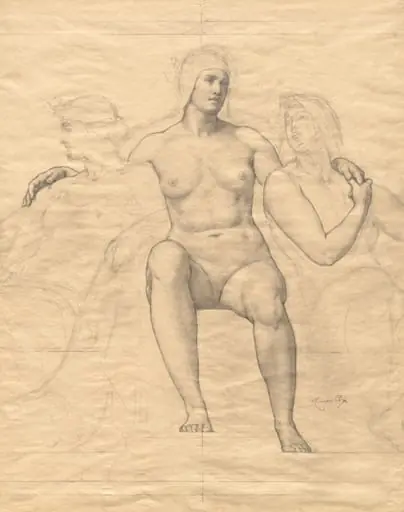 Allegorical Female Figures
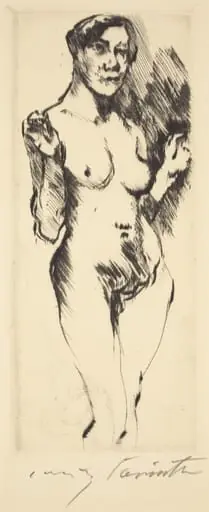 Stehende Weibliche akte (Standing Female Nude)
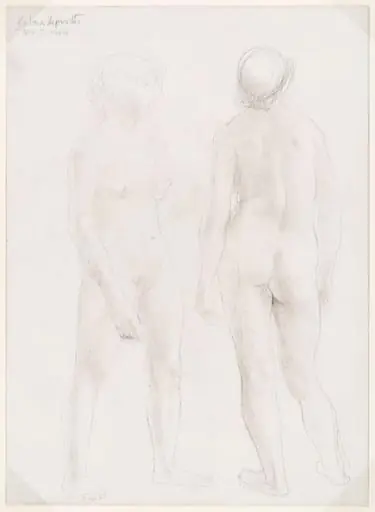 Figure study of two standing women
 Rape II (Raub II, Weib halb)
 The Mother at Her Toilette
 Three Kneeling Women (Drei Frauen knied)
 Standing Girl with Arms Behind her Head