Artwork
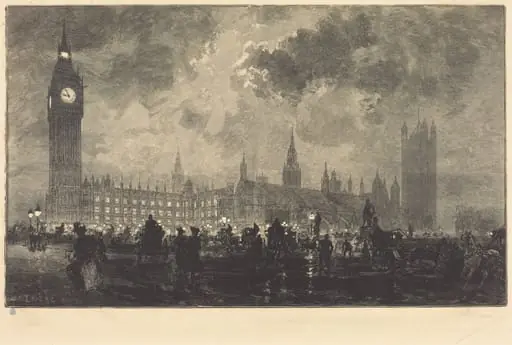
14 Juillet. Illumination du Palais du Trocadéro
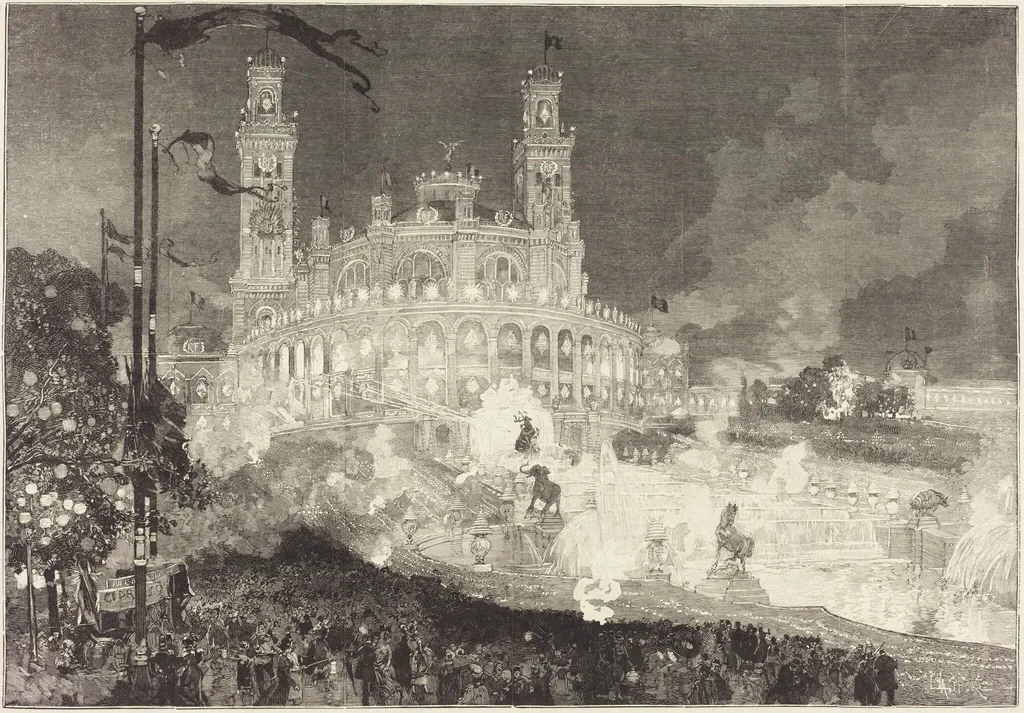
14 Juillet. Illumination du Palais du Trocadéro is an ink print by the Impressionist artist Auguste Lepère. It dates from 1883 and is held in the collection of the National Gallery of Art. 14 Juillet.
About this work
Overview
14 Juillet. Illumination du Palais du Trocadéro is a 1883 wood engraving by Auguste Lepère, capturing a nocturnal scene of the Trocadéro Palace illuminated during a Bastille Day celebration.
Subject & Meaning
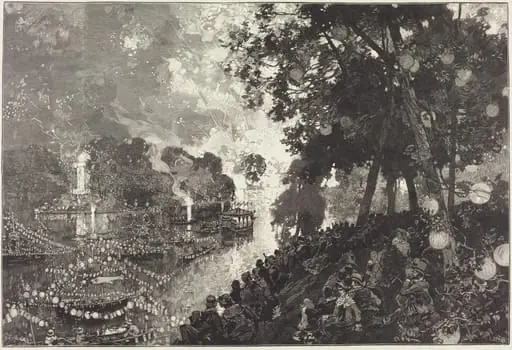
The engraving depicts the festive illumination of the Trocadéro Palace on Bastille Day, conveying a sense of national celebration and public spectacle. The scene includes a crowd on a bridge, fountains, statues, flags, and trees, framing the grand, lit-up building.
Technique & Style
Lepère employed cross-hatching, a technique using fine, stacked parallel lines to achieve depth and dimensionality, rendering the palace's architecture almost three-dimensional amidst contrasting shadows and light.
History & Provenance
Created in 1883 by French artist Auguste Lepère, this work exemplifies his role in the late 19th-century European revival of wood engraving as an artistic medium.
Context
The piece reflects the cultural significance of Bastille Day in late 19th-century France, while also highlighting the Trocadéro Palace as a prominent venue for national celebrations during that era.
Legacy
Through this and other works, Lepère contributed to the resurgence of wood engraving, influencing the medium's artistic expression in the late 19th century.
Artist & collection
Artist
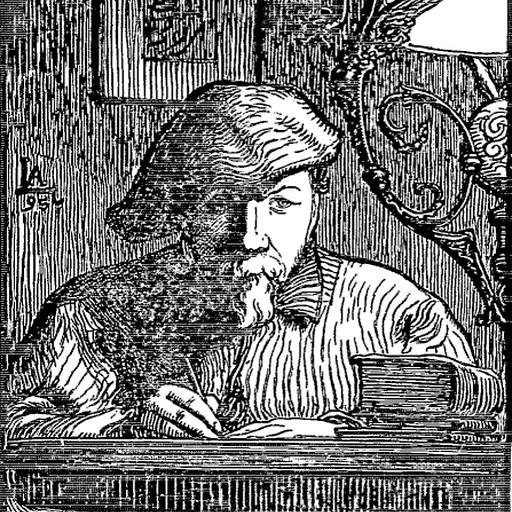
Louis-Auguste Lepère (30 November 1849 – 20 November 1918) was a French painter and etcher. Lepère is also considered a leader in the creative revival of wood engraving in Europe.