Artwork
Old Foot-bridge, Banks of the Small Morin (Vieille passerelle, bords du petit morin)
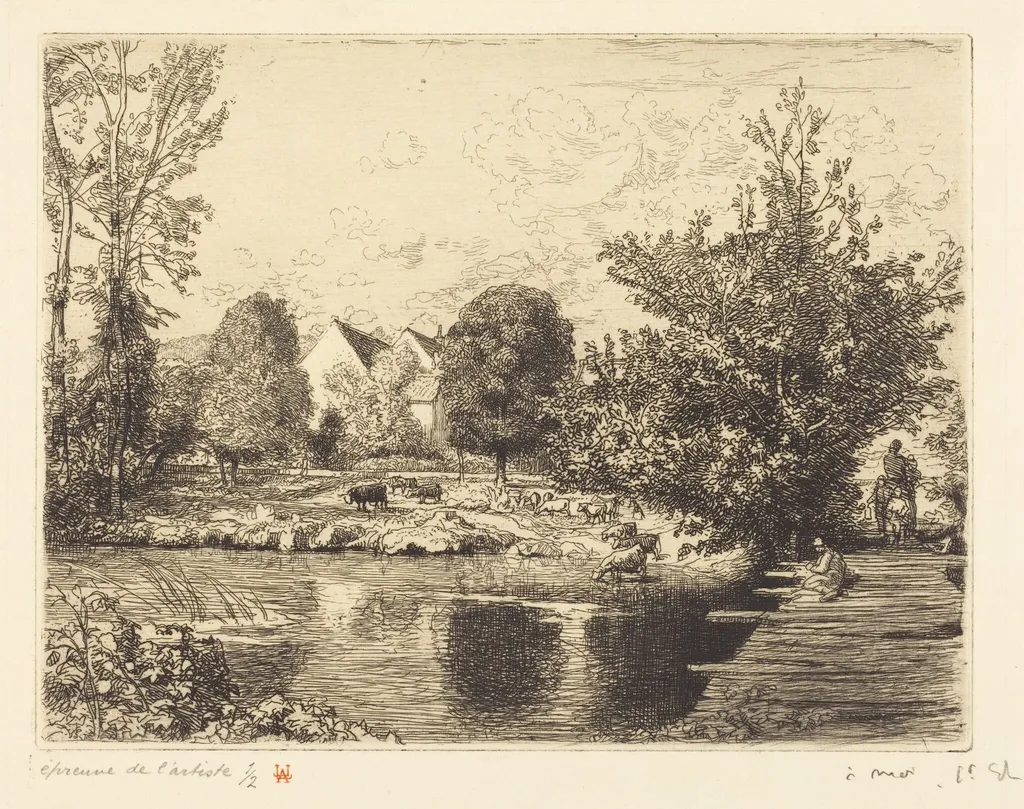
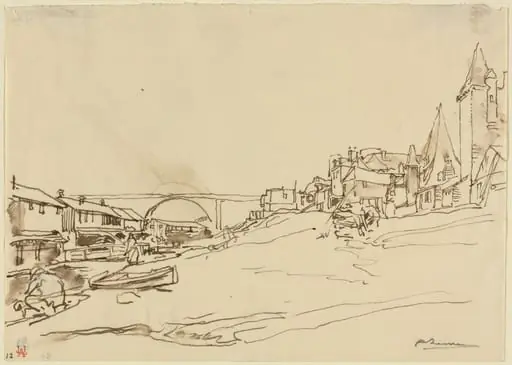
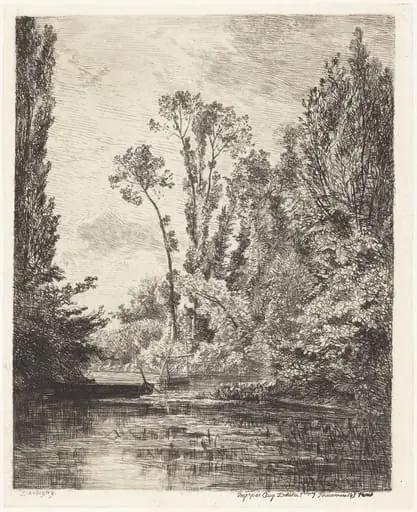
Old Foot-bridge, Banks of the Small Morin (Vieille passerelle, bords du petit morin) is an ink print by Auguste Lepère. It dates from 1915 and is held in the collection of the National Gallery of Art.
About this work
Overview
Created in 1915, this etching by Auguste Lepère portrays a quiet rural crossing over the Small Morin river in France.
Created in 1915, this etching by Auguste Lepère portrays a quiet rural crossing over the Small Morin river in France. As a printmaker deeply engaged with the revival of traditional graphic techniques, Lepère used the etching process to capture subtle atmospheric effects and textures. The work belongs to a body of prints that reflect his dedication to landscape and everyday rural life, distinguishing him within early 20th-century French print culture.
Subject & Meaning
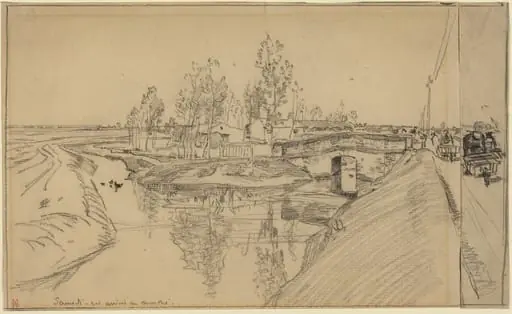
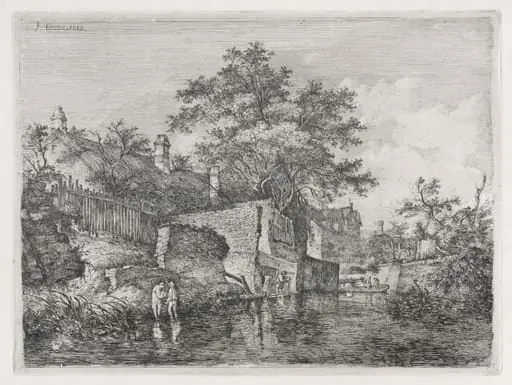
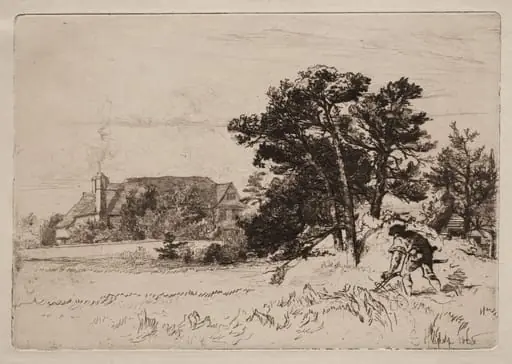
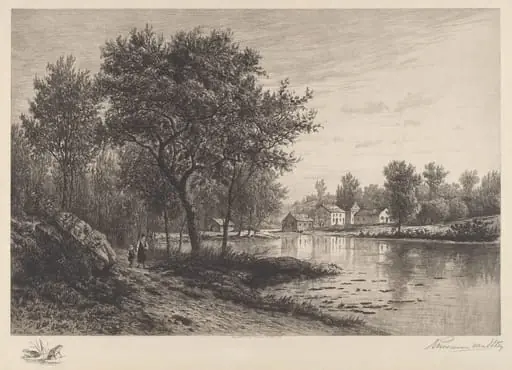
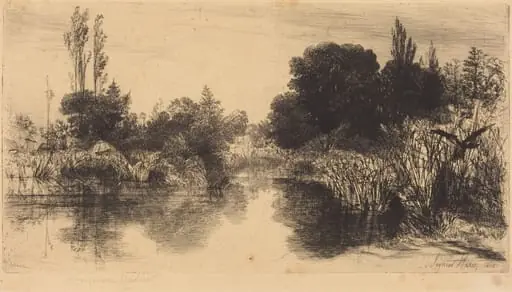
The scene centers on a weathered wooden footbridge, slightly askew, spanning a narrow stream flanked by overgrown banks. Sparse trees and tall reeds frame the composition, while a soft, overcast sky adds stillness. There is no human presence, emphasizing solitude and the quiet endurance of natural and man-made elements. The image evokes a sense of time passed, where infrastructure has merged with its surroundings, suggesting harmony rather than disruption.
Technique & Style
Lepère employed fine, controlled lines to render the bridge’s weathered planks, the ripple of water, and the delicate texture of foliage. The etching’s tonal range is restrained, relying on gradations of ink to suggest depth and light rather than bold contrasts. His attention to surface detail—rustic wood grain, grasses bending with the breeze—demonstrates a meticulous approach rooted in direct observation, characteristic of his commitment to the craft of printmaking.
History & Provenance
The work was produced late in Lepère’s career, during a period when he was increasingly recognized for his contributions to printmaking revival in Europe. Though not widely exhibited during his lifetime, this etching aligns with his broader practice of documenting French rural landscapes. Its survival in private and institutional collections reflects its status as a representative example of early 20th-century French graphic art.
Context
Lepère worked amid a resurgence of interest in handcrafted prints, countering the rise of industrial reproduction. His focus on modest, unidealized landscapes placed him alongside contemporaries who valued intimacy over grandeur. This etching reflects a broader European trend: artists turning to quiet natural scenes as a counterpoint to urbanization and modernity, preserving the dignity of rural life through careful observation.
Legacy
Though Lepère is less known today than some of his peers, his etchings remain important for their technical precision and emotional restraint. 'Old Foot-bridge' exemplifies his role in sustaining traditional print methods during a time of rapid artistic change. The work continues to be studied for its quiet economy of form and its contribution to the legitimacy of etching as a serious medium for landscape expression.
Own this work as a print
Artist & collection
Artist
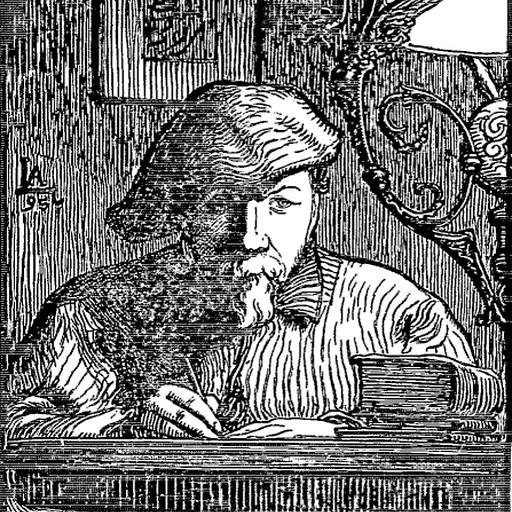
Louis-Auguste Lepère (30 November 1849 – 20 November 1918) was a French painter and etcher. Lepère is also considered a leader in the creative revival of wood engraving in Europe.