Artwork
The Pond in the Tuileries
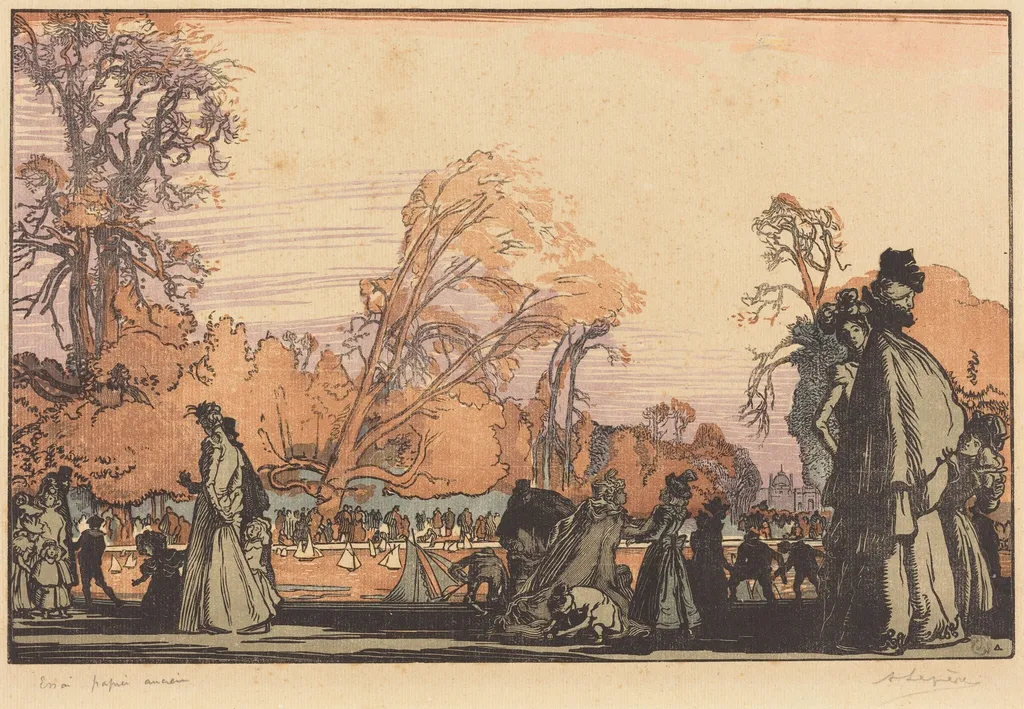
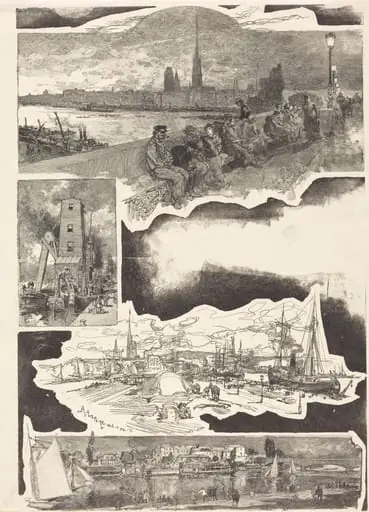
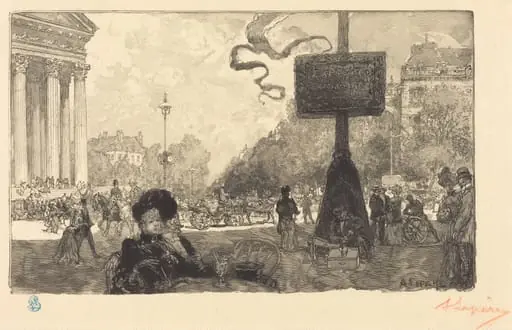
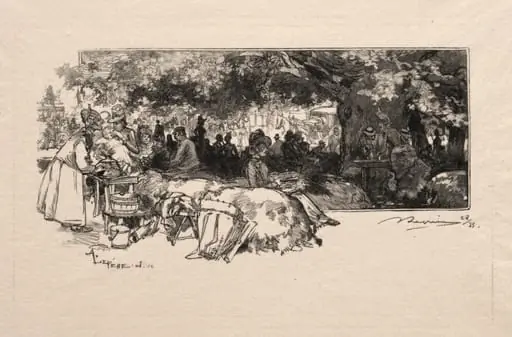
The Pond in the Tuileries is an ink print by the Impressionist artist Auguste Lepère. It dates from 1898 and is held in the collection of the National Gallery of Art.
About this work
Overview
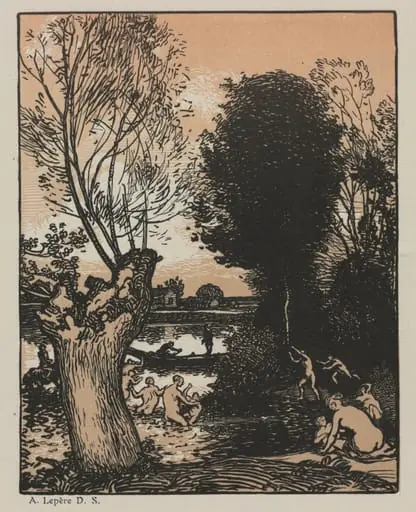
The Pond in the Tuileries is a 1898 color woodcut on laid paper by Auguste Lepère, a key figure in the European revival of wood engraving. This print exemplifies Lepère's technical proficiency in printmaking and its integration with his artistic approach.
Subject & Meaning
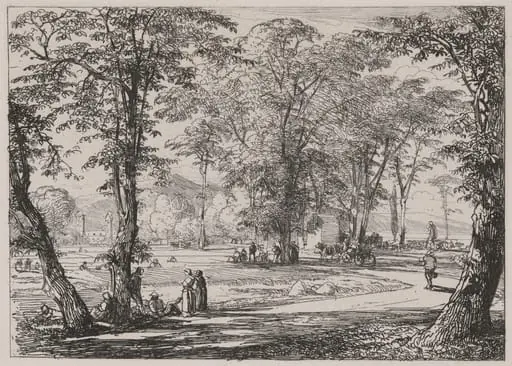
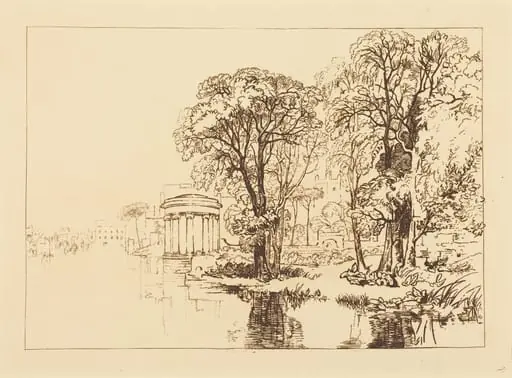
The print depicts a serene yet lively scene in the Tuileries Garden, capturing everyday life with figures leisurely interacting near a pond, under bare-branched trees, and around a distant fountain. The composition conveys a sense of tranquil urbanity.
Technique & Style
Lepère employed a color woodcut technique, characteristically blending light and dark hues to achieve depth. Strategic blank areas invite the viewer's participation, imbuing the scene with a dynamic, slightly ethereal quality.
History & Provenance
Created in 1898, the work reflects Lepère's contribution to the late 19th-century wood engraving revival in Europe. Specific provenance details are not provided.
Context
The Pond in the Tuileries situates itself within the broader artistic movement of reviving traditional printmaking techniques in late 19th-century Europe, while also reflecting the era's interest in capturing modern urban leisure.
Legacy
As part of Lepère's oeuvre, The Pond in the Tuileries contributes to the enduring appreciation of woodcut as a vibrant medium in early 20th-century European art, influencing subsequent generations of printmakers.
Artist & collection

Artist
Louis-Auguste Lepère (30 November 1849 – 20 November 1918) was a French painter and etcher. Lepère is also considered a leader in the creative revival of wood engraving in Europe.