Artwork
The Wash-house (Le lavoir)
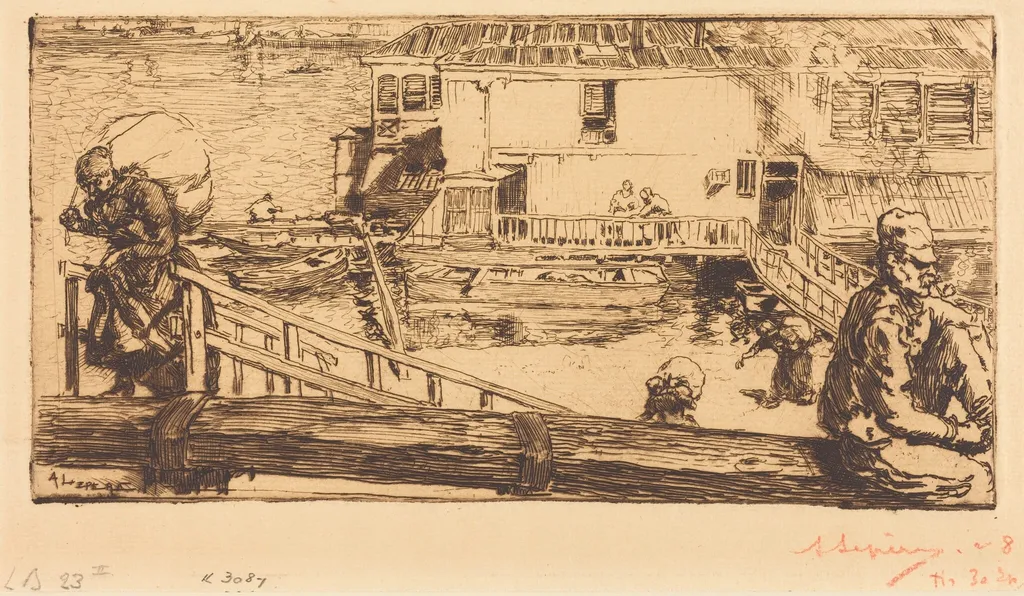
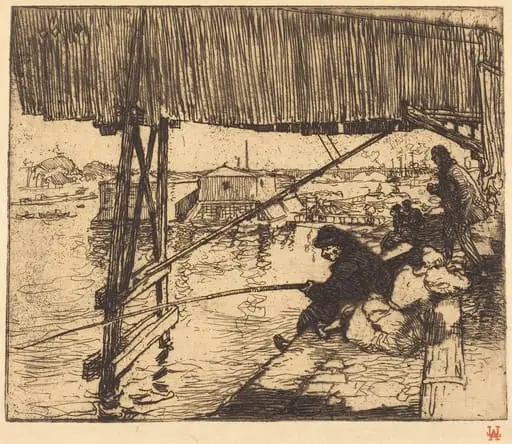
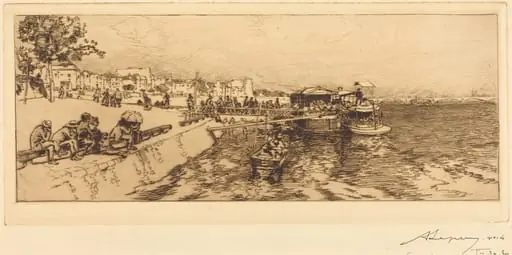
The Wash-house (Le lavoir) is an ink print by the Impressionist artist Auguste Lepère. It dates from 1891 and is held in the collection of the National Gallery of Art.
About this work
Overview
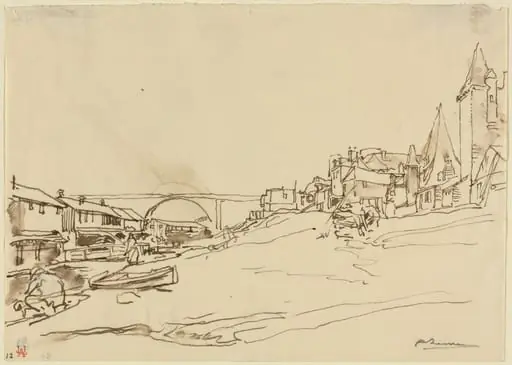
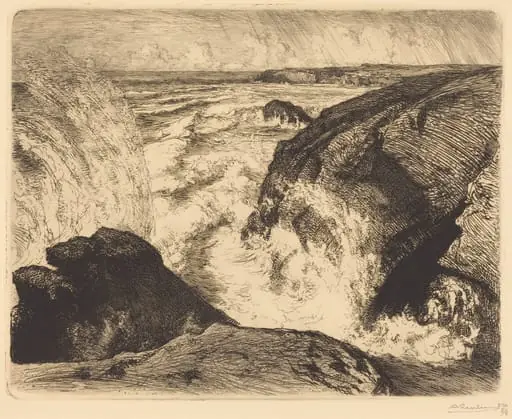
Created in 1891, *The Wash-house (Le lavoir)* is an etching executed in brown ink on a light‑buff sheet of paper. The composition captures a quiet rural wash‑house, populated by a few figures engaged in daily chores. The work reflects Auguste Lepère’s interest in ordinary scenes, rendered with a calm, observational tone.
Subject & Meaning
The print presents a modest communal wash‑house: a woman on the left balances a large bundle, a man rests on a wooden beam in the foreground, and a partially visible figure stands to the right. A tiled‑roofed building forms the backdrop, while other passersby attend to their tasks, suggesting a moment of shared labor and social interaction.
Technique & Style
Lepère employed traditional copper‑plate etching, using brown ink to achieve a warm tonal range against the buff paper. Fine line work and varied hatching create texture in stone walls, water, and clothing, while broader washes suggest atmospheric depth. The contrast between dark outlines and the paper’s pale surface enhances the sense of space and materiality.
History & Provenance
Born in 1849, Auguste Lepère was a French painter and printmaker who contributed to the 19th‑century revival of wood engraving and etching in Europe. He produced *The Wash-house* near the end of his career; the artist remained active until his death in 1918. The print has circulated through museum and private collections as an example of his mature etching practice.
Artist & collection
Artist
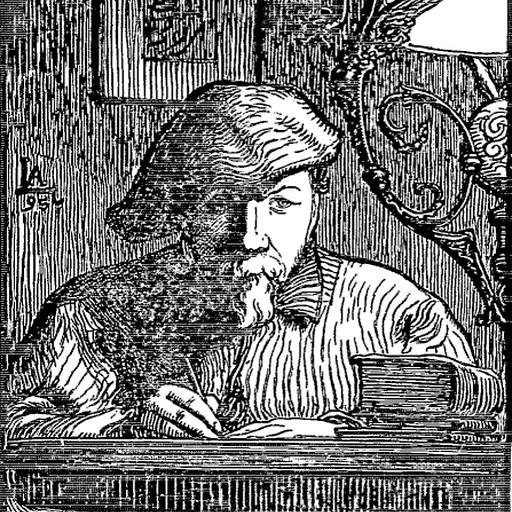
Louis-Auguste Lepère (30 November 1849 – 20 November 1918) was a French painter and etcher. Lepère is also considered a leader in the creative revival of wood engraving in Europe.