Artwork
The Wash-house (Le lavoir)
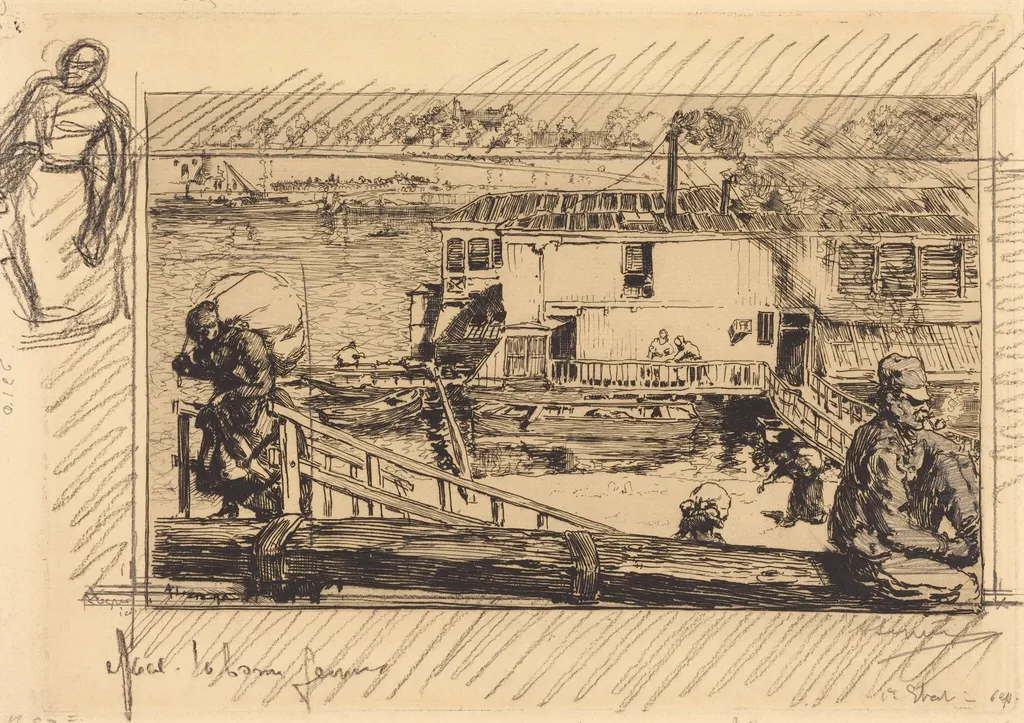
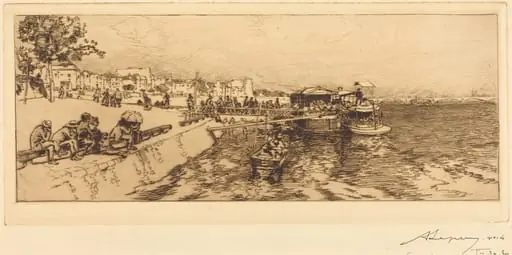
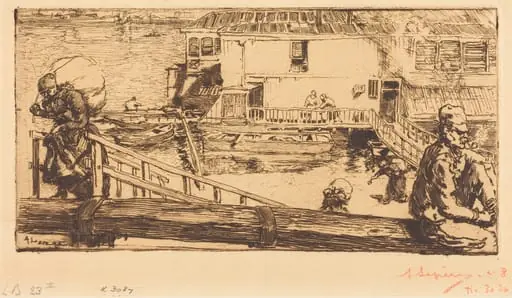
The Wash-house (Le lavoir) is an ink print by the Impressionist artist Auguste Lepère. It dates from 1891 and is held in the collection of the National Gallery of Art.
About this work
Overview
Created in 1891, *The Wash‑house (Le lavoir)* is a print by French artist Auguste Lepère. Executed as a touched‑proof etching, the work captures a bustling riverside tableau where villagers gather around an open‑air laundry facility while a distant railway station hints at contemporary change.
Subject & Meaning
The composition centers on a communal washhouse, a focal point of rural social life where men and women performed laundry by hand. Figures are shown in various poses—standing, seated, conversing—suggesting a moment of collective routine. The inclusion of a far‑off train station introduces a subtle contrast between traditional labor and the encroaching modernity of the railway age.
Technique & Style
Lepère employed the touched‑proof method, a stage in etching where the plate is printed before the final wiping, preserving a softer, more spontaneous line. The drawing is rendered with brisk, fluid strokes and delicate shading, emphasizing movement and atmosphere over meticulous detail. This approach aligns with Lepère’s broader interest in reviving printmaking processes that favor immediacy.
History & Provenance
The print belongs to Lepère’s late period, a time when he devoted considerable effort to refining etching and wood‑engraving techniques. While specific ownership records are limited, the work is documented in catalogues of his oeuvre and has appeared in exhibitions highlighting French printmaking of the late nineteenth century.
Artist & collection
Artist
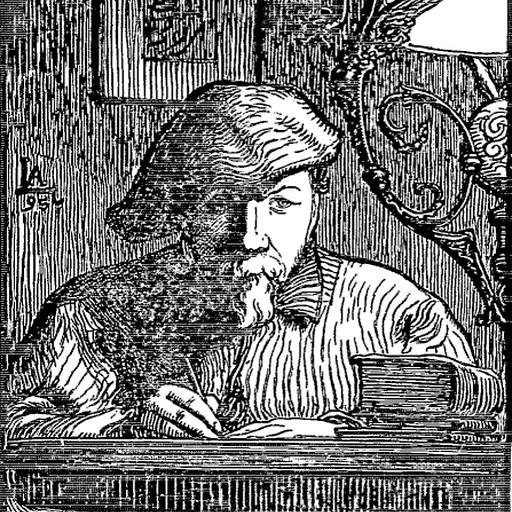
Louis-Auguste Lepère (30 November 1849 – 20 November 1918) was a French painter and etcher. Lepère is also considered a leader in the creative revival of wood engraving in Europe.