Artwork
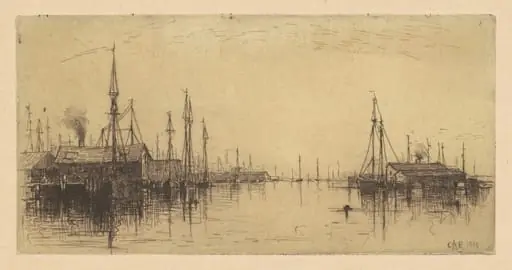
Shanties on the Harlem
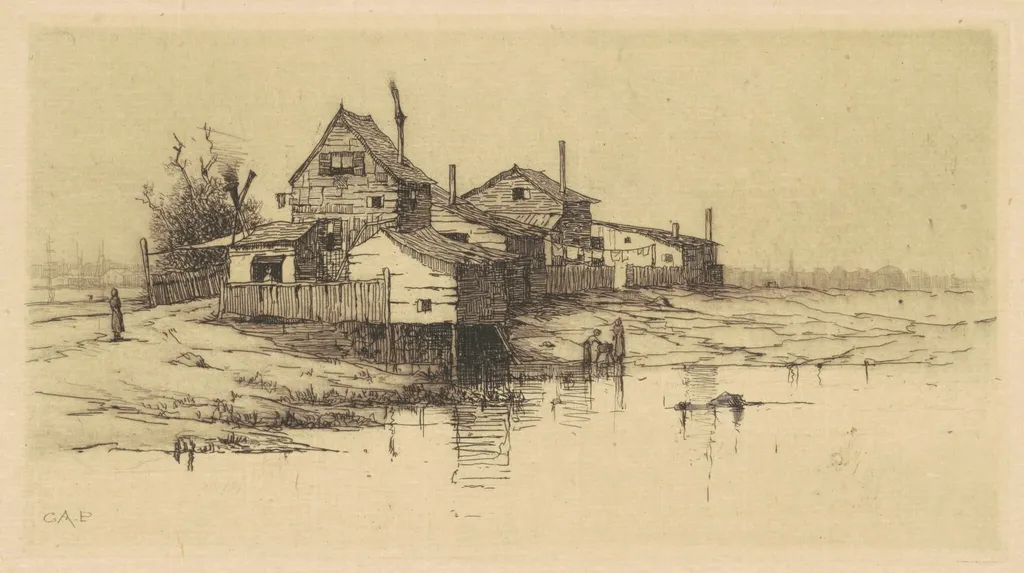
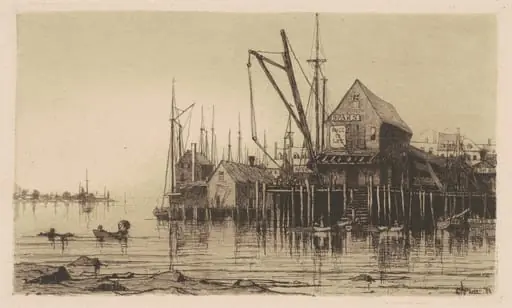
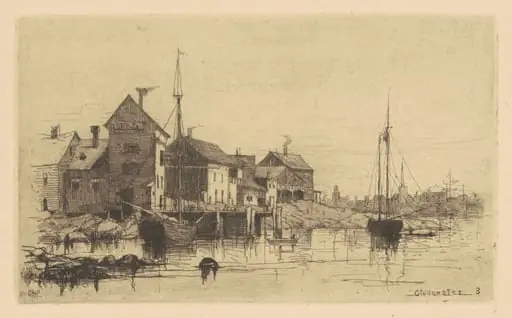
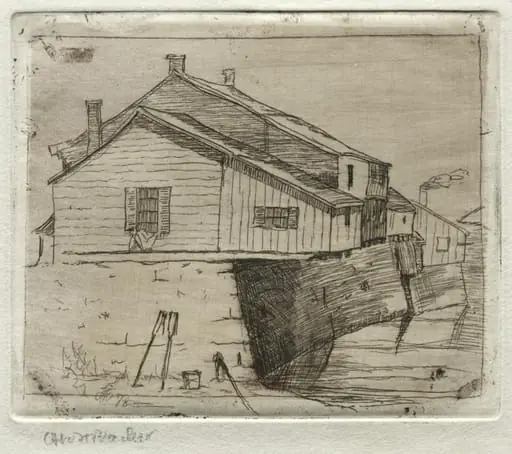
Shanties on the Harlem is an ink print by the Impressionist artist Charles A. Platt. It dates from 1882 and is held in the collection of the National Gallery of Art. Charles A.
About this work
Overview
A muted horizon reveals vague silhouettes of ships and distant buildings, situating the scene within a bustling waterfront environment.
Charles A. Platt’s 1882 print, titled Shanties on the Harlem, is an etching executed in black on laid paper. The work captures a cluster of precarious wooden shacks erected directly over water, their sagging porches and makeshift clotheslines suggesting a fragile, improvised settlement. A muted horizon reveals vague silhouettes of ships and distant buildings, situating the scene within a bustling waterfront environment.
Subject & Meaning
The composition portrays a marginal community living in precarious dwellings, emphasizing the vulnerability of the inhabitants through the tilted structures and flooded ground. Two figures—a solitary adult and a parent with a child—stand amid the shacks, underscoring themes of survival and familial continuity in an environment marked by instability and constant water encroachment.
Technique & Style
Platt employs a rapid, scratchy line quality characteristic of late‑19th‑century etching, allowing the wooden frames to appear as though they might collapse at any moment. The stark black ink on the textured laid paper creates a raw, unrefined surface, while the minimal shading conveys depth without softening the harshness of the scene.
History & Provenance
Created in 1882, Shanties on the Harlem belongs to Platt’s early printmaking period, preceding his later reputation as an architect and landscape designer. The work has circulated through several private collections before entering a public institution’s holdings, where it is referenced as an example of American urban etching from the post‑Reconstruction era.
Context
The print reflects contemporary concerns about rapid urban expansion and the living conditions of low‑income populations along New York’s waterfront. During the 1880s, the Harlem River area was undergoing industrial development, and informal housing like that depicted by Platt was a common, though often overlooked, aspect of the city’s growth.
Artist & collection