Artwork
Funeral Pyre of Memnon
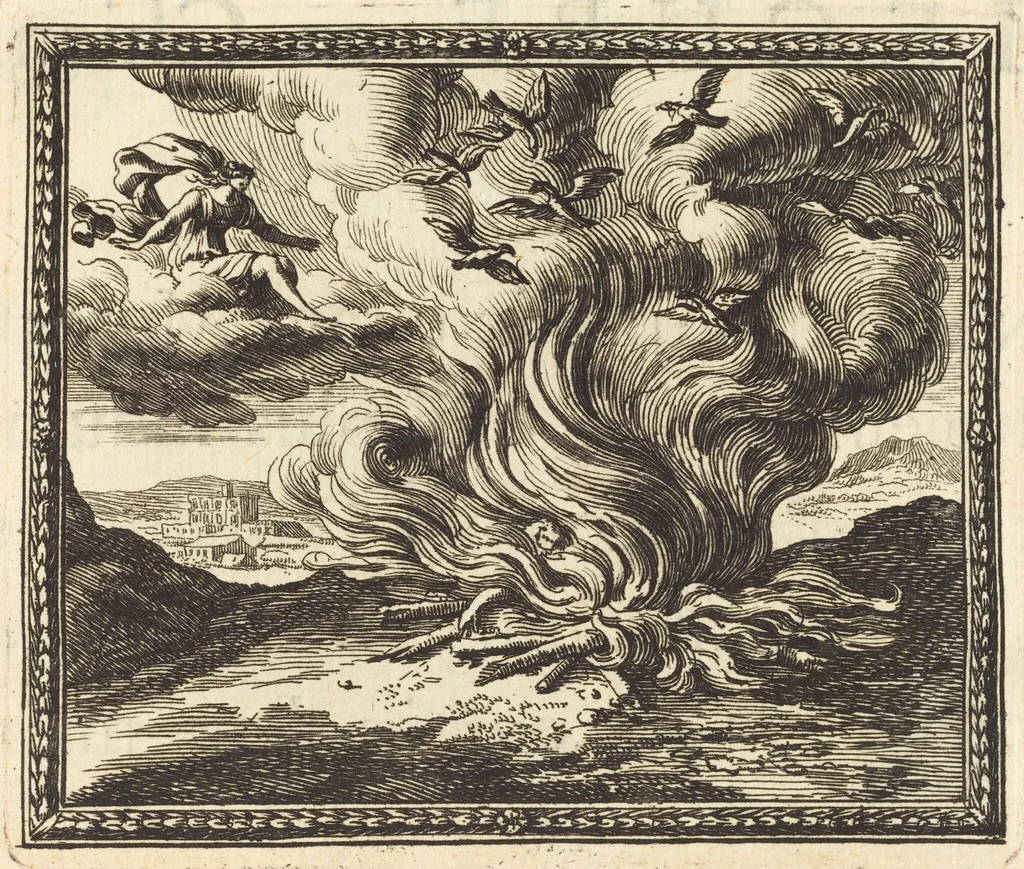
Funeral Pyre of Memnon is an ink print by the Baroque artist Jean Lepautre. It dates from 1676 and is held in the collection of the National Gallery of Art.
About this work
Overview
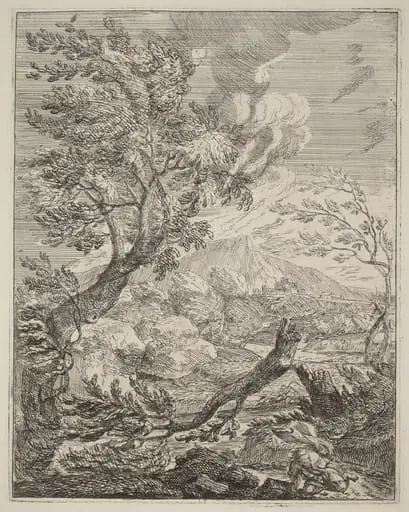
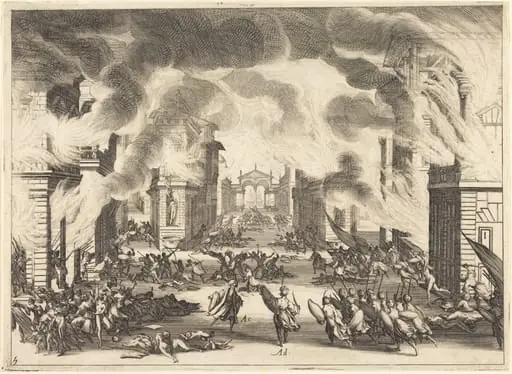
Jean Lepautre’s 1676 print, titled *Funeral Pyre of Memnon*, is an engraving executed on laid paper. The work captures a nocturnal ceremony on a craggy shoreline, where a towering pyre burns amid a gathering of mourners. A gnarled tree looms behind the flames, while a distant settlement crowns a hill under a turbulent sky.
Subject & Meaning
The composition depicts the mythic funeral rites of Memnon, the Ethiopian king slain by Achilles, whose body was traditionally said to be burned on a coastal pyre. Lepautre arranges the mourners and the towering fire to convey both the solemnity of loss and the transformative power of fire, linking the earthly ritual to the heroic narrative.
Technique & Style
Lepautre employs fine, sharply incised lines and cross‑hatching to model the rocky terrain, the twisted bark of the tree, and the swirling clouds. The contrast between deep shadows and illuminated flames creates a sense of depth and motion, characteristic of late‑seventeenth‑century French engraving, where precision and controlled drama coexist.
History & Provenance
Created in 1676, the print belongs to Lepautre’s mature period, during which he produced a series of mythological and historical subjects for the French court. Original impressions are held in several European print collections, having passed through private hands before entering museum holdings in the nineteenth century.
Context
The image reflects the baroque fascination with theatricality and the classical revival of antiquity that permeated French art under Louis XIV. By choosing the episode of Memnon’s funeral, Lepautre aligns his work with contemporary literary sources and the broader cultural interest in heroic tragedy and its visual representation.
Artist & collection