Artwork
Political Cartoon of the American Civil War
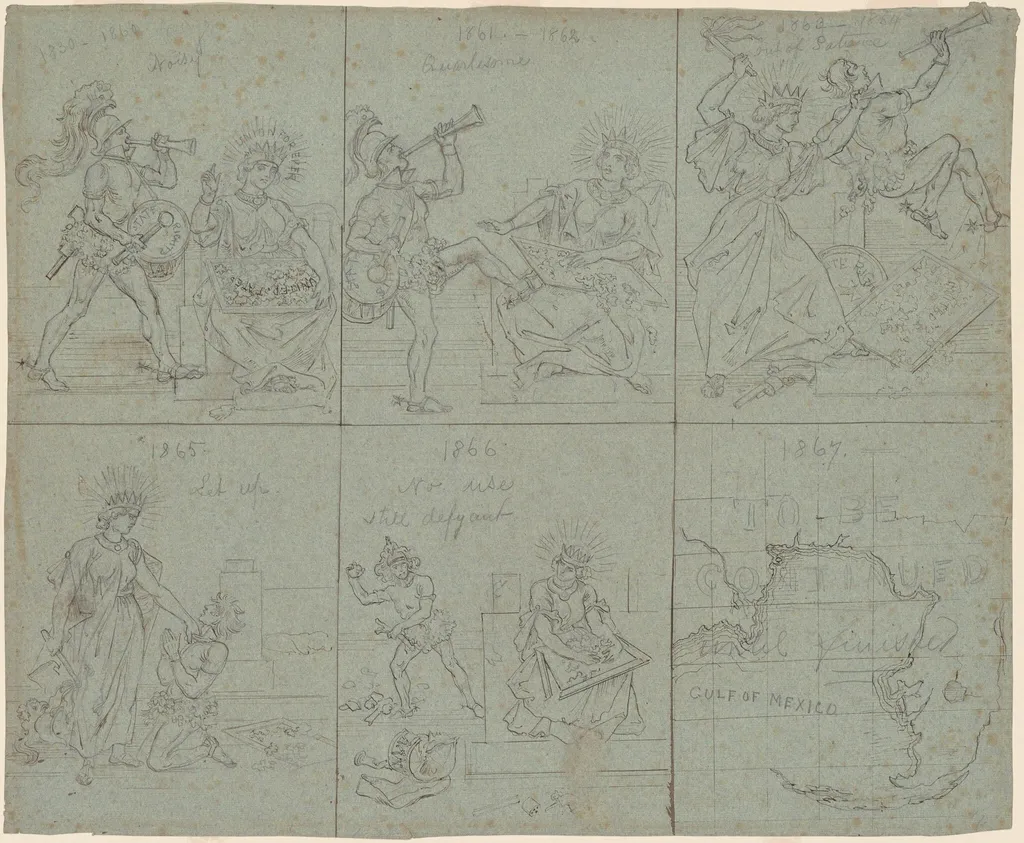
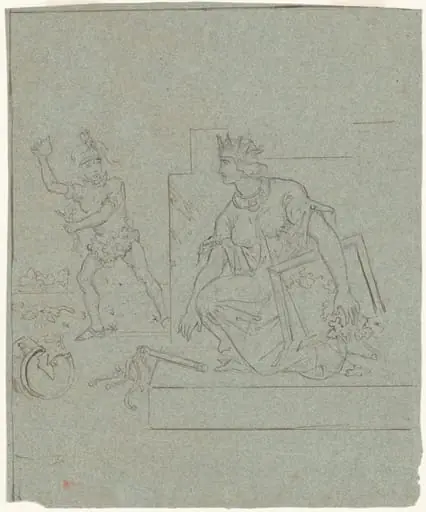
Political Cartoon of the American Civil War is an ink drawing by the Impressionist artist Emanuel Leutze. It dates from 1864 and is held in the collection of the National Gallery of Art.
About this work
One panel has a ship labeled "Gulf of Mexico," and another shows a battle with a fallen soldier.
This sketch shows six dramatic scenes with wild, exaggerated figures. Some wear crowns or hold guns, while others look defeated or angry. The lines are loose and shaky, like quick notes. One panel has a ship labeled "Gulf of Mexico," and another shows a battle with a fallen soldier.
The artist scribbled dates like 1864 and 1865 in the corners, hinting at real events. The mix of chaos and symbols feels urgent—like a protest or a warning.
Next, check out cross-hatching to see how artists build drama with just lines.
Overview
Created in 1864 by Emanuel Gottlieb Leutze, this ink drawing on blue-gray laid paper is a rapid, expressive response to the American Civil War. Though best known for large-scale history paintings, Leutze turned to a smaller, more immediate format here, using loose penwork over graphite to capture the war’s turmoil. The work’s informal medium and urgent composition distinguish it from his monumental canvases, reflecting a personal engagement with contemporary events.
Subject & Meaning
The drawing presents six fragmented scenes filled with symbolic figures—some crowned, others armed or fallen—suggesting a critique of leadership, violence, and national fracture. A ship marked 'Gulf of Mexico' and a battlefield with a dead soldier anchor the narrative in real conflict zones. Scribbled dates imply a timeline of escalating crisis. The imagery functions less as a story and more as a visceral outcry, blending political allegory with raw emotional urgency.
Technique & Style
Leutze employed swift, irregular pen strokes over a graphite underdrawing, creating a sense of spontaneity and agitation. Cross-hatching builds shadow and tension without refinement, while the shaky lines convey instability. The blue-gray paper provides a muted ground, heightening the contrast of black ink. This technique rejects polished finish in favor of immediacy, aligning the work with journalistic or protest art rather than academic tradition.
History & Provenance
Made during Leutze’s later years in the United States, the drawing likely originated in his studio as a private commentary rather than a commissioned piece. Its survival suggests it was retained by the artist or a close associate. No public exhibition record exists from the time, and its current location reflects 20th-century acquisition by an institution interested in Civil War-era graphic expression.
Context
In 1864, as the Civil War entered its final, brutal phase, visual satire and political imagery surged in newspapers and pamphlets. Leutze, though trained in European academic traditions, responded to this climate with a work that echoes the chaotic energy of wartime cartoons. His choice of a sketch-like format aligns with emerging trends in visual journalism, even as his symbolic language remains rooted in allegorical painting.
Legacy
This drawing stands as a rare example of Leutze’s engagement with direct political commentary. Unlike his grand historical works, it reveals a more personal, unfiltered perspective on national crisis. Though not widely circulated in its time, it now serves as a valuable artifact of how even established painters turned to informal media to process the war’s moral and human toll.
Artist & collection

Artist
Emanuel Leutze grew up in America but moved to Germany as a teen, where he studied art in Düsseldorf.

![Study of Half-Length Figure with Pole [verso], by Emanuel Leutze](https://artifactworldgallery.com/img/emanuel-leutze--study-of-half-length-figure-with-pole-verso--13a43a492f70c459-w320.webp)
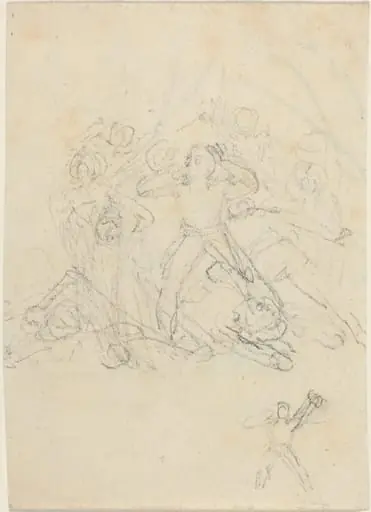 Battle Scene
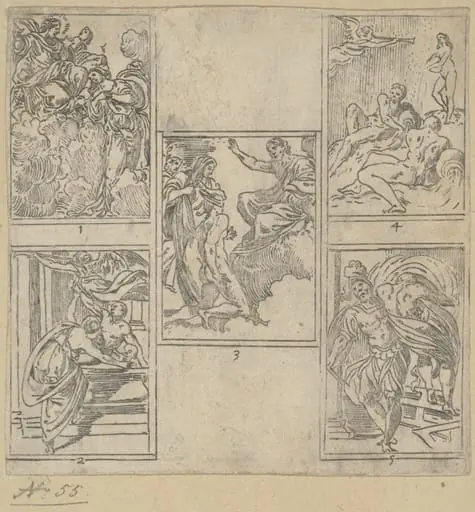 The Obsequies of Agostino Carracci: Third Plate
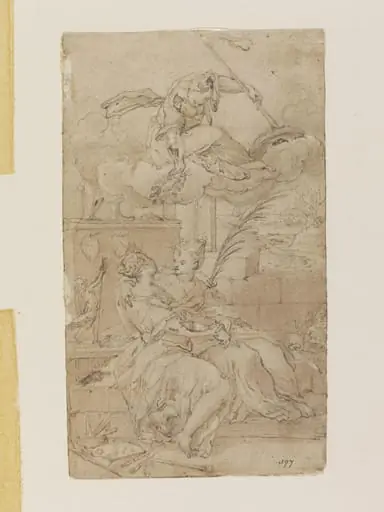 Allegory of the Union of Painting and Sculpture
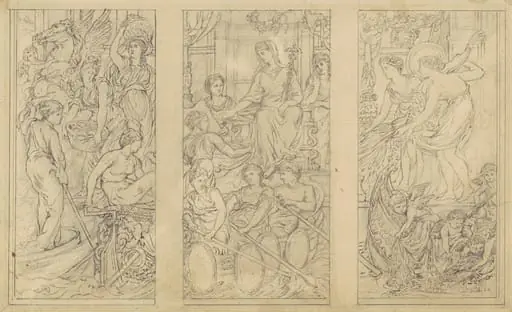 Study for "Commerce"
![Design for a Book Illustration of Circe and Odysseus [recto], by Thomas Stothard](https://artifactworldgallery.com/img/thomas-stothard--design-for-a-book-illustration-of-circe-and-odysseus-recto--5bd59a6f73de4838-w320.webp) Design for a Book Illustration of Circe and Odysseus [recto]
Design for a Book Illustration of Circe and Odysseus [recto] Tracings of Classical Subjects
 Studies of Classical Women, with Eros
 Study for 'The Siege of Gibraltar'
 Compositional Sketches after Raphael and other artists
 Three preparatory studies for the Burning of the Books at Ephesus
 Figure Studies
 Political Cartoon of the American Civil War