Artwork
Francis Bacon
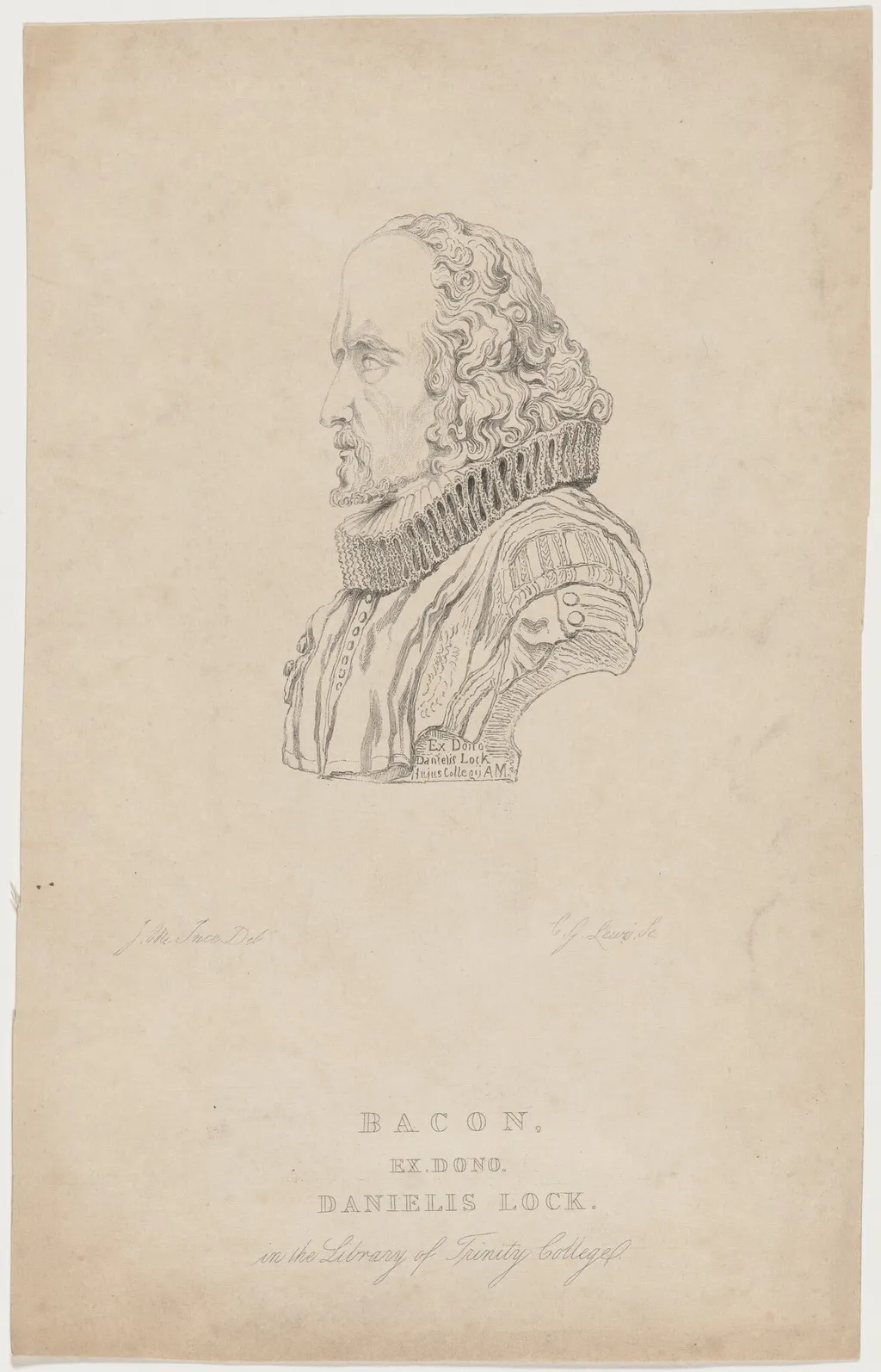
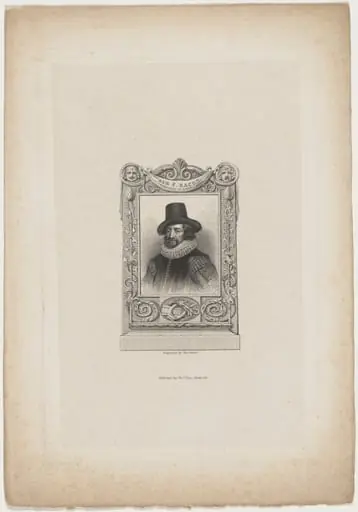
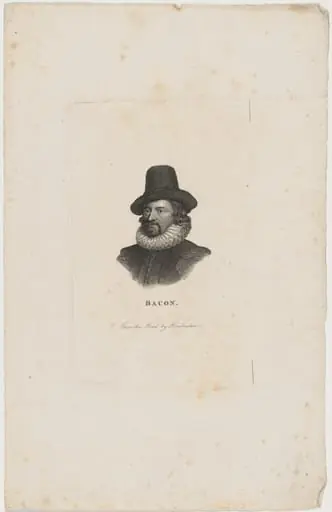
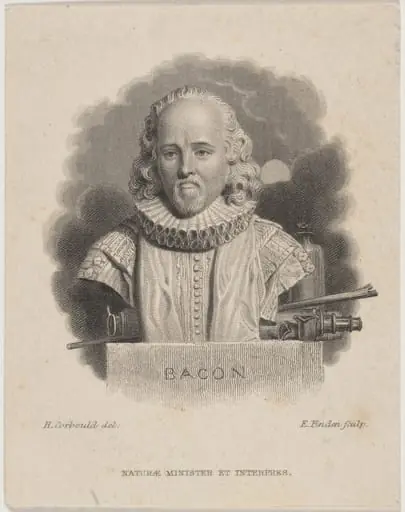
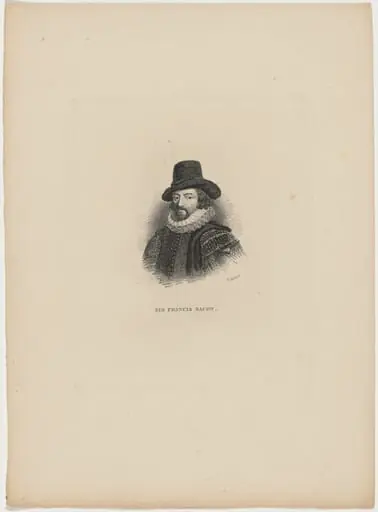
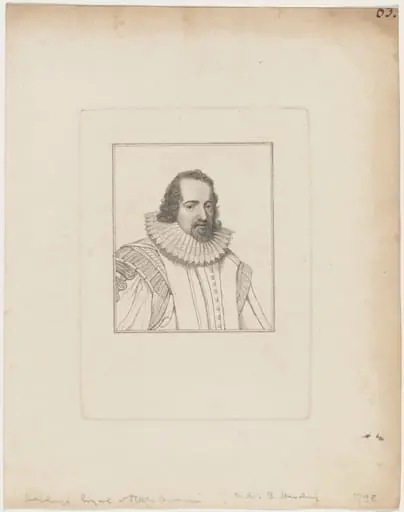
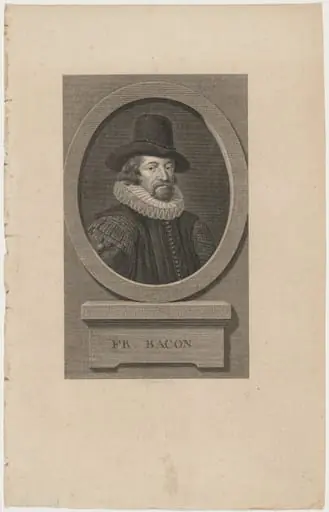
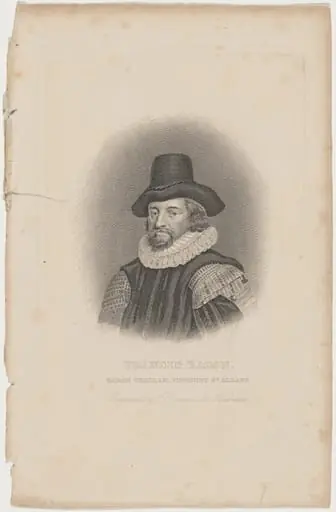
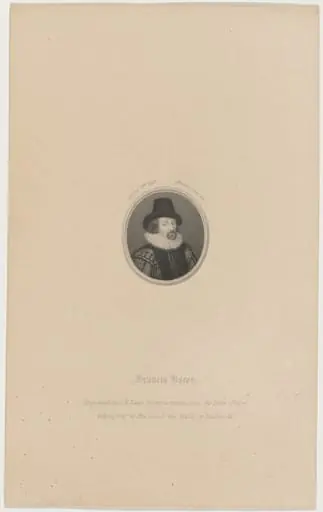
Francis Bacon is an ink print by the Romanticist artist Charles George Lewis. It dates from 1844 and is held in the collection of the National Gallery of Art.
About this work
Overview
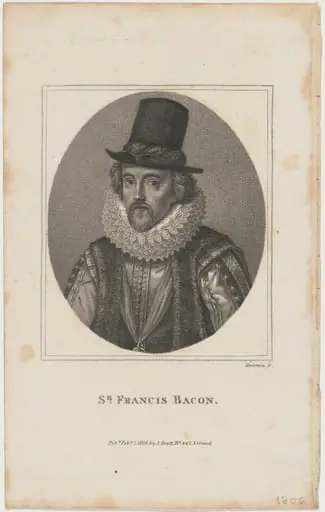
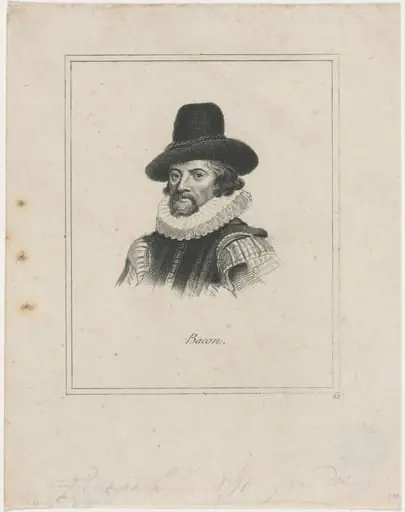
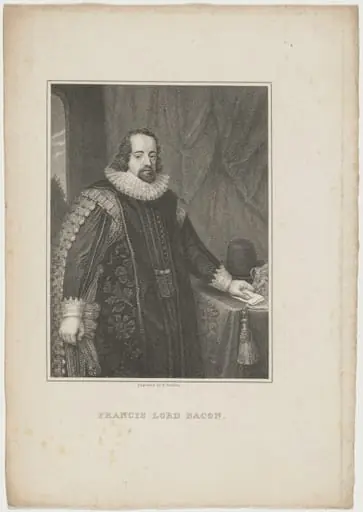
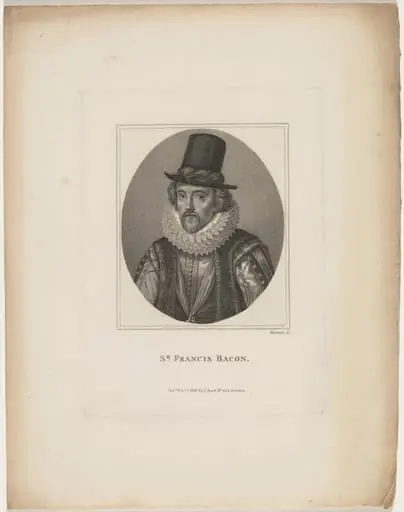
This 1844 engraving by Charles George Lewis depicts a male figure in profile, rendered in monochrome ink on paper. The composition centers on the head and upper torso, with no decorative background to distract from the subject’s features. The work is part of a tradition of scholarly portraiture, likely intended for reproduction and distribution rather than as a standalone artwork.
Subject & Meaning
His attire—high collar, ruff, and chain—reflects the dress of Elizabethan elites, aligning with historical depictions of Bacon.
The figure is identified as Francis Bacon, the 16th-century English philosopher and statesman. His attire—high collar, ruff, and chain—reflects the dress of Elizabethan elites, aligning with historical depictions of Bacon. The inscription referencing Trinity College and Daniel Lock, a known benefactor, reinforces the portrait’s connection to academic and institutional memory, positioning Bacon as a figure of intellectual legacy.
Technique & Style
Lewis employed fine, controlled lines typical of 19th-century engraving to model form and texture. The curls of the beard and hair, the sheen of the chain, and the folds of the collar are suggested through precise hatching and cross-hatching. The absence of tone or shading emphasizes line as the primary vehicle of representation, characteristic of reproductive prints made for clarity and detail.
History & Provenance
The inscription 'EX. DONO. DANIELIS LOCK' indicates the image was derived from a portrait donated by Daniel Lock, possibly a Trinity College benefactor. The work was likely produced to accompany scholarly publications or institutional collections, serving as a standardized visual reference. Its creation in 1844 places it within a broader 19th-century effort to document and disseminate images of historical figures.
Context
During the mid-19th century, engravings of historical figures were widely used in educational and archival contexts. This print reflects a period when institutions sought to visually anchor intellectual heritage through standardized portraiture. Bacon’s image, though not from life, was shaped by earlier paintings and textual descriptions, making this engraving a link between artistic tradition and academic commemoration.
Legacy
As a reproductive engraving, this work contributed to the visual canon of Francis Bacon in academic circles. Though not an original portrait, it helped standardize his likeness for textbooks and institutional displays. Its survival in collections today underscores the role of print media in preserving historical identity beyond the original artwork.
Artist & collection