Artwork
Eighteen Views of Rome: The Ponte Rotto
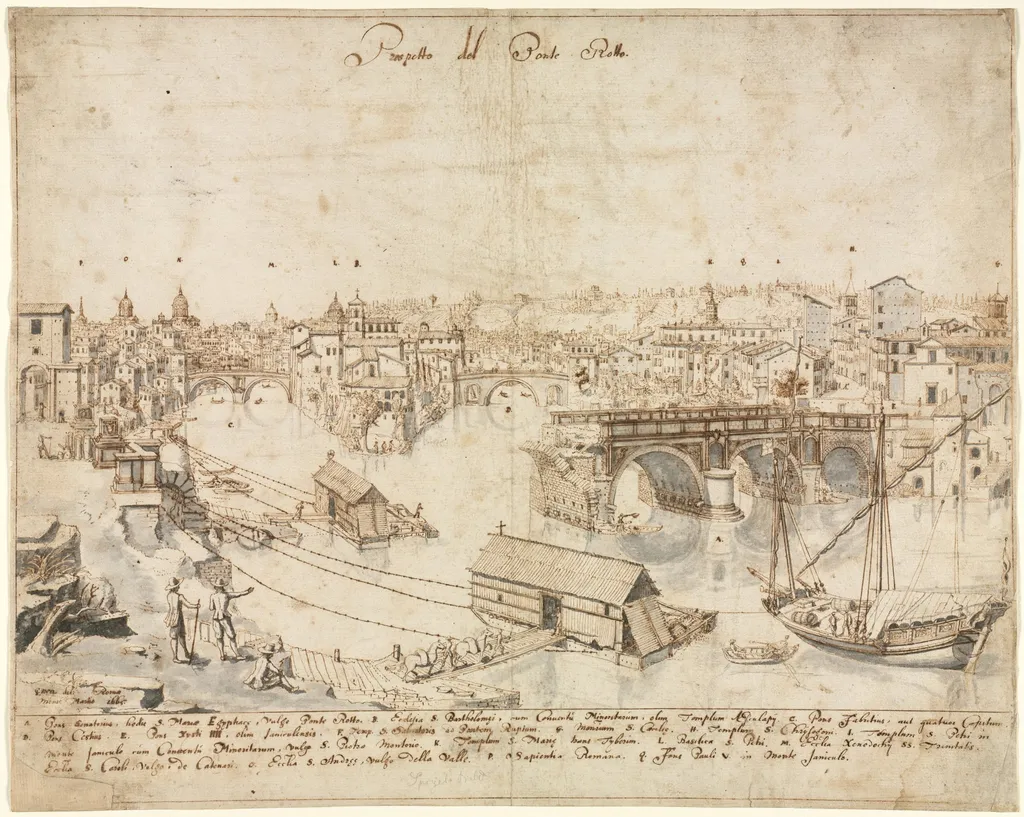
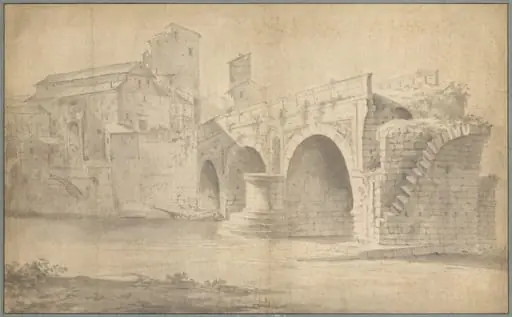
Eighteen Views of Rome: The Ponte Rotto is a drawing by the Baroque artist Lievin Cruyl. It dates from 1665 and is held in the collection of the Cleveland Museum of Art.
About this work
Overview
Held since the 20th century by The Cleveland Museum of Art, it reflects the 17th-century interest in documenting classical ruins.
Created in 1665 by Lievin Cruyl, this ink drawing is one of eighteen views of Rome documenting the city’s architecture. It focuses on the Ponte Rotto, an ancient bridge in partial ruin, rendered with precise linear detail. The work is part of a larger topographical series, intended as a visual record rather than a decorative piece. Held since the 20th century by The Cleveland Museum of Art, it reflects the 17th-century interest in documenting classical ruins.
Subject & Meaning
The drawing centers on the Ponte Rotto, a remnant of the ancient Pons Aemilius, spanning the Tiber River. Boats moored beneath and figures along the bank suggest daily life amid decay. The surrounding cityscape, dense with domes and towers, implies Rome’s layered history—ancient foundations beneath Baroque expansion. The artist’s labeling of structures functions as a cartographic annotation, emphasizing observation over imagination.
Technique & Style
Executed in light brown ink, the drawing employs fine, controlled lines to define architecture and topography. Buildings are rendered with minimal shading, relying on contour and scale for depth. Tiny inscriptions identify key monuments and streets, blending surveying precision with artistic draftsmanship. The composition avoids dramatic lighting or emotional emphasis, favoring clarity and spatial accuracy over theatrical effect.
History & Provenance
The drawing was produced during Cruyl’s time in Rome, likely as part of a commissioned or personal project to document the city’s antiquities. It remained in private hands until entering the Cleveland Museum of Art’s collection in the 20th century. Its survival as part of a complete series is rare, as many such drawings were dispersed or lost. The museum acquired it with other works from the same corpus, preserving its original context.
Context
Cruyl’s work emerged during a period when European travelers and artists increasingly recorded Roman ruins as cultural relics. His drawings align with the scholarly trend of antiquarianism, where architecture was studied as historical evidence. Unlike Baroque painters who dramatized ruins, Cruyl prioritized documentation, reflecting the influence of emerging cartographic and archaeological practices in the mid-17th century.
Legacy
The drawing contributes to a broader corpus of topographical studies that informed later architectural and urban documentation. Cruyl’s method—combining precise draftsmanship with labeled annotations—became a model for subsequent surveyors and antiquarians. While not widely exhibited, the work remains a key example of how early modern artists contributed to the systematic recording of historical landscapes.
Artist & collection

Artist
Lievin Cruyl or Lieven Cruyl was a Flemish priest and a draughtsman and etcher of landscapes, seascapes, and architectural views.

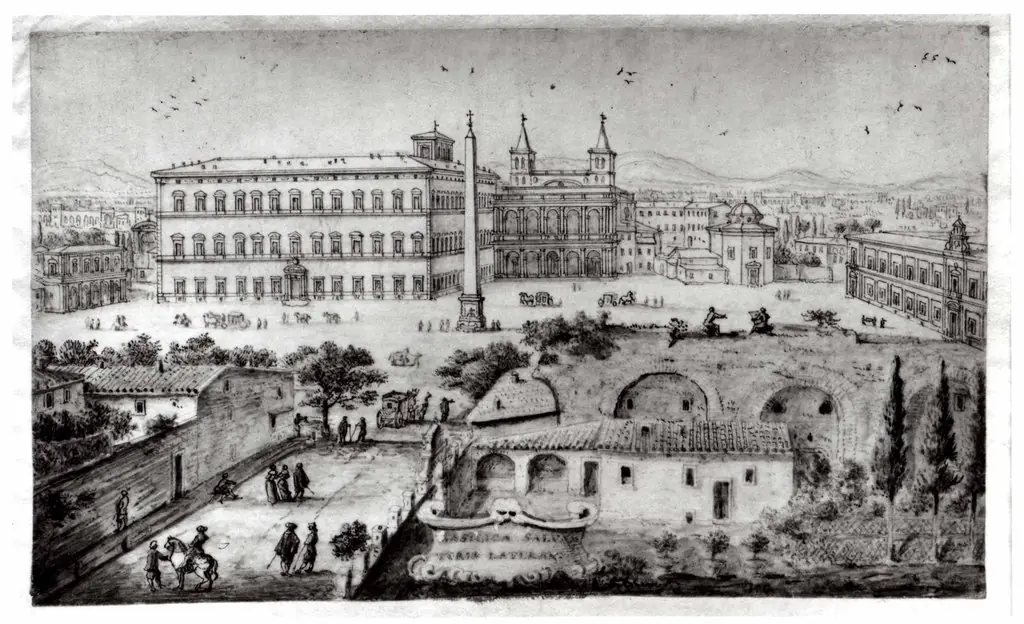 View of Lateran, Rome
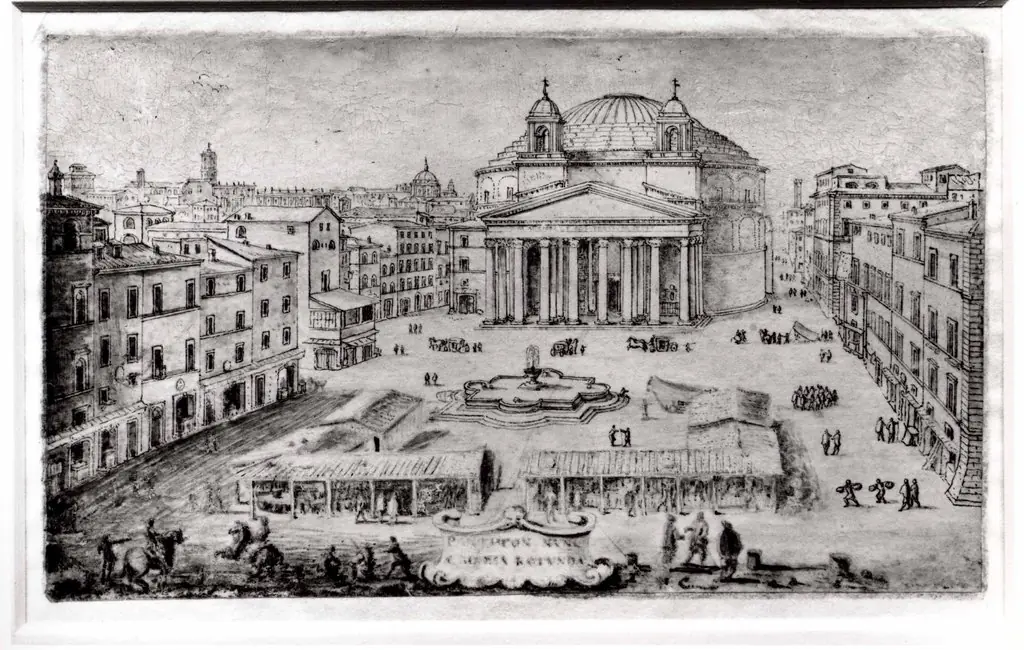 View of the Pantheon, Rome
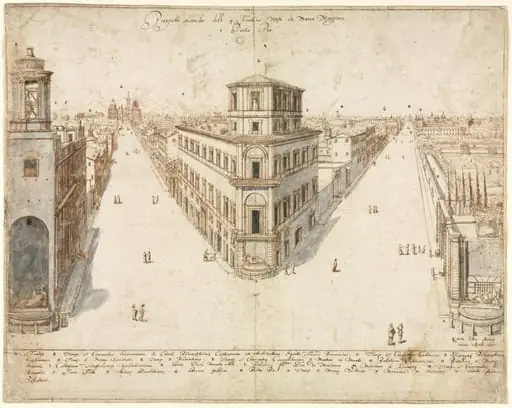 Eighteen Views of Rome: The Quattro Fontane Looking Toward Santa Maria Maggiore
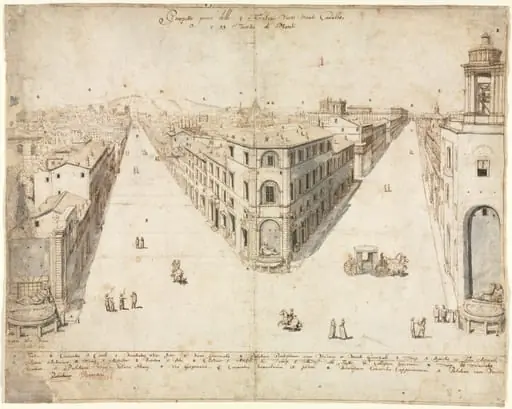 Eighteen Views of Rome: The Quattro Fontane Looking Toward Monte Cavallo
 Sketch for San Giovanni in Laterano (verso)
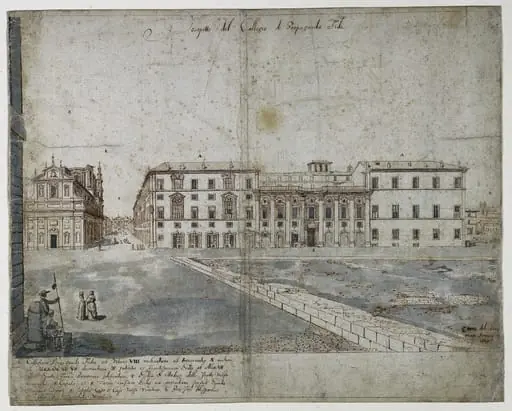 Eighteen Views of Rome: The Collegio di Propaganda Fide (recto)
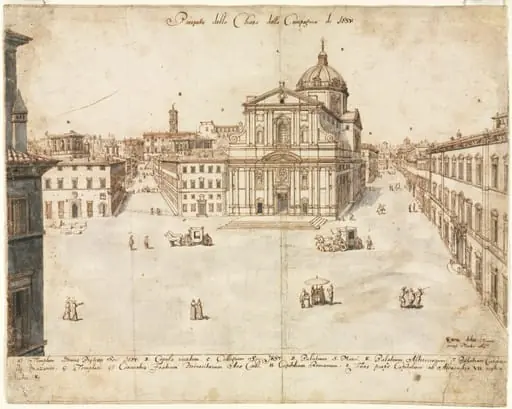 Eighteen Views of Rome: The Church of the Gesù
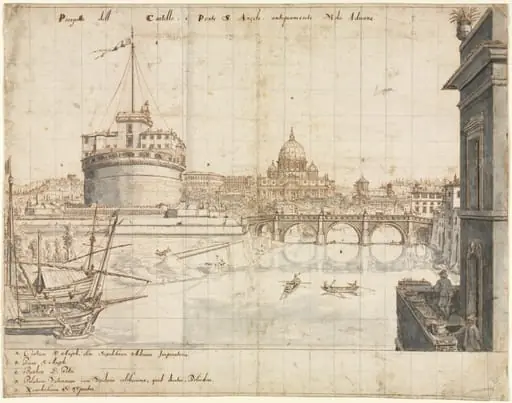 Eighteen Views of Rome: The Castel Sant'Angelo