Artwork
Eighteen Views of Rome: The Quirinale
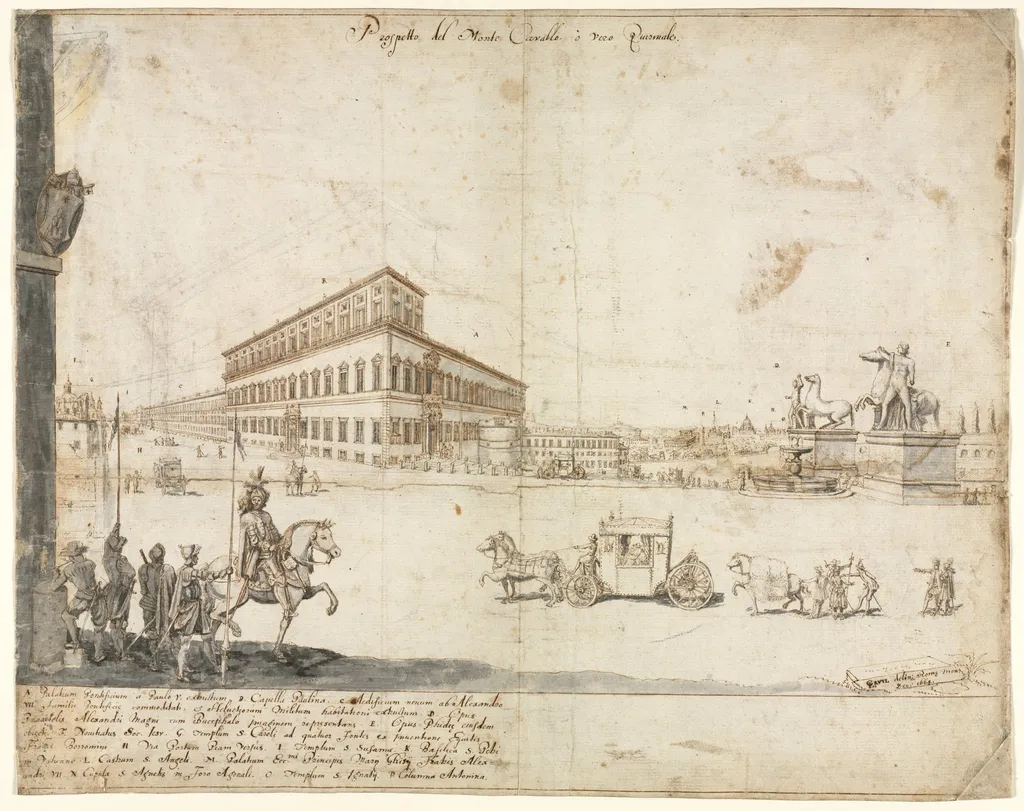
Eighteen Views of Rome: The Quirinale is a drawing by the Baroque artist Lievin Cruyl. It dates from 1664 and is held in the collection of the Cleveland Museum of Art.
About this work
Overview
Created in 1664 by Lievin Cruyl, this pen-and-ink drawing captures a precise perspective of the Quirinale Palace in Rome. Part of a series documenting the city’s architecture, it reflects the artist’s interest in urban topography. The work is held in the collection of the Cleveland Museum of Art, where it serves as a record of Roman civic life during the mid-seventeenth century.
Subject & Meaning
The composition conveys order and hierarchy, aligning with the palace’s role as a seat of power rather than a purely decorative view.
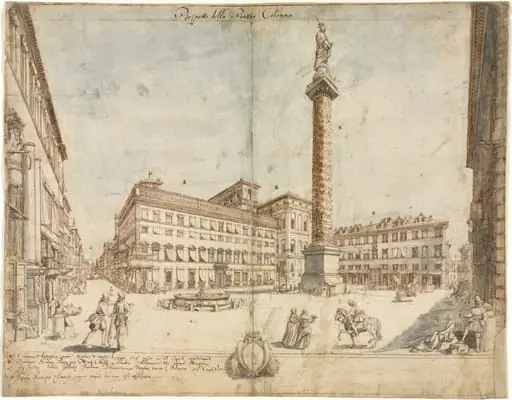
The scene centers on the Quirinale Palace, then a papal residence, framed by figures engaged in daily movement: a mounted official leading soldiers, a carriage with four horses, and pedestrians along the street. Statues on pedestals suggest imperial or religious authority. The composition conveys order and hierarchy, aligning with the palace’s role as a seat of power rather than a purely decorative view.
Technique & Style
Cruyl employed fine, controlled pen lines to render architectural detail and spatial depth. The folds of clothing, the texture of stone, and the recession of buildings into the distance demonstrate careful observation. Shadows are suggested through hatching rather than wash, emphasizing structure over dramatic contrast. This restrained approach reflects a topographical tradition rather than theatrical Baroque expression.
History & Provenance
The drawing belongs to a series of eighteen views Cruyl made during his time in Rome, likely commissioned or intended for scholarly circulation. It entered the Cleveland Museum of Art’s collection in the twentieth century, having passed through private hands in Europe. Its survival in good condition offers rare insight into early modern European interest in Roman urban planning.
Context
In the 1660s, Rome was a center of papal authority and artistic patronage. Artists like Cruyl, often from the Low Countries, traveled to document its monuments for Northern European audiences. The Quirinale, recently expanded by the papacy, symbolized both religious and political presence. These drawings functioned as both records and status objects for collectors interested in classical antiquity and contemporary governance.
Legacy
Cruyl’s series influenced later topographical artists and contributed to the documentation of Rome’s architectural evolution. Though not widely exhibited, his precise renderings remain valuable for historians studying urban development and the transmission of visual knowledge across Europe in the Baroque era.
Artist & collection

Artist
Lievin Cruyl or Lieven Cruyl was a Flemish priest and a draughtsman and etcher of landscapes, seascapes, and architectural views.

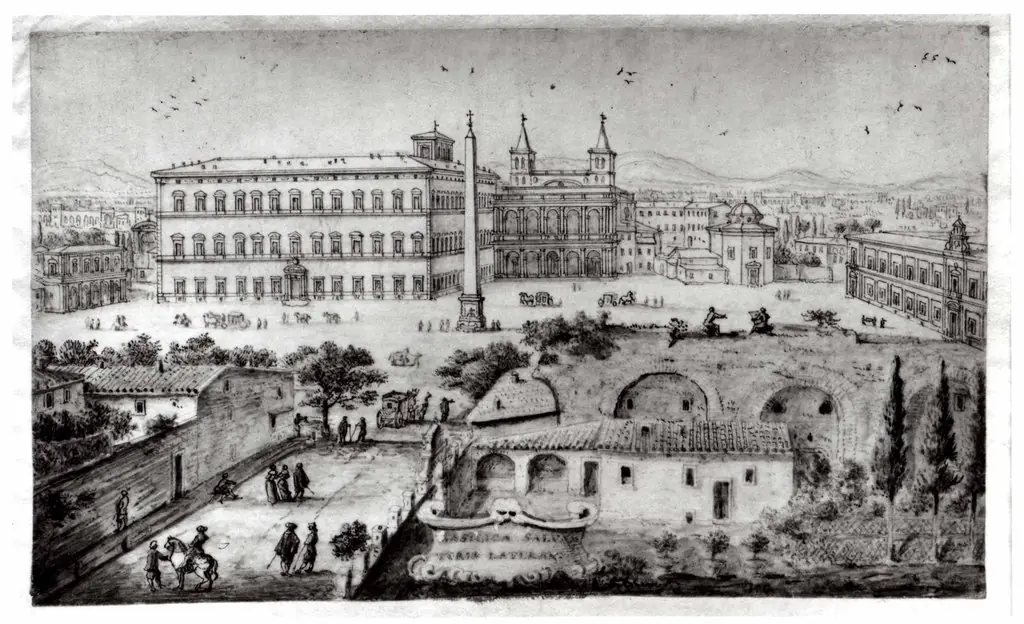 View of Lateran, Rome
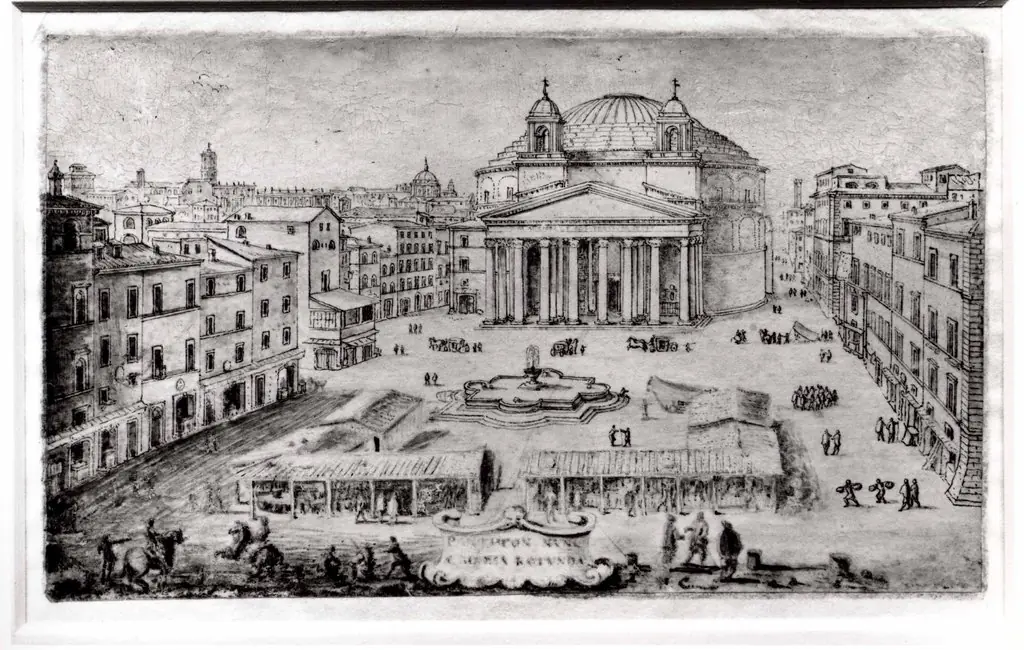 View of the Pantheon, Rome
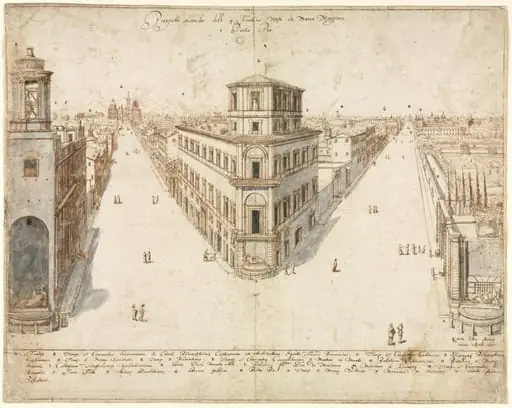 Eighteen Views of Rome: The Quattro Fontane Looking Toward Santa Maria Maggiore
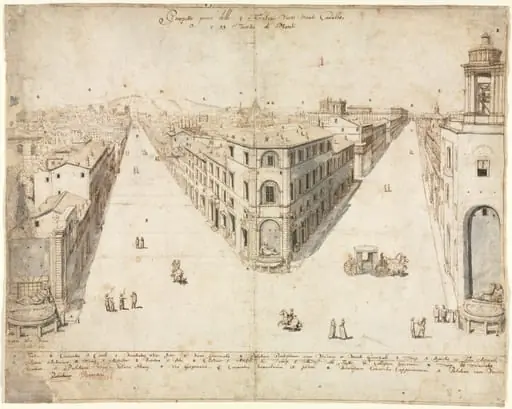 Eighteen Views of Rome: The Quattro Fontane Looking Toward Monte Cavallo
 Sketch for San Giovanni in Laterano (verso)
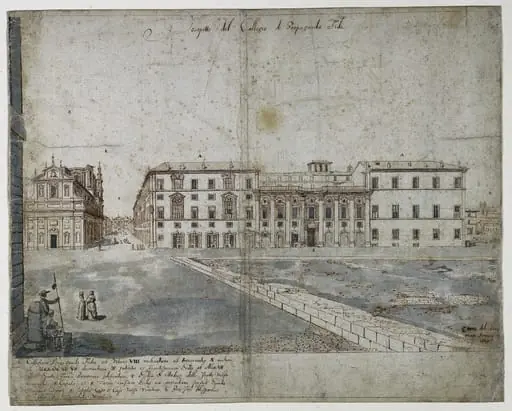 Eighteen Views of Rome: The Collegio di Propaganda Fide (recto)
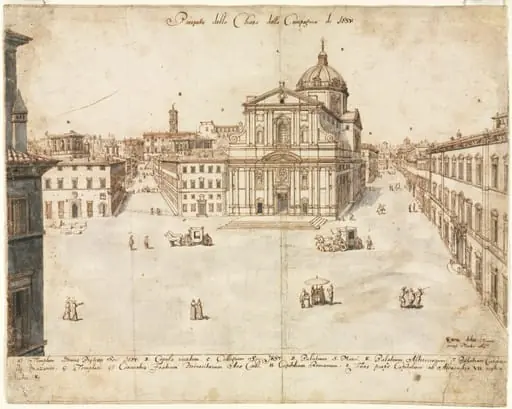 Eighteen Views of Rome: The Church of the Gesù
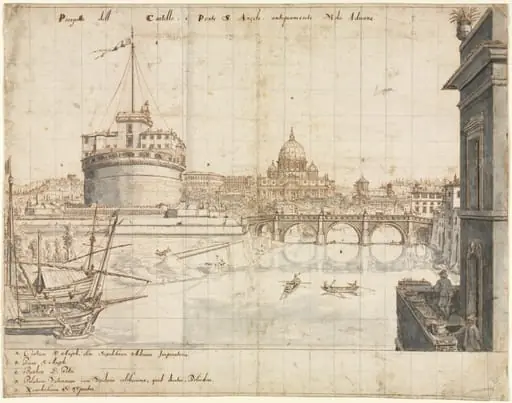 Eighteen Views of Rome: The Castel Sant'Angelo
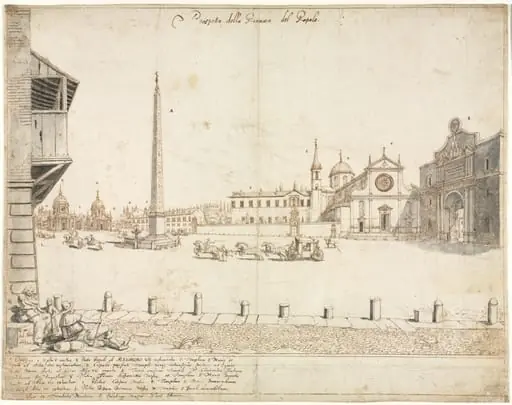 Eighteen Views of Rome: The Piazza del Popolo (recto)
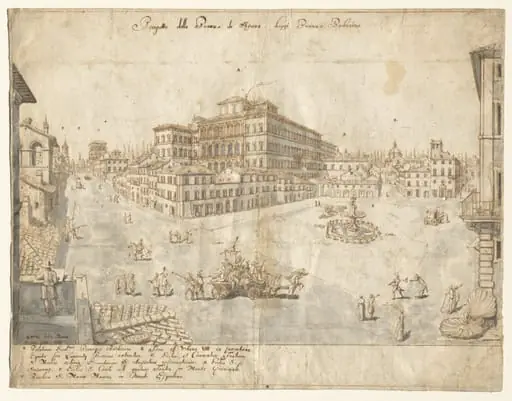 Eighteen Views of Rome: The Piazza Barberini (recto)
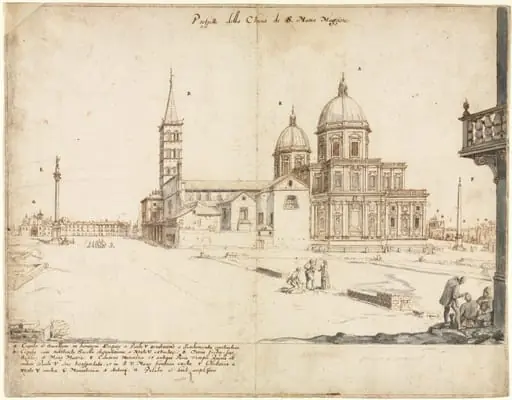 Eighteen Views of Rome: The Basilica of Santa Maria Maggiore
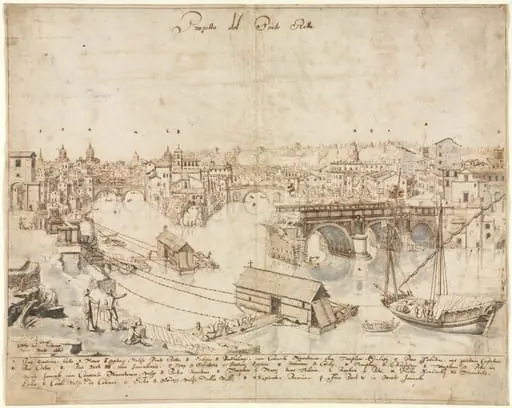 Eighteen Views of Rome: The Ponte Rotto
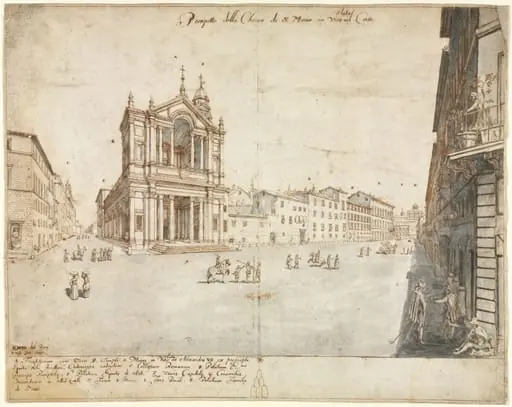 Eighteen Views of Rome: Santa Maria in Via Lata
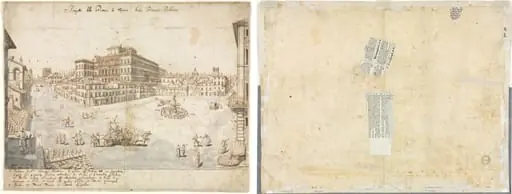 Eighteen Views of Rome: The Piazza Barberini (recto); Tracing of a Fountain from recto and Sketches of Two Faces (verso)
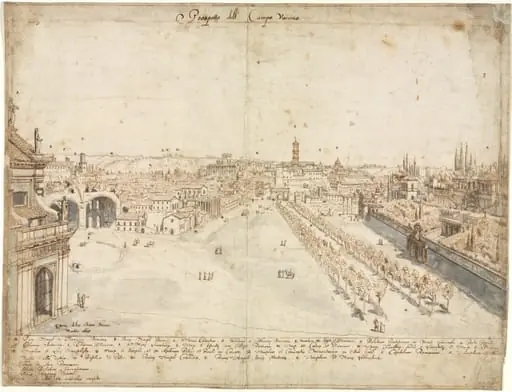 Eighteen Views of Rome: The Campo Vaccino (The Roman Forum)
 Eighteen Views of Rome: The Piazza Colonna