Artwork
Frontispiece with Portrait of Saint Francis
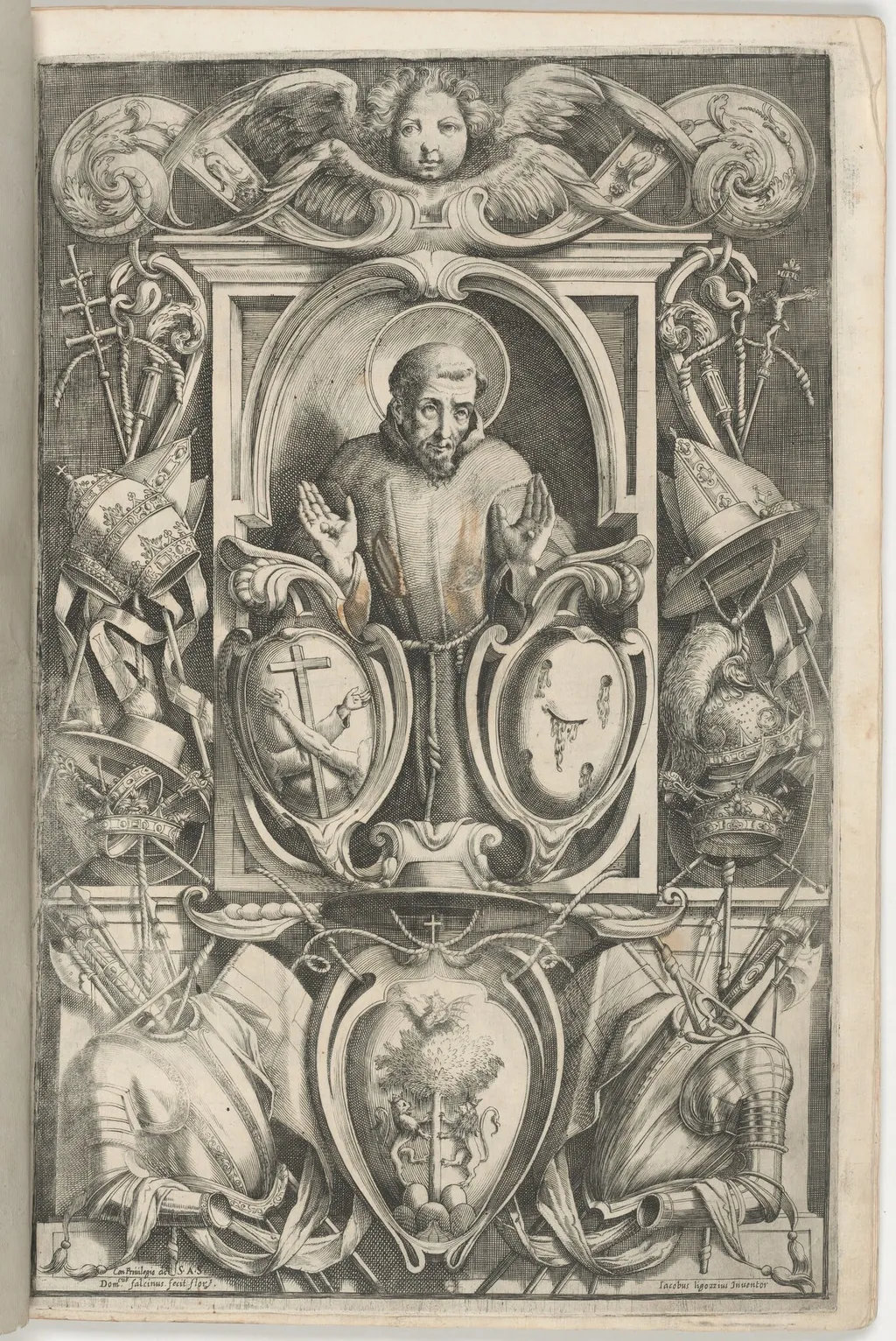
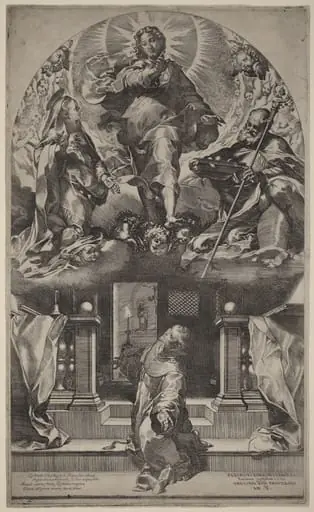
Frontispiece with Portrait of Saint Francis is an ink print by the Baroque artist Jacopo Ligozzi. It dates from 1612 and is held in the collection of the National Gallery of Art.
About this work
Overview
Executed in fine linear detail, the composition combines portraiture with symbolic ornamentation typical of early 17th-century Italian printmaking.
Created in 1612 by Jacopo Ligozzi, this engraving serves as a devotional frontispiece centered on Saint Francis of Assisi. Executed in fine linear detail, the composition combines portraiture with symbolic ornamentation typical of early 17th-century Italian printmaking. Ligozzi’s mastery of cross-hatching lends texture and volume to the figures, guiding the viewer’s attention toward the saint’s central position.
Subject & Meaning
Saint Francis is portrayed frontally, hands raised in prayer, clad in a coarse tunic that signifies his vow of poverty. Above him, a cherub’s head suggests divine presence, while the shield below displays a tree with a bird—likely referencing the legend of Francis preaching to birds or the Tree of Life. These elements together frame the saint as a mediator between earthly humility and spiritual grace.
Technique & Style
Ligozzi employed meticulous engraving techniques, using fine, intersecting lines to model form and depth. The dense patterning of shadows and highlights reflects Mannerist tendencies toward complexity and refinement. Despite the intricate borders, the composition remains balanced, with the saint’s calm demeanor anchoring the visual noise of surrounding motifs.
History & Provenance
The engraving was produced during Ligozzi’s tenure at the Medici court in Florence, where he designed illustrations for religious and scientific texts. This piece likely served as an introductory plate in a devotional publication, though its original context remains undocumented. Surviving impressions are rare, suggesting limited circulation among scholarly or monastic audiences.
Context
In early 17th-century Italy, engravings like this were used to disseminate religious imagery beyond painted altarpieces. Ligozzi’s work aligns with Counter-Reformation efforts to reinforce saintly veneration through accessible, detailed prints. His background as a miniaturist informed the precision of this piece, bridging manuscript illumination traditions with emerging print culture.
Legacy
Though not widely reproduced in later centuries, the engraving exemplifies the transition from Renaissance idealism to Baroque emotional intensity. Ligozzi’s attention to symbolic detail influenced regional printmakers in Tuscany, and the work remains a testament to the role of engraving in devotional practice during the late Mannerist period.
Artist & collection

Artist
Jacopo Ligozzi (1547–1627) was an Italian painter, illustrator, designer, and miniaturist. His art can be categorized as late-Renaissance and Mannerist styles.


![Chapel of Saint Sebastian (Cappella di San Sebastiano) [plate N], by Jacopo Ligozzi](https://artifactworldgallery.com/img/jacopo-ligozzi--chapel-of-saint-sebastian-cappella-di-san-sebastiano-plate-n--144b97ba4a91d67b-w320.webp)
![Church of the Stigmata (Chiesa delle Stimmate) [plate M], by Jacopo Ligozzi](https://artifactworldgallery.com/img/jacopo-ligozzi--church-of-the-stigmata-chiesa-delle-stimmate-plate-m--255dd75981bd30e3-w320.webp)
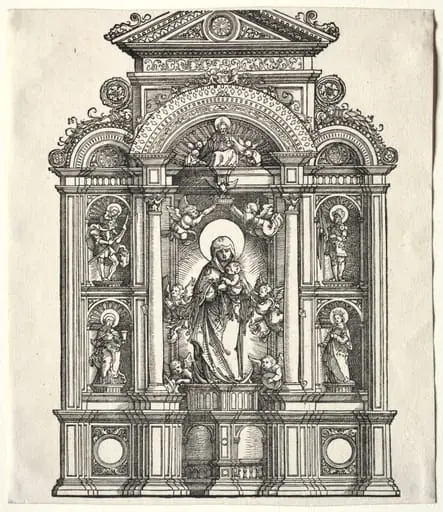 Great Altar with the Virgin, in a border with SS. Christopher, George, Barbara, Catherine
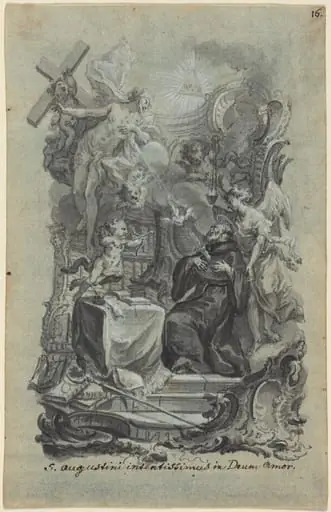 Saint Augustine's Zealous Love of God
 Nun
Nun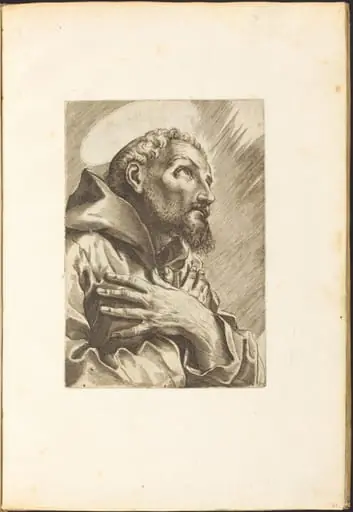 Saint Francis of Assisi
 Christ and His Disciples III
 Christ and His Disciples V
 Glass Design with Saint John the Baptist and Saint John the Evangelist
 Funeral Monument to the Daughters of Feuerabend
 Jesus Christ appearing to St. Francis
 Triumphal Altar with Stages in the Life of Christ
 Vision of Saint Francis