Artwork
Carl Cabriel Krook
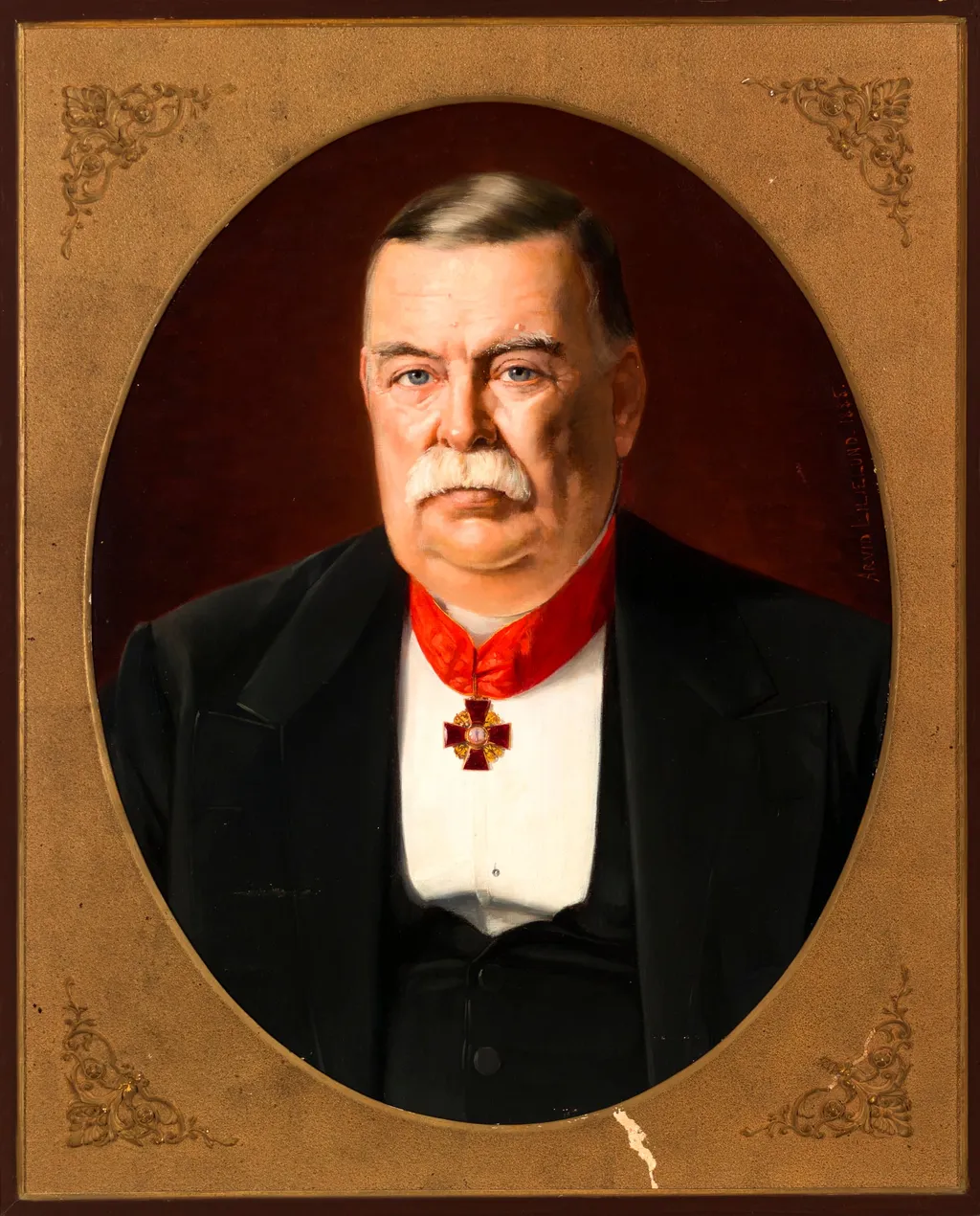
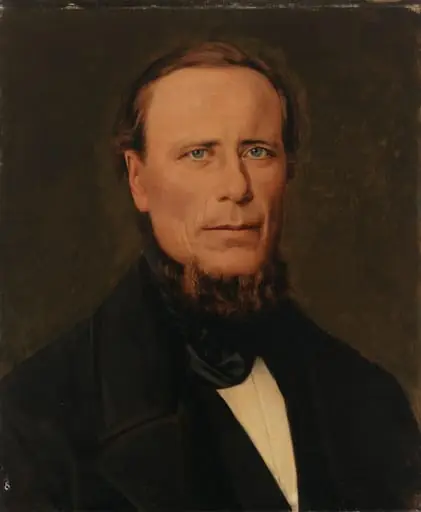
Carl Cabriel Krook is a drawing by Arvid Liljelund. It is held in the collection of the Helsinki City Museum. This portrait depicts a man in formal attire, rendered with deliberate precision.
About this work
Overview
His expression is composed and introspective, while the red sash and cross-shaped medal suggest official or ceremonial status.
This portrait depicts a man in formal attire, rendered with deliberate precision. The composition isolates the subject against a dark, unadorned background, emphasizing his presence. His expression is composed and introspective, while the red sash and cross-shaped medal suggest official or ceremonial status. The work’s focus on facial detail and restrained color palette conveys dignity without ornamentation.
Subject & Meaning
The figure’s attire—dark suit, white shirt, and crimson sash—along with the medal bearing a cross, implies a position of authority, possibly military or civic. The medal’s religious symbol may indicate honor conferred by a state or order. His serious gaze and minimal background suggest a portrait intended to convey gravitas rather than personal emotion, aligning with traditions of official portraiture.
Technique & Style
The artist employed fine, controlled brushwork to model skin and fabric with subtle texture, avoiding overt brushstrokes. The smooth surfaces of the shirt and skin contrast gently with the richer, more varied application on the sash and medal. The use of stippling-like precision in rendering details, particularly in the medal’s surface and facial contours, demonstrates a methodical approach to achieving realism through incremental tonal shifts.
History & Provenance
The painting’s origin and early ownership are not documented in available records. The gold frame, with modest corner embellishments, suggests it was commissioned or curated for formal display. Its preservation in a condition that retains both paint integrity and original framing points to careful handling, though its full provenance remains untraced.
Context
Created in a period when official portraiture emphasized decorum and symbolic attire, this work reflects conventions of early 20th-century Nordic visual culture. Similar portraits from the era often depicted public figures with restrained emotion and clear indicators of rank. The absence of landscape or props aligns with a trend toward psychological focus in modern portraiture.
Legacy
The painting contributes to a body of work that values understated representation over dramatic flair. Its technical discipline and symbolic clarity offer insight into how authority was visually codified in its time. Though not widely exhibited, it remains a representative example of disciplined portraiture from its region and era.
Artist & collection

 Untitled
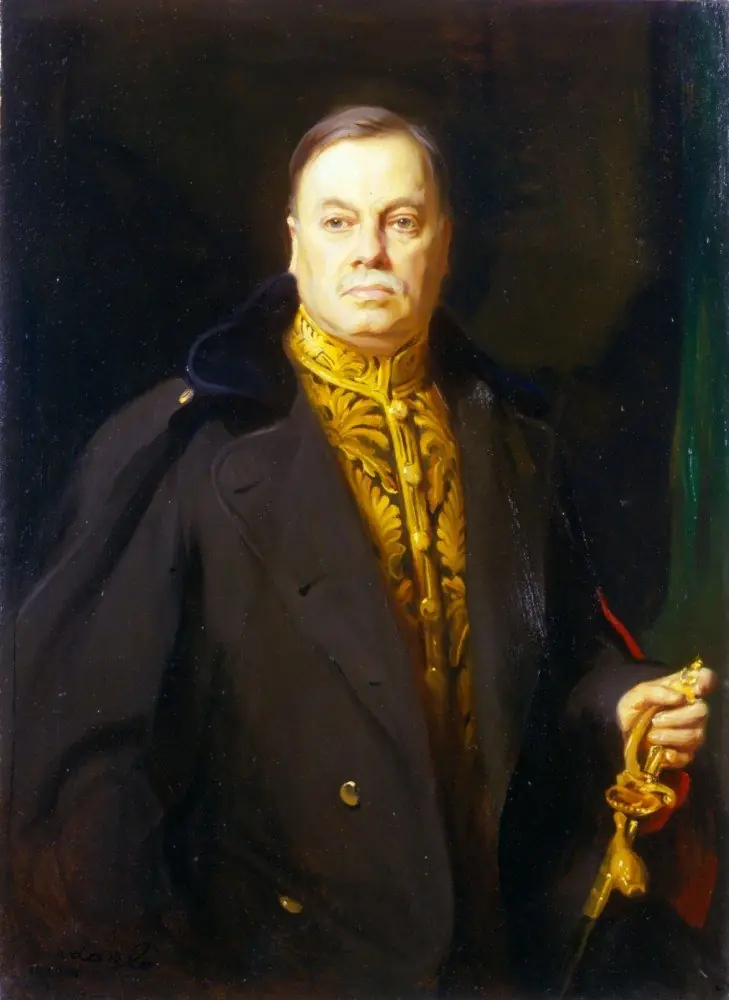 Portrait of Lord Rothermere
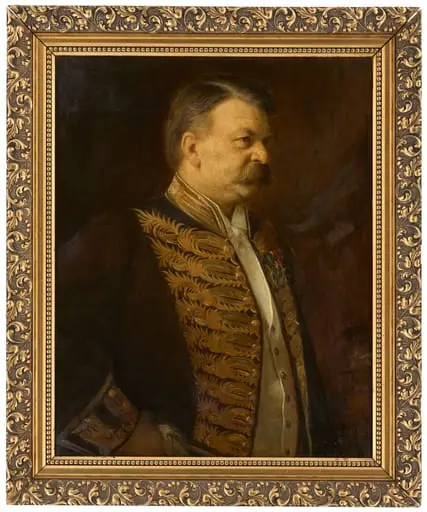 Bildnis Hans Franz Otto Freiherr von Krafft-Ebing
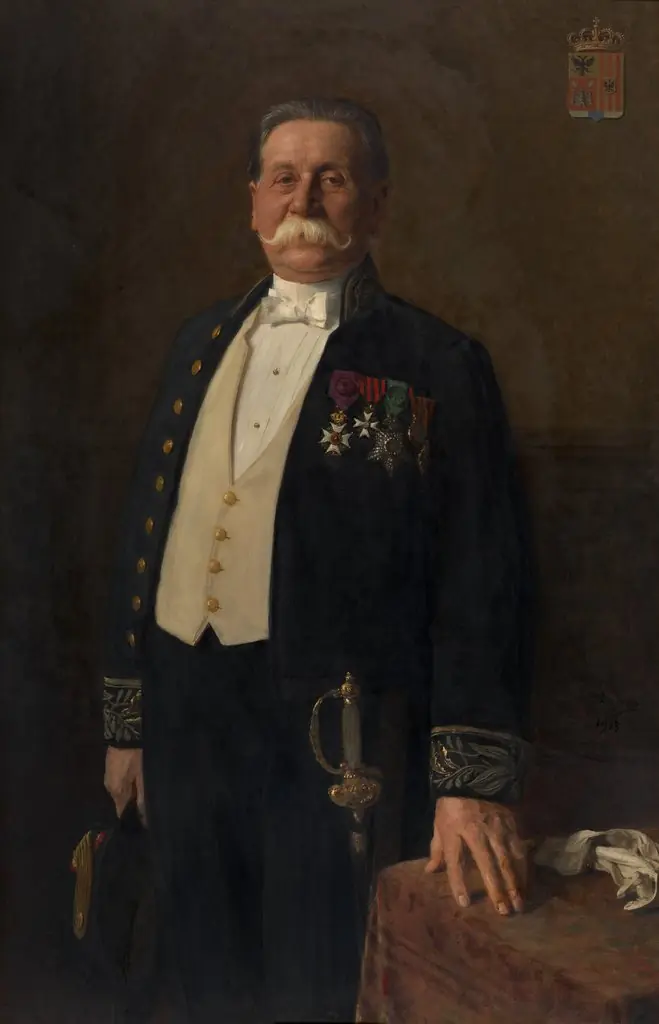 Justin Peeters-Lacroix
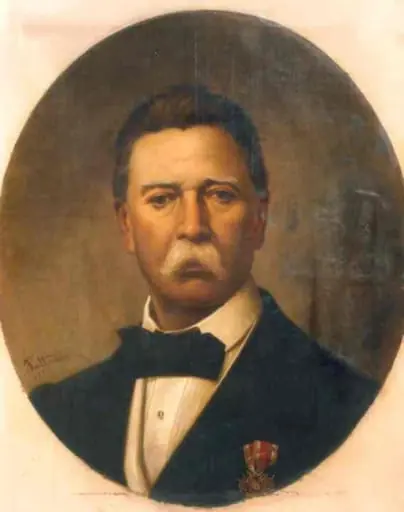 Colonelul Mustacoff
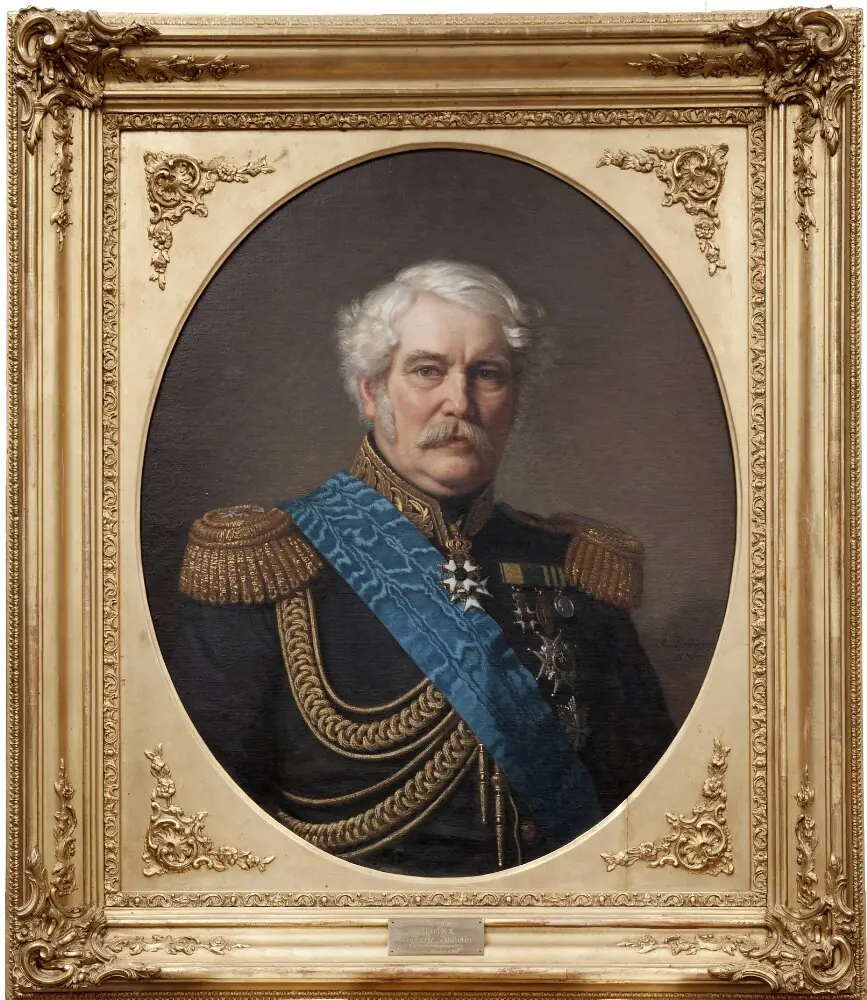 Johan Peter Lefrén (1784-1862), general, educationalist, politician, Married to Maria Antoinetta Hedman
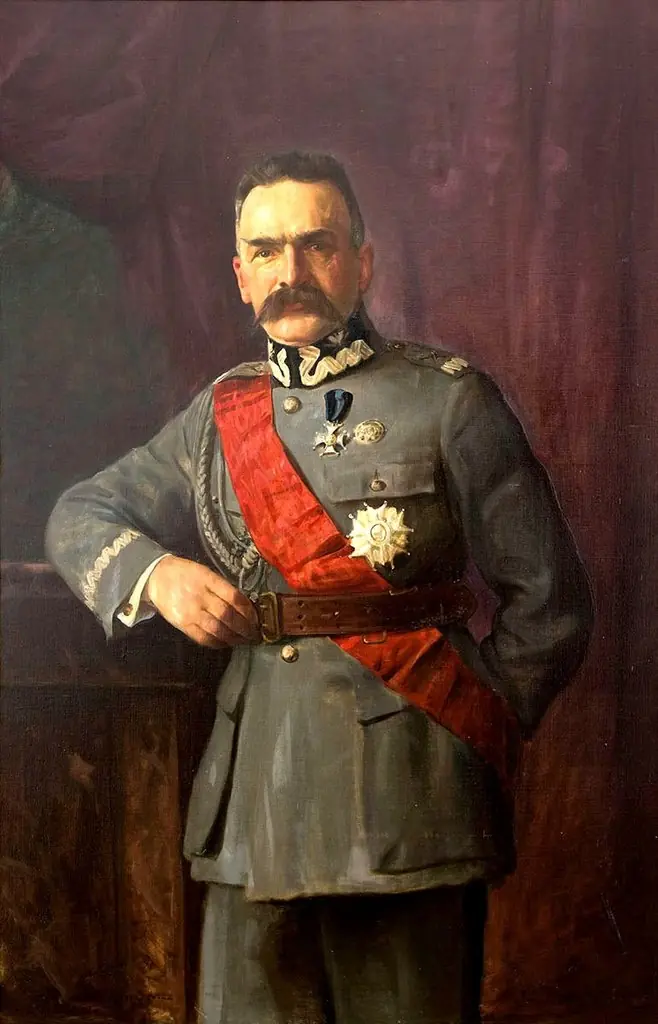 Portret Józefa Piłsudskiego
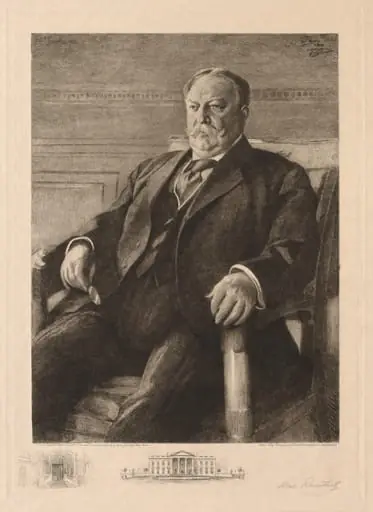 William H. Taft
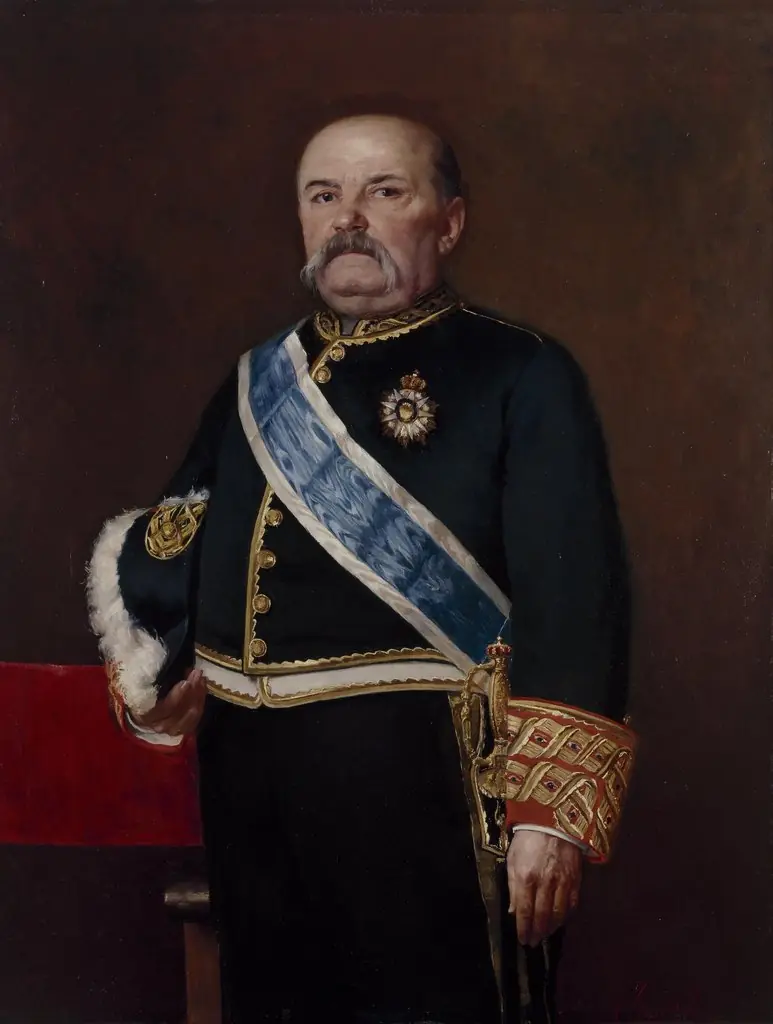 Manuel Becerra ministro de Ultramar
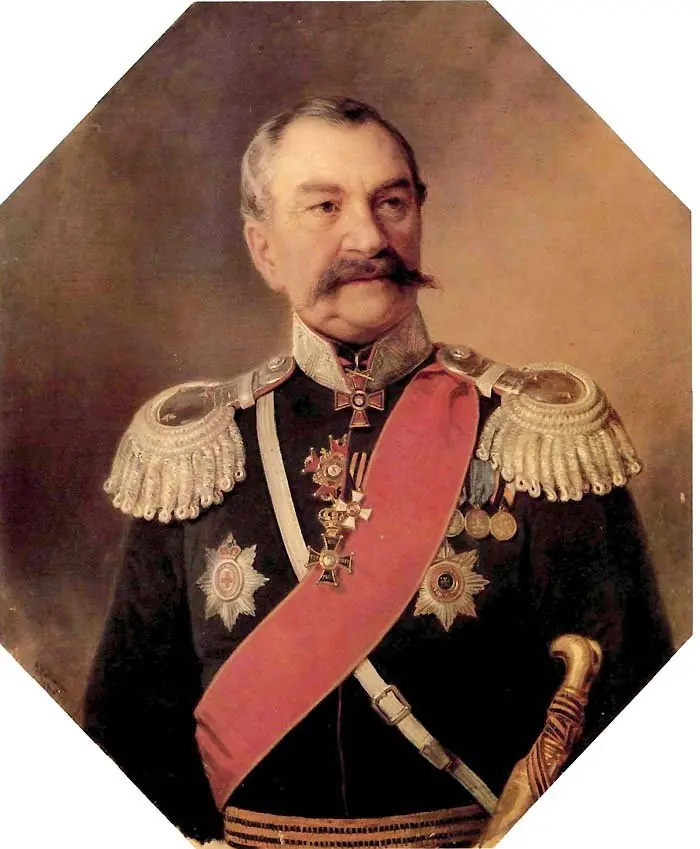 Portrait of I.A.Orlov, Lieutenant-General of the Cossack Troops
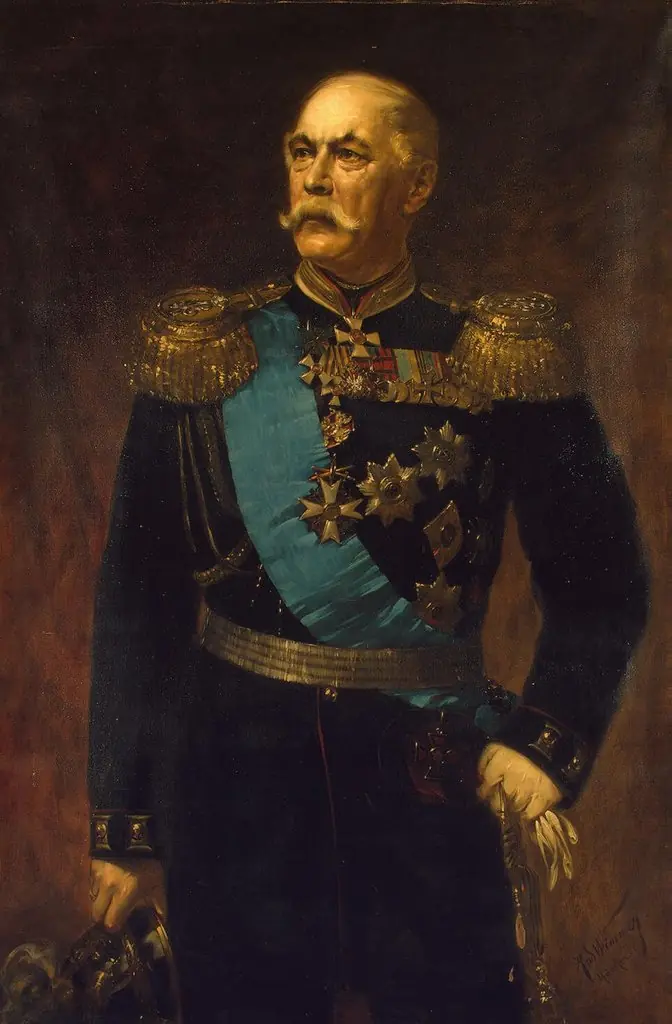 Portrait of Eduard I. Totleben
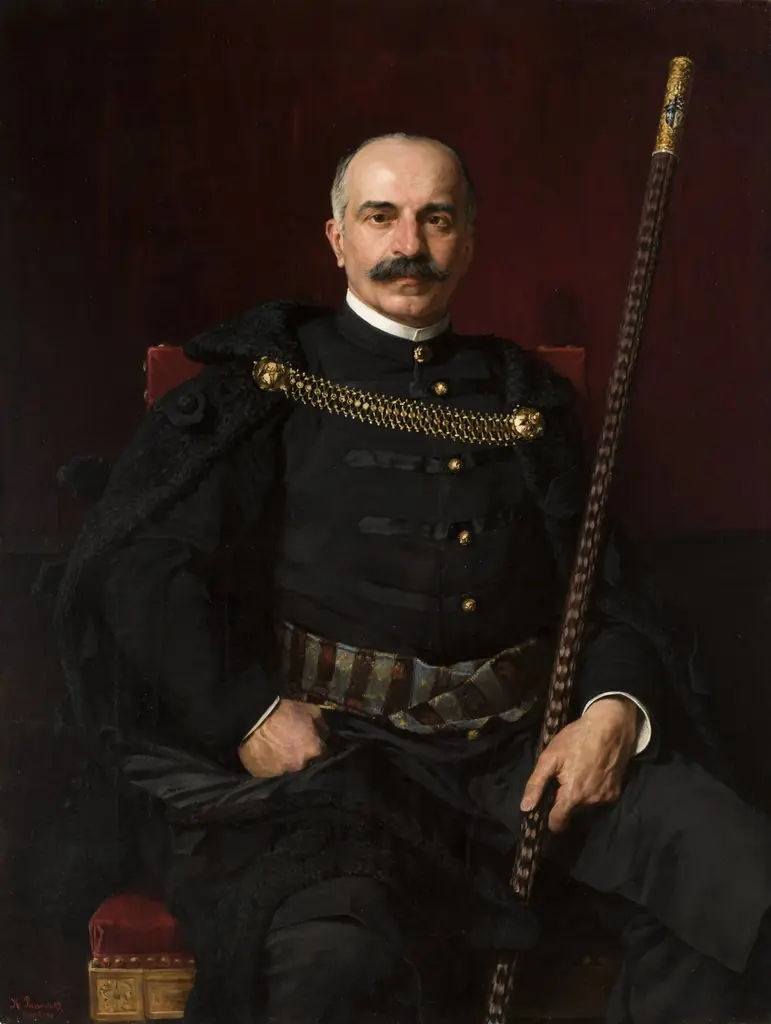 Portrait of Eustachy Sanguszko