Artwork
Le paysan
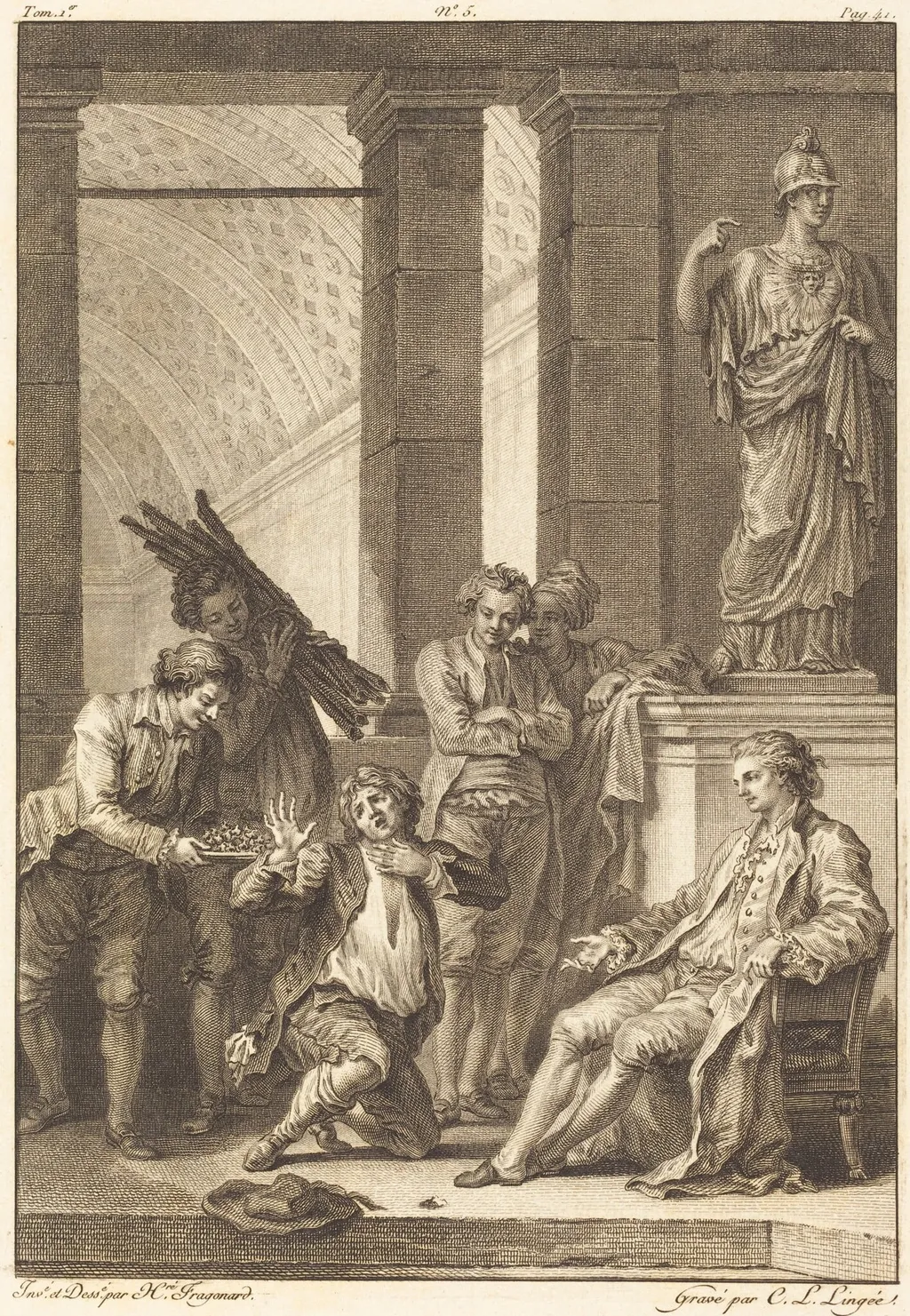
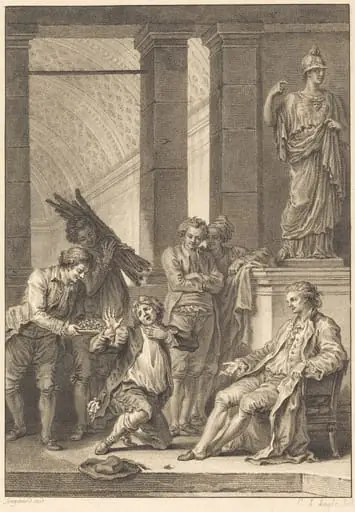
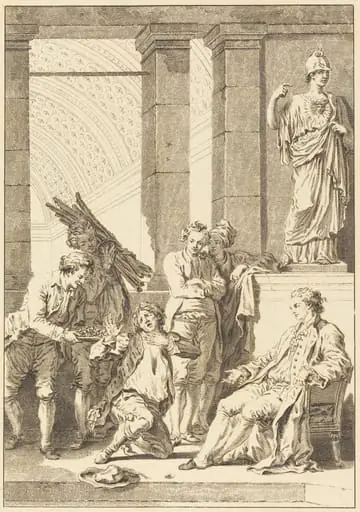
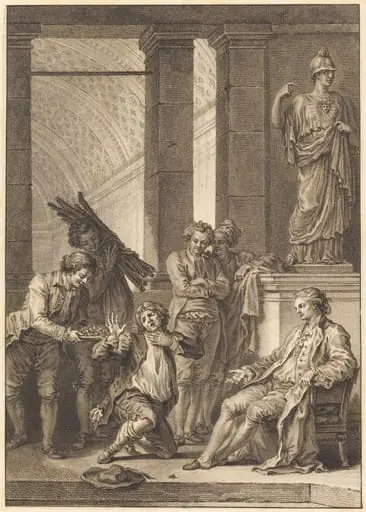
Le paysan is an ink print by the Baroque artist Charles Louis Lingée. It dates from 1784 and is held in the collection of the National Gallery of Art.
About this work
Overview
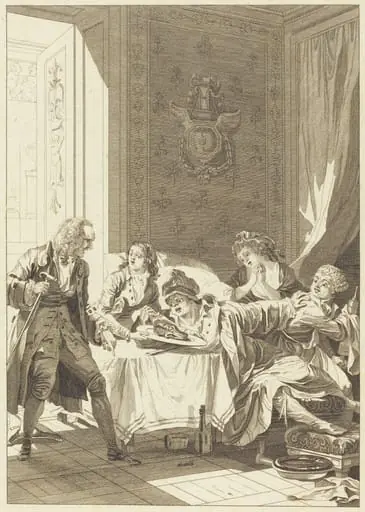
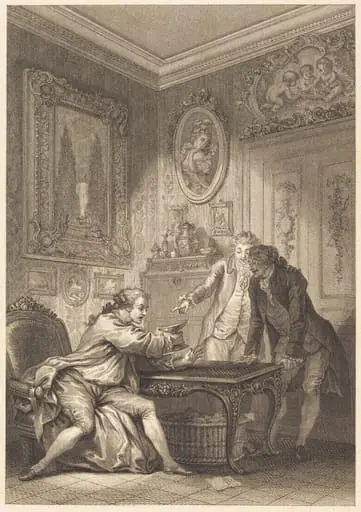
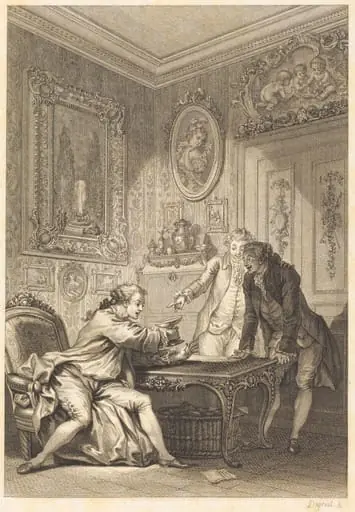
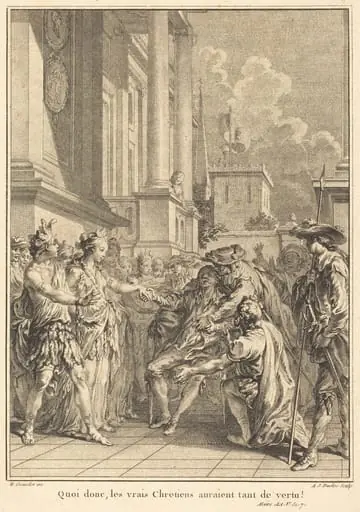
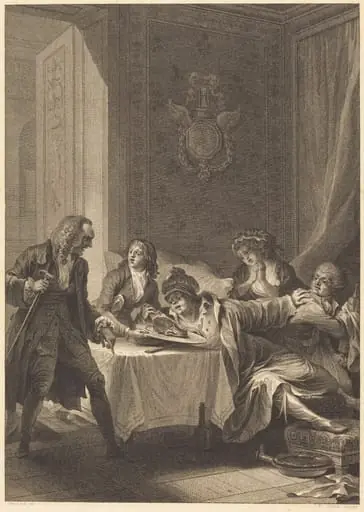
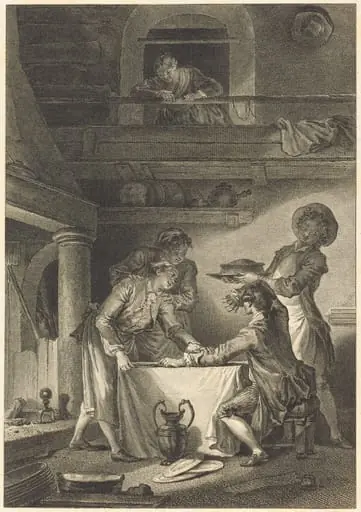
Charles Louis Lingé’s 1784 print titled *Le paysan* is an etching and engraving executed on metal. The monochrome work depicts a cramped interior where five male figures are arranged around a towering statue. The composition balances activity and stillness, each figure engaged in a distinct gesture, while the statue dominates the background, holding a diminutive figure in its left hand.
Subject & Meaning
The scene presents a group of peasants or laborers gathered in a dimly lit room, suggesting a moment of communal pause or informal council. One man kneels, clutching a hat and gazing upward at a cane‑leaning companion, while another appears absorbed in reading or writing. The varied postures convey a narrative of shared labor, contemplation, and hierarchy within a modest setting.
Technique & Style
Lingé employed traditional etching methods, incising lines into a copper plate with acid to achieve fine detail, and reinforced certain areas through engraving for sharper edges. The artist’s use of chiaroscuro—delicate cross‑hatching and tonal gradations—models the folds of clothing and the statue’s visage, creating a sense of depth despite the print’s limited palette.
History & Provenance
Created in 1784, the print reflects Lingé’s activity during the late Ancien Régime, a period when prints served both decorative and documentary purposes. While specific ownership records are scarce, the work has circulated among collections of French printmaking, illustrating the artist’s engagement with genre scenes that blend everyday life with classical references.
Artist & collection