Artwork
Untitled
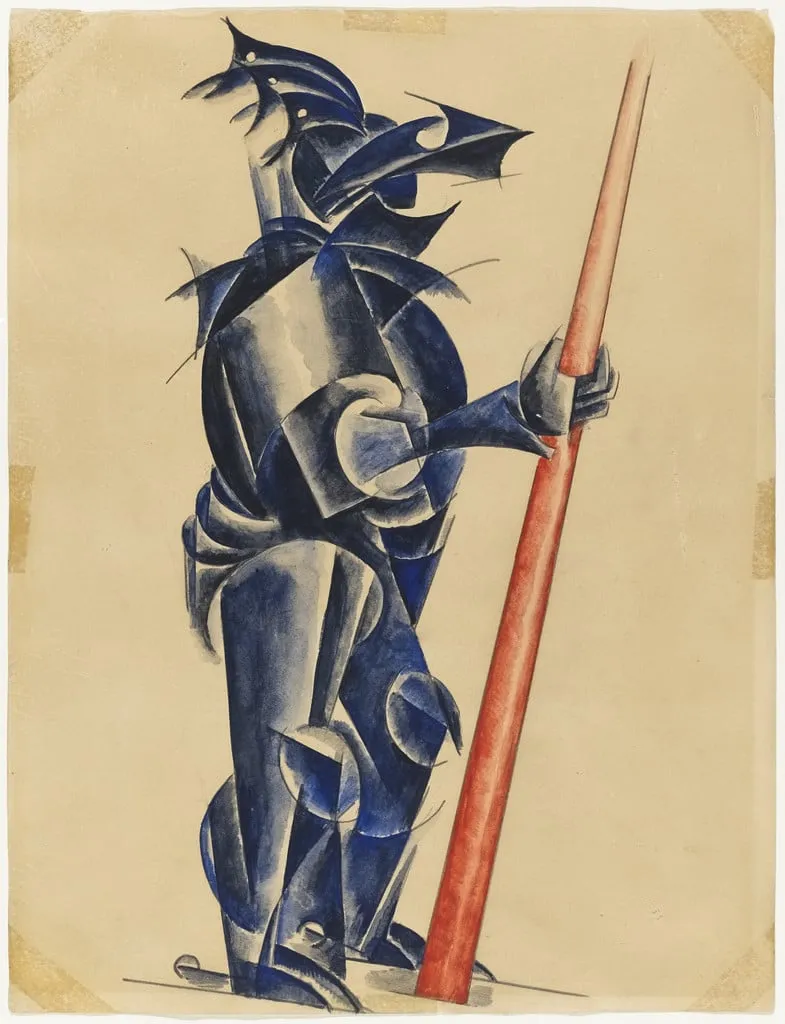
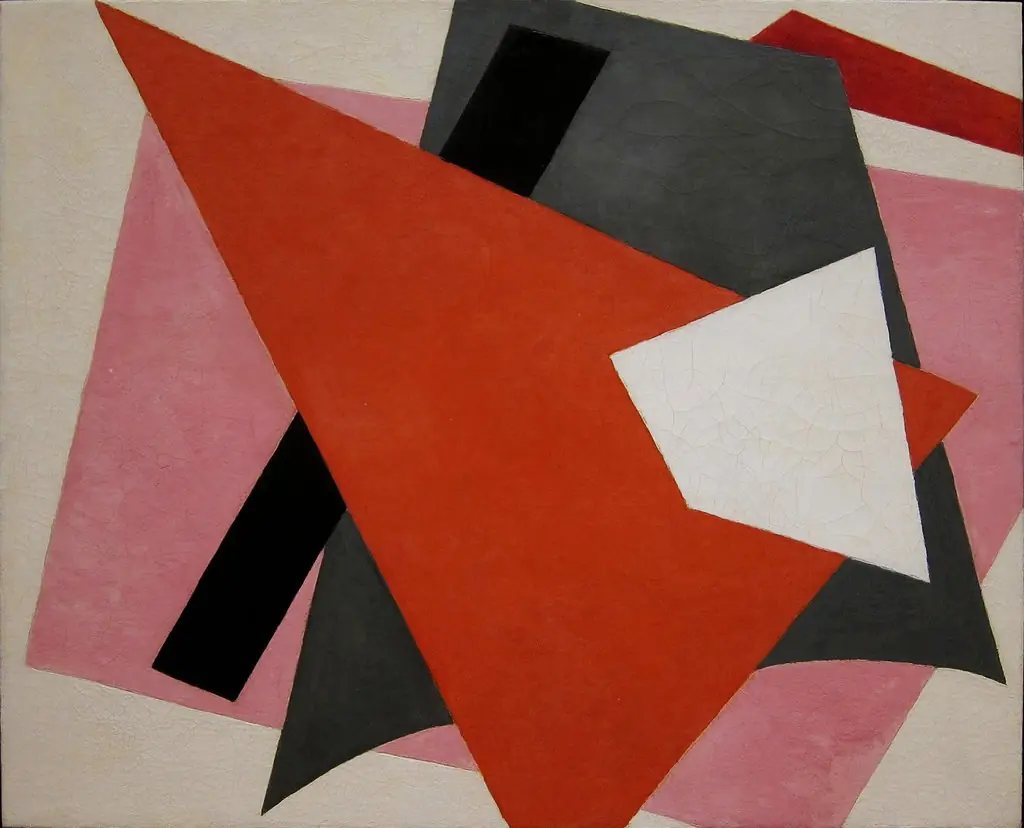
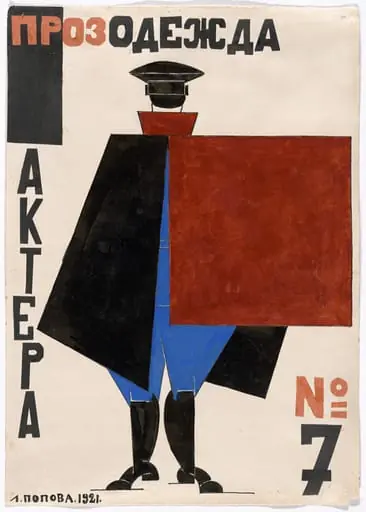
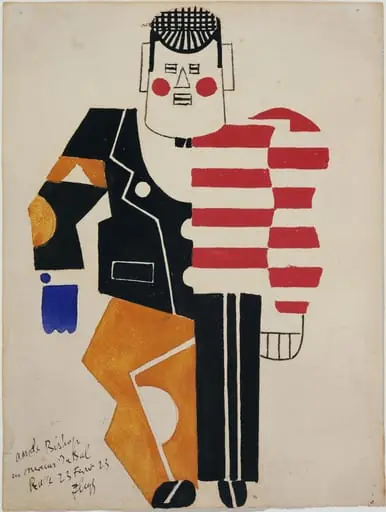
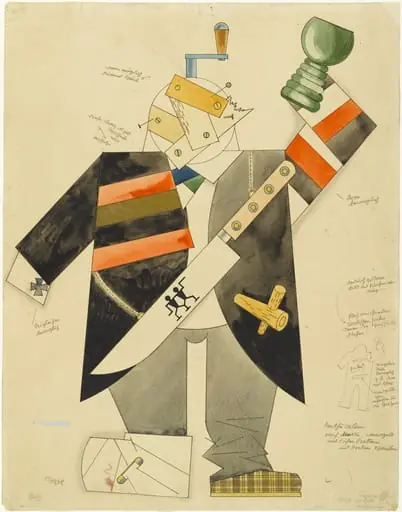
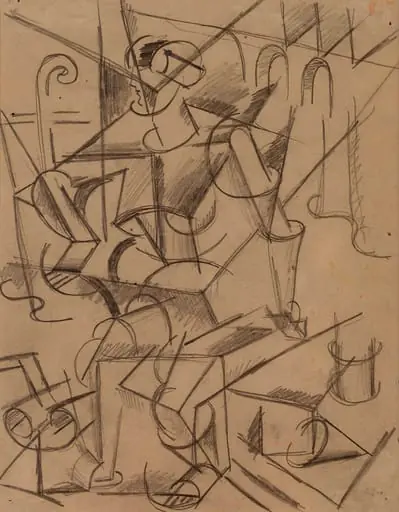
Untitled is a watercolor drawing by Lyubov Popova. It dates from 1921 and is held in the collection of the Museum of Modern Art. Created in 1921, this watercolor and pencil drawing by Liubov Popova is a preparatory study for a theatrical costume.
About this work
Popova designed clothes that looked like moving geometry, so actors could perform in shapes instead of fabric.
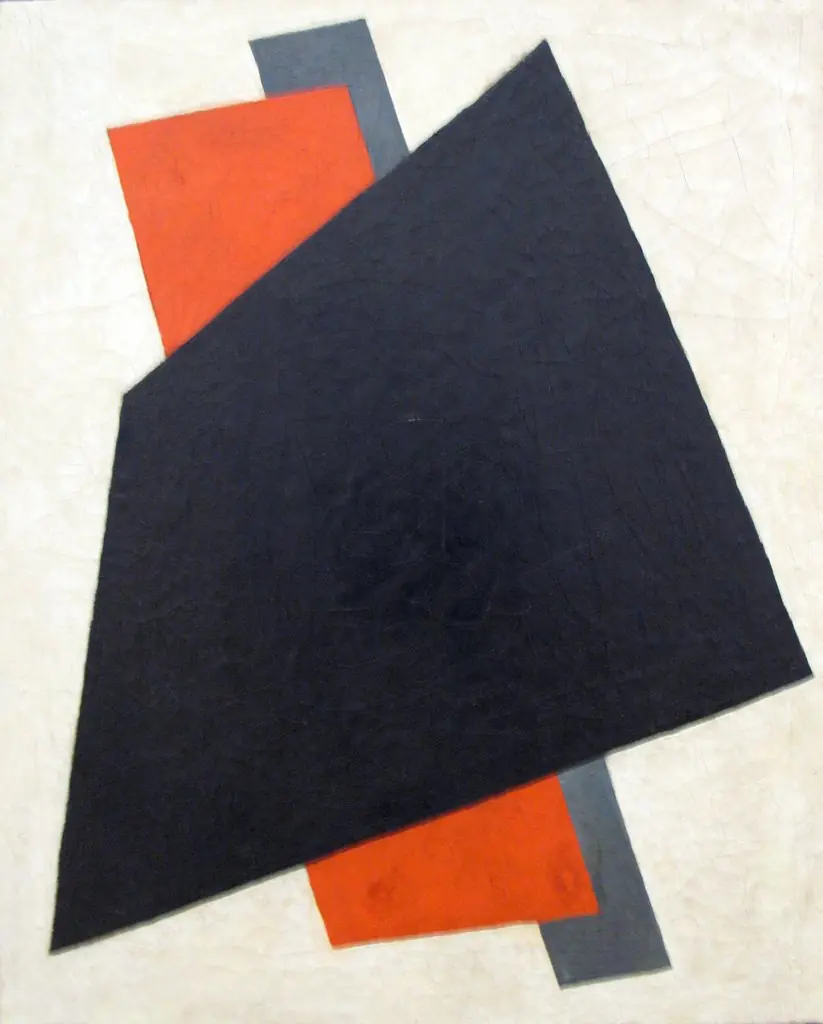
You see sharp triangles and rectangles in red, gray, and black, stacked like building blocks on a page.
This isn’t just abstract art—it’s a costume sketch for a 1921 *Romeo and Juliet* production. Popova designed clothes that looked like moving geometry, so actors could perform in shapes instead of fabric. The watercolor layers let light shine through, making the colors glow.
To see how she turned stage clothes into art, look up watercolor, glazing.
Overview
Created in 1921, this watercolor and pencil drawing by Liubov Popova is a preparatory study for a theatrical costume. It resides in the collection of The Museum of Modern Art and exemplifies the artist’s engagement with constructivist principles, translating architectural forms into wearable design for the stage.
Subject & Meaning
The drawing serves as a costume design for a 1921 production of Romeo and Juliet, reimagining the characters through geometric abstraction. Sharp triangles, rectangles, and layered planes replace traditional fabric drapery, suggesting movement and structure rather than naturalism. The forms imply kinetic energy, aligning the actors’ bodies with the mechanized aesthetics of early Soviet avant-garde theater.
Technique & Style
Popova employed watercolor glazing to build translucent layers of red, gray, and black, allowing underlying pencil lines and paper texture to remain visible. The technique creates a luminous effect, enhancing the sense of light passing through the costume’s planes. Pencil underdrawing defines precise edges, reinforcing the architectural rigor of the composition.
History & Provenance
The work originated as part of Popova’s contributions to the 1921 production of Romeo and Juliet at the Moscow State Theater. It remained in her possession until after her death in 1924, later entering institutional collections. Its acquisition by The Museum of Modern Art reflects its significance in the history of modernist stage design.
Context
This piece emerged during a period when Russian avant-garde artists sought to dissolve boundaries between art, industry, and performance. Popova’s designs rejected ornamental costume in favor of structural forms that responded to movement and space, aligning with broader constructivist goals of functional, collective art rooted in revolutionary ideals.
Legacy
The drawing exemplifies how theatrical design became a laboratory for abstract form in early 20th-century art. Popova’s integration of geometry into costume influenced later developments in performance and industrial design, demonstrating that clothing could function as both sculptural object and dynamic element in spatial composition.
Artist & collection
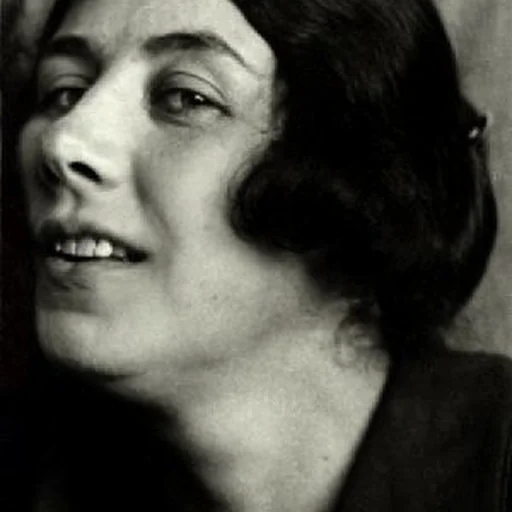
Artist
Lyubov Sergeyevna Popova (Russian: Любо́вь Серге́евна Попо́ва; 24 April 1889 – 25 May 1924) was a Russian-Soviet avant-garde artist, painter and designer.