Artwork
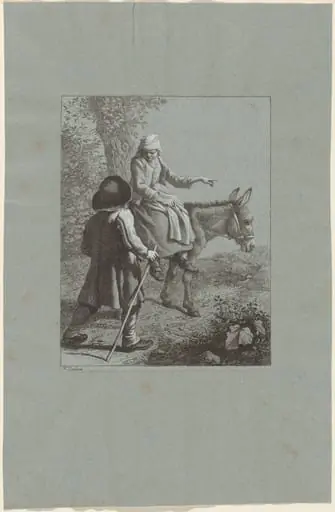
Boy on a Donkey Driving a Flock
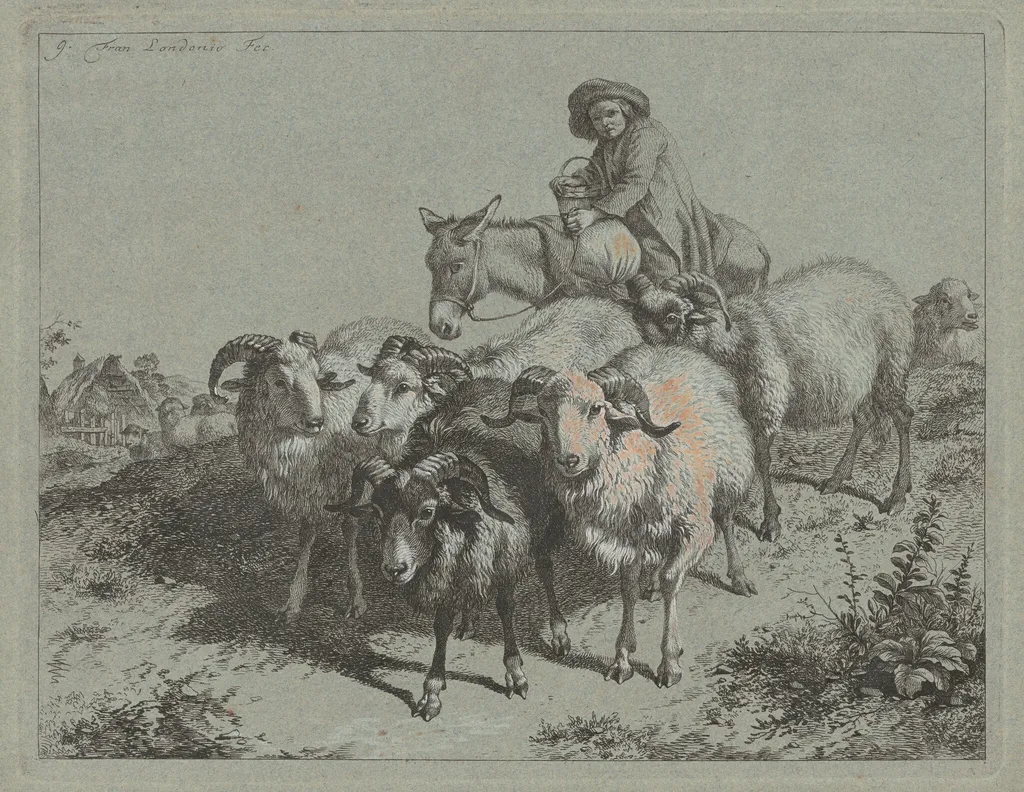
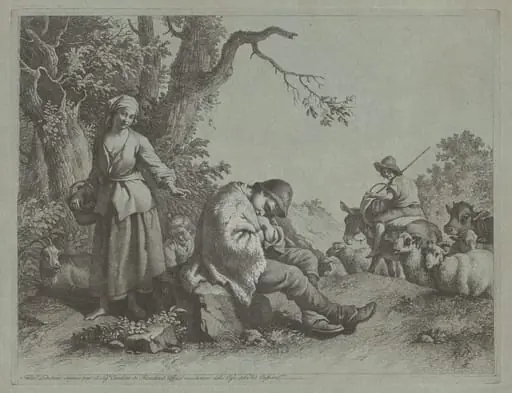
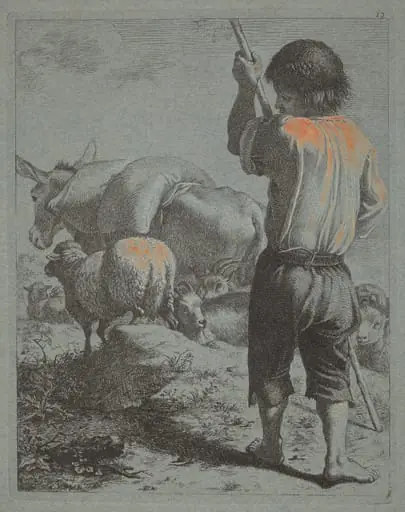
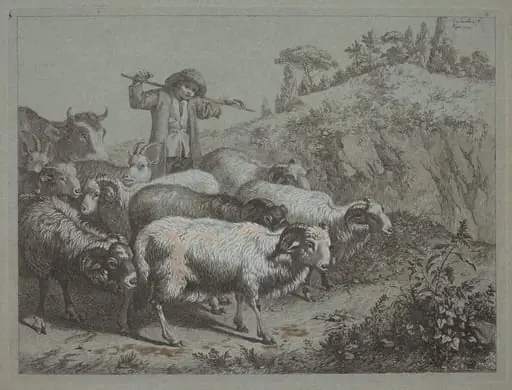
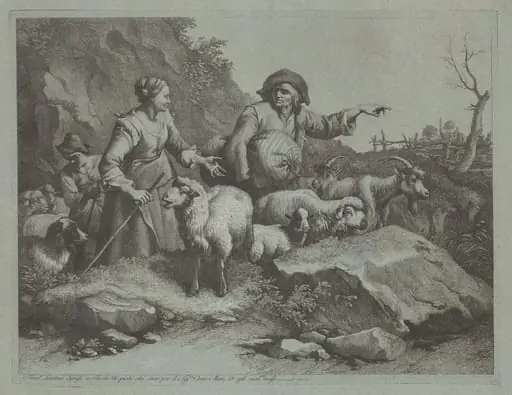
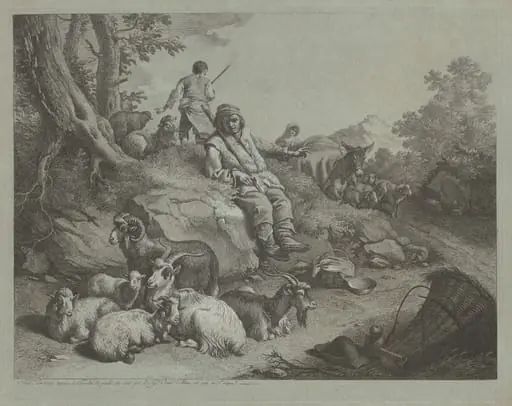
Boy on a Donkey Driving a Flock is an ink print by the Romanticist artist Francesco Londonio. It dates from 1763 and is held in the collection of the National Gallery of Art.
About this work
Overview
Created in 1763, this etching on blue laid paper by Francesco Londonio captures a quiet rural moment: a boy guiding a flock of sheep on a dirt path.
Created in 1763, this etching on blue laid paper by Francesco Londonio captures a quiet rural moment: a boy guiding a flock of sheep on a dirt path. The work is enhanced with white pigment to accentuate textures and forms, contrasting with the cool blue ground. As a print, it reflects Londonio’s skill in translating observational detail into a delicate, tonal composition suited to the tastes of Northern Italian collectors.
Subject & Meaning
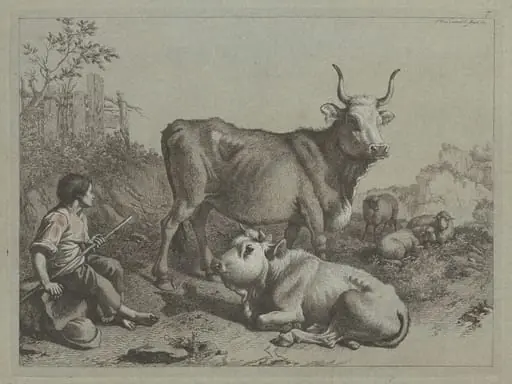
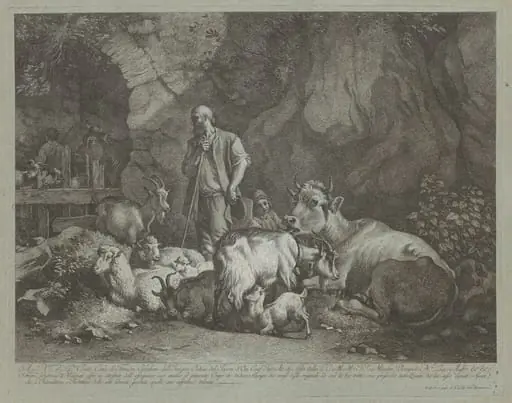
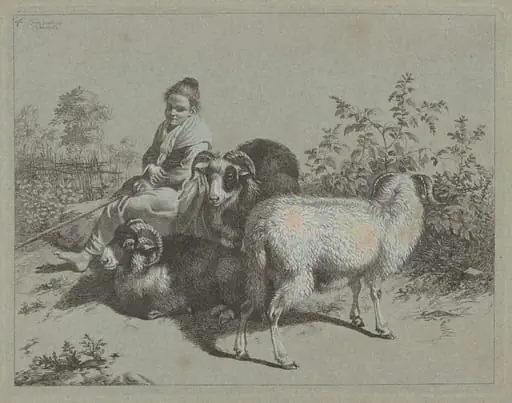
The scene depicts an ordinary pastoral activity—shepherd boy, donkey, and flock—without idealization. The boy’s practical attire and the donkey’s burden suggest daily labor, while the sheep’s wool and marked backs hint at agricultural management. The calm, uneventful composition reflects a quiet dignity in rural life, aligning with 18th-century interest in authentic, unembellished scenes of the countryside.
Technique & Style
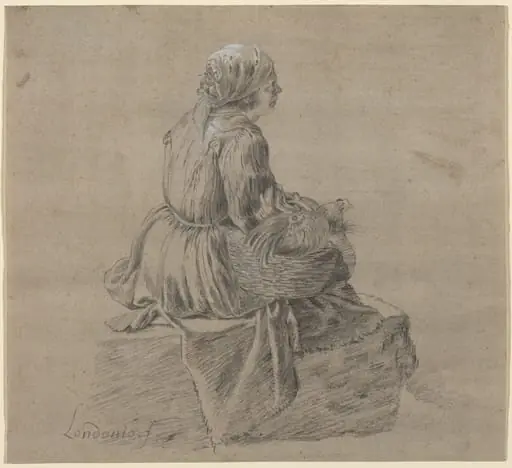
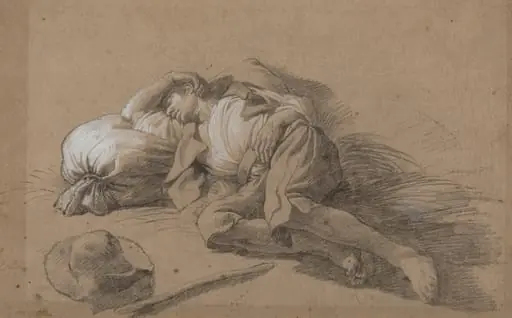
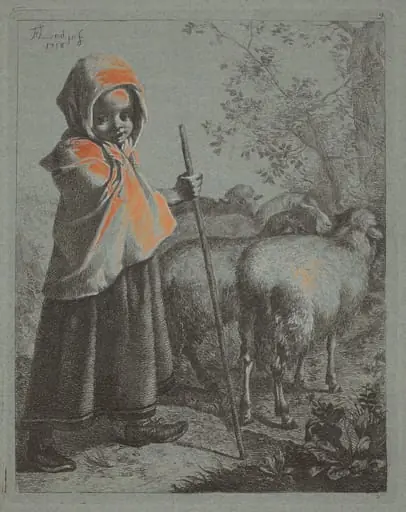
Londonio employed etching to render fine, sketchy lines that suggest movement and texture, then added white heightening to highlight wool, basket weave, and the donkey’s harness. The blue paper provides a cool, atmospheric base, enhancing the sense of air and distance. The restrained use of color and emphasis on line rather than mass reflect a delicate, observational approach typical of his graphic work.
History & Provenance
Francesco Londonio trained in Milan under Ferdinando Porta and Giovanni Battista Sassi, later studying engraving with Benigno Bossi. His travels to Rome and Naples exposed him to broader Italian artistic currents. This print, dated 1763, belongs to a body of work produced during his mature period, when his pastoral subjects gained favor among Milanese and Lombard collectors seeking genre scenes with naturalistic charm.
Context
In mid-18th-century Northern Italy, there was growing patronage for images of rural life that balanced realism with aesthetic refinement. Londonio’s prints catered to this trend, offering scenes of peasants and animals that avoided overt sentimentality. His work stood apart from grand historical or religious themes, instead valuing quiet observation and the dignity of everyday labor.
Legacy
Londonio’s etchings, including this one, contributed to the documentation of rural Italian life during the late Baroque and early Rococo. Though not widely known today, his prints influenced regional graphic traditions and remain valuable for their unromanticized portrayal of agricultural routines. They offer insight into how artists of the time engaged with the ordinary as worthy of artistic attention.
Artist & collection

Artist
Francesco Londonio (1723–1783) was an Italian painter, engraver, and scenographer, active mainly in his native Milan in a late-Baroque or Rococo style.