Artwork
The Vision of Ezekiel
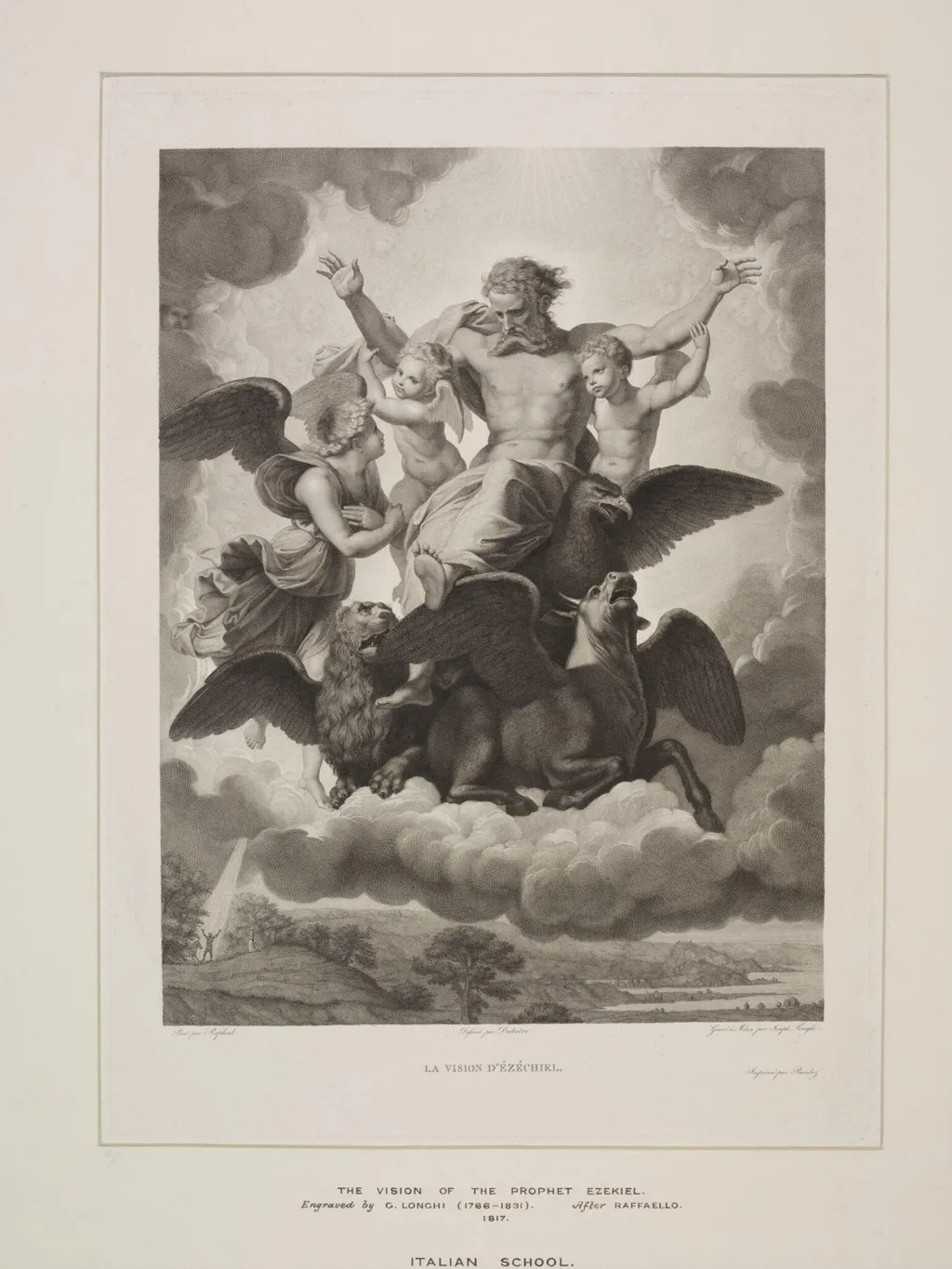
The Vision of Ezekiel is a print by Giuseppe Longhi. It is held in the collection of the Victoria and Albert Museum.
About this work
Overview
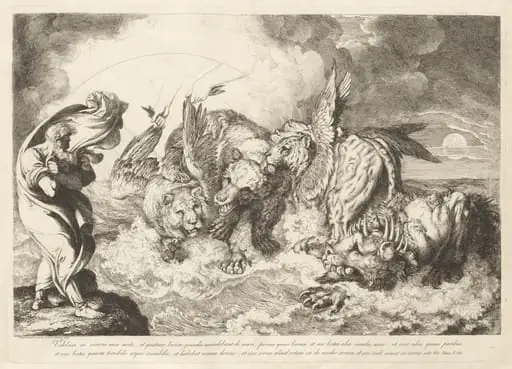
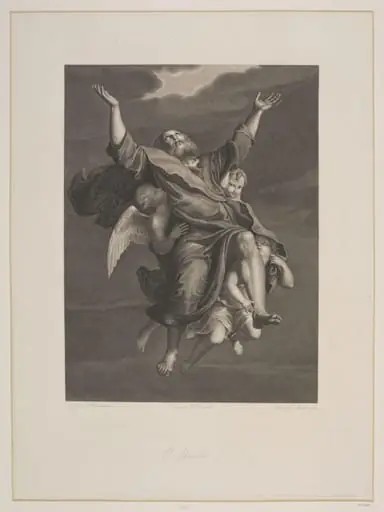
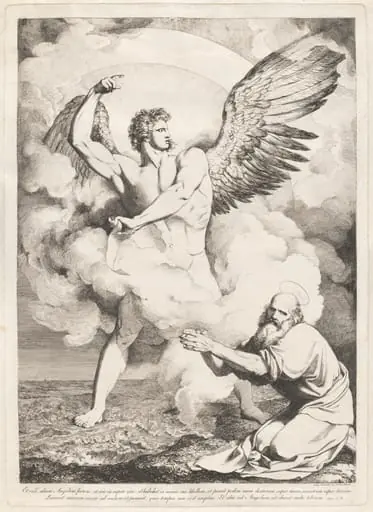
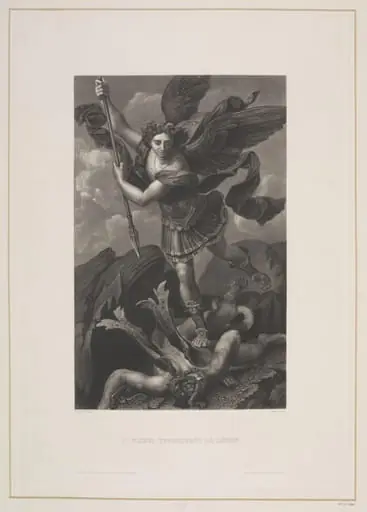
Giuseppe Longhi’s 1850 print, *The Vision of Ezekiel*, is a paper reproduction of Raphael’s original composition. Executed in monochrome, the work captures a dramatic, aerial tableau that interprets the biblical prophet’s apocalyptic experience.
Subject & Meaning
The image portrays a bearded figure, identified as Ezekiel, mounted on a fantastical creature that combines a lion’s head with eagle’s wings. Flanking him are two winged youths, one clutching a scroll, while diminutive figures occupy a distant landscape below, suggesting a celestial vision of divine judgment.
Technique & Style
Longhi employs stark chiaroscuro, using pronounced contrasts of light and shadow to model the forms and heighten the scene’s theatricality. The limited palette of black, white, and gray emphasizes the volumetric qualities of the figures and the swirling clouds that dominate the sky.
History & Provenance
Created in the mid‑nineteenth century, the print served as a means of disseminating Raphael’s composition to a broader audience. As a reproductive work, it reflects the period’s interest in making canonical religious imagery accessible through print media.
Context
The work belongs to a tradition of religious prints that sought to convey biblical narratives with dramatic intensity. Its use of chiaroscuro aligns with Baroque sensibilities, while the subject matter draws directly from the prophetic visions described in the Book of Ezekiel.
Artist & collection
Artist
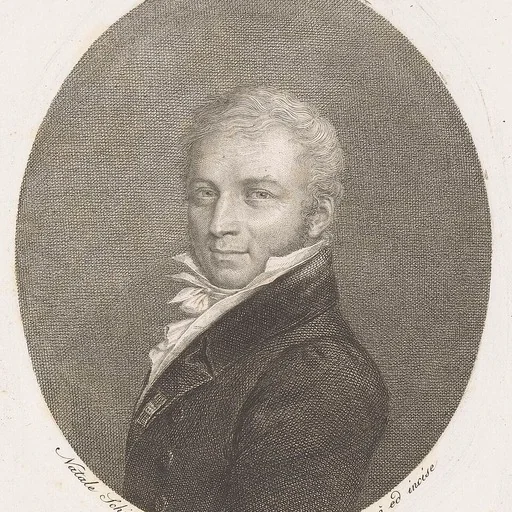
Giuseppe Maria Longhi (13 October 1766, Monza – 2 January 1831, Milan) was an Italian painter and engraver, in the Neo-Classical style.